The report lands in your inbox full of numbers and colored bars, and the pale patch by the drive still looks exactly the same, because a report only helps once you know which lines deserve action and which ones just describe soil doing its job.
Read it in a fixed order: pH first, then the big three nutrients, then everything else. That order matters because pH decides whether the grass can use the nutrients the rest of the report is counting.
Start with pH: the line that unlocks the rest
pH measures how acidic or alkaline your soil is, on a scale from 0 to 14, with 7.0 neutral. Each whole step on that scale is a tenfold change, so a lawn at 5.5 is working against far more acidity than the small-looking gap to 6.5 suggests.
Most lawn grasses grow best between pH 6.0 and 7.0. Inside that window, roots can take up nitrogen, phosphorus, and potassium freely, while below it those same nutrients bind to the soil and sit there unused — which is how a lawn can test high in phosphorus and still grow like it has none.
If pH is below 6.0, lime is usually the fix, and it comes before any fertilizer decision. If pH is above 7.0, sulfur is the tool that brings it down, slowly, over a season. The soil pH amendment calculator turns your current and target pH into pounds of lime or sulfur for your lawn’s size, so work from its output rather than from a bag’s generic rate.
The big three: N, P, and K
Nitrogen (N) drives leaf growth and color, and most lab reports handle it differently from the other two, because soil nitrogen changes too quickly for a single reading to steer a season. Reports often leave nitrogen to a recommendation based on grass type and lawn size instead of a measured level, and that is normal, not a missing line.
Phosphorus (P) supports root growth and establishment. Lawns that have been fertilized for years frequently test high here, and when yours does, the right move is to choose a fertilizer with little or no phosphorus until the level drifts back down.
Potassium (K) underpins stress tolerance — drought, cold, and wear all land softer on grass with enough of it. A low potassium reading is one of the most common quiet findings on an otherwise healthy-looking lawn, and it is also one of the simplest to correct with the right fertilizer ratio.
Once you know which of the three is short, the fertilizer calculator converts the report’s recommendation into pounds of product for your actual lawn, which is the step that keeps a correct diagnosis from becoming an over-application.
What “sufficiency” means on the page
Most reports rate each nutrient low, medium, high, or very high instead of just printing a number, and those ratings rest on an idea worth understanding: sufficiency. Once the soil holds enough of a nutrient for the grass to grow well, adding more produces no extra growth — the lawn is already supplied.
That is why a “high” rating is an instruction to stop, not an invitation to maintain the level with more product. Adding phosphorus to soil already rated high buys no greener grass, and the excess has to go somewhere, which is usually the nearest storm drain after a hard rain.
The practical read is simple. Low means correct it, medium means a maintenance amount in your fertilizer is reasonable, and high or very high means choose a product that leaves that nutrient out.
A worked example, line by line
The numbers below are an example report, written to show the reading process — they are not your soil, and your own report’s figures are the ones to act on.
| Measure | Example result | Rating | What it means |
|---|---|---|---|
| pH | 5.6 | Below target | Lime comes first, before fertilizer changes |
| Phosphorus (P) | High | High | Choose a no-phosphorus fertilizer |
| Potassium (K) | Low | Low | Pick a ratio with a strong third number |
| Magnesium | Medium | Medium | No separate action needed this season |
Read in order, this example lawn gets lime first, because at pH 5.6 the grass cannot fully use what is already in the ground. The high phosphorus explains why past fertilizer never greened it the way the bag promised: the nutrient was present, just locked away by acidity.
Potassium is the one genuine shortage, so the next fertilizer should carry a strong third number and a zero in the middle — a ratio shaped like the diagnosis. Magnesium at medium needs nothing, and chasing it would be spending money on a line that is already doing its job.
Secondary lines: calcium, magnesium, and the small print
Below the big three, reports list calcium, magnesium, and micronutrients such as iron and manganese. For most home lawns these lines confirm rather than direct: they rarely call for a separate product, and lime itself supplies calcium as it raises pH, which settles two lines with one application.
Organic matter percentage appears on many reports too, often somewhere between 2 and 5 percent for a home lawn. Treat it as background health information — topdressing with compost nudges it up over years — rather than a number with a quick fix attached.
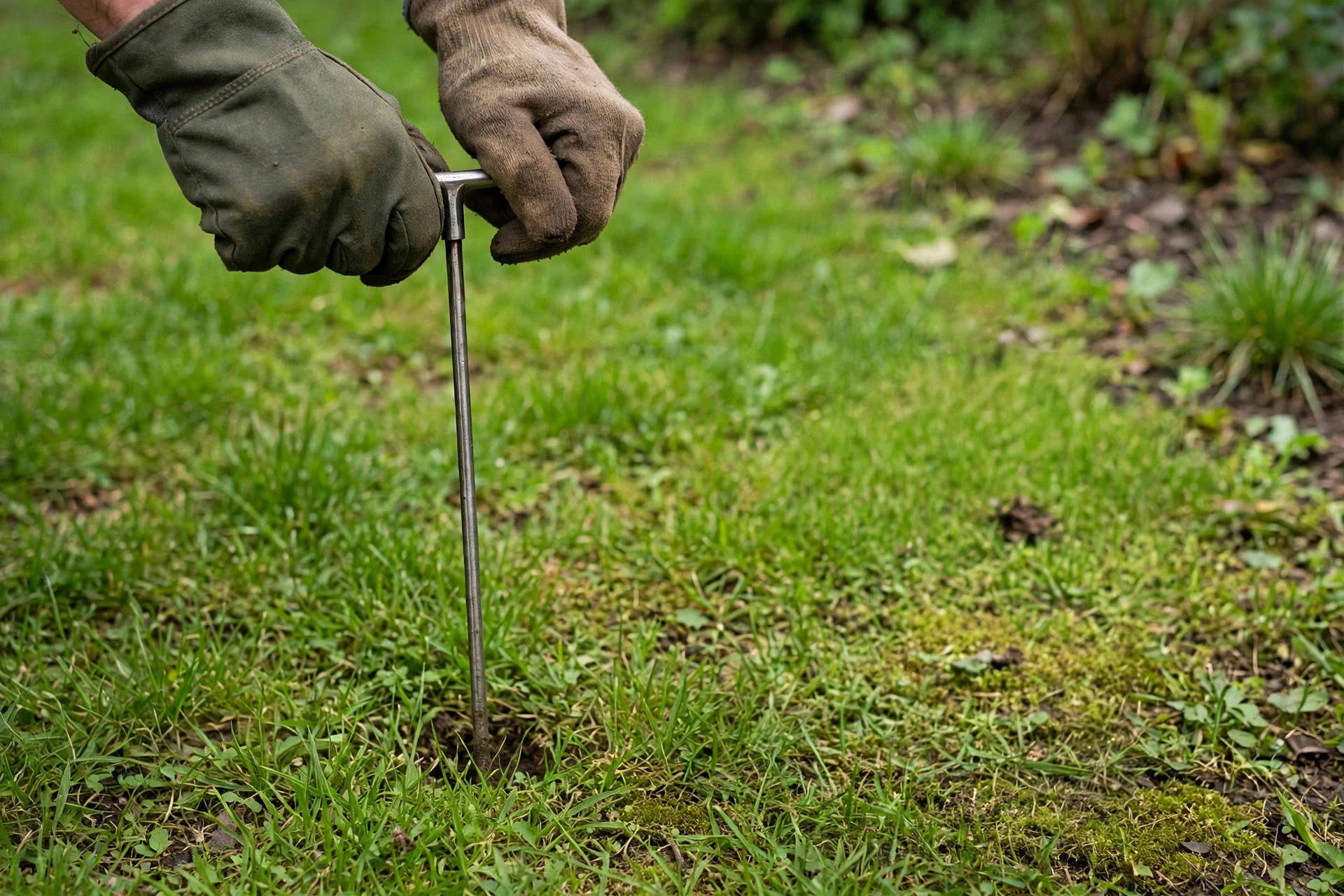
One caution belongs here. A report is only as honest as the sample behind it, so if your numbers look wildly different from last year’s, suspect the sampling before you suspect the soil. Our guide to how to take a soil sample for a lawn test covers the mixing and depth that keep a sample representative.
What to do this week
Work the report top-down: fix pH with lime or sulfur if it sits outside 6.0 to 7.0, correct the one nutrient rated low, and leave every high line alone. If you have not tested yet, our roundup of the best soil test kits for lawns compares the mail-in lab panels and the at-home option side by side.
That is the whole skill. A report that looked like homework an hour ago becomes three decisions — lime, one fertilizer ratio, and a list of things to stop buying — and the pale patch by the drive finally gets treated for its actual cause.