The spreader is back in the garage, the granules are still visible on the grass, and the hose is in your hand. Whether to turn it on is the whole question, and for granular fertilizer the answer is yes — lightly, on purpose, and measured.
Skip the watering and the granules sit on blades where they can burn, or lose nitrogen to the air while they wait. Flood the lawn and you push that nitrogen down past the roots instead. The useful middle is a specific number, and this post gives you the number and the way to measure it.
Why granular fertilizer needs water
Granules do their work in the soil, not on the leaf. Water is what moves them the last inch — off the blades, through the thatch, and into the ground where roots can reach the nutrients.
About a quarter inch of water handles three jobs at once. It washes granules off leaf blades before their salts can scorch the tissue, it carries the nutrients down to root level, and it cuts the nitrogen that urea and ammonium fertilizers otherwise lose to the air as ammonia while they sit dry on the surface.
Extension guidance treats that quarter inch as the standard watering-in amount, and it is deliberately small. You are rinsing the fertilizer into place, not watering the lawn for the week.
How to measure a quarter inch
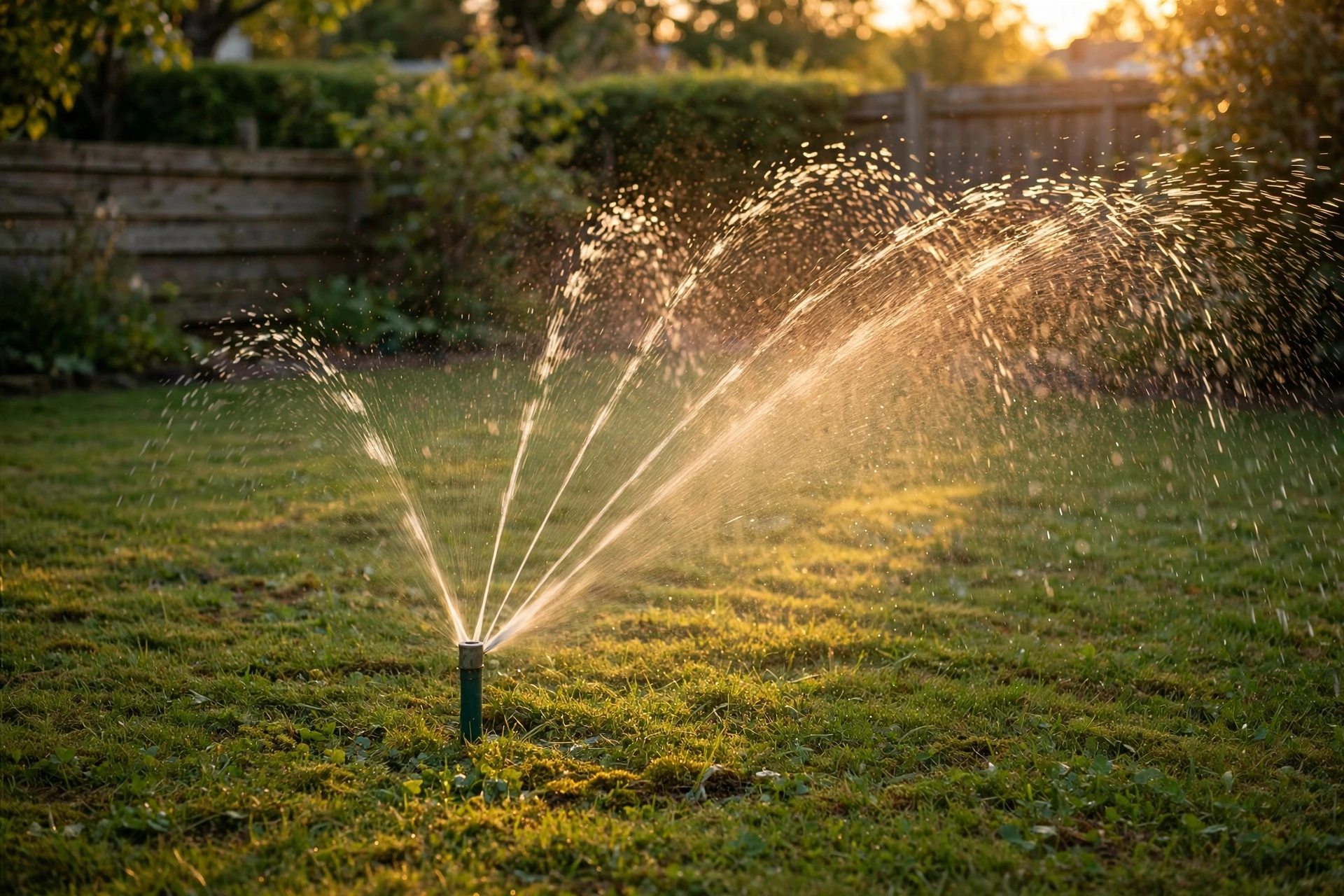
A catch can gives you the real number here. Set a straight-sided can or a rain gauge on the lawn inside the sprinkler’s reach, run the zone, and stop when the water standing in the can reaches a quarter inch deep.
Most sprinklers need roughly 15 to 30 minutes to put down that quarter inch, but systems vary widely enough that the range is only a starting guess. Read the depth in the can and stop there, whatever the clock says: a zone that delivers a quarter inch in 12 minutes and a zone that needs 35 are both normal, and watering them for the same time shortchanges one of them.
Stand at the edge of the lawn while a zone runs and you can watch the soil darken in a widening ring as the water goes in, the pale granules vanishing as the surface wets. That color change is the job finishing, and it is a better signal than any timer.
If you want the math done for every zone, the sprinkler catch can calculator turns your can readings into a per-zone schedule you can set once and trust.
When more water makes it worse
Past about half an inch, the returns reverse. Water moving deeper than the root zone carries nitrogen down with it, below the roots and out of reach, and water the soil cannot hold runs off the surface carrying fertilizer along.
So the target is a band rather than a maximum effort: a quarter inch to water in, and no benefit — with some loss — once you pass half an inch in one go. A lawn that needs a deep drink this week can get it on a different day, after the fertilizer has settled where it belongs.
Letting rain do the job
A light rain can water in for you. If about a quarter inch or less is expected within a day of spreading, that rain does the same rinsing work as the hose, and you can leave the sprinklers off.
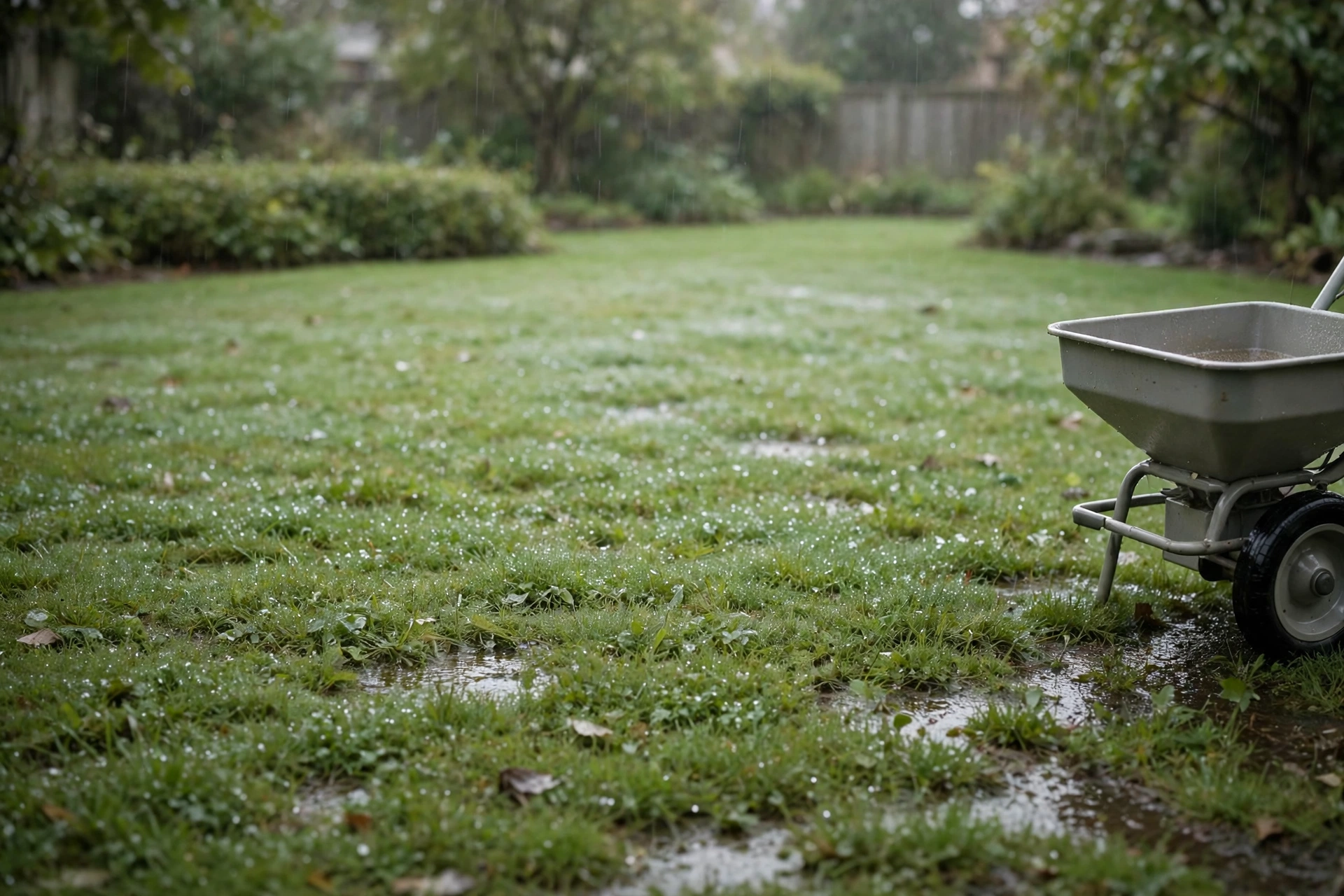
A heavy rain in the forecast is the opposite signal. Rather than spreading and hoping, delay the application until the storm has passed and the soil has drained, because fertilizer put down ahead of a downpour is on its way somewhere else. The full sorting of wet conditions, from dew to standing water, is in can you fertilize a wet lawn.
The products that need to dry first
Two product classes reverse the rule. Liquid fertilizer is sprayed onto the leaf and needs time to dry there before water washes it off, and weed-and-feed and other herbicide products need the same dry window so the granules stay on the weed leaves they landed on.
Many of those labels say to wait 24 hours before watering. The label is the authority for your product, so check it before you reach for the hose — watering too early quietly cancels the weed half of the job.
Slow-release granules are not an exception. They still get the light watering-in, to move them off the blades and into the soil; the slow part happens afterward, underground, as the coatings break down over the following weeks. The timing differences between the two types are covered in slow-release vs quick-release fertilizer.
New seed follows different rules
Starter fertilizer under new seed is the one case where the quarter-inch rule steps aside. A seedbed needs to stay consistently moist while seed germinates, which calls for light, frequent watering rather than one measured rinse.
Feed and seed together by the seeding guidance instead, and let the quarter-inch habit resume once the grass is established and mowing has started. The product choices for that job are rounded up in best starter fertilizer for overseeding.
The short answer
Water granular fertilizer in on the same day you spread it, with about a quarter inch measured in a catch can rather than guessed from the clock. Keep the exceptions straight — liquids and weed-and-feed dry for a day first — and the default stays simple: spread on dry blades, rinse in a quarter inch, and let the roots take it from there.