Most homeowners buy the bag that promises the fastest green-up, then wonder why the lawn fades three weeks later and the bag is already empty. That is the quick-release trade in one season: speed now, another purchase in a month. Slow-release fertilizer works the other way around — slower to show, and still feeding when the fast bag is long gone.
How each one actually feeds
The difference is not the nutrient. Both bags deliver nitrogen. The difference is how fast the nitrogen becomes available to the grass.
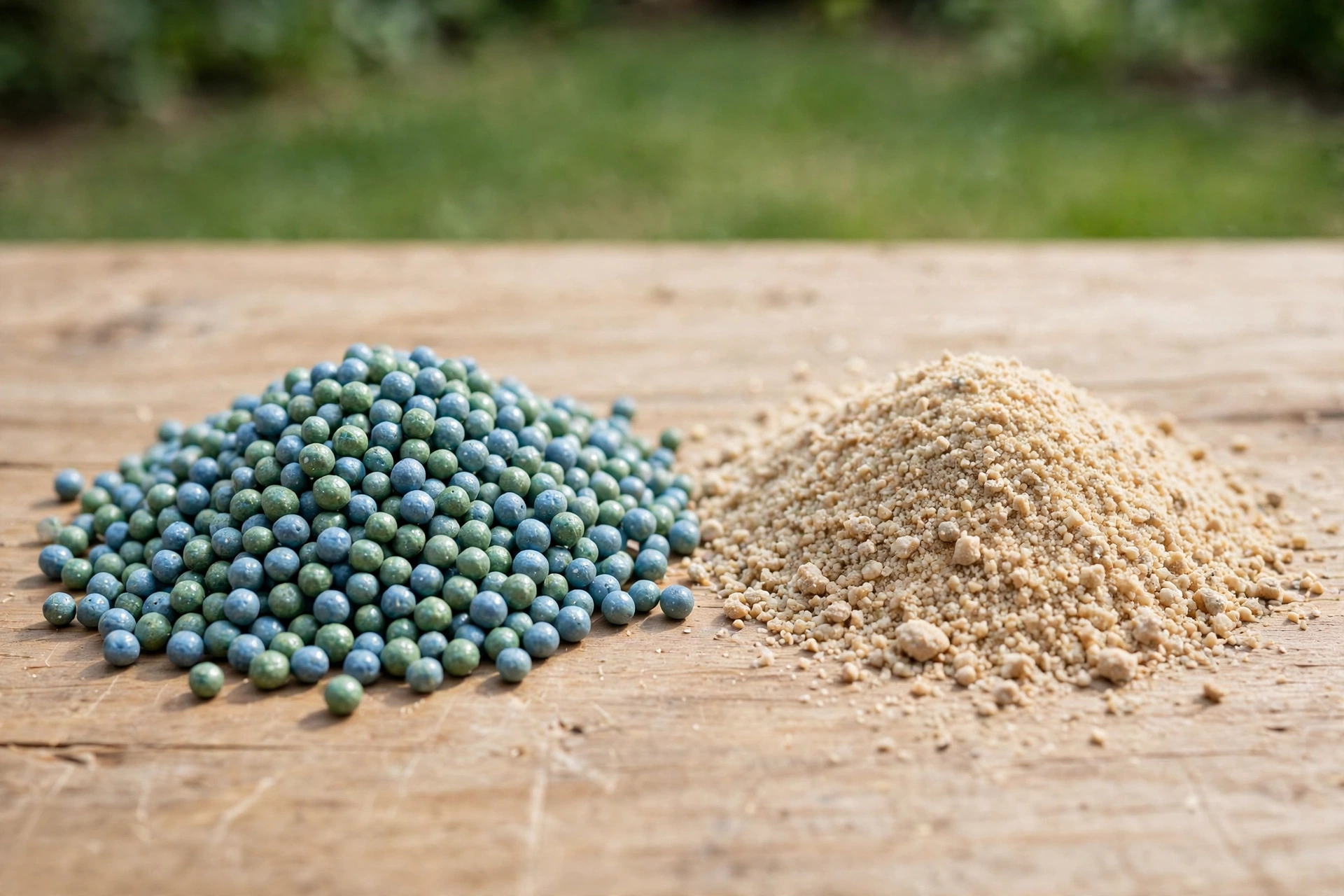
Quick-release fertilizer uses water-soluble nitrogen — urea and ammonium sulfate are the common forms. The granules dissolve within hours of watering, and the full dose of nitrogen is available to the roots almost immediately. The lawn greens up in 3 to 5 days, and the feeding is largely spent within about two weeks. That speed is the whole point, and it is also the risk: all of the salt load arrives at once, and any over-application burns the turf before you can correct it.
Slow-release fertilizer meters the nitrogen out over time. Polymer-coated urea and sulfur-coated urea carry a coating that breaks down gradually with moisture, heat, and soil microbes. Methylene urea — sold as ureaform — releases through chemical breakdown instead of a coating, but the result is the same steady trickle. A quality slow-release application feeds for roughly 6 to 12 weeks, with Cornell turfgrass guidance putting the typical range at 8 to 12 weeks. Only 20 to 30 percent of the nitrogen is available right away, so the salt load stays low and the burn risk drops with it.
Slow-release vs quick-release at a glance
| Slow-release | Quick-release | |
|---|---|---|
| Feeding window | 6 to 12 weeks per application | Days; effect fades within about 2 weeks |
| Green-up speed | 7 to 10 days to visible color | 3 to 5 days |
| Burn risk | Low; nitrogen arrives gradually | High if over-applied, especially in heat |
| Applications per season | 2 to 3 | Every 2 to 4 weeks |
| Best for | Established lawns, beginners, hot weather | A pale lawn that needs color fast |
The cost math favors the slow bag
Quick-release looks cheaper on the shelf, and it is — per bag. Over a season the math flips. A quick-release program needs a fresh application every 2 to 4 weeks, while a slow-release bag covers 6 to 8 weeks at a time. That works out to roughly three quick-release applications for every one slow-release application, so you buy about three times as much product to feed the same lawn for the same season.
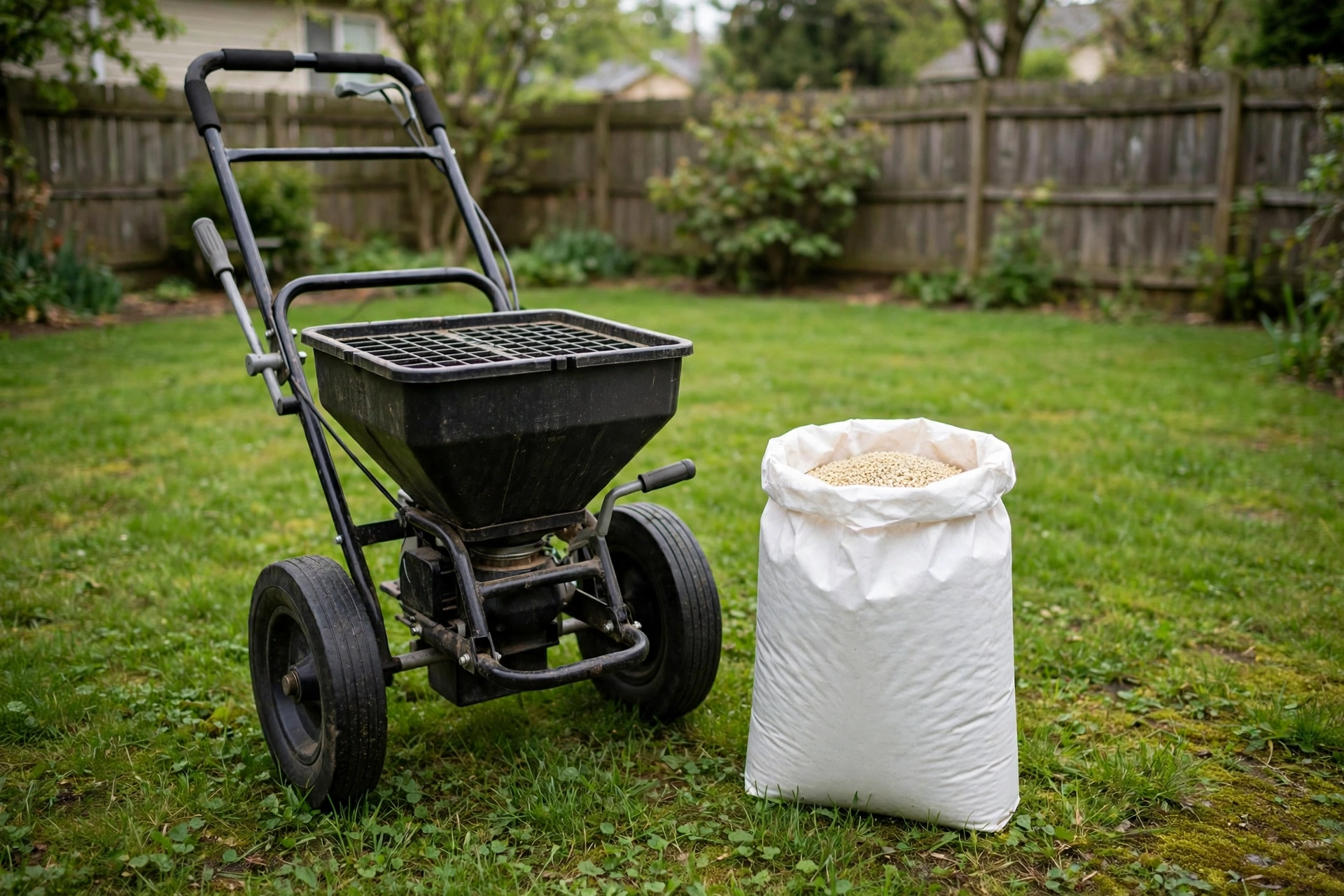
There is a second cost that never shows on the receipt: the rescue. An over-applied quick-release feeding burns stripes into the lawn, and the fix is heavy watering, waiting, and sometimes reseeding. Slow-release forgives a sloppy pass because only a fraction of its nitrogen is ever available at once. For a homeowner spreading by hand or with a basic broadcast spreader, that forgiveness is worth more than the price gap between the bags.
Which one wins
Best overall: slow-release. For most lawns, most of the season, slow-release is the right default. It feeds steadily for 6 to 12 weeks, it rarely burns, and it asks for two or three applications a year instead of six or eight. Its trade-off is patience: the color takes a week or more to show, and a bag of coated urea costs more up front than a bag of straight urea. Milorganite 6-4-0 is the classic example — an organic slow-release that feeds gently and almost never burns — and polymer-coated synthetics like the coated-urea blends do the same job with a higher nitrogen number per pound.
Runner-up: quick-release, for rescue feeding. Quick-release earns its place when a lawn needs color fast — a pale lawn two weeks before a gathering, or a thin stretch that needs a push during active growth. Scotts Turf Builder Lawn Food 38-0-4 is built for exactly that job, with visible green-up in as little as 3 days. Use it as a one-off shot, at the label rate, watered in the same day.
Not recommended: quick-release as the routine feed in summer heat. A fast-release bag applied to a drought-stressed lawn in July is the highest-burn combination in home lawn care. The salts flood the soil while the grass is already short on water, and the damage shows within days. If the lawn is stressed, skip feeding entirely until it is growing actively again — and if you do feed in late fall, the decision is about timing more than speed, as our guide to the best winterizer fertilizer for cool-season lawns explains.
How to use the winner
Slow-release still needs the basics done right. Apply no more than about 1 pound of actual nitrogen per 1,000 square feet per application — the bag math is 100 divided by the first number on the label. Water it in the same day so the granules move off the blades and into the soil. And time it for active growth, not dormancy: a lawn that is not growing cannot use the nitrogen, whatever the release rate. Our comparison of 28-0-3 vs 10-10-10 fertilizer walks through the same rate math for two common bags, and if you are considering a concentrated high-nitrogen formula, read is DAP fertilizer good for grass first — DAP is a fast-acting granular, and it punishes careless spreading more than a slow-release bag will.
Bottom line
Buy the slow bag for the season and keep a quick bag only for rescue. A lawn fed steadily for twelve weeks beats one greened up in three days and faded by the fourth week — and the slow bag costs less by the end of the year, too.