This site contains product affiliate links. We may receive a commission if you make a purchase after clicking on one of these links.
Overseeding fails more often from the wrong fertilizer than from the wrong seed. New seedlings need roots before they need height, and the fertilizer that greens up an established lawn fastest is often the worst thing to put down on seed.
The label number to look for is the middle one. In a 24-25-4 style analysis, the first number is nitrogen, the second is phosphorus, the third is potassium. Phosphorus supports root development in young plants, which is why starter fertilizers run phosphorus-rich while regular lawn food runs nitrogen-heavy. That one difference explains most of the picks below.
How to tell a starter fertilizer from regular lawn food
Phosphorus is present and prominent. A starter formula lists a meaningful middle number. A maintenance formula may list zero phosphorus at all.
Nitrogen is moderate, not maximum. Too much nitrogen pushes the existing lawn into fast top growth that shades seedlings, and it can burn tender roots. Starter nitrogen feeds steadily while roots establish.
Timing is at seeding, not after. Starter fertilizer goes down the same day as seed, or within a day or two, so nutrients are in the soil as roots emerge. Spreading it weeks later misses the window it exists for.
One caution that belongs in every starter conversation: some states and localities restrict phosphorus on established lawns, and a soil test is the honest way to know whether your lawn needs it. If your soil already tests high in phosphorus, a phosphorus-free overseeding approach with a light nitrogen feed is the safer call — and your extension soil-test report will say so plainly.
The picks
Best overall: Scotts Turf Builder Starter Food for New Grass
Scotts Starter Food for New Grass is the straightforward default for overseeding: a 15-pound bag covers 5,000 square feet, and it is made to be applied when planting seed, including overseeding, sod, and grass plugs. It gives seedlings the phosphorus-led nutrition described above without asking you to decode a specialty label.
Apply it at seeding time, water it in, and keep the seedbed consistently moist until germination. The trade-off is the usual one for a mass-market starter: it feeds, it does not control weeds, so crabgrass prevention needs a separate, seed-safe plan if that is part of your project.
Scotts Turf Builder Starter Food for New Grass
15 lb covers 5,000 sq ft; the straightforward starter for seed, overseeding, and sod.
Runner-up: Scotts Turf Builder Triple Action Built for Seeding
Triple Action Built for Seeding pairs starter nutrition with weed prevention that is safe for new grass, preventing dandelion and crabgrass for up to 6 weeks without harming new grass, according to Scotts. A 17.2-pound bag covers 4,000 square feet.
That combination earns its place when weeds are the reason you are overseeding in the first place — thin lawns invite weeds, and a starter that also holds the line for six weeks solves two problems in one pass. The trade-off is coverage per bag and price per square foot versus the plain starter above, and it does not kill existing weeds, only prevents new ones.
Scotts Turf Builder Triple Action Built for Seeding
Starter feed plus seed-safe weed prevention for up to 6 weeks; 17.2 lb covers 4,000 sq ft.
Not recommended for new seed: high-nitrogen maintenance lawn food
A heavy nitrogen maintenance formula — the kind that greens an established lawn in a week — is the wrong tool on seed. It pushes top growth, risks burning seedlings, and typically carries little or no phosphorus, so it feeds exactly the part of the plant that does not need feeding yet. Save it for the established lawn, after the new grass has been mowed a few times.
Comparison at a glance
| Product | Coverage | Weed prevention | Best for |
|---|---|---|---|
| Scotts Starter Food | 15 lb / 5,000 sq ft | None | Straightforward overseeding |
| Scotts Triple Action | 17.2 lb / 4,000 sq ft | Up to 6 weeks, seed-safe | Thin, weedy lawns |
How to apply it when you overseed
Seed first, or spread together. Mow short, rake up debris, spread seed at label rate, then spread starter fertilizer the same day. Order between seed and fertilizer matters less than getting both down before the first watering.
Water lightly and often. Seed needs steady moisture, not floods. Short, frequent watering keeps the top inch damp until germination, then lengthen intervals as roots go deeper.
Do not add a second fertilizer on top. Starter plus a regular feed in the same week is how seedlings get burned. One starter application at seeding is the plan; the next feed comes after the new grass is established.
Hold the weed-and-feed. Standard weed-and-feed products can harm new seed. If weed control matters, use a product labeled safe for seeding — like the runner-up above — not the bag already in the garage.
What to expect next
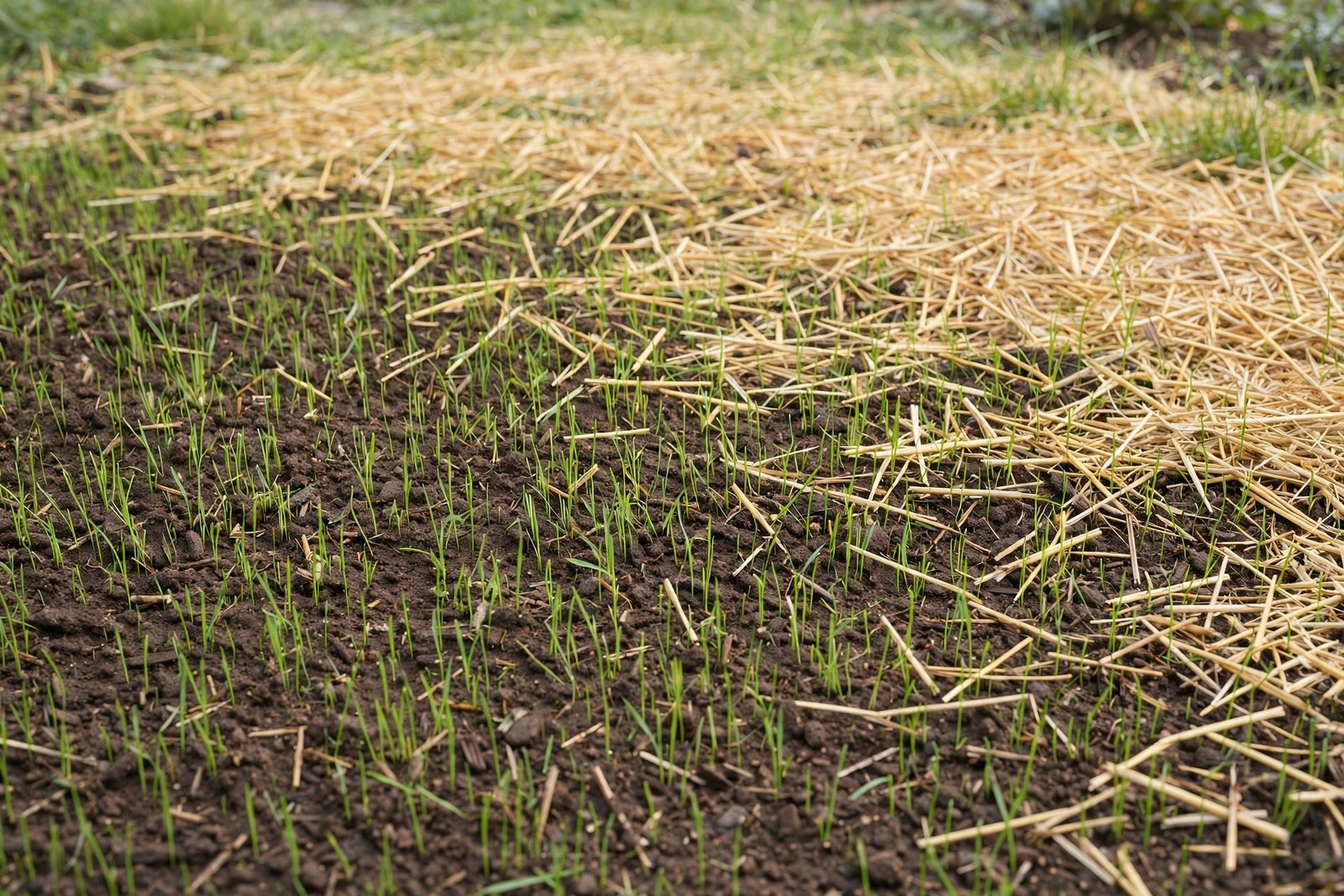
Germination timing depends on grass type and soil temperature, but the pattern is the same: roots first, visible green second. Do not judge the overseed by how green it looks in week one. Judge it by coverage after the first few mowings, and by whether the thin spots filled rather than just greened.
For the timing around overseeding, see should you aerate before or after overseeding, and for the difference between starter and maintenance feeding, 28-0-3 vs 10-10-10 fertilizer explains what each bag actually delivers. Once the new grass is up, the best winterizer fertilizer for cool-season lawns covers the next feed in the sequence.
Bottom line
For most overseeding jobs, Scotts Starter Food is the right default: phosphorus-led, simple, and sized for a typical lawn. If weeds are half the problem, Triple Action Built for Seeding earns its extra cost by holding them back for six weeks while the new grass takes hold.