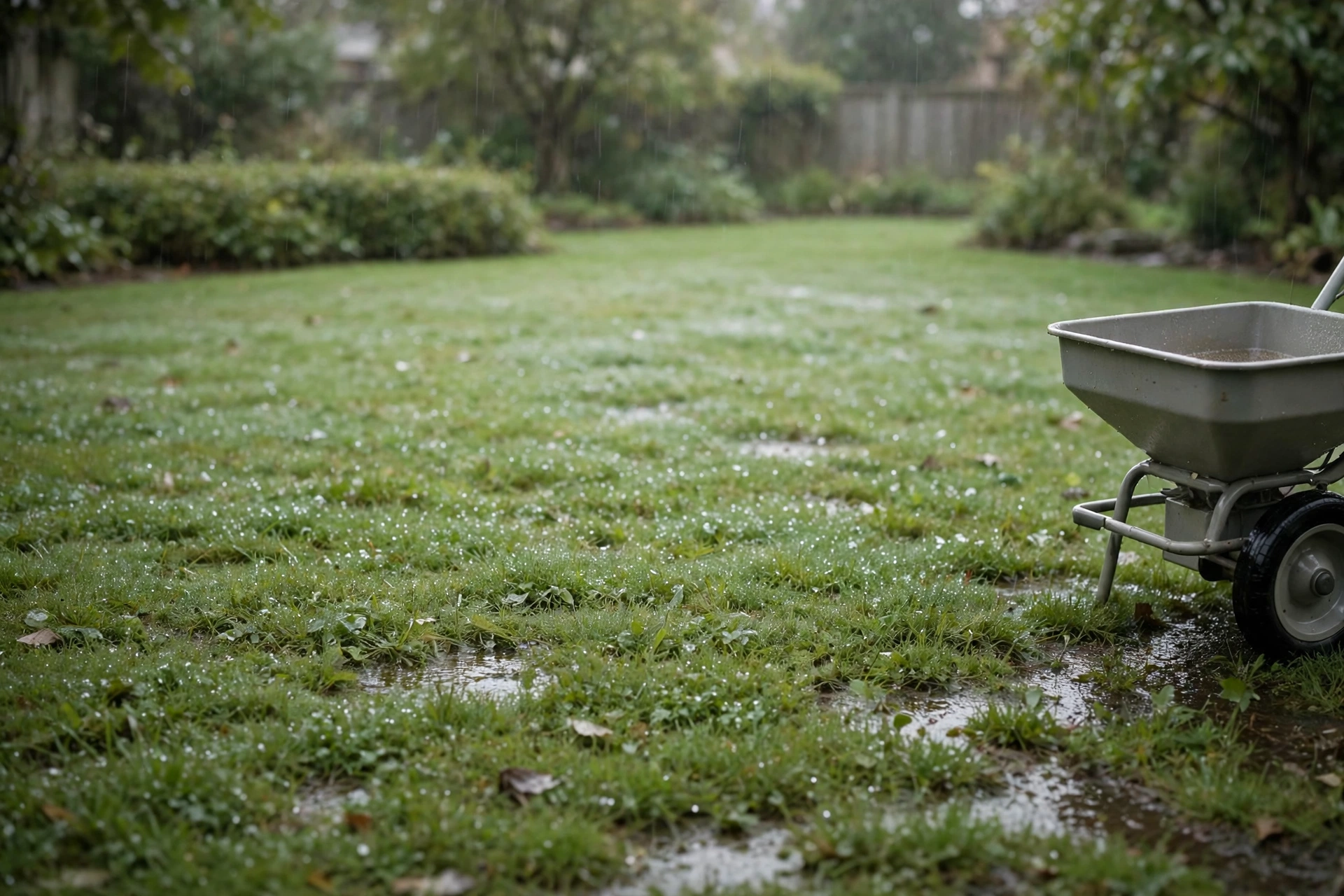
An hour after the spreader passes, the granules are still there — white and gray specks clinging to wet blades instead of disappearing down into the grass. That sight is the lawn telling you, early, that the timing was off, and it is worth reading before those specks turn into stripes.
Maybe it rained last night, or the dew never burned off, or the soil is still squelching from yesterday’s storm. Those are three different kinds of wet, and they do not carry the same risk. This post sorts them, because the right move depends entirely on which wetness you are standing in.
Start with what you are seeing
If the lawn already looks wrong, the symptom tells you which mistake happened. Pale, washed-out color a week after feeding usually means the fertilizer left — dissolved and carried off before roots could take it up.
Yellow or brown stripes that follow the spreader’s path point the other way: the fertilizer stayed, but it stayed in the wrong place, stuck to blades where its salts could burn. Scorched leaf tips with healthier grass between passes are the same story in a milder form.
Neither symptom is a mystery once you match it to the conditions on spreading day. Work backward from the pattern you can see, and the fix for next time gets much clearer.
Wet blades: granules stick where they land
Granular fertilizer is built to fall. A dry granule hits a dry blade, bounces, and drops to the soil surface, which is where it belongs.
On damp blades it does none of that. The granule sticks to the wet leaf, sits there dissolving against the tissue, and concentrates its salts in one small spot. Multiply that by thousands of granules and you get the burn spots and stripes that show up within days.
This is why most granular labels say to apply to dry turf. Dew alone is enough to cause it — a lawn can have good soil moisture underneath and still be the wrong surface to spread on at seven in the morning. Wait for the blades to dry, even if that moves the job to midday, and use the spreader habits in applying fertilizer without burning your lawn to keep the dose even once conditions are right.
Moist soil and dry blades: the window you want
The ideal morning looks like a contradiction: soil moist a knuckle down, blades dry on top. Moist soil is ready to receive the granules and start dissolving them toward the roots.
Dry blades let every granule fall through to that soil instead of catching on the way down. If you watered yesterday, or a light rain passed two days ago and the surface has since dried, you are in the window.
Late-season feeding follows the same daily rule. The question in is it too late to fertilize your lawn in November is about the calendar, but the call on any given morning is still about the surface: dry blades over moist soil, in any month when the grass is growing.
Saturated soil: nowhere for it to go
Saturated is a different problem entirely. When the soil is already full of water, it cannot absorb more, so granules dissolve into water that is already moving — across the surface, toward the drive, the drain, and the nearest waterway.
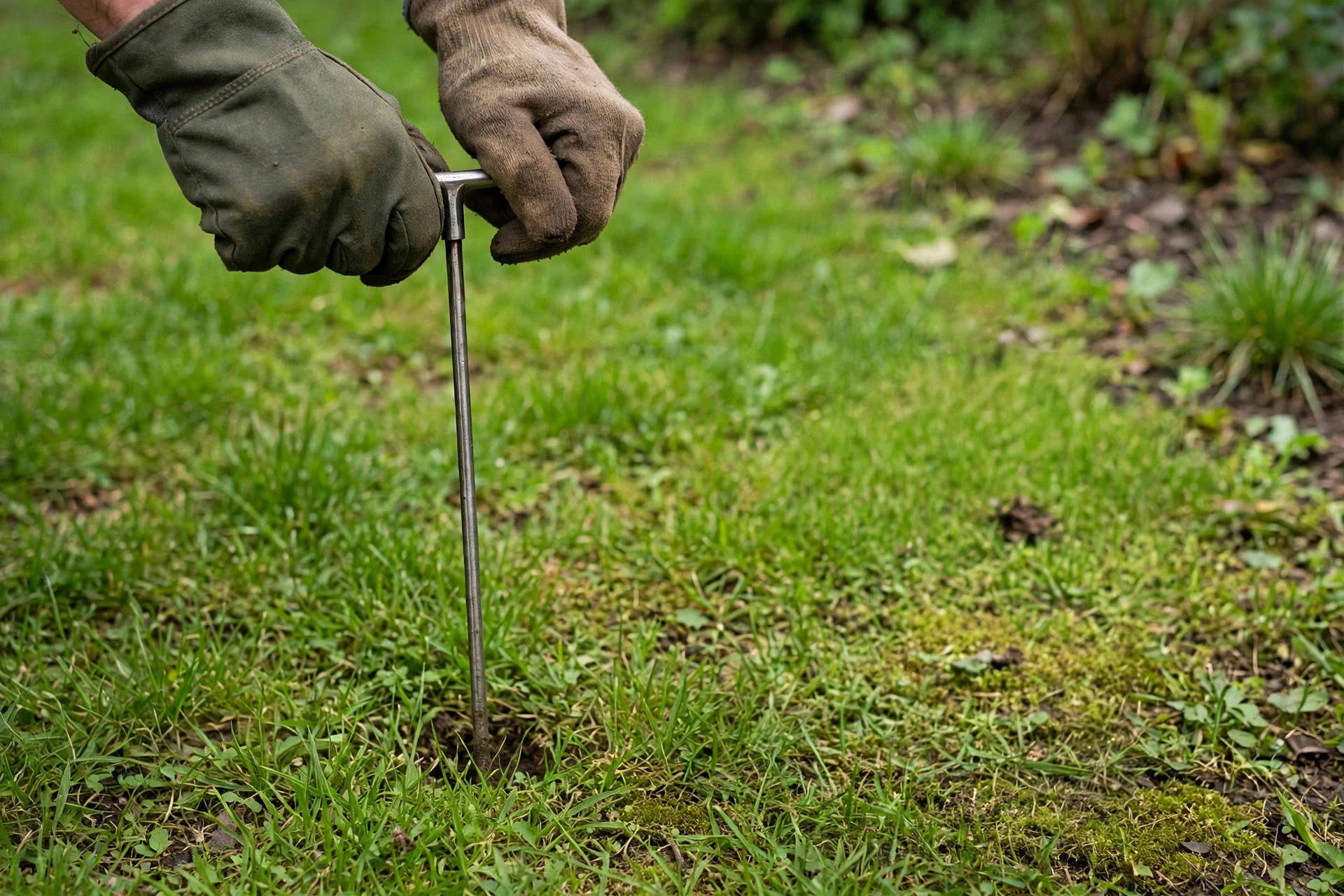
The field check is your boot. If the ground squelches when you step, leaves a footprint that fills with water, or still shows puddles an hour after rain, the soil is telling you it is full. Spreading into that sends the dose toward the street instead of the roots.
Never fertilize standing water, and never fertilize frozen ground, where nothing absorbs at all and the first thaw carries the whole dose away at once. With this kind of wet, waiting is the entire decision.
When heavy rain is in the forecast
A wet lawn is not only about what already fell. If heavy rain is forecast within 24 hours, hold the application, even on a lawn that looks dry right now.
University of Florida research puts the risk window tight: much of a quick-release urea application can be lost to runoff and leaching when heavy rain lands within 8 to 12 hours of spreading. The granules have barely begun dissolving before the water arrives to move them.
After a soaking rain, give the lawn about 24 hours. That is usually enough for blades to dry and for soil to drain back to moist rather than squishy — the window described above, reached by waiting instead of by luck.
The exceptions printed on the bag
One product class breaks the dry-blade rule on purpose, and the reason is printed on its bag. Some weed-and-feed labels direct you to apply to a damp lawn, because the herbicide granules need to stick to weed leaves to work, and then to leave the lawn unwatered for 24 to 48 hours so they stay put.
The feeding half of that product would prefer dry blades, but the weed-killing half needs the stick, and the label has already made that trade for you. The bag governs, always — read the label for the product in your spreader, not the one you used last year.
Liquid fertilizer follows its own label too, since it needs dry-time on the leaf before water moves it. The format differences are laid out in liquid vs granular fertilizer, and the wetness rules shift with the format every time.
If you already spread on a wet lawn
Say the bag is empty and the blades were wet. Do not spread a second dose to make up for it — the first dose is still there, and doubling it turns a timing mistake into a burn.
Once conditions allow, water lightly, about a quarter inch, to wash the granules off the blades and down to the soil. That small drink rescues most of the application, and should you water your lawn after fertilizing works through exactly how much to apply and how to measure it.
Then watch the lawn over the next week. Any stripes that appear are a record of where granules sat longest, and they grow out with mowing in most cases — worth noting for next time, not a reason to feed again now.
The short answer
Sort the wetness before you open the bag. Dew-wet blades and saturated soil both say wait, for opposite reasons, while dry blades over moist soil say go. When in doubt, the lawn will keep until tomorrow: fertilizer spread a day late feeds just as well, and fertilizer spread into the wrong wetness feeds the drain instead.