Landscape & Leisure is reader-supported. When you buy through links on our site, including Botanical Interests seed links, we may earn a commission at no extra cost to you. Prices change, so click through to confirm current pricing.
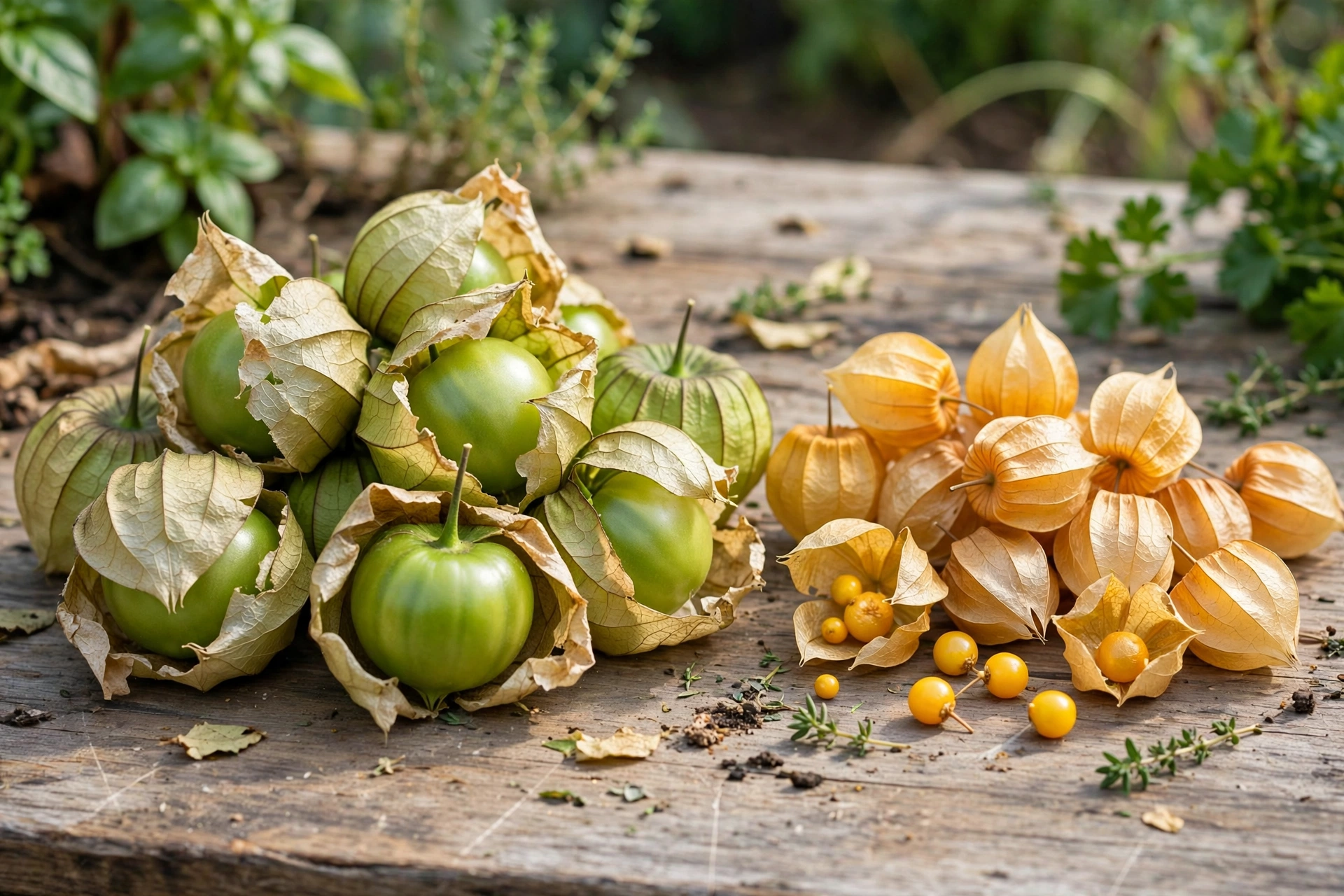
Is a ground cherry just a small tomatillo? It is the question the seed rack invites, because both fruits arrive wearing the same papery husk, and the short answer is no — they are different plants that happen to share a wrapper.
The stakes are practical. A tomatillo is a cooking fruit, tart and firm, grown for salsa verde and sauces, and it needs a second plant nearby to set fruit at all. A ground cherry is a snacking fruit, sweet enough to eat standing in the row. Buy the wrong packet and you have grown a fine plant for a job you never wanted done.
Botanical Interests sells two tomatillo varieties, and they split the work cleanly — one for the sauce pot, one for eating fresh. Ground cherries get their honest hearing below, with one plain caveat: there is no ground cherry packet in this catalog, so there is no card for one. Our growing tomatillos from seed guide covers the indoor start and the harvest signs, and our tomatillos vs. ground cherries comparison works the head-to-head in full. If you are building a salsa bed, the tomatillos belong beside the plants in our best hot peppers roundup.
Two Tomatillos, and a Cousin Who Is Not One
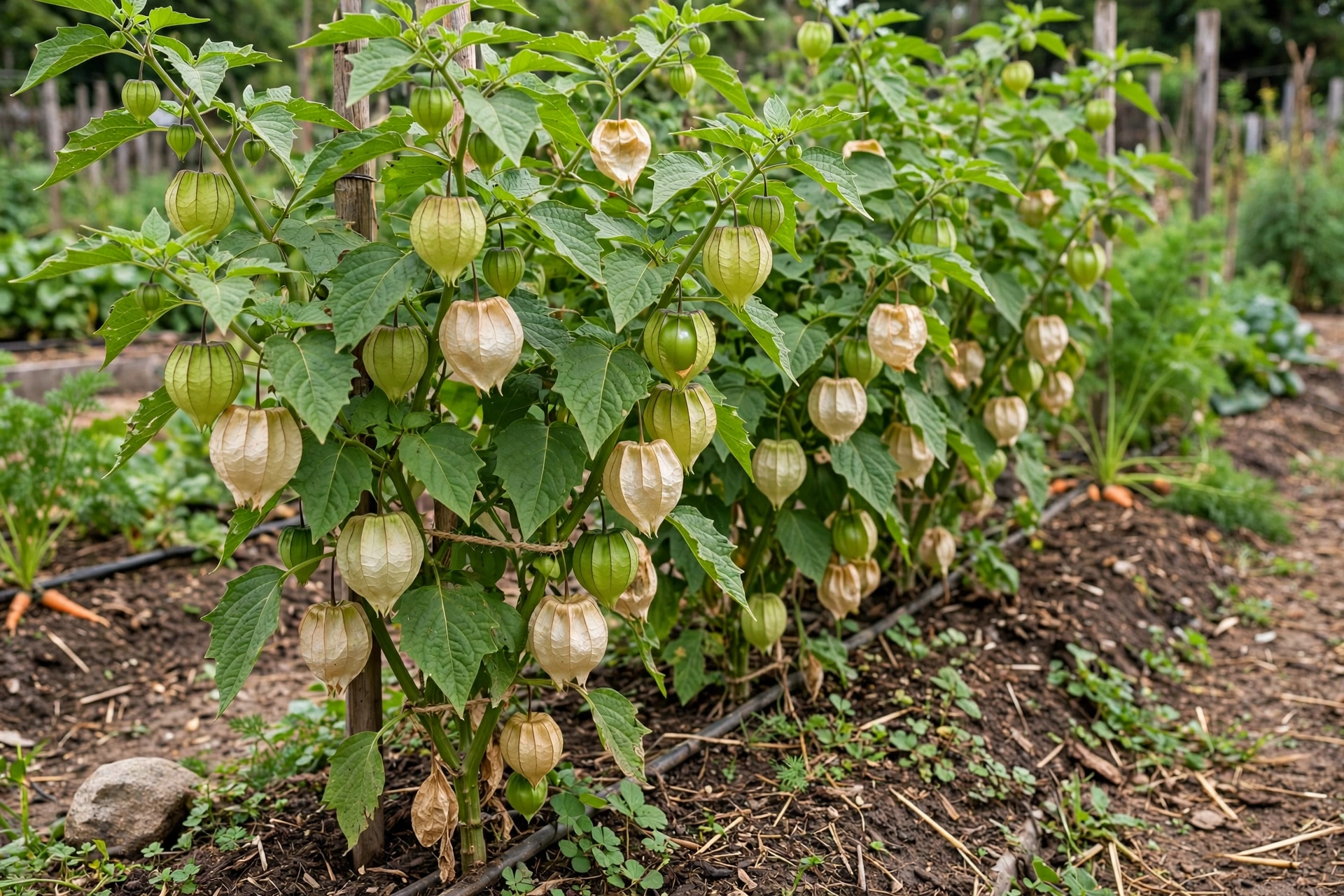
Both tomatillos here are Physalis philadelphica, rated 4.4 out of 5 by gardeners, and both packets carry the same instruction that decides the whole planting: grow two or more plants to ensure good pollination. A single tomatillo plant flowers bravely and sets almost nothing. That, in practice, is the usual reason a tomatillo disappoints — not the variety, the headcount.
The ground cherry is Physalis pruinosa, a sprawling plant whose golden fruit, about a half to three-quarters of an inch across, ripens sweet and drops to the ground in its husk when it is ready. Different species, different spacing, different harvest, different supper.
| Plant | Days from transplant | Fruit | Spacing | Sold by Botanical Interests? |
|---|---|---|---|---|
| Grande Rio Verde Tomatillo | 85 days | Green, about 3 ounces | 18 inches | Yes — best overall below |
| Purple Tomatillo | 70 days | 1 to 1¼ inches, turning purple | 36 inches | Yes — sweetest below |
| Ground cherry | About 70 days | Golden, ½ to ¾ inch | About 24 inches | No — covered generically below |
Best Overall: Grande Rio Verde Tomatillo
Plant this one for salsa. Grande Rio Verde sets 3-ounce green fruit nearly all at once on compact plants about 24 inches tall, and that short, concentrated harvest window is exactly what a canning or freezing day wants — a bowlful at a time, not a handful a week. Gardeners rate it 4.4 out of 5 from 30 reviews, and the $2.99 packet yields roughly 80 plants started indoors.
The compact habit is the second reason it wins. At 18-inch spacing, with the packet also marking it good for containers, two or three plants fit a small bed or a row of large pots and still give you the pollination partner the crop requires.
Pros: big 3-ounce fruit for sauce; ripens in a concentrated window that suits canning and freezing; compact plants, container-friendly; about 80 plants per packet.
Cons: 85 days from transplanting is the slower of the two; the concentrated harvest means one busy picking week, not a long grazing season.
Grande Rio Verde Tomatillo Seeds
The salsa tomatillo — 3-ounce green fruit, ripening together, on compact 24-inch plants.
Sweetest: Purple Tomatillo
Purple is the fresh-eating tomatillo. The fruit starts green at 1 to 1¼ inches and turns purple as it ripens, and the packet is blunt about the trade: the purple fruits are much sweeter than the green types. Leave the fruit on the plant until the husk splits and you get the full color and the full sweetness with it.
It is also the faster plant — 70 days from transplanting, a full two weeks ahead of Grande Rio Verde — which matters where the season is short. The cost is room: this one spaces at 36 inches, twice the Grande’s footprint, so a pair of Purple plants wants a real bed, not a patio corner. Gardeners rate it 4.4 out of 5 from 15 reviews; the packet is $2.99 for roughly 78 plants started indoors.
Pros: sweetest fruit of the two, good eaten fresh; fastest at 70 days; color deepens the longer the fruit hangs.
Cons: small fruit, so a sauce batch takes a lot of picking; 36-inch spacing eats bed space; best flavor demands patience while green-picked fruit stays tart.
Purple Tomatillo Seeds
The fresh-eating tomatillo — small fruit that turns purple and sweet, ready in 70 days.
The Ground Cherry, Honestly
I like ground cherries, and I would plant them for the reason nobody plants a tomatillo: to eat in the garden. The fruit ripens golden and sweet with a pineapple edge, falls to the ground in its husk when it is ready, and keeps for weeks if you leave the husk on. One sprawling plant covers about two feet and feeds a household’s snacking habit all late summer.
Two cautions come with it. Green, unripe ground cherries are not ready — the drop is the signal, not the calendar — and the plant reseeds freely where fruit is missed, so pick up the fallen ones you do not eat. Botanical Interests does not sell a ground cherry packet, so this section carries no card; if the snacking fruit is the one you want, the comparison linked at the top of this page lays out how it grows, and you will source that seed elsewhere.
The Indoor Start Both Packets Ask For: Epic 6-Cell Seed Starting Trays
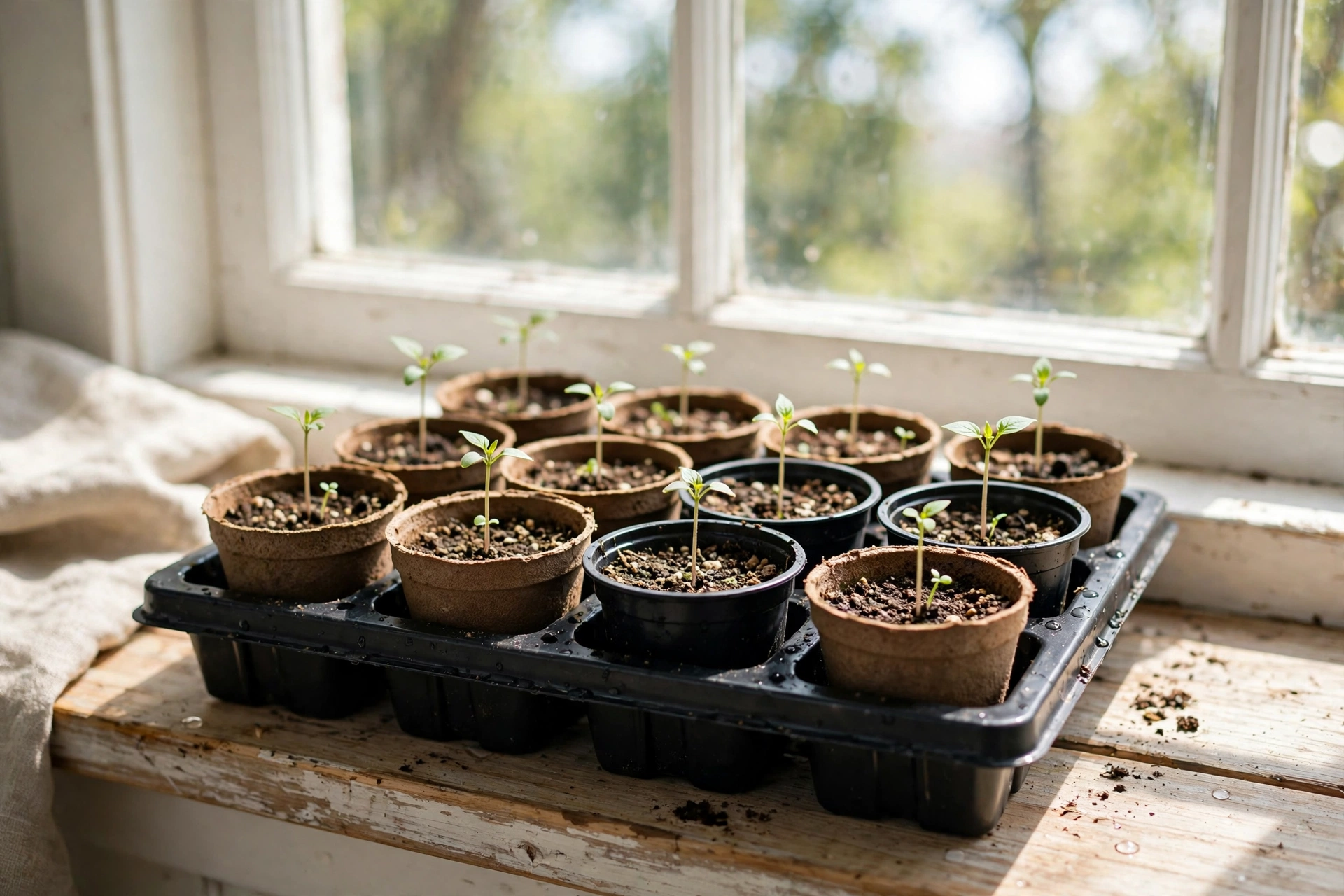
Both tomatillo packets mark the indoor start as recommended, four to six weeks before the last frost, and a packet yielding 78 to 80 plants means most gardeners sow far more seed than they will ever plant. A sturdy 6-cell tray is how those extras stay organized — sow a cell per hopeful plant, keep the strongest, and give the rest away in the tray they grew in.
These trays are thick recycled plastic with air-pruning slots and finger holes for pushing seedlings out clean, and twelve of them fit one standard 1020 bottom tray. They are $19.99, rated 4.9 out of 5 from 579 reviews.
Pros: holds up season after season; seedlings pop out clean at transplant; fits standard 1020 trays.
Cons: more tray than a two-plant planting needs on its own — it earns its place across the whole spring bench.
Epic 6-Cell Seed Starting Trays
Sturdy cells for the four-to-six-week indoor start both tomatillo packets recommend.
Worth Adding: Seed Starting Heat Mat
Tomatillo seed wants soil at 80° to 85°F to germinate, and it takes about 10 days to emerge even then. A spring windowsill in a cool house sits well under that window, and slow, patchy germination is the predictable result — the seed gets blamed for a cold room.
This mat raises soil temperature 10 to 20 degrees above the room, fits any 1020 tray, and runs a simple on/off with no thermostat or timer. It is $29.99, rated 4.7 out of 5 from 50 reviews, and it comes off the bench as soon as the seedlings are up.
Pros: holds the 80° to 85°F germination window in a cold room; sized for a standard 1020 tray.
Cons: no thermostat, so check trays daily in a warm room; only earns its place during germination.
Seed Starting Heat Mat
Steady bottom heat for the 80° to 85°F soil tomatillo seed wants to sprout.
What to Skip
Skip the single plant. One tomatillo, however healthy, has no pollination partner, and both packets say so in plain type — a lone plant is the most common way this crop fails, and it fails after a full season of looking promising.
Skip, too, any plan that treats the ground cherry as a small green tomatillo for salsa. Cooked into a sauce it loses the sweetness that is its whole point. Grow it for the row-side handful, and let the two tomatillos above do the cooking.
Bottom Line
Order Grande Rio Verde for the sauce pot and Purple for fresh eating, and plant at least two of whichever you choose — that headcount, settled before the seed even sprouts, is the difference between a bowl of salsa verde by late summer and a row of full-size plants carrying empty husks.