Landscape & Leisure is reader-supported. When you buy through links on our site, including Botanical Interests seed links, we may earn a commission at no extra cost to you. Prices change, so click through to confirm current pricing.
Start tomatillos indoors, on heat, and plant at least two. That is the whole method in one line, and everything after it is detail — because the two ways this crop fails are a cold start and a lonely plant, and both are settled before the seed goes in the soil.
I have stood over a flat of tomatillo seed doing nothing for two weeks, and the packet had told me why all along: the ideal soil temperature for germination is 80° to 85°F. A windowsill in March is not that. The second failure looks healthier — a big, flowering plant in July with no fruit — and it has the same kind of cause, printed on the same packet.
This guide works through both Botanical Interests varieties, the two tomatillo picks in our roundup, step by step. For the cousin that shares the husk, see our tomatillos vs. ground cherries comparison.
Starting Indoors: Heat First, Then Light
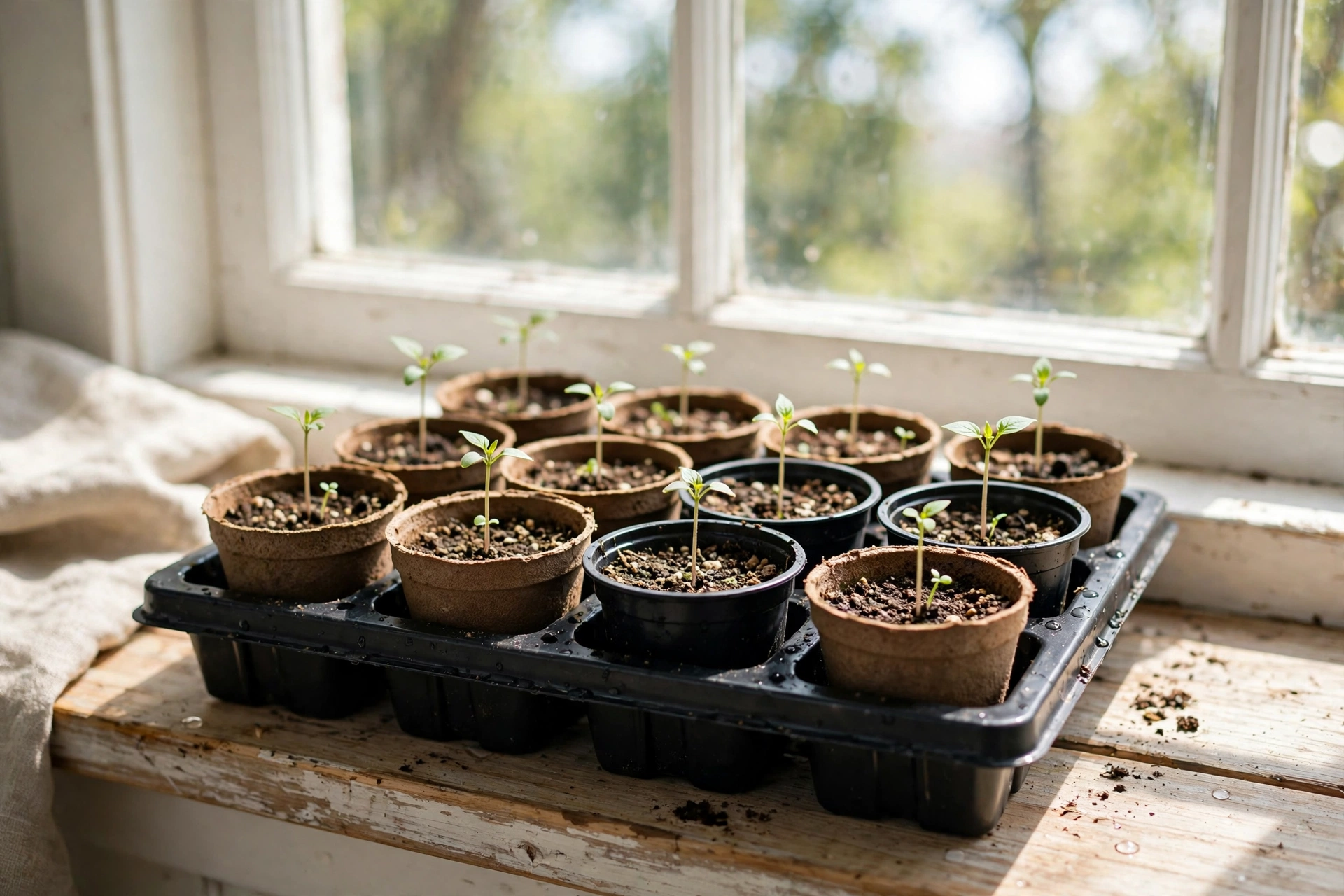
Sow four to six weeks before your average last frost date, a quarter inch deep, in groups the packet sizes at three seeds per cell or pot. Emergence takes about 10 days at the right temperature, and the seedlings grow fast once they are up — give them strong light from the first day so the stems stay stocky.
The heat matters only until germination. Once the seedlings emerge, the mat comes away and ordinary room temperature is fine; what they need from there is light and air, not more warmth.
Seed Starting Heat Mat
Raises soil temperature 10 to 20 degrees — the difference between a cold sill and the 80° to 85°F window.
Spacing: The Two Packets Disagree, and Both Are Right
Thin seedlings to one per spot when they are 2 inches tall, and set transplants out after frost, when the soil has reached at least 60°F. Then follow the packet in your hand, because the two varieties take different room.
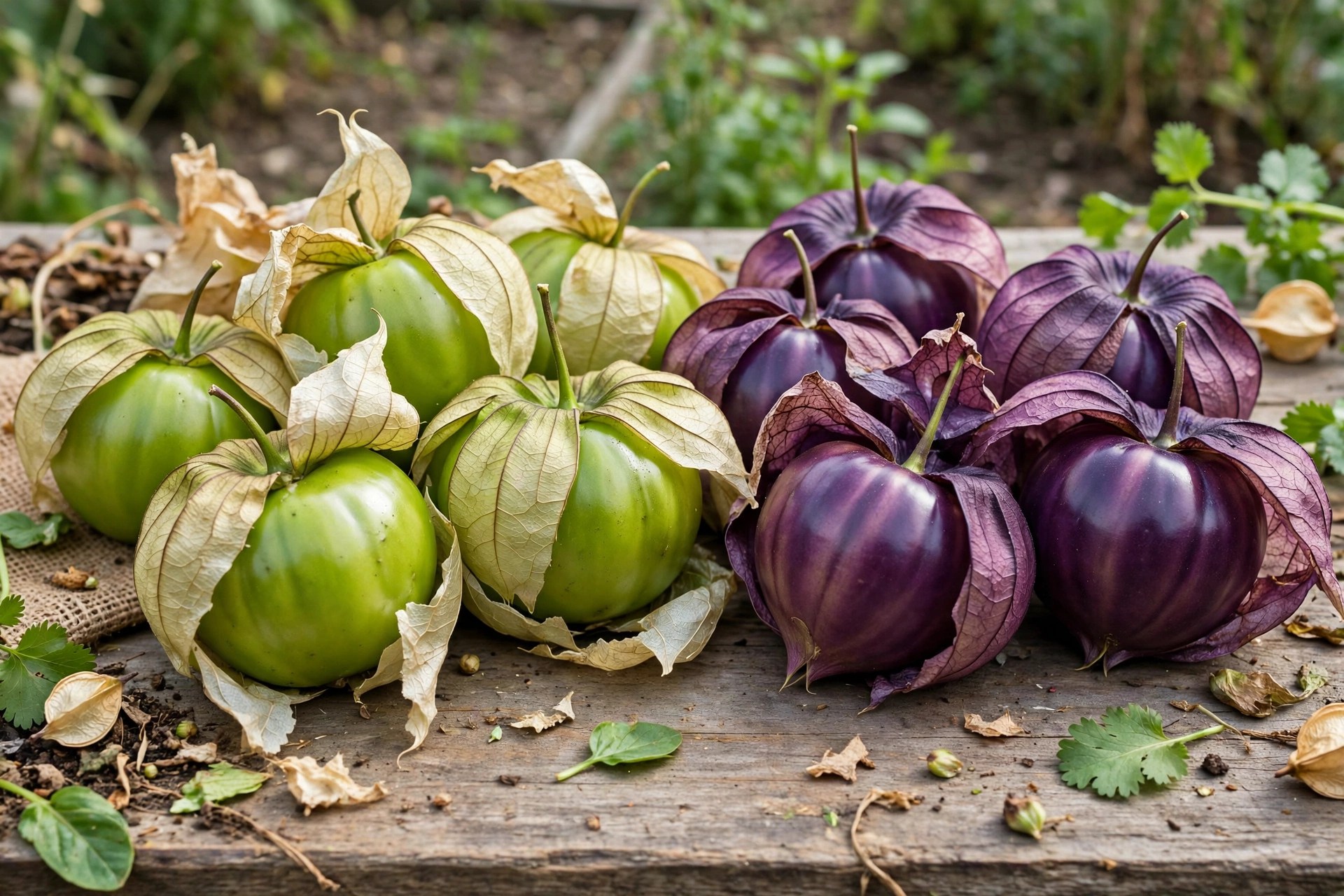
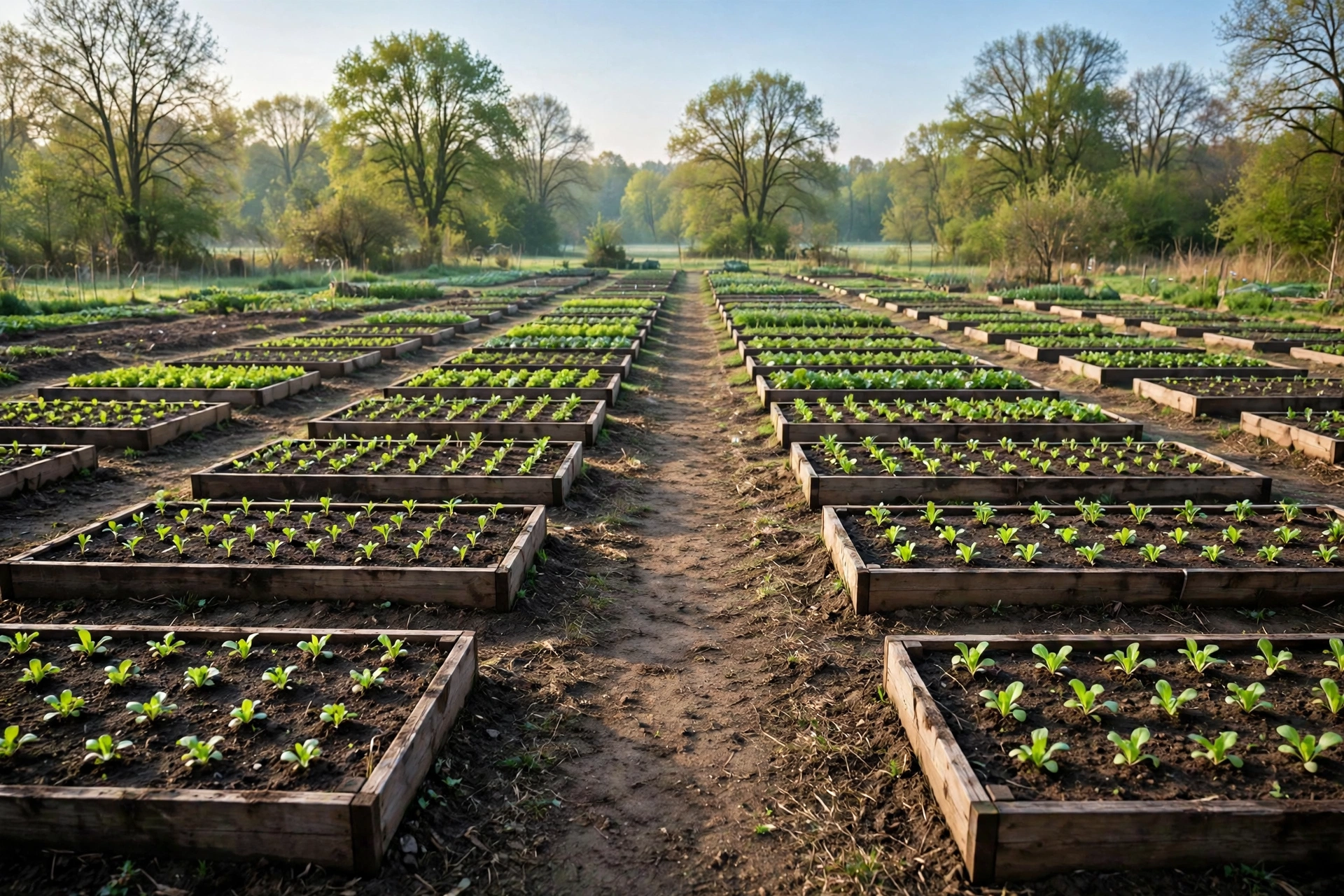
Grande Rio Verde is the compact plant, about 24 inches tall, spaced a group of three seeds every 18 inches and marked good for containers. Purple spaces at 36 inches — twice the footprint — on plants the packet also lists at 12 to 24 inches, so the width, not the height, is what you are paying for. Rows sit 36 inches apart for both.
| Variety | Start indoors | Spacing | Days from transplant | Harvest sign |
|---|---|---|---|---|
| Grande Rio Verde | 4–6 weeks before last frost | 18 inches | 85 days | Fruit fills the husk, ripening nearly all at once |
| Purple | 4–6 weeks before last frost | 36 inches | 70 days | Husk splits, fruit fully purple |
Grande Rio Verde Tomatillo Seeds
Compact 24-inch plants at 18-inch spacing — the pair for a small bed or large containers.
Purple Tomatillo Seeds
Wider spacing, faster finish — 70 days, and fruit that turns purple and sweet as the husk splits.
Pollination: Plant the Partner
Both packets carry the same line: grow two or more plants to ensure good pollination. Tomatillos are not reliably self-fertile, and a single plant can flower for weeks and set almost nothing — in practice, the missing partner is the usual suspect when a healthy plant carries no fruit.
The two plants do not have to be the same variety, so the easy answer is one of each: Grande Rio Verde for the sauce batch and Purple for fresh eating pollinate each other and split the harvest between the pot and the table. Keep them in the same bed or the same cluster of containers, not at opposite ends of the garden.
Direct Sowing, and Its Limits
The packets allow direct sowing two to four weeks after the last frost, once the soil reaches 60°F — for Purple, the packet limits that advice to mild climates. Every week of outdoor waiting is a week off the back end of the season, and at 70 to 85 days from transplanting, a short-season garden that direct-sows is gambling its fall against its spring. The indoor start is recommended on both packets, and up north it is the right default.
Tomatillos handle heat well once they are growing — the packets list them as heat tolerant and frost sensitive, which is the whole calendar in two phrases: nothing gained by rushing them into cold soil, nothing lost by a hot July.
Harvest: Read the Husk
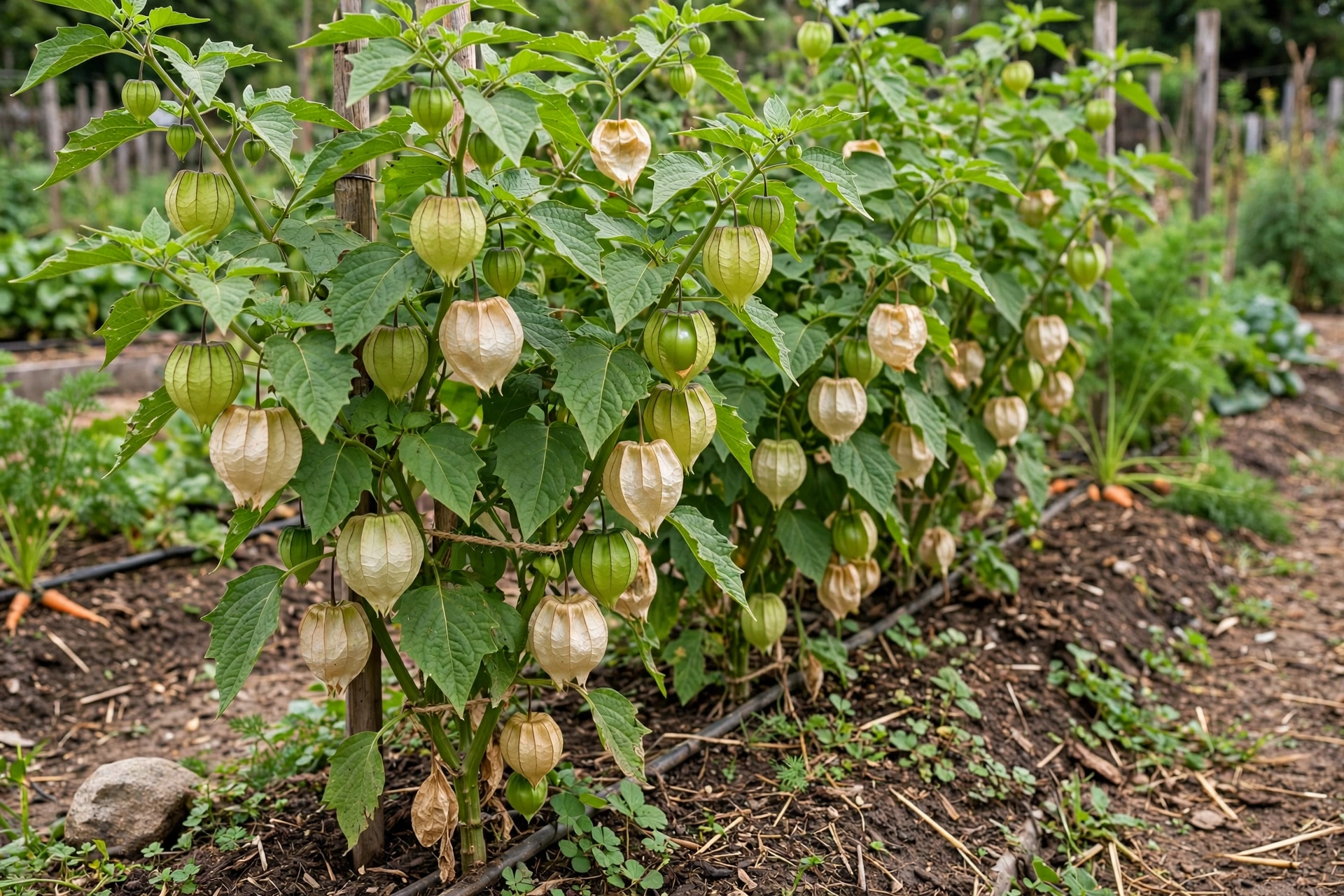
The husk is the gauge. Grande Rio Verde is ready as the 3-ounce fruit fills its husk, and because it ripens nearly all at once, plan the picking around a canning or freezing session — or simply freeze the fruit whole for sauce later, as the packet suggests.
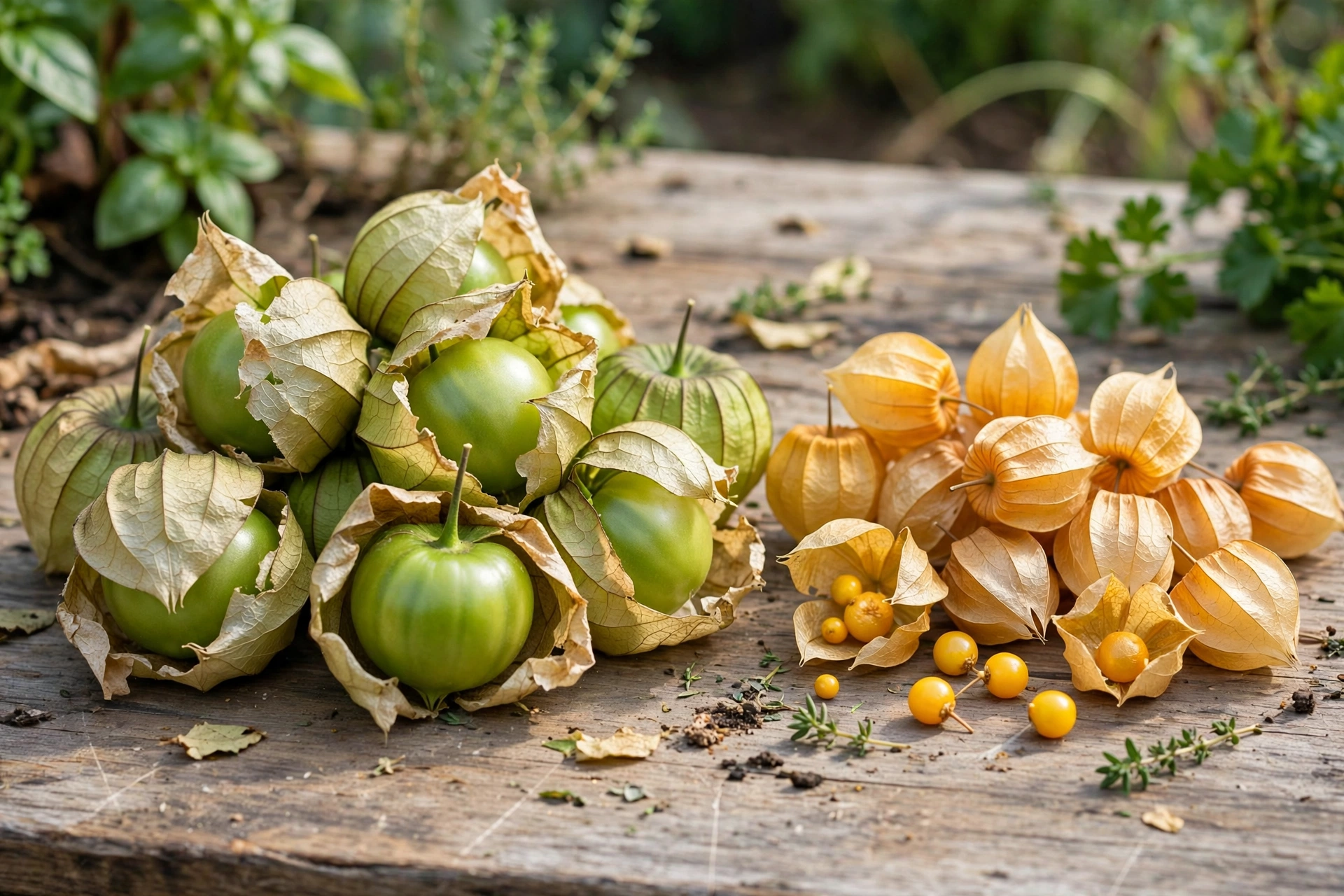
Purple asks for the opposite patience. Let the fruit stay on the plant until the husk splits; that is when the color is deepest and the sweetness the variety is grown for has actually arrived. Picked green and firm, it is just a small tart tomatillo. The plants for a full salsa bed — peppers alongside — are in our best hot peppers roundup.
Bottom Line
Sow on heat six weeks out, transplant into warm soil, space by the packet in your hand, and never plant fewer than two. Do those four things and the husks fill on schedule — Grande’s all at once for the freezer, Purple’s one split husk at a time for the table.