Landscape & Leisure is reader-supported. When you buy through links on our site, including Botanical Interests seed links, we may earn a commission at no extra cost to you. Prices change, so click through to confirm current pricing.
The cheapest heat you will ever buy comes in a paper packet that costs less than a jar of salsa, and the difference between a summer of picking and a summer of waiting is the variety you choose. Hot peppers are not one plant with one personality: a jalapeño wants to be stuffed, a serrano wants to be sliced into pico, and a Scotch bonnet wants to be handled with respect and a pair of gloves. Pick the wrong one and you get either a pepper too mild to notice or one so hot nobody in the house will touch it.
Five varieties below cover the whole range, from a jalapeño with a citrus twist to a bonnet that tops 100,000 Scoville units, and every one of them is in stock at Botanical Interests with the price and rating shown as listed. One more variety is in stock too and still does not make the list, for a reason worth knowing before you spend the money.
Our starting guide covers heat, timing, and hardening off for every variety here, and our fruit-set guide sorts out why pepper flowers sometimes fall without a pepper behind them. If you are still weighing sweet against hot, our sweet-and-hot pepper roundup covers both sides of the family, and our sweet-versus-hot comparison settles which side suits a northern garden.
Best Overall: Megatron Jalapeño
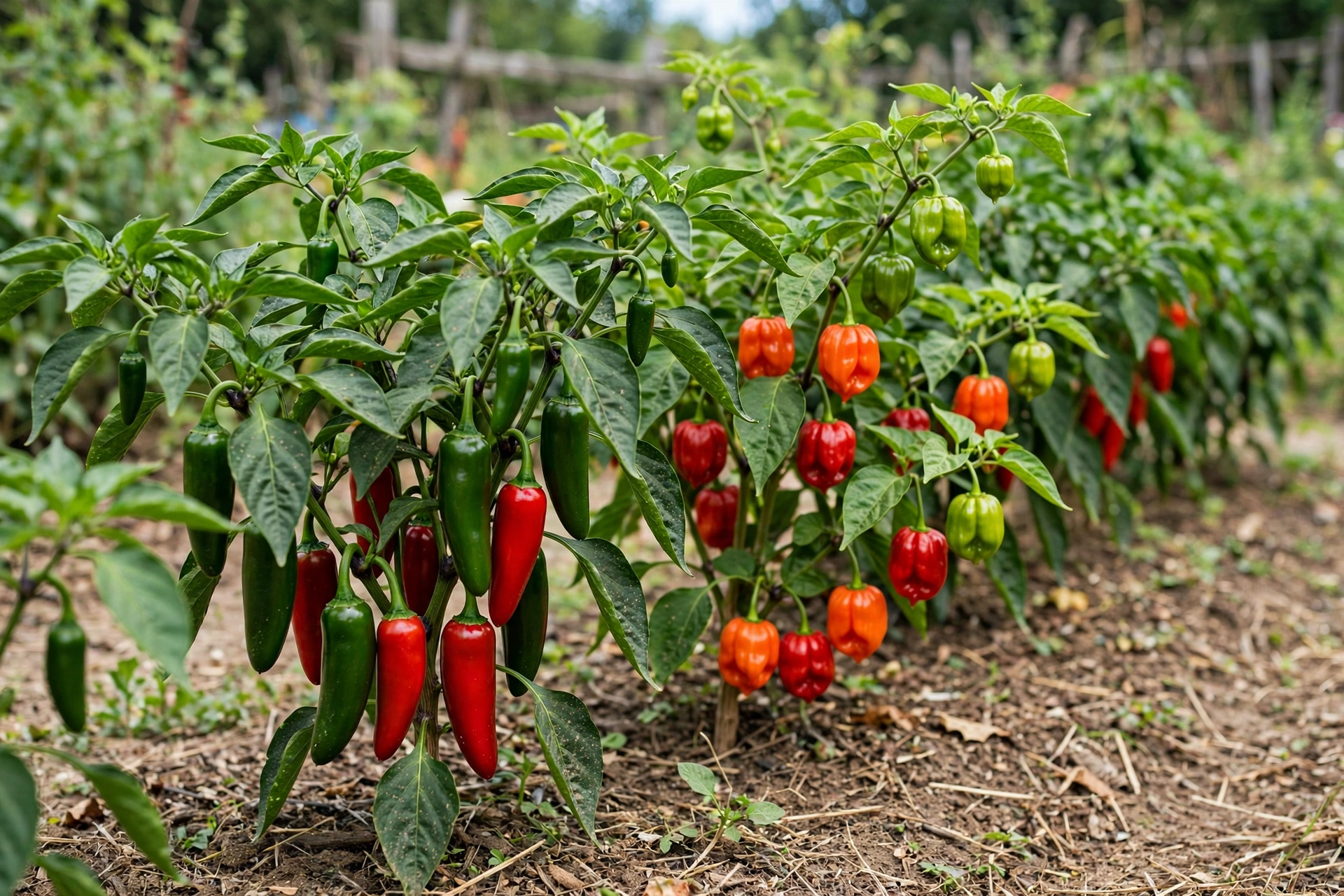
Megatron earns the top spot because it is the jalapeño that does the most jobs at once. The fruits run 4 1/2 inches long and 1 1/2 inches wide at the shoulder, thick-walled and heavy enough to stuff, and they start dark green and turn red if you leave them on the plant, sweeter and a touch spicier as they color up. At 2,500 to 5,000 Scoville units it is medium-hot, which is the heat most kitchens actually use, and it reaches harvest in 65 days from transplanting, the earliest of any variety here.
The other reason it leads is that it comes with protection built in: high resistance to bacterial leaf spot and to tobamovirus, the two problems that most often cut a jalapeño season short. Gardeners rate it 4.3 from 66 reviews, the largest review base in this roundup, and the packet yields about 8 plants. The honest trade-off is the packet size — eight plants is plenty for one household, but if you are planting a whole row for pickling, it is the smallest yield here.
Pros: earliest harvest here at 65 days; thick-walled 4 1/2-inch fruit made for stuffing; disease resistant; largest review base at 66 reviews.
Cons: about 8 plants per packet, the smallest yield here; $4.49, the joint-priciest jalapeño in the roundup.
Megatron Jalapeño Chile Pepper Seeds
The earliest harvest here, with thick-walled fruit made for stuffing and disease resistance built in.
Runner-Up: Serrano
Serrano is the pepper for the gardener who cooks with heat every week, because it is the one variety here that never runs out. The fruits are slender, 2 to 3 inches long, thick-fleshed and crisp, and the plants are described as prolific enough to drip with peppers — one packet sows up to 74 plants, which is more pepper plants than most gardens can use. At 10,000 to 20,000 Scoville units it sits a clear step above a jalapeño, medium-hot to hot, and gardeners rate it 4.6 from 19 reviews, the joint-highest rating in this roundup.
It earns the runner-up spot on value as much as on flavor: $2.69 is the lowest price here, and that buys the most plants per packet of any variety in the roundup. The trade-off is the wait, 75 to 90 days from transplanting against Megatron’s 65, and the smaller fruit — serranos are for slicing into salsa and pico, not for stuffing. If your kitchen runs on fresh salsa, this is the plant to grow in quantity.
Pros: highest rating here at 4.6 from 19 reviews; $2.69, the lowest price in the roundup; one packet sows up to 74 plants.
Cons: 75 to 90 days, slower than Megatron; small fruit, no good for stuffing.
Serrano Chile Pepper Seeds
The highest-rated pepper here, at the lowest price, with one packet sowing up to 74 plants.
Best for Real Heat: Scotch Bonnet
Scotch Bonnet is the pepper for the gardener who has already outgrown jalapeños and wants the heat that makes jerk chicken taste like jerk chicken. At 100,000 to 325,000 Scoville units it is extremely hot, in the same range as a habanero, but the flavor is what sets it apart: fruity and smoky, with a citrus, apricot-like note that is sweetest when the fruit turns red. The fruits are small and puckered, about 1 1/2 inches, green at first and red when ripe, and the plant is a tall one, over 24 inches.
The caveat is the season it needs. At 75 to 100 days from transplanting it is the slowest of the five picks, so it wants the warmest spot in the garden and an early start indoors, and at $5.49 it is the priciest packet here. It is also the smallest harvest per packet, about 16 plants. Buy it for the flavor, not the volume — one plant makes more bonnets than most kitchens can use.
Pros: fruity, smoky heat no jalapeño can match; sweetest when red; the classic pepper for jerk dishes and mango salsa.
Cons: $5.49, the priciest here; 75 to 100 days, the slowest of the five picks; about 16 plants per packet.
Scotch Bonnet Chile Pepper Seeds
Extremely hot with a fruity, smoky flavor — the pepper that makes jerk dishes taste right.
Best Small Hot Pepper: Santaka
Santaka is the little pepper that earns its place on flavor and versatility rather than size. The fruits are only 2 inches long, but at 40,000 to 50,000 Scoville units they carry real heat, and they are the pepper to grow if your cooking leans toward stir-fries and soups — the variety is popular in Japan for exactly those dishes, and the peppers dry well for the pantry, too. Gardeners rate it 4.6 from 10 reviews, tied with Serrano for the highest rating here, and at $2.69 it shares the lowest price.
The honest note is the size of that review base: 10 reviews is the smallest sample among the five picks, so read the 4.6 as promising rather than proven. The fruit is also small by design, which means more picking per jar of sauce. But for a gardener who wants a hot pepper that dries, stores, and seasons Asian cooking, nothing else here does the same job.
Pros: 40,000 to 50,000 Scoville units in a 2-inch fruit; dries well for the pantry; $2.69; 4.6 from 10 reviews.
Cons: only 10 reviews so far; small fruit means more picking per jar.
Santaka Chile Pepper Seeds
A 2-inch pepper with real heat that dries well — the one to grow for stir-fries and soups.
Best Yellow Jalapeño: NuMex Lemon Spice
NuMex Lemon Spice is the jalapeño for the gardener who wants the familiar heat with an unfamiliar color. It carries the same 2,500 to 5,000 Scoville units as a green jalapeño, but the fruits ripen to a bright, sunny yellow with a slight citrusy tang, and the plant was bred by the Chile Pepper Institute in New Mexico for exactly that combination. The fruits run 2 to 3 inches long, the plant stays medium at 12 to 24 inches, and it reaches harvest in 65 days, tied with Megatron for the earliest here.
The compact size is the practical win: at 12 to 24 inches it is the shortest plant in this roundup and the easiest to fit in a container, and a packet yields about 16 plants. It is the lowest-rated of the five picks at 4.2 from 34 reviews, which is still a solid score with a decent base behind it. Pick it green for a milder bite, or let it turn yellow for the full citrus flavor — a jar of pickled peppers in both colors is the prettiest thing in the pantry.
Pros: same heat as a jalapeño with a citrus twist; ripens bright yellow; compact 12- to 24-inch plant, good for containers; 65 days, tied for earliest.
Cons: 4.2 from 34 reviews, the lowest rating among the five picks; $4.49, the joint-priciest jalapeño here.
NuMex Lemon Spice Jalapeño Chile Pepper Seeds
Jalapeño heat with a citrus tang, ripening bright yellow on a compact plant made for containers.
The One to Skip: Habanero
Habanero is the famous hot pepper, and it is the one variety here that does not earn its packet. It is in stock at $2.99, organic, with 100,000 to 350,000 Scoville units and a distinct fruitiness that chile lovers prize — but it is the lowest-rated hot pepper in this roundup at 3.2 from 13 reviews, with germination complaints running through those reviews, and at 100 days from transplanting it is the slowest variety here by a clear margin. Scotch Bonnet gives you heat in the same range, a better rating, and a fruit that ripens sooner, so the habanero is the packet to leave on the shelf.

How the Five Compare
| Variety | Best for | Price | Rating | Heat (Scoville) |
|---|---|---|---|---|
| Megatron Jalapeño | Stuffing, earliest harvest | $4.49 | 4.3 from 66 reviews | 2,500–5,000 |
| Serrano | Salsa and pico, in quantity | $2.69 | 4.6 from 19 reviews | 10,000–20,000 |
| Scotch Bonnet | Jerk dishes, real heat | $5.49 | 4.3 from 19 reviews | 100,000–325,000 |
| Santaka | Stir-fries, soups, drying | $2.69 | 4.6 from 10 reviews | 40,000–50,000 |
| NuMex Lemon Spice | Containers, yellow pickled peppers | $4.49 | 4.2 from 34 reviews | 2,500–5,000 |
Bottom Line
Start with Megatron if you want one pepper that does the most: earliest harvest, thick fruit for stuffing, disease resistance, and the biggest review base here. Add Serrano if your kitchen runs on salsa, because one packet plants more peppers than a family can eat, and add Scotch Bonnet if you want the heat that makes jerk dishes taste right. Santaka is the small, hot pepper for stir-fries and the pantry shelf, and NuMex Lemon Spice is the pretty yellow jalapeño that fits a container. Leave the habanero on the shelf — Scotch Bonnet does its job better. For the growing routine, read our starting guide, and if the flowers fall without fruit, our fruit-set guide sorts out why.