The most common way to ruin a pine straw bale is also the easiest: set it straight on the garage floor, or worse, on the driveway, and leave it there until spring.
Concrete wicks moisture. Rain finds the low corner of every driveway. A bale that goes into storage dry can come out with a black, matted core that smells like a swamp, and at that point it is compost material, not mulch. If you buy bales ahead of the season, or hold half a bale back from a fall job, storage decides whether that straw is still worth spreading.
Why Dry Is the Whole Job
Pine straw stores well for one reason: dry needles barely decay. Longleaf needles are resinous and slow to break down on the ground, which is why the mulch lasts a season in a bed.
Trapped moisture changes the terms. A damp bale heats slightly in the middle, mildew works through the compressed center, and the needles mat together into slabs that will not shake apart into the loose, airy layer pine straw is supposed to form. One bale covers roughly 60 square feet at a 3-inch depth, so a ruined bale is a visible hole in a bed, not a rounding error. The pine straw coverage calculator will give you the exact count for your beds.
How to Store Pine Straw Bales
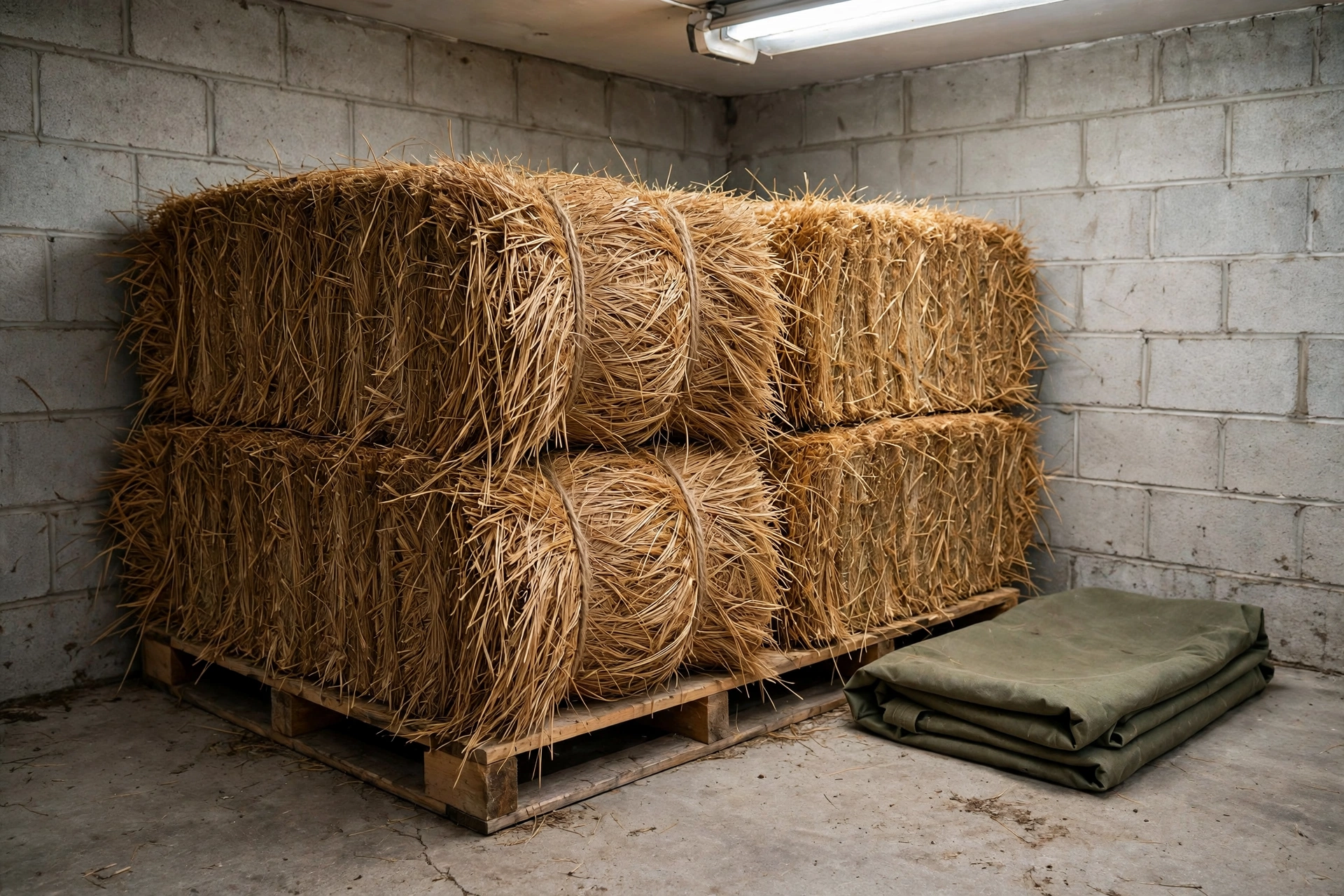
Get them off the ground. Set bales on a pallet, a pair of scrap 2x4s, or a shelf. Air underneath matters as much as cover overhead, because the floor is where the moisture is.
Keep them under a roof. A garage corner, a shed, or a carport all work. Outdoors under a tarp is the last resort: a tarp thrown directly over bales traps condensation against the needles, so tent it with air space above the stack instead of wrapping the bales tight.
Stack loosely. Two or three bales high, with a little air between them. A tight, tall stack compresses the bottom bales and holds whatever moisture gets in.
Leave the twine on. A bale holds its shape and stays portable while it is tied. Cut the twine when the bale goes to the bed, not when it goes into storage.
The corner of the garage smells faintly resinous all winter when the bales are dry, which is the quickest check there is. A sour smell at arm’s length means moisture got in, and that bale should be opened and inspected before you count on it.
How Long Stored Straw Stays Good
Kept dry and off the floor, pine straw holds up for a full season and usually longer. The needles fade from rust-red to a duller brown over months in storage, and that color change is cosmetic. Faded straw mulches exactly as well as fresh straw.
What does not recover is a bale that got wet. Mildewed needles go on a compost pile or a utility path, not around azaleas and blueberries you care about. The guidance in how to use pine straw in garden beds covers which plants want it most.
When a Stored Bale Has Gone Bad
Cut the twine and pull the bale apart from the center, not the surface. The outside of a stored bale can look perfect while the core tells the truth.
Good straw shakes apart into individual needles and smells like resin and dry leaves. Bad straw comes out in damp slabs, shows white or black mildew threading through the middle, and smells sour. Slabs that are merely compressed, with no mildew and no sour smell, are fine: shake them out by hand and spread them.
If you are deciding between stored pine straw and a fresh layer of something else entirely, pine needle mulch vs. bark mulch lays out where each one wins.
The Short Version
Store pine straw bales on a pallet, under a roof, tied, and stacked loose. Do that and last fall’s leftover bale is next spring’s first bed, at no cost beyond the pallet it sat on.