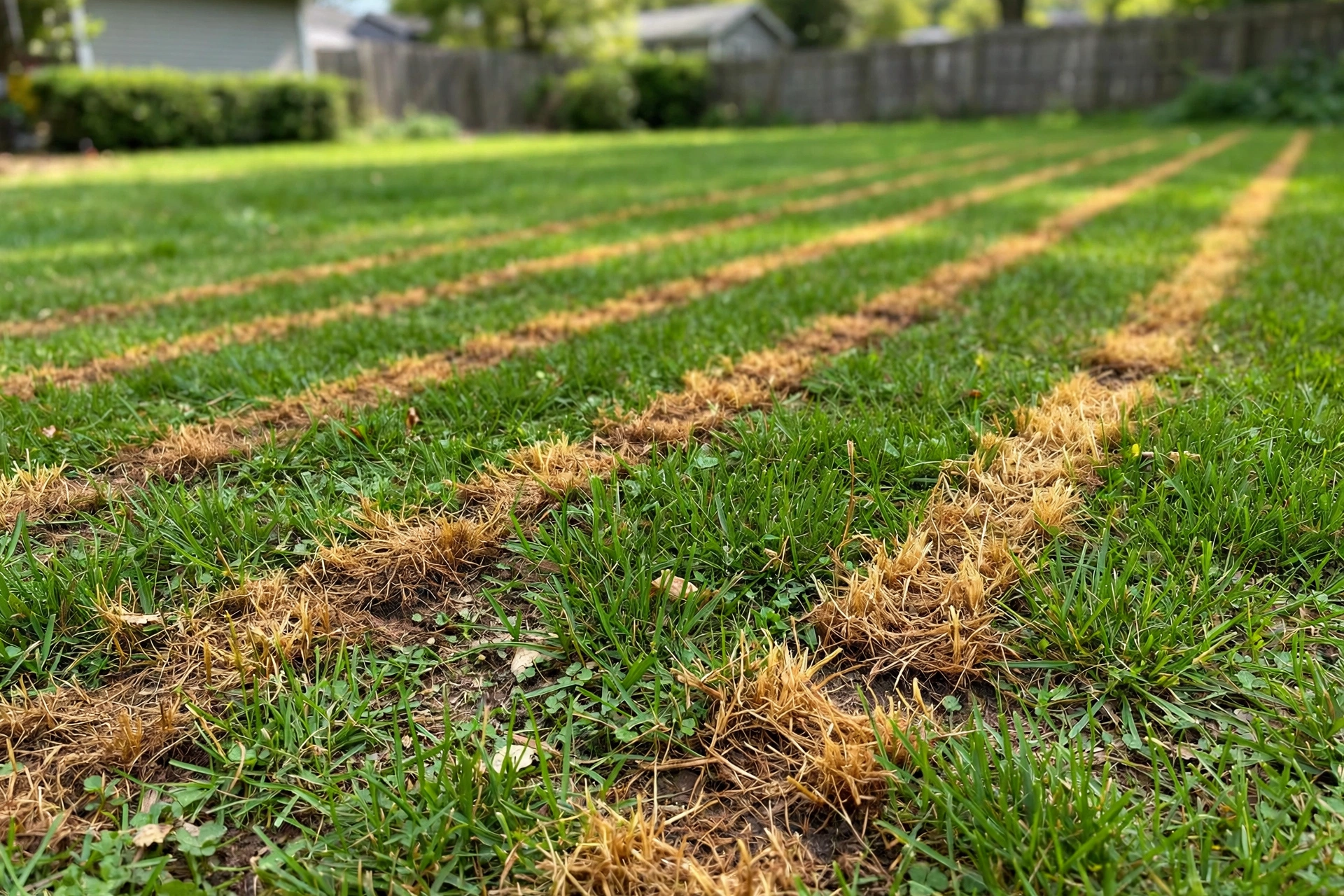
The stripes give it away before anything else does: parallel yellow-brown bands across the lawn, spaced exactly as far apart as your spreader passes, showing up two or three days after you fertilized.
That pattern is fertilizer burn, and it is one of the few lawn problems you can diagnose from the sidewalk. The good news is that most burned lawns are scorched, not dead. This post settles how to tell the difference, what to do in the first 48 hours, and how to keep the stripes from coming back.
What Fertilizer Burn Actually Is
Fertilizer is salt. Where too much of it lands in one place, the salt pulls moisture out of the grass blades faster than the roots can replace it, and the tissue dries out and browns.
That is why the pattern follows your equipment so faithfully. Stripes mean the spreader overlapped its passes or dribbled at every turn. A dead patch the shape of a spill means a pile sat on the grass. A ring or a scorched edge usually traces a hand spreader or a spill along the driveway that got swept onto the lawn.
How to Spot It, and Rule Out the Look-Alikes
Timing. Burn shows within 1 to 4 days of the application. Browning that appears weeks later, or that was already starting before you fertilized, is something else.
Pattern. Burn follows straight lines, passes, and spill shapes. Fungal disease spreads in circles and irregular patches with no respect for your walking route, and drought stress starts on high spots and south-facing slopes regardless of where you spread.
The crown test. Part the brown blades and look at the base of the plant, at soil level. If the crowns are still firm and pale green or white, the plant is alive and the damage is in the blades only. If the crowns are brown and mushy, that spot is dead. The blades are the lawn’s solar panels; the crowns are the plant. Only the second one matters.
How to Fix Fertilizer Burn
Pick up any visible granules first. If a spill is still sitting on the grass, sweep or vacuum up every granule you can see before you add water. Water on a concentrated pile dissolves it straight into the soil at full strength.
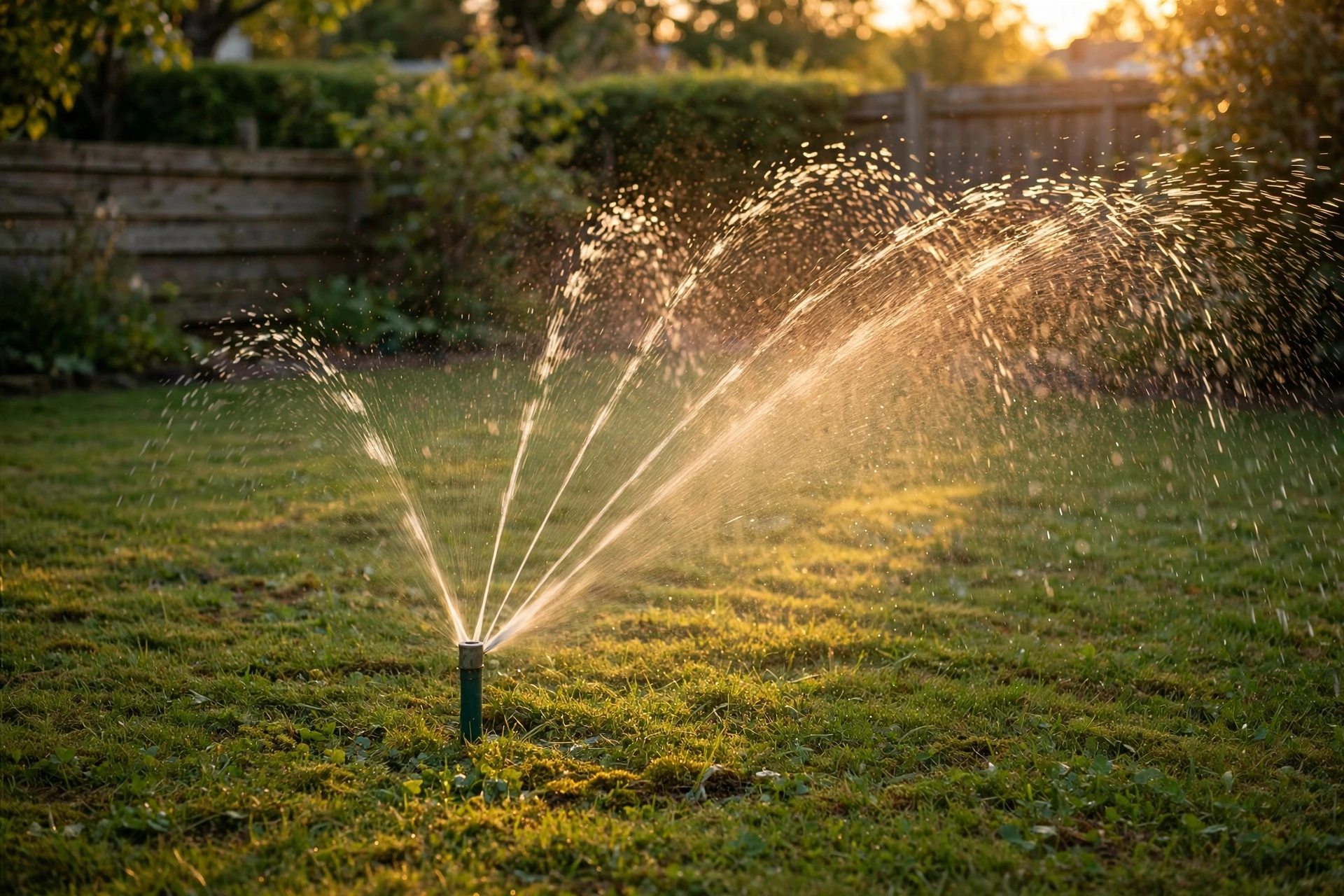
Flush the area with water. Run sprinklers on the burned area until it has received about 1 inch of water, then repeat the watering daily for several days. The goal is to dilute the salts and move them down past the root zone. A tuna can or rain gauge on the lawn tells you when you have actually put down an inch, because sprinkler output surprises almost everyone.
Then wait. If the crowns passed the test above, expect new green growth to push up through the brown blades in about 2 to 4 weeks. Mow high in the meantime and do not fertilize the recovering area again that season. The waiting is the hard part, because a flushed, watered lawn looks no better on day three than it did on day one. The recovery happens at the crown, out of sight, before it shows at the surface.
Reseed what is truly dead. Where crowns are brown and mushy, rake out the dead material once the surrounding lawn has recovered, rough up the soil, and seed the patch. Small spill spots reseed cleanly; large dead areas are a fall overseeding job for cool-season lawns.
How to Prevent It Next Time
Most burn comes from three causes, and all three are fixable. The first is rate: more fertilizer than the label calls for, often from a spreader that was never calibrated. The second is overlap, doubling the dose on every pass line. The third is application to a dry, stressed lawn followed by no water.
The full prevention routine, including spreader settings and why a half-rate pass in two directions beats one full-rate pass, is in how to apply fertilizer without burning your lawn. Whether to water right after an application is covered in should you water your lawn after fertilizing, and the choice between liquid vs. granular fertilizer changes the burn risk too, since liquid products go down diluted by design.
The Verdict on a Burned Lawn
Flush it with an inch of water, check the crowns, and give it a month before you judge it. Most striped lawns recover completely from the crowns, and the ones that do not tell you exactly where to reseed. The burn is embarrassing for a week and instructive for years, because nobody who has flushed stripes out of a lawn ever skips calibrating the spreader again.