You spread fertilizer on a Saturday morning, water it in, and by Tuesday the lawn has brown stripes right where the spreader passed twice. The grass is not diseased, and it is not short on water. That is fertilizer burn, and it is fixable — and mostly preventable once you know what actually causes it.
What fertilizer burn really is
Fertilizer is concentrated salt. Spread too much of it, and the salts sitting in the soil pull moisture out of the grass roots by osmosis — the same pull that dries out a plant in salty soil. The roots cannot take up water even when the soil looks damp, so the leaf blades dry out from the tips down and turn yellow, then brown.
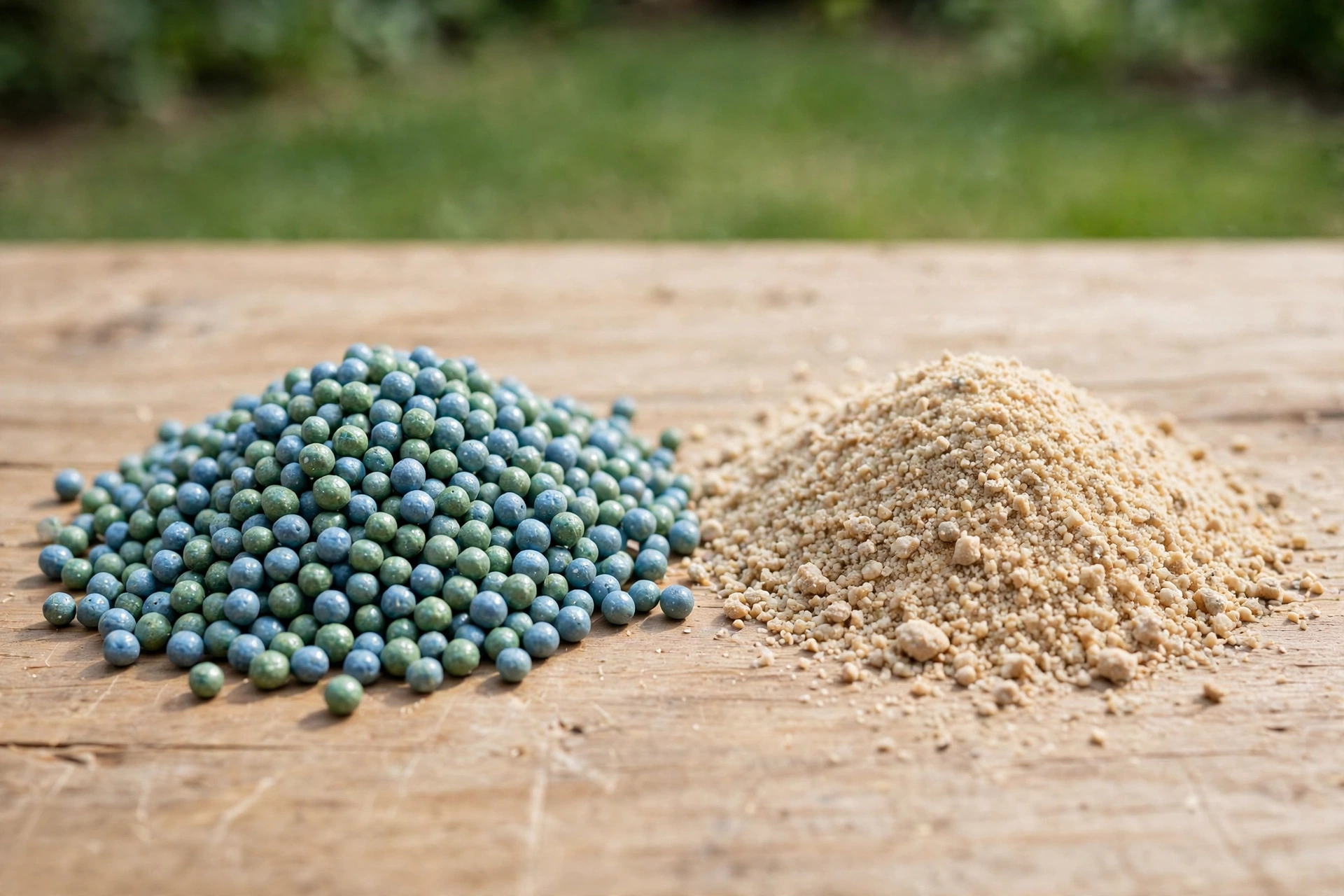
Nitrogen drives most of the damage, because it is the nutrient applied in the largest amount and the one with the highest salt load in common formulas. High-salt products such as ammonium sulfate and potassium chloride carry more burn risk than lower-salt options such as sulfur-coated urea. The rule Extension guidance repeats for home lawns is simple: apply no more than about 1 pound of actual nitrogen per 1,000 square feet in a single application. Stay under that ceiling and the salts stay dilute enough for the roots to handle.
How to tell burn from other brown patches
Burn has a signature, and checking it before you act keeps you from treating the wrong problem. Run through these in order:
The pattern matches the spreader. Burn shows up as stripes, bands, or patches that follow your spreading passes — darker where passes overlapped, or a neat rectangle where a spill sat. Drought browning is broad and even across the lawn, with no stripes.
The timing matches a feeding. Burn symptoms appear within 1 to 3 days of spreading. If the brown patches showed up weeks after your last feeding, look elsewhere.
The grass pulls differently than grub damage. Grub-killed turf lifts like loose carpet because the roots are eaten. Burned turf stays rooted; the blades are dead but the crowns underneath may still be alive. Tug a tuft — if it holds, the roots are intact and recovery is likely.
The fix: apply it so it cannot burn
Prevention is a short routine, and it works for granular and liquid feeding alike. Do it in this order:
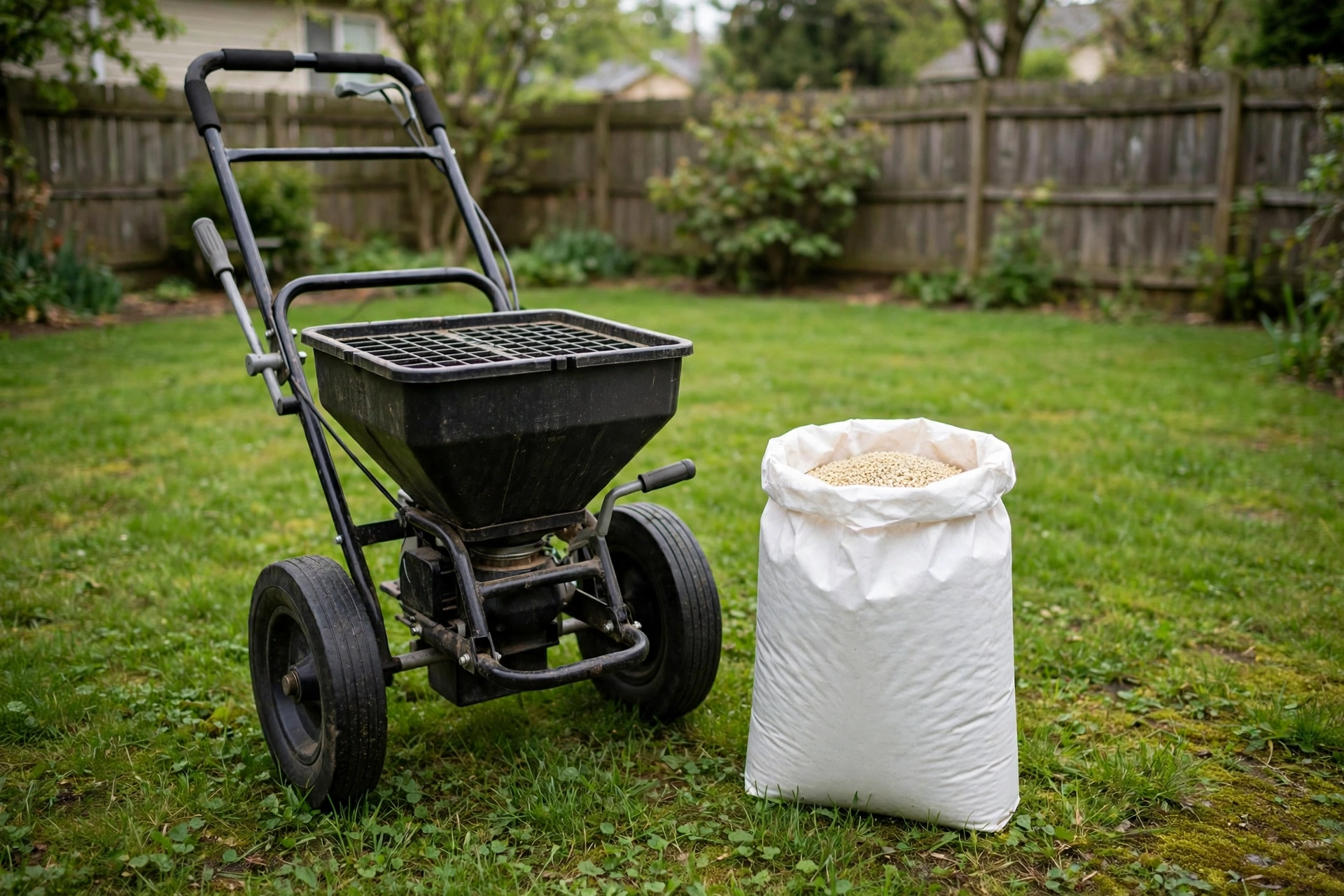
1. Do the bag math first. The three numbers on the bag are percentages by weight, so the first number tells you how much product carries 1 pound of nitrogen. Divide 100 by that first number: a 20-0-0 bag needs 5 pounds of product per 1,000 square feet, while a 10-10-10 bag needs 10 pounds. Weigh or measure the product for your lawn’s actual square footage instead of guessing by the bag’s coverage claim.
2. Split the pass. Spread half the rate walking north to south, then the other half walking east to west. Overlap stops being a hazard when each pass only carries half the dose, and coverage comes out far more even than a single heavy pass.
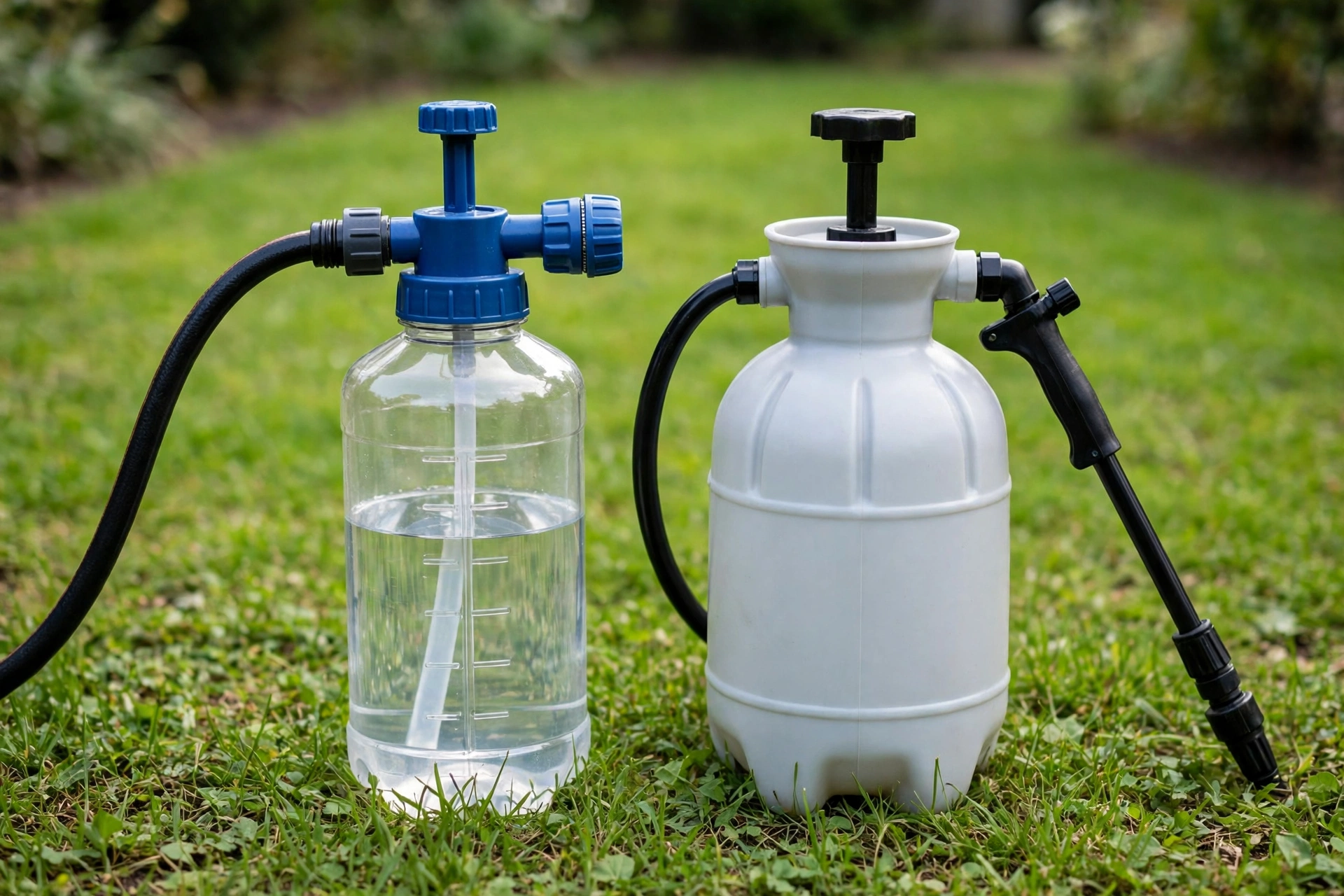
3. Water it in the same day. About a quarter inch of water moves granules off the blades and down into the soil, where the salts dilute instead of sitting against the grass. If you use a liquid feed, follow the label rate and apply to a lawn that is already damp, not bone dry — our guide to the best liquid lawn fertilizers covers which formulas suit that approach, and liquid vs granular fertilizer explains how the two forms differ in burn risk.
4. Feed a lawn that can take it. Never fertilize drought-stressed, dormant, or frozen turf, and skip feeding when the air temperature is above 85°F. A stressed lawn cannot use the nitrogen, so the salts sit in the soil and do the damage instead. High-nitrogen granular products deserve extra care here — is DAP fertilizer good for grass explains why a concentrated formula like diammonium phosphate punishes sloppy spreading more than a balanced bag does.
5. Sweep up spills before you water. A torn bag or a tipped spreader leaves a pile that will burn a perfect circle once it gets wet. Sweep granules off sidewalks and driveways too — they wash into beds and storm drains, and they do nothing for the lawn from the concrete.
If the burn already happened
Dead blades will not turn green again, so the goal is to save the crowns and get new growth going. Water heavily right away — about a half inch, enough to wet the top 4 inches of soil — then repeat every 12 hours for two days to flush the salts down past the roots. Do not re-feed a burned patch to “fix” it; more nitrogen only adds more salt. If the crowns are alive, new blades usually push through within two to three weeks. Patches where the crowns died will need reseeding once the salts have leached out.
When to skip feeding entirely
Some days are simply not feeding days. Skip the spreader when the lawn is brown and dormant, when the soil is dry enough that the grass is already wilting by midday, or when the ground is frozen. The fertilizer will not help a lawn that is not growing, and the runoff risk climbs when the soil cannot absorb it. Wait for active growth and a stretch of mild weather, then feed at the 1-pound rate.
Bottom line
The safest routine is a slow-release bag at the 1-pound nitrogen rate, spread in two light passes and watered in the same day. Feed that way, skip the hot dry days and the dormant stretches, and the brown stripes never show up.