This post contains affiliate links. If you buy through them, we may earn a commission at no extra cost to you.
Spring is when sweet potatoes are lost. The slips go out on the first warm weekend, into soil that is still 55°F at root depth, and a tropical vine does exactly what tropical vines do in cold ground: nothing, slowly, for weeks. The season this crop wants starts later than your impatience and ends hotter than your kitchen.
Wait for soil above 60°F, with frost fully past, and the same slips take off in days. Everything after that is spacing, steady water, and a cure that turns a starchy root sweet.
Start with slips — yours or bought
A slip is a shoot sprouted from a storage root. Buy certified, inspected slips of the variety you chose — the variety ranking is in the sweet potato varieties roundup — or bed your own: lay sound roots in moist sand, cover them an inch deep, and hold the bed warm.
Extension’s bedding numbers are specific. Keep the sand near 80°F while roots sprout, then 75 to 80°F until slips emerge. Each root gives 12 to 20 slips over three to four weeks, and a slip is ready to pull at 8 to 10 inches long, with a root system of its own.
Warmth is the lever, and it is the one place gear genuinely helps a slip bed indoors.
Seed Starting Heat Mat
Raises soil temperature 10–20°F over ambient, holding a bedding tray in the warm range slips sprout in.
Epic 1020 Universal Bottom Tray
The watertight base under a bedding tray of sand and roots — holds the moisture slips need without leaking it.
Build the ridge, set the slips
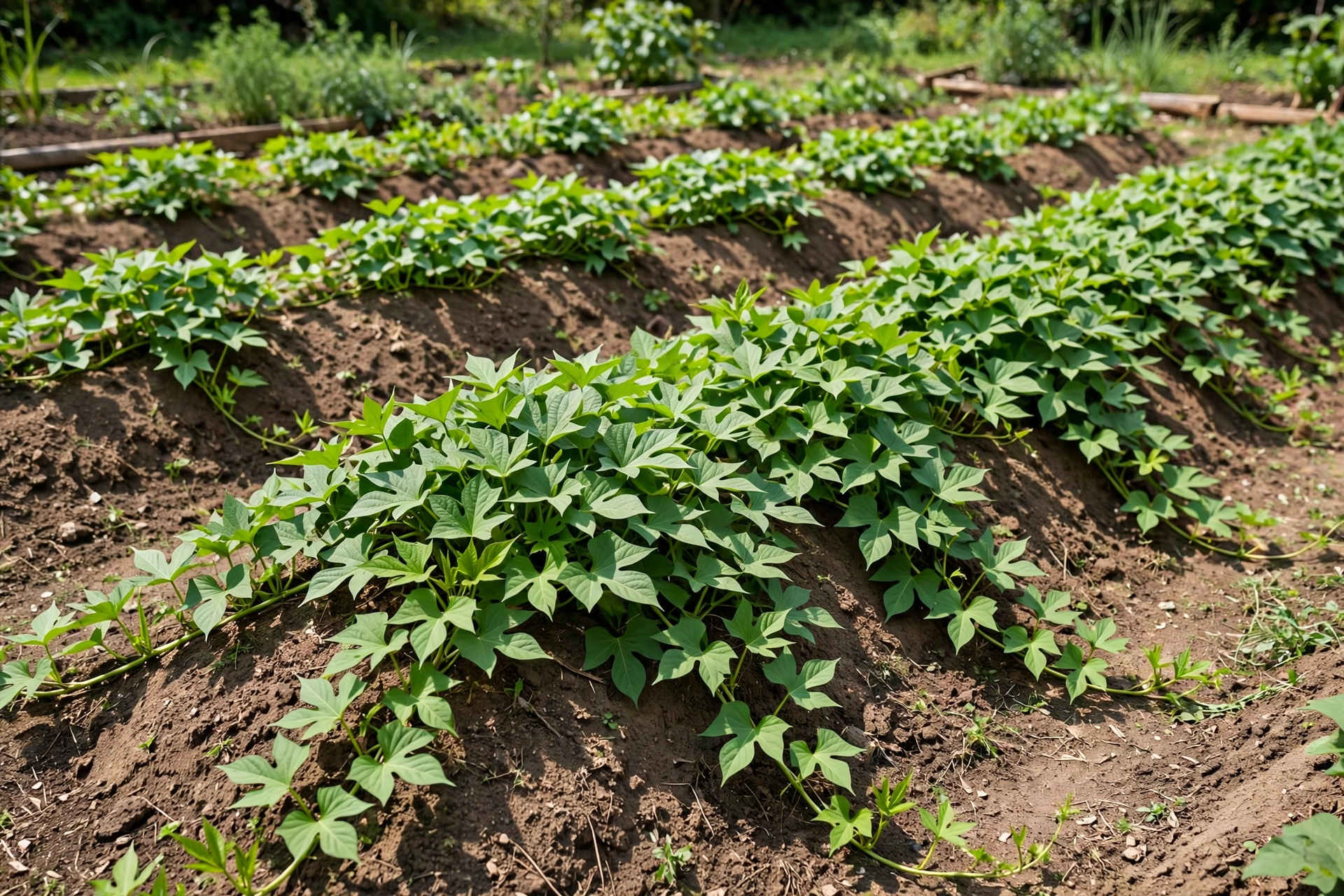
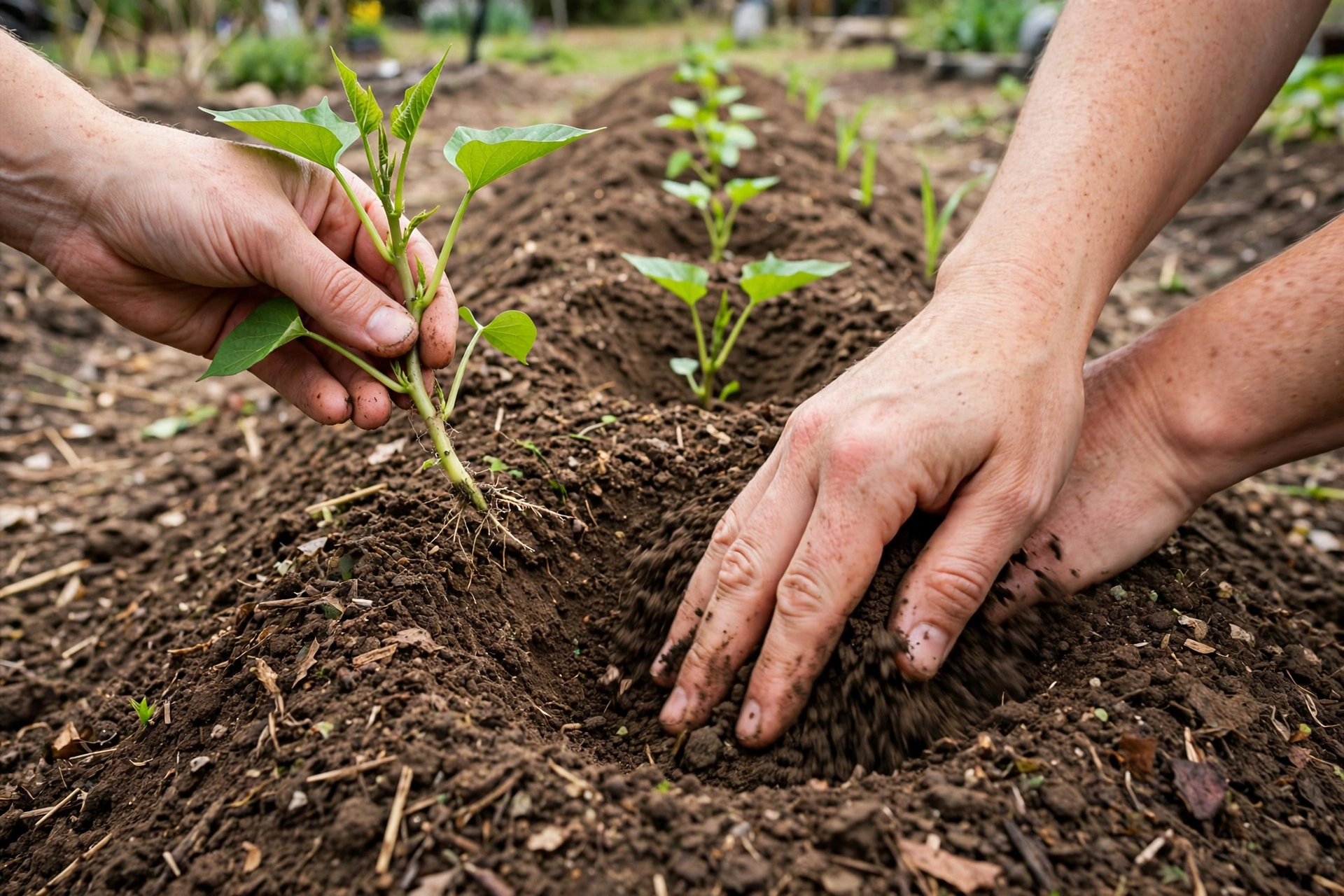
Sweet potatoes want sandy loam, well drained, at pH 5.7 to 6.7. Extension’s bed is a ridge about 12 inches tall and 15 to 18 inches wide at the base, settling to roughly 8 inches — loose soil the roots can swell in without fighting clay.
Set slips 12 inches apart in rows 36 inches apart, buried up to their top leaves, and water them in. If bought slips arrive during bad weather, heel the bundles into a shallow furrow and cover the roots rather than letting them dry on a bench.
| Step | Figure | Why it matters |
|---|---|---|
| Bedding temperature | About 80°F in the sand | Cold roots sprout slowly or not at all |
| Slip size at pulling | 8–10 inches | Smaller slips root weakly; larger ones wilt |
| Planting threshold | Soil above 60°F, frost past | The plant cannot withstand frost or prolonged cold |
| Spacing | 12 by 36 inches | Room for roots to size and vines to run |
| Digging deadline | Before soil drops below 55°F | Chilled roots lose storage life |
| Cure | 85°F, about 90% humidity, 7–10 days | Heals wounds and converts starch toward sugar |
Figures: University of Arkansas Division of Agriculture, Home Gardening Series FSA6018.
Water steady, then hands off the vines
Soil moisture decides both how many roots a plant sets and how big they size. Keep moisture even through the first half of the season while storage roots initiate, and keep it coming while they bulk.
The vines will cover the row middles by midsummer, and that canopy is the plant’s sugar factory — the leaves feed the roots. I redirect wandering vines back onto the bed rather than cutting them; every leaf removed is energy the roots never see. Shallow cultivation only, early, before the vines run: the feeder roots sit near the surface and resent a hoe.
Dig before the soil chills, cure before you store
Roots develop 4 to 6 inches under the surface. Test-dig a hill once roots reach about 2 inches across for early, uncured eating, and dig the storage crop in fall before a killing frost — and in any case before soil temperature falls below 55°F, because chilled roots keep badly no matter how careful the cure.
Dig with a fork, handle the roots like eggs, and do not wash them. Shake off loose soil and cure immediately: 85°F at about 90 percent relative humidity for seven to ten days, with air moving and no condensation on the roots. Curing grows a corky layer over every scrape and cut, sealing in moisture and sealing out rot.
Then store warm, not cold: about 60°F, never below 55°F, humid, in slatted crates or baskets with air around them. Cured and stored that way, roots keep six months or more. A refrigerator is the one place a sweet potato should never go.
Harvest Basket
Wood and wire-mesh basket in 8- and 16-quart sizes for carrying a bruise-prone harvest from bed to cure.
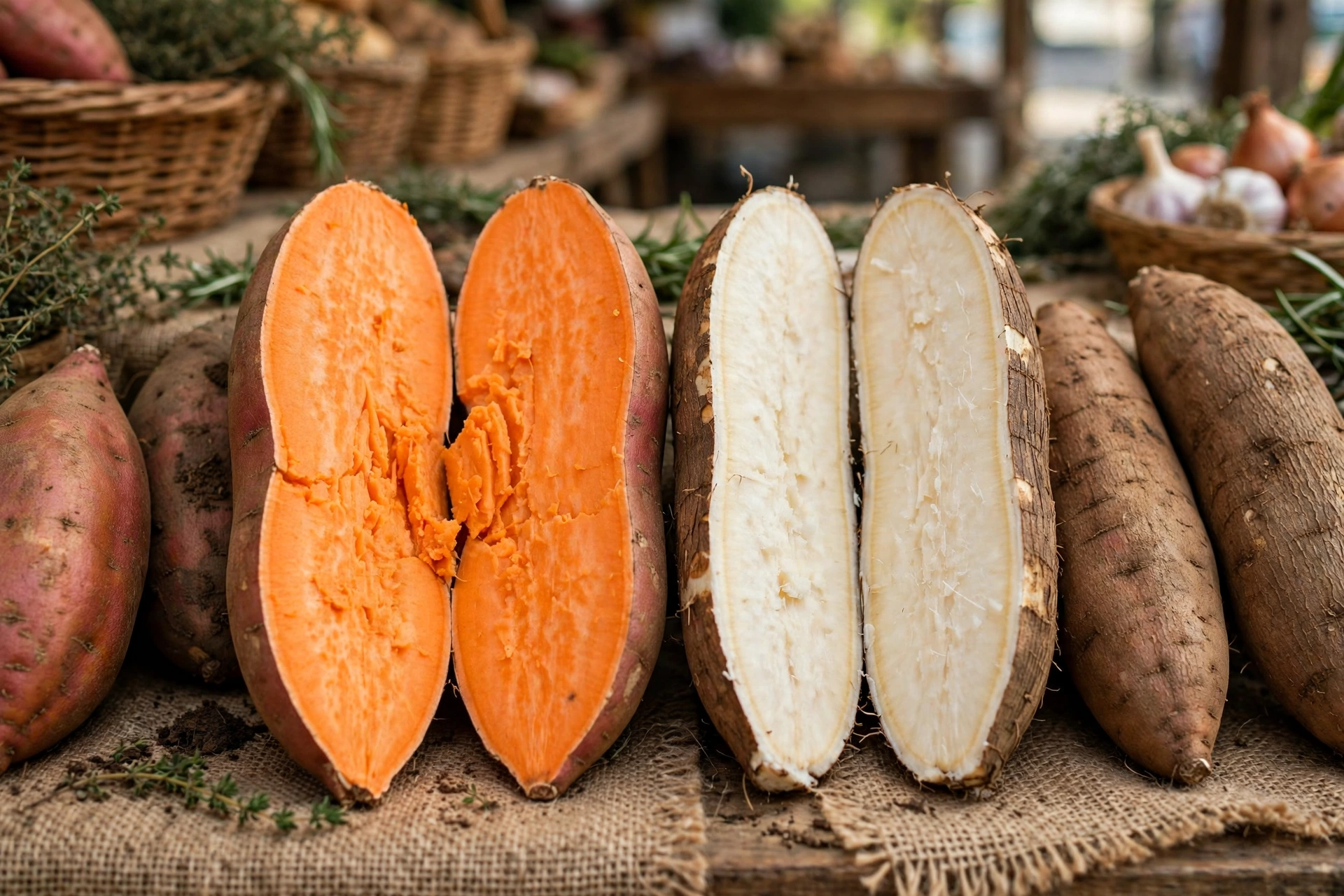
Expect roughly 6 to 15 pounds per 10 feet of row, and plan on about a dozen slips per person you are feeding. The variety choice that sets the clock is in the varieties roundup, and if the store bin has you second-guessing what you grew, sweet potatoes vs. yams sorts the labels out.
Start late, dig on time, cure hot. Do those three and the crop is easy; skip the first and no variety on the list can save the season.