This post contains affiliate links. If you buy through them, we may earn a commission at no extra cost to you.
The first sweet potato decision is not a packet. There is no packet — sweet potatoes grow from slips, the rooted shoots pulled from a bedded storage root, and the variety is chosen when you choose whose slips to plant. Get that call wrong and no amount of warm soil fixes it, because a 110-day variety in a 100-day season is a harvest of leaves.
Plant Beauregard first in most gardens. It finishes in 90 days, yields heavily, and stores well, which makes it the default against which every other variety here has to argue its case.
First, the honest part: slips, not seed
Sweet potatoes are Ipomoea batatas, a morning glory relative from tropical America, and they are propagated vegetatively. A storage root bedded in moist sand sprouts slips; each root produces 12 to 20 slips over three to four weeks, and the slips are pulled at 8 to 10 inches long and set out once the soil passes 60°F.
True seed exists — the plant occasionally sets it — but it does not come true to the parent variety, so no seed house sells sweet potato varieties as packets. The varieties below are ranked from University of Arkansas Extension’s cultivar table, the standard home-garden reference for this crop. What you can buy for this crop, and what the cards in this post cover, is the gear that starts slips warm and handles the harvest gently.
Beauregard — the 90-day default
Beauregard is the variety the rest of the list is measured against. Ninety days to maturity, high yielding, stores well, with tolerance noted for white grub and soil pox in the Extension table.
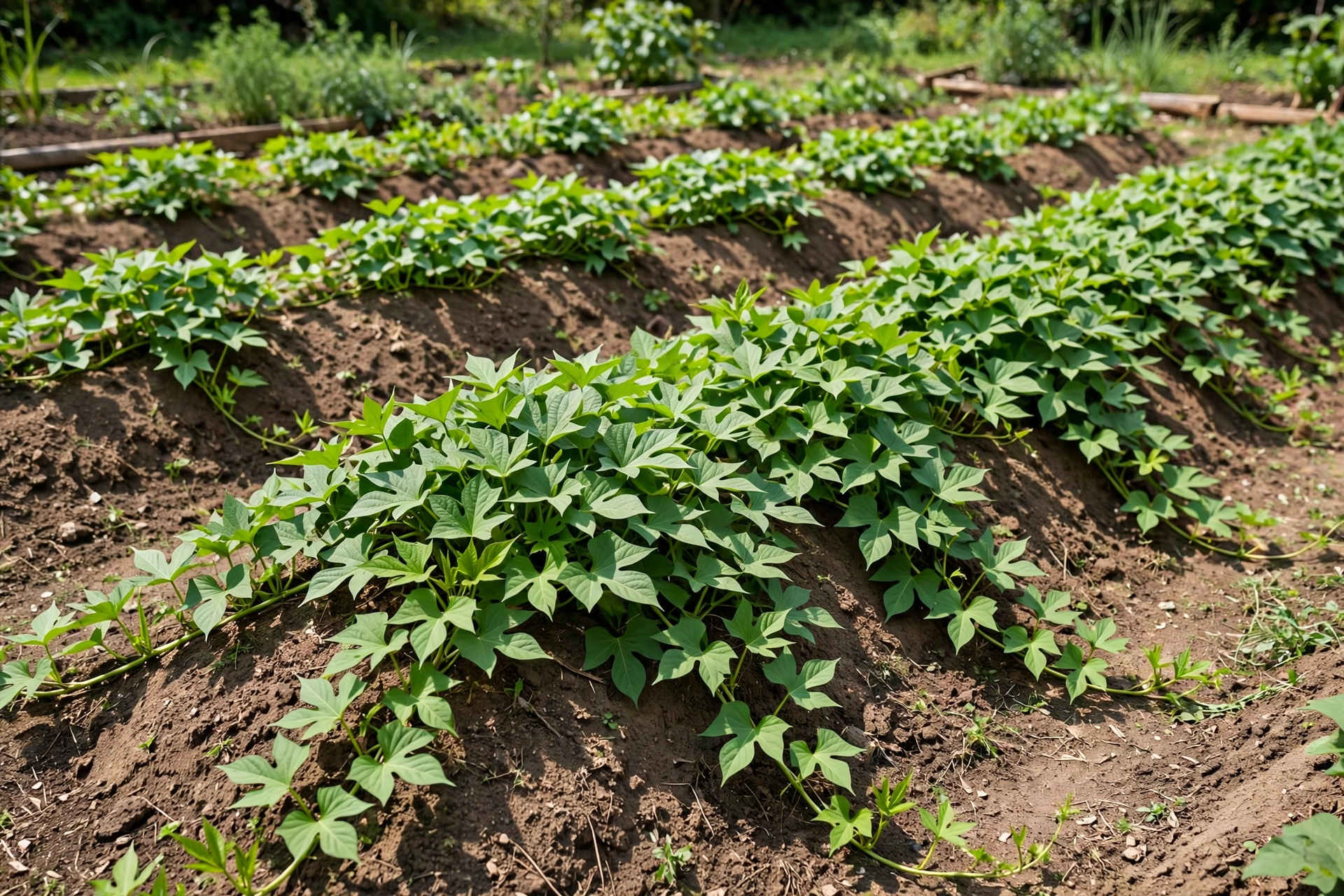
That 90-day finish is the whole argument in northern gardens. Sweet potatoes cannot take frost, and roots left in soil that drops below 55°F lose their storage life, so a variety that sizes up by early fall is worth more than a slightly better baker that needs two more weeks.
- Pros: fastest reliable finish at 90 days; high yields; stores well.
- Cons: a vining type that wants room — plan on the standard 12 by 36 inches per plant, and more vine than that suggests.
Covington — the uniform root with resistance
Covington runs 100 days and carries the strongest disease line in the table: resistance to Fusarium and to root-knot nematodes, with rose skin over orange flesh.
I would plant Covington where sweet potatoes have grown before, or in sandy soil where nematodes are a known presence. Ten extra days buys real insurance, provided your frost-free window covers it.
- Pros: Fusarium and root-knot nematode resistance; uniform, rose-skinned roots.
- Cons: 100 days leaves less margin than Beauregard in a short season.
Vardaman — the compact plant for small beds
Every other variety on this page vines. Vardaman is listed by Extension as a compact type with deep orange flesh, finishing in 95 days, and that habit is its entire case.
A compact plant fits a raised bed or a large container where a vining variety would swallow the paths by August. The trade is yield per plant — compact plants cover less ground and feed fewer roots — but a small bed that actually gets planted beats a vining variety you skipped for lack of room.
- Pros: compact habit for beds and containers; deep orange flesh; 95 days.
- Cons: lower yield per plant than the vining types.
Georgia Jet — the other 90-day option
Georgia Jet matches Beauregard’s 90 days, with rose skin and orange flesh. It is the pick when you want the short-season finish in a second variety, for a side-by-side in the same bed.
Beyond those two, the table’s longer varieties — Centennial at 95 days, Jewel at 105, Porto Rico at 110 as the noted good baker, Nancy Hall at 110 with pale flesh — belong to long, hot seasons. In a short one they are not bad varieties. They are late ones, and late is the failure mode this crop punishes.

The varieties, side by side
| Variety | Days to maturity | Flesh | Noted for |
|---|---|---|---|
| Beauregard | 90 | Orange | High yield, stores well |
| Georgia Jet | 90 | Orange | Rose skin, short-season finish |
| Vardaman | 95 | Deep orange | Compact plant, small beds |
| Centennial | 95 | Orange | Older cultivar, Fusarium and internal cork tolerance |
| Covington | 100 | Orange | Fusarium and root-knot resistance |
| Jewel | 105 | Orange | A standard cultivar, nematode tolerance |
| Porto Rico | 110 | Mottled | Good baker, rose-pink skin |
Variety data: University of Arkansas Division of Agriculture, Home Gardening Series FSA6018.
The gear that starts slips warm
A slip bed is a warmth problem before it is anything else. Extension’s bedding guidance holds the bed near 80°F while roots sprout, and a root that sits cold sits still. These are the pieces that hold that warmth and handle the crop at both ends of the season.
Seed Starting Heat Mat
Raises soil temperature 10–20°F over ambient — the steady warmth a bedding tray of seed roots needs to sprout slips.
Check Price at Botanical InterestsEpic 6-Cell Seed Starting Trays
Pulled slips root fast in cells while the bed warms up outside — thick, reusable trays that survive season after season.
Check Price at Botanical InterestsHarvest Basket
Wood and wire-mesh basket in 8- and 16-quart sizes — dug roots bruise easily, and a basket beats a bucket at the hose.
Check Price at Botanical InterestsWhich variety I would plant
Beauregard, in any bed with the room for vines. Ninety days is the margin this crop lives on, and its storage record means the harvest you cure in October is still sound in February.
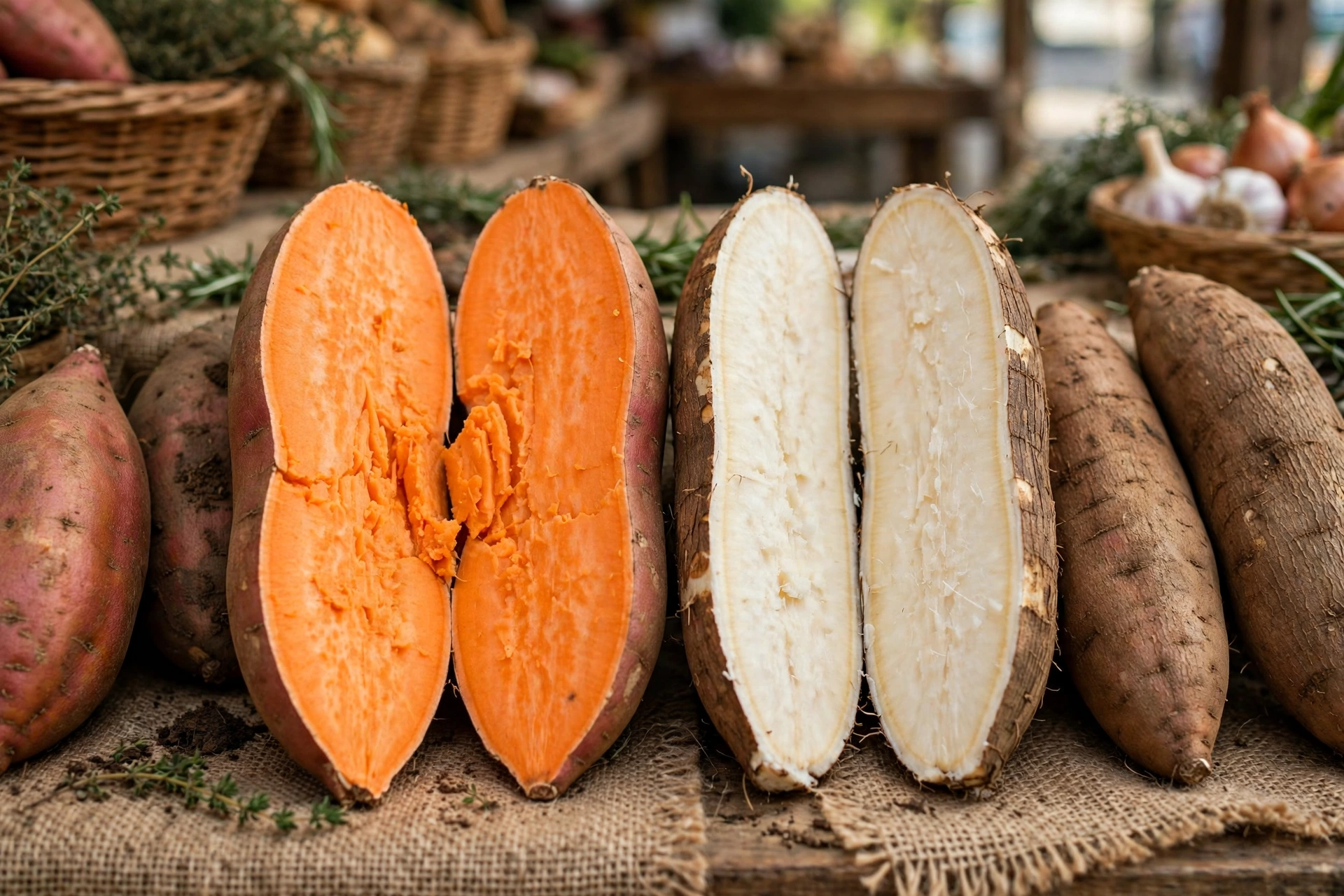
Vardaman is the deliberate exception for a small bed, and Covington the one for ground with a nematode history. The growing itself — bedding roots, setting slips, digging and curing — is covered step by step in growing sweet potatoes: slips, spacing, and harvest, and the bin-label question that follows this crop everywhere is settled in sweet potatoes vs. yams. For the other root that grows from true seed instead, see the potato varieties roundup.