This post contains affiliate links. If you buy through them, we may earn a commission at no extra cost to you.
A sweet potato is a morning glory root from tropical America. A yam is a Dioscorea tuber from West Africa. They share a store bin and a holiday casserole, and almost nothing else — and the one in the bin, in nearly every American supermarket, is the sweet potato wearing the yam’s name.
That is the whole answer, and it matters in two places: the recipe in front of you, and the garden order you are about to place, because you cannot buy yam slips for a US garden bed the way you buy sweet potato slips.
How the names got crossed
University of Arkansas Extension puts it plainly: in the United States, sweet potatoes are often called yams and the words are used interchangeably, but that is not botanically correct. The true yam is a tuber of West African origin in the genus Dioscorea — a different family entirely from Ipomoea batatas.
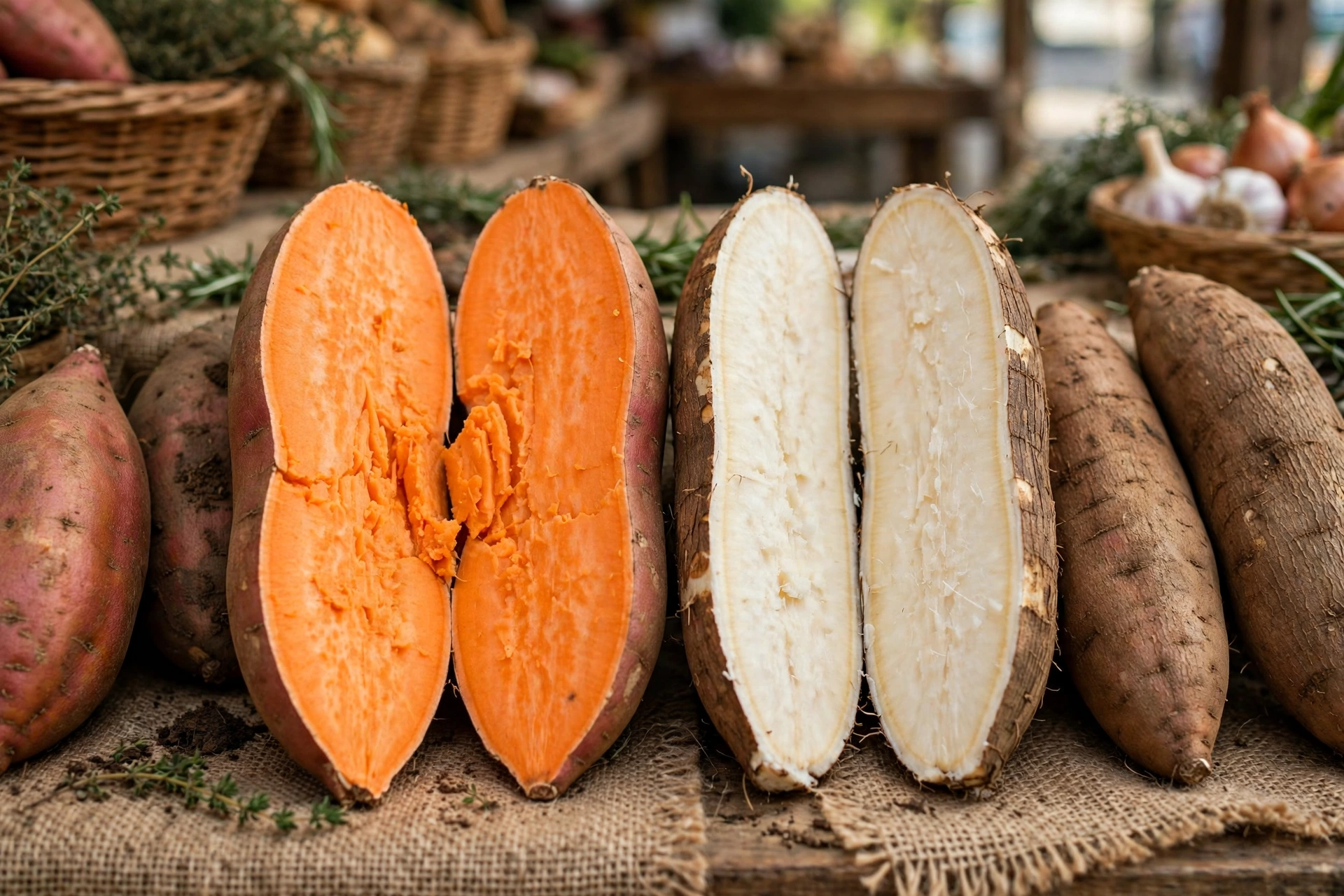
The store label adds a second layer. Moist, orange-fleshed sweet potatoes are the ones most often tagged “yam” at retail, to separate them from the firmer, paler sweet potatoes shelved beside them. Both are sweet potatoes. The label is sorting flesh types, not species.
The two plants, side by side
| Trait | Sweet potato | True yam |
|---|---|---|
| Botanical name | Ipomoea batatas | Dioscorea species |
| Family | Morning glory (Convolvulaceae) | Dioscoreaceae |
| Origin | Tropical America | West Africa |
| Edible part | Enlarged storage root | Tuber |
| How it is grown in the US | From slips, 90–110 days, warm season | Rarely grown; a long-season tropical crop |
| In a US supermarket bin | Nearly always this, whatever the sign says | Occasionally, in international markets |
Which one your recipe wants
An American recipe that calls for yams — the candied dish, the casserole with the marshmallow top — wants a moist orange sweet potato. Buy the bin’s “yams” with confidence, because that is what they are, and the variety background is in the sweet potato varieties roundup.
A recipe from a West African or Caribbean tradition that calls for yam wants the Dioscorea tuber: starchier, less sweet, a different texture that no sweet potato imitates well. That one you hunt in an international market, not the produce bin, and not a seed catalog.
Which one your garden can grow
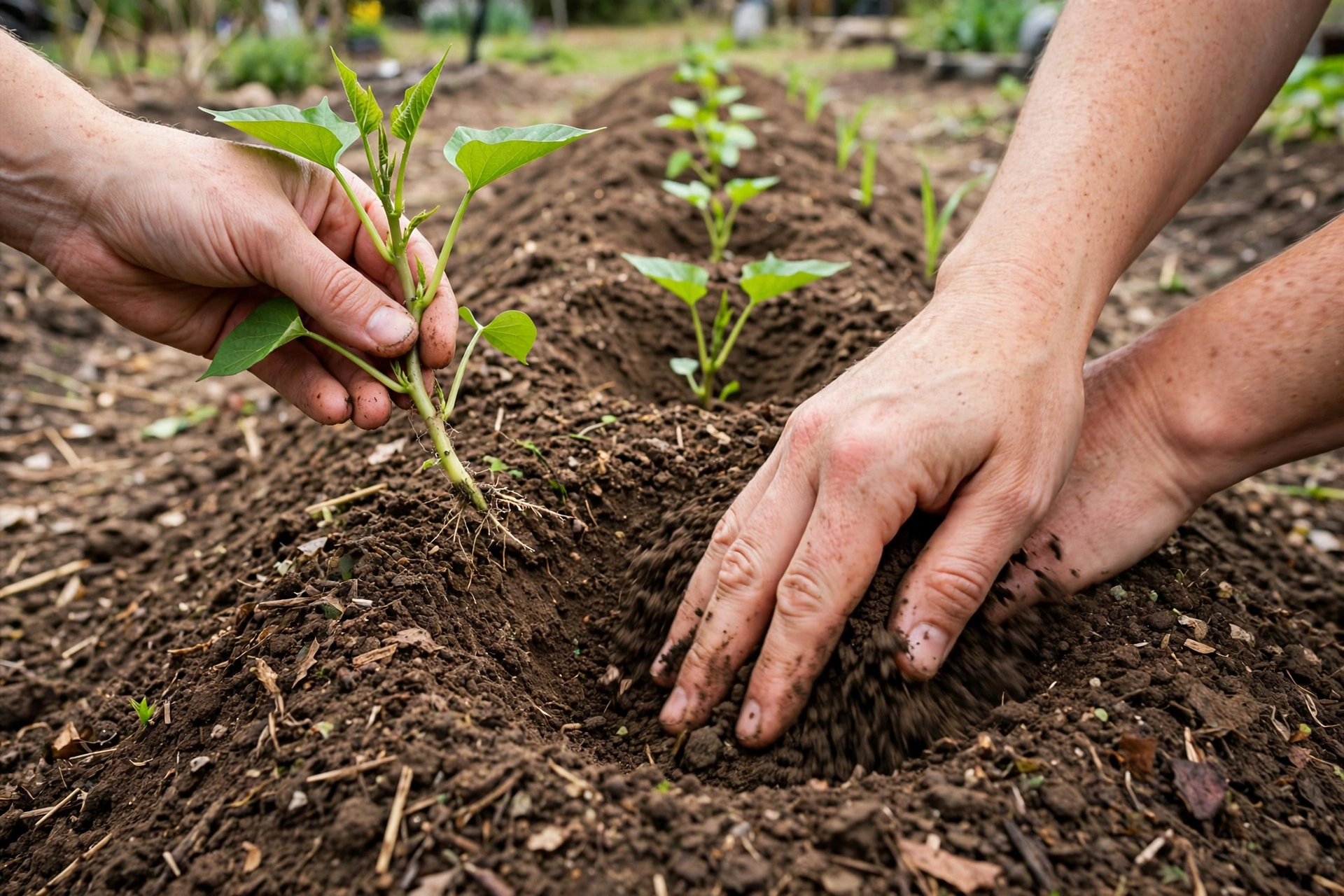
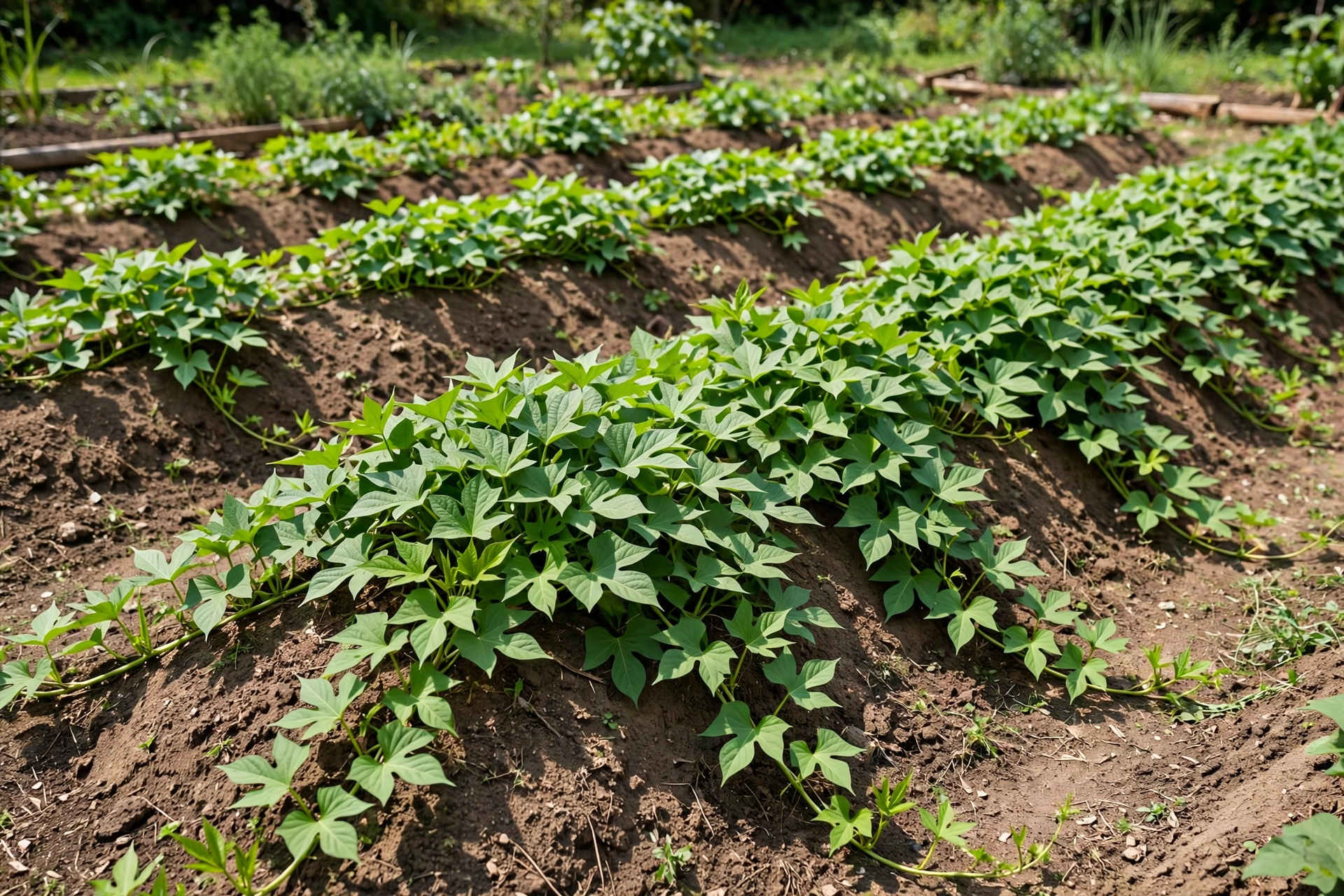
The garden answer is not close. Sweet potatoes grow across the warm US season from slips set after the soil passes 60°F — growing sweet potatoes: slips, spacing, and harvest has the full run from bedding to curing. True yams need a long tropical season and are not a home-garden crop in most of the country.
When a sweet potato plant does flower in a long season, the bloom gives the family away at a glance: a morning glory flower, pale and trumpet-shaped, on a vine running across the bed. Gardeners write to Extension asking why their potatoes are blooming like morning glories — the answer is that they are.
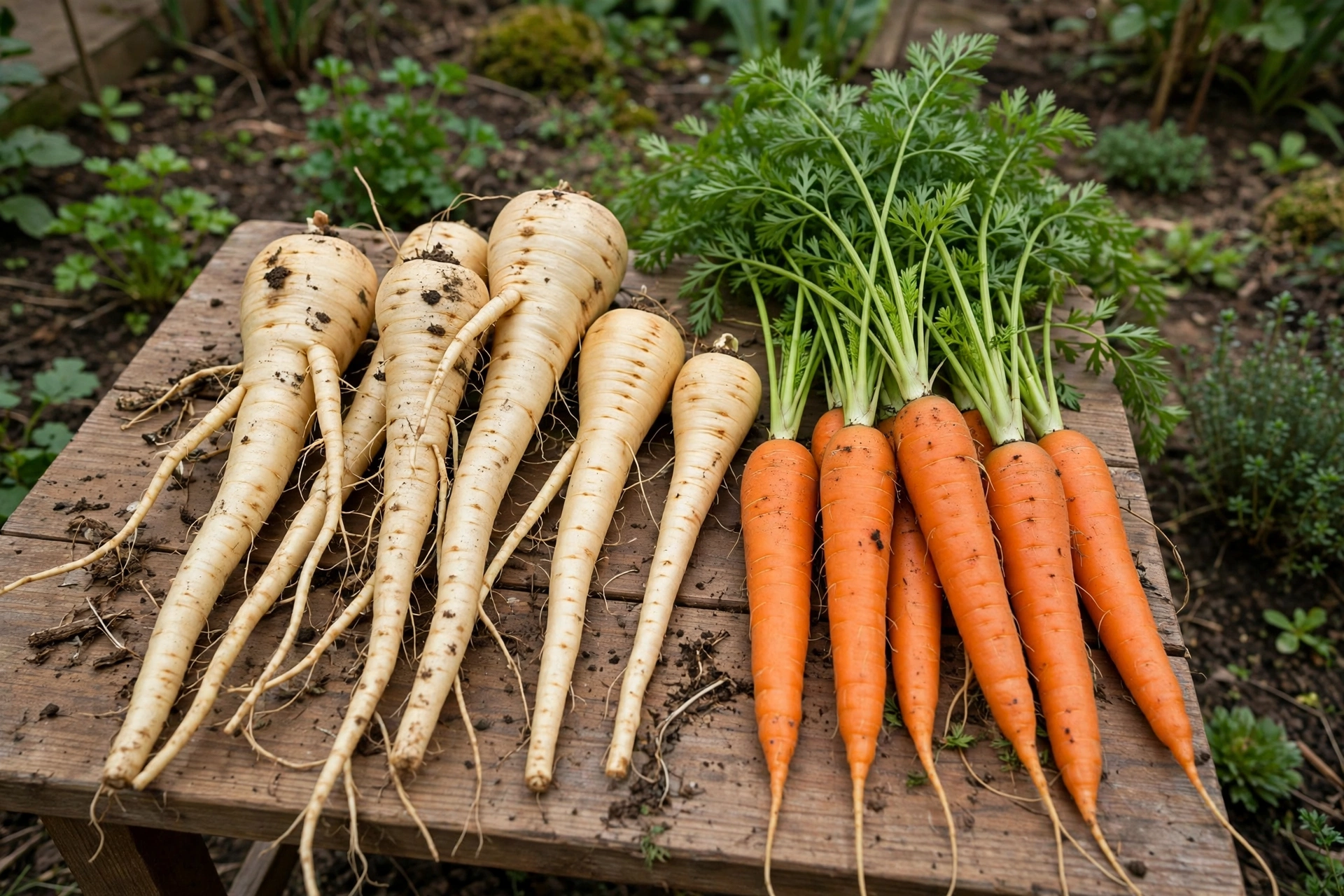
One more name belongs in the same drawer: the sweet potato is only distantly related to the ordinary potato, a nightshade. Three crops, three families, one confusing bin.
For the harvest end of the crop you can grow, a basket that treats thin skins gently earns its shelf space.
Harvest Basket
Wood and wire-mesh basket in 8- and 16-quart sizes — sweet potato skins bruise and skin at a touch, so carry them, don’t dump them.
Epic Grow Bags – Lined
Lined fabric bags from $29.99–$42.99 in sizes up to 15 gallons — the container route when a compact variety is all your space allows.
In an American store, the bin holds a sweet potato whatever the sign above it says. In your garden the same rule applies: the sweet potato is the one of the two that will actually come up.