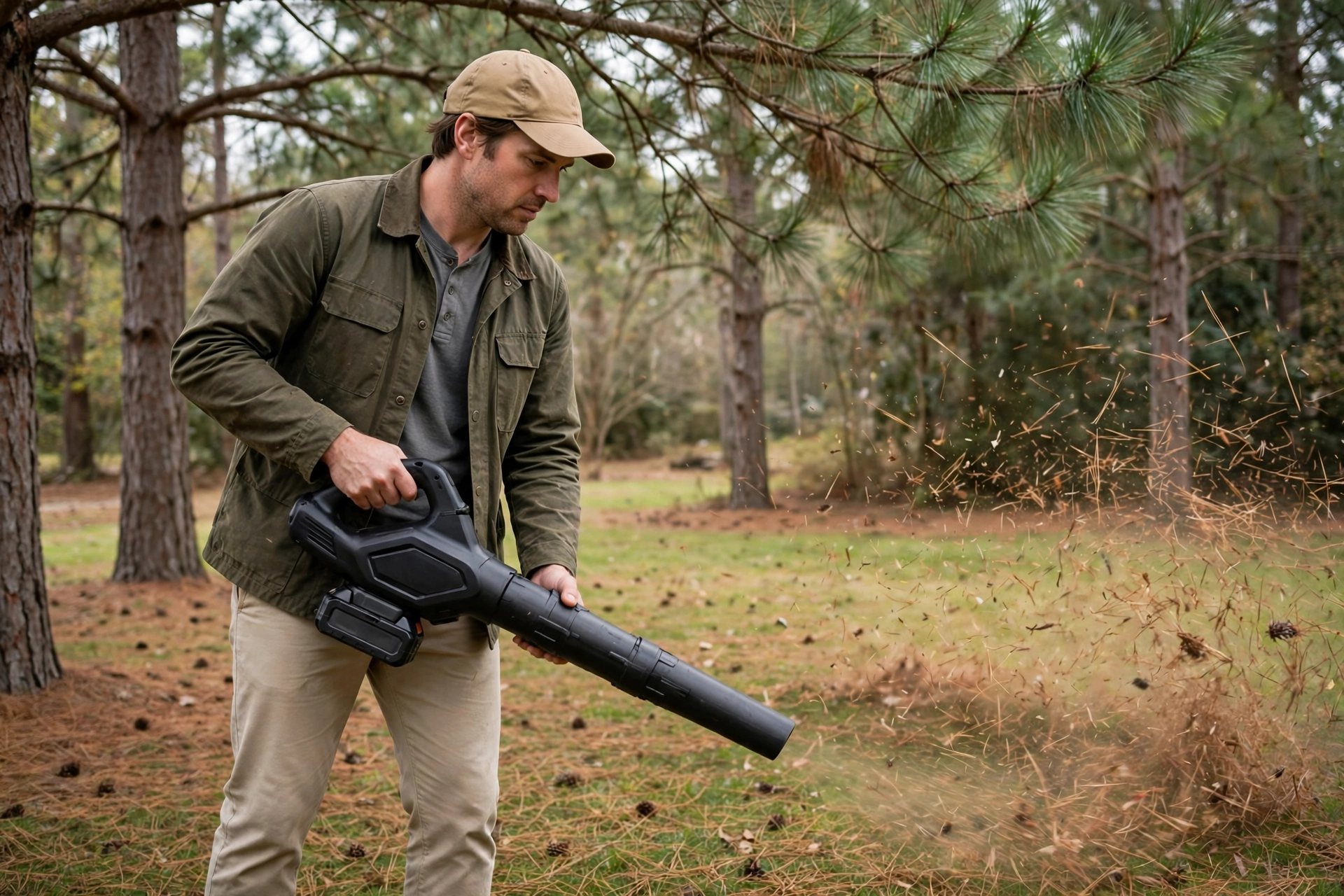
Can you use a leaf blower on pine needles? Yes — with one condition that decides the whole job. Dry needles blow cleanly off pavement, decks, and short grass, while wet needles mat together and barely move no matter how much air you push at them.
That single fact explains most of the frustration with this chore. Pick the tool by the condition of the needles, not by habit, and a yard under pines stays manageable instead of becoming a weekend project.
When a Blower Works Well
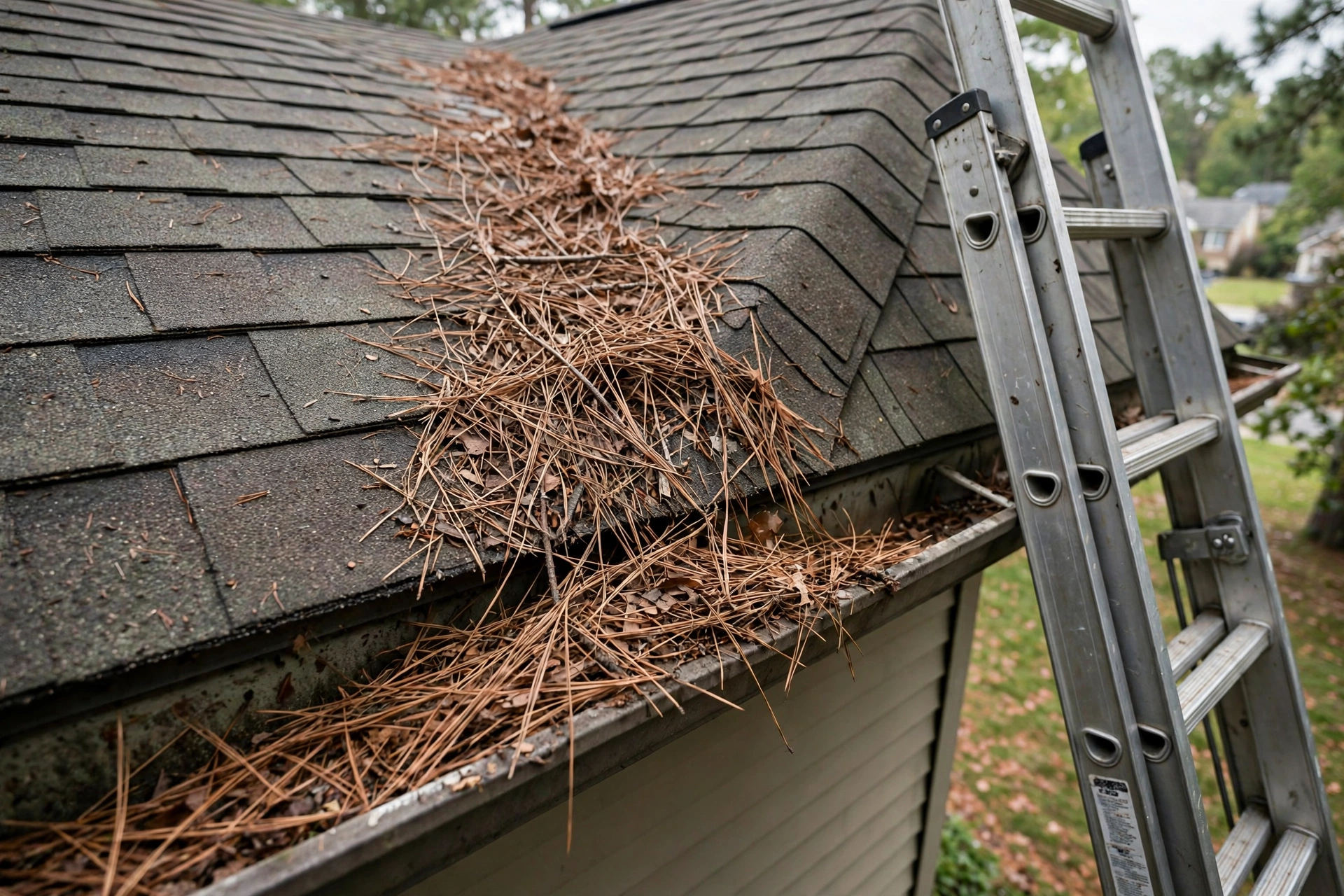
Dry needles on hard surfaces. Driveways, patios, decks, and walkways clear fast. Work in one direction toward a pile or a tarp, in short passes, so needles do not scatter back over ground you already finished.
Dry needles on short grass. A blower lifts loose needles off a closely mown lawn reasonably well, especially right after a fresh drop before rain presses them down.
When a Blower Loses
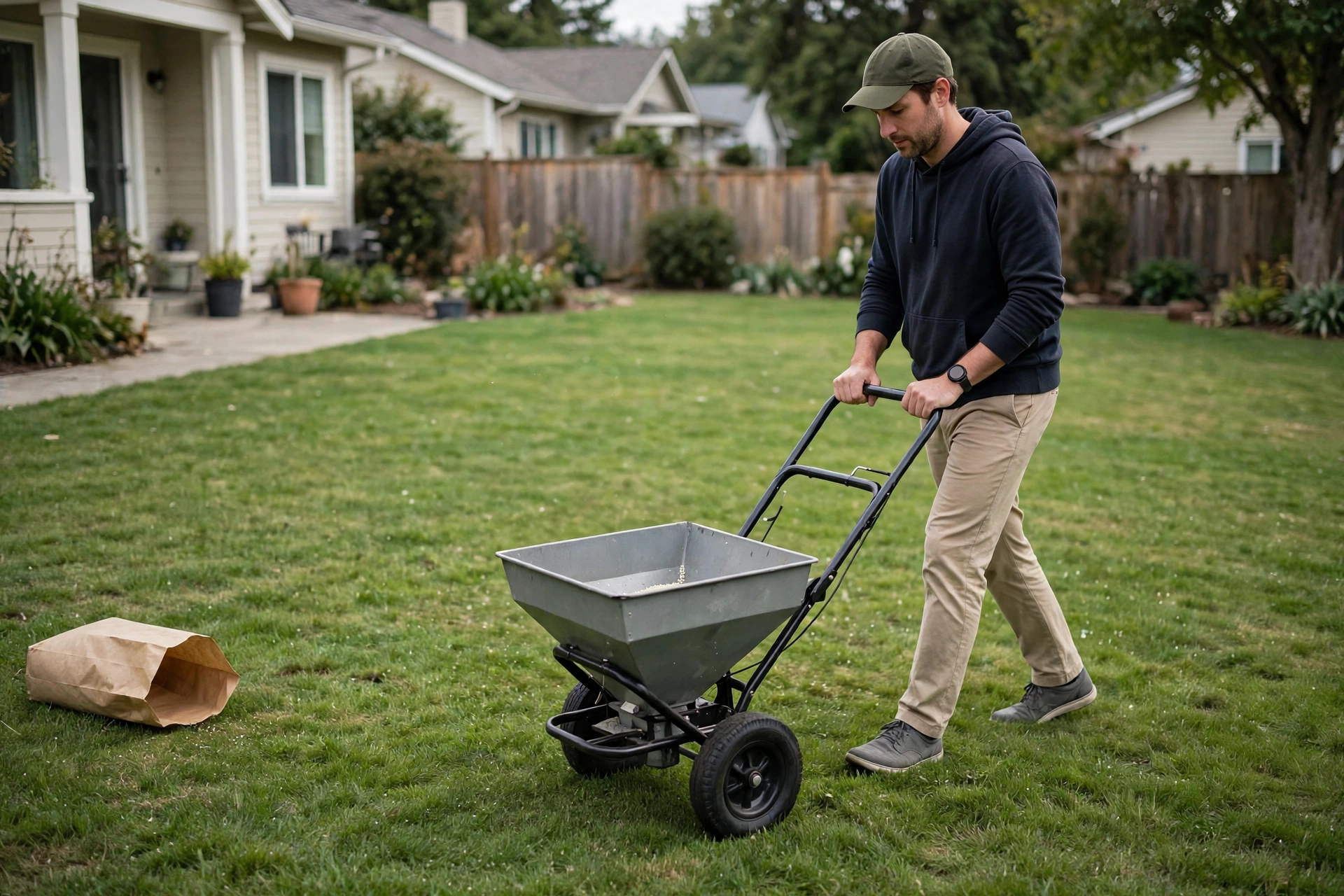
Wet, matted needles. After rain, needles interlock into a mat that air slides over. A rake or a lawn sweeper does this job better: the sweeper’s brushes pull needles out of the grass instead of skimming across them. Our guide to composting pine needles faster covers what to do with the pile once it is gathered.
Needles worked down into tall grass. The longer the turf, the deeper needles settle, and the less a blower can reach them. Mow first, then blow or sweep.
The Practical Order
Wait for a dry day when you can. Blow the hard surfaces and roof edges first, sweep or rake the lawn areas where needles have matted, and gather everything in one pass so you handle the pile once.
Pine straw you collect clean and dry has a use, too — as pine needle mulch in beds, where it settles without blowing around the way it does on open ground.
So the blower earns its place, as long as the needles are dry. Wet mats belong to the rake and the sweeper, and no amount of extra blowing changes that.