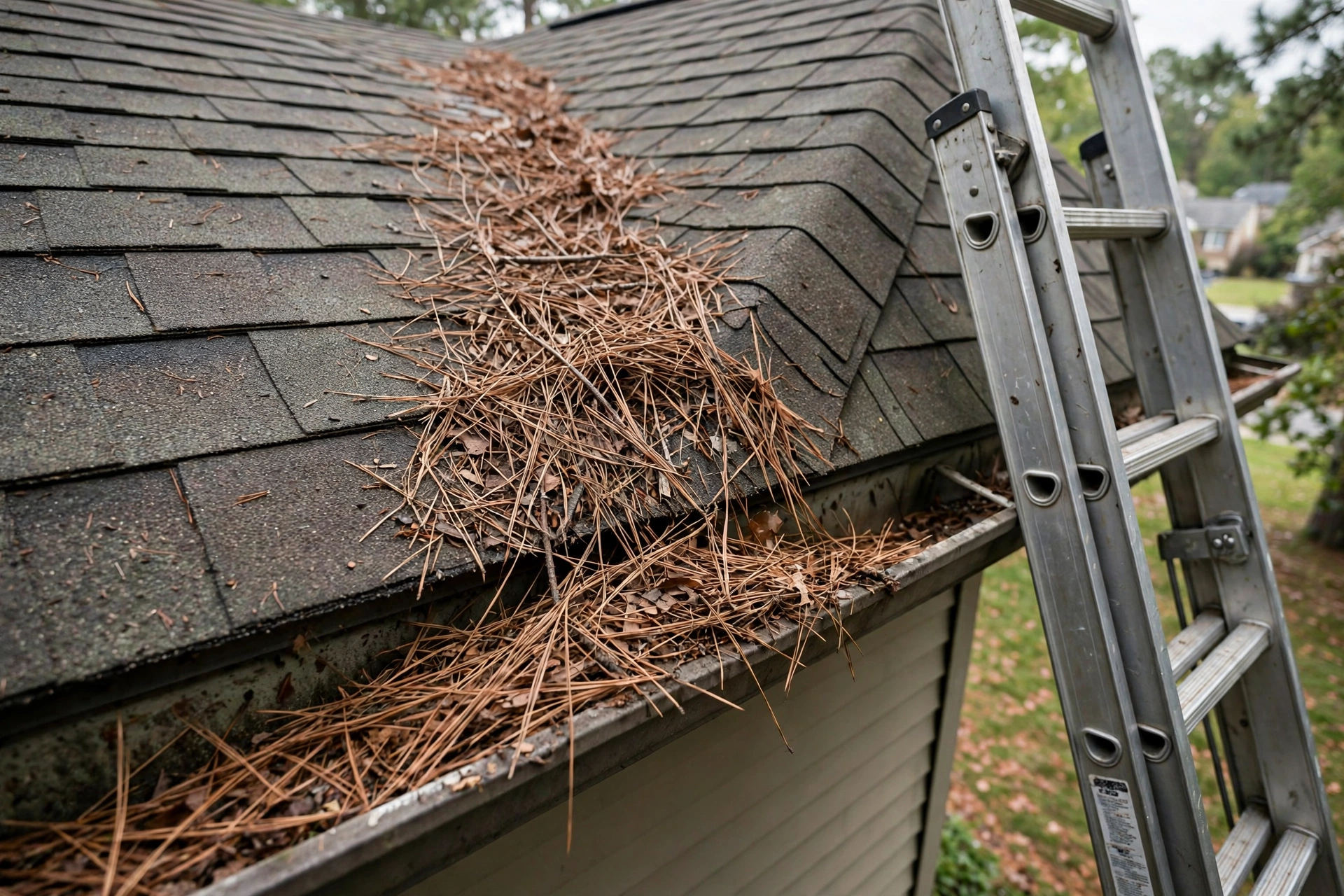
The common mistake is heading up a ladder with a metal rake and dragging it across the shingles. Pine needles come off a roof easily enough, but asphalt shingles lose their protective grit the same way, and a roof that sheds its grit ages years faster than it should.
Needles matter because they hold moisture against the roof and dam up valleys and gutters, so water backs up where it was never meant to sit. Work from the ground first, use soft tools on the roof itself, and save the ladder for the valleys and edges a blower cannot reach.
Start From the Ground
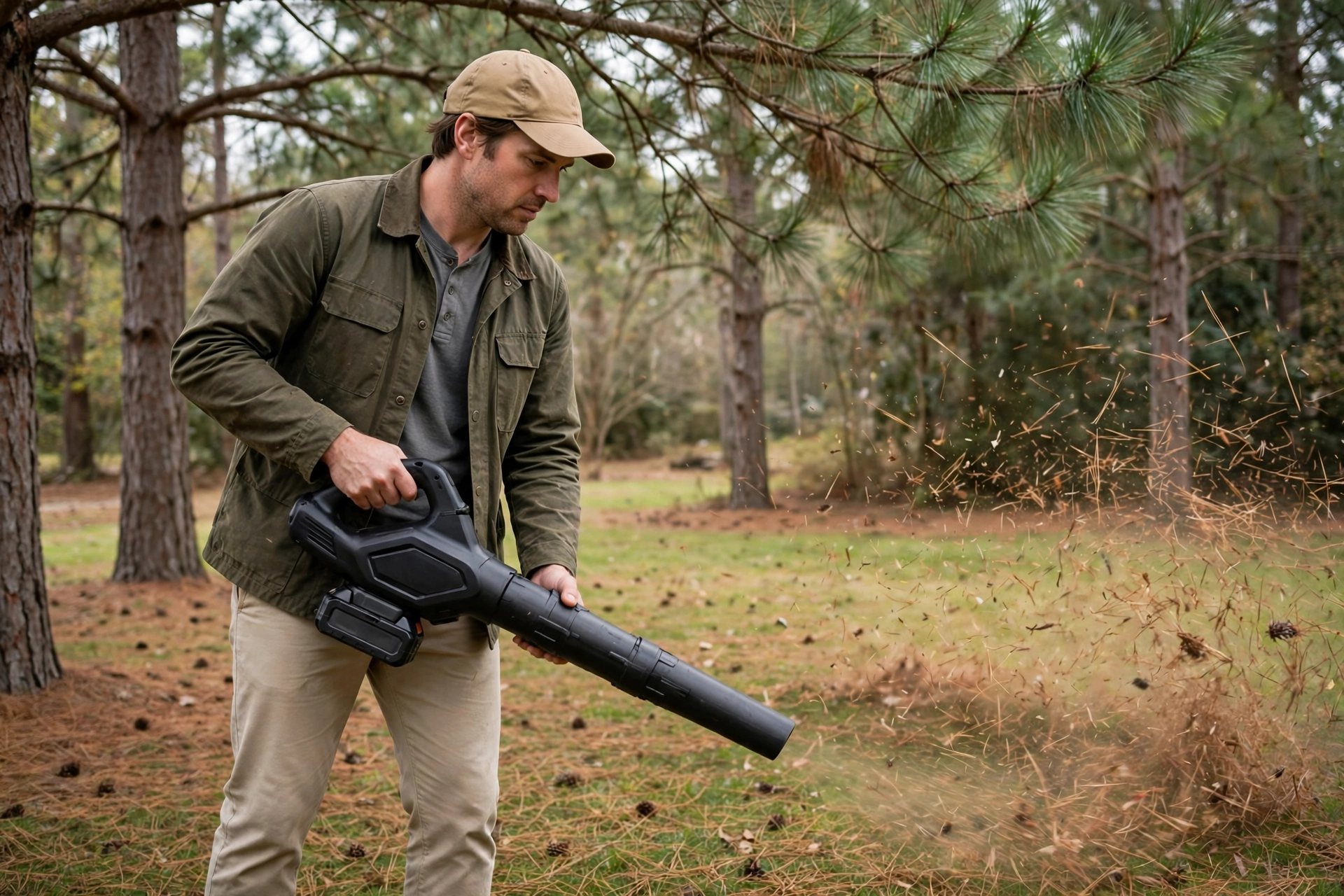
Blow what you can reach. A leaf blower aimed up-slope from a ladder at the eaves, or from the ground with an extension nozzle, clears most loose needles on low-pitch roofs without anyone walking the surface.
Clear the gutters in the same pass. Needles that leave the roof land in the gutter, so scoop them out by hand and flush the downspouts. Our guide to keeping pine needles out of gutters covers guards and screens that cut this chore down.
On the Roof: Soft Tools Only
Use a soft broom or a blower, never a metal rake. Sweep with the slope, not against it, so the broom does not catch shingle edges and lift them.
Work the valleys by hand. Valleys collect the deepest mats, sometimes two or three inches thick after a windy fall. Lift those mats out by hand or with a plastic scoop, because a packed valley is where leaks start.
Skip the pressure washer. A pressure washer strips grit even faster than a rake and can drive water under shingles. It has no place on an asphalt roof.
How Often, and Staying Safe
Under mature pines, plan on clearing the roof twice a year: once after the heaviest fall needle drop and once in spring. A single mature pine can drop enough needles in autumn to mat a valley in one season.
The roof gets slick underfoot where needles have sat and rotted, which is another reason the ground-first order matters. If the pitch is steep, the roof is two stories, or the mats have been sitting long enough to stain the shingles, hire the job out. Paying for one cleaning costs far less than replacing water-damaged decking.
Once the roof is clear, keep the yard side handled too: pine needle mulch puts the cleaned-up needles to work in beds instead of the trash. Clear from the ground first, use soft tools up top, and do the valleys by hand — that order protects both you and the shingles.