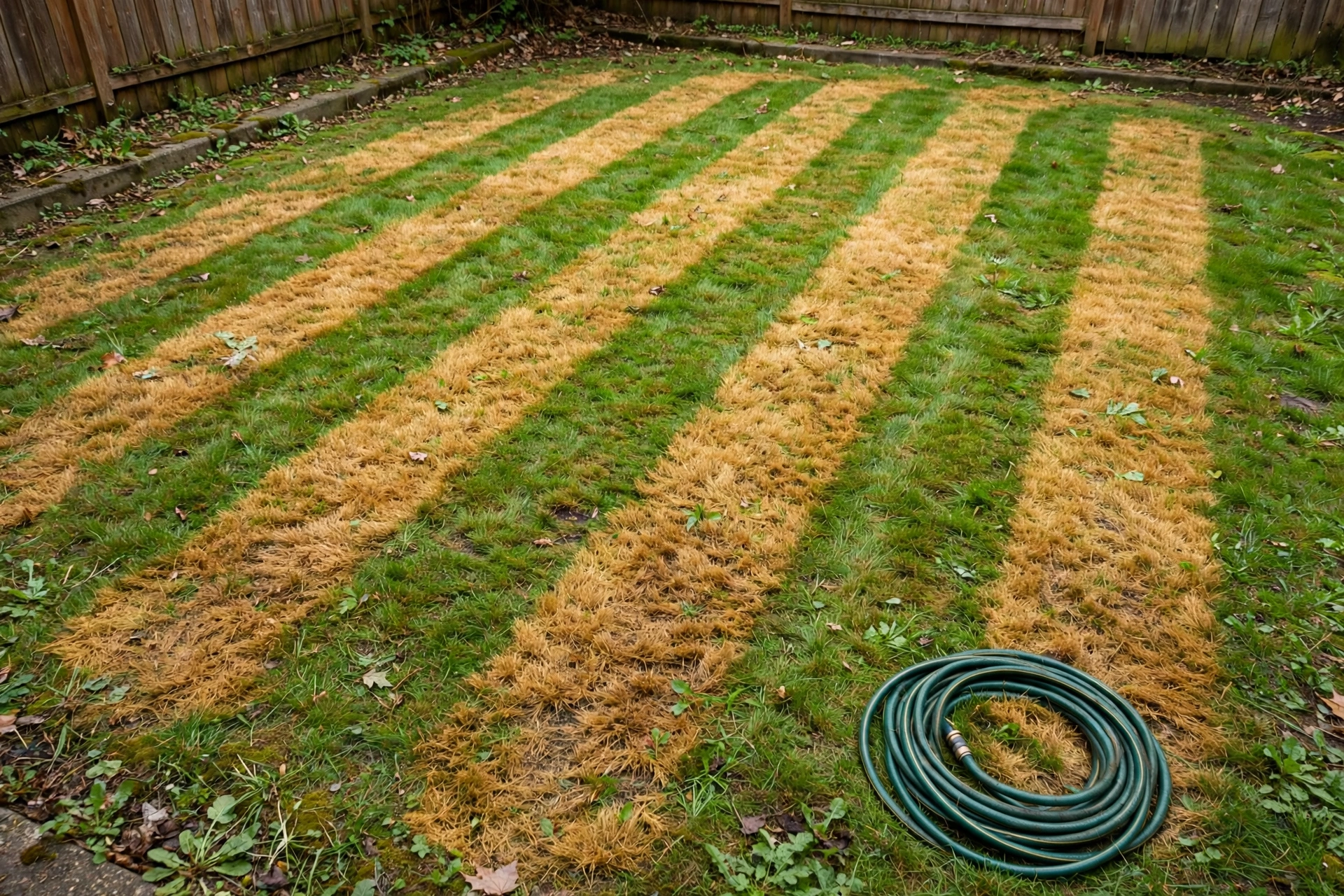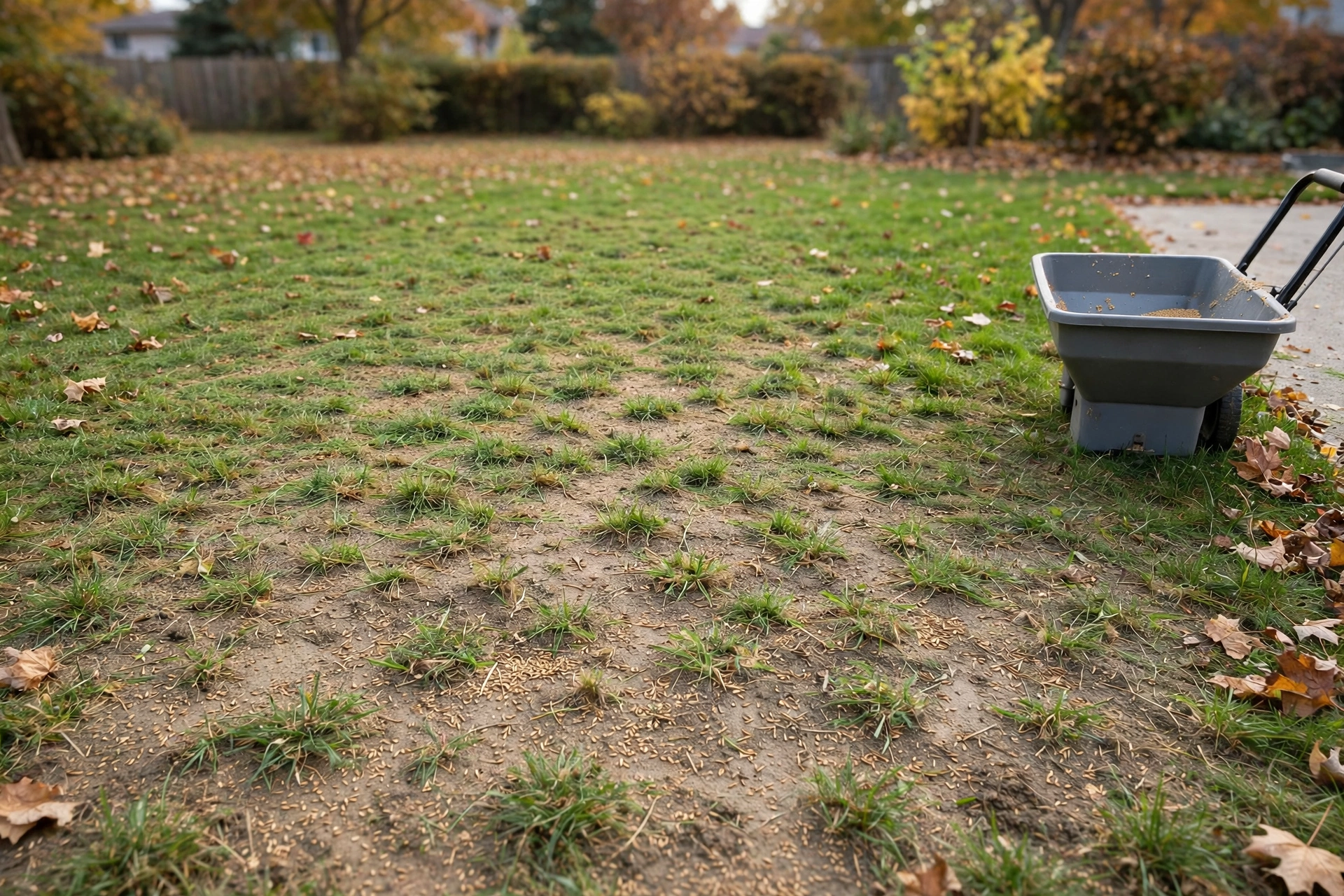
Fall is the season when overseeding either takes hold or quietly fails, and fertilizer timing is usually the difference. Seed that goes down hungry struggles, but seed that gets fed too heavily, too soon, can burn before it ever roots.
The rhythm is simple once you see it: a light starter feeding at seeding, then a pause while the new grass establishes, then a normal feeding once it has been mowed a few times.
At Seeding: A Light Starter Feeding
Apply starter fertilizer the same day you seed. Starter formulas carry phosphorus, which supports root growth in new seedlings. A typical rate is about 1 pound of nitrogen per 1,000 square feet or less — read the bag, because starter products vary.
Water it in lightly. New seed needs consistent surface moisture, and a light watering settles both seed and fertilizer against the soil where they belong.
The Pause: Four to Six Weeks
Hold off on further fertilizer for roughly 4 to 6 weeks after seeding. During that window the seedlings are putting energy into roots, and a heavy nitrogen push forces top growth they cannot support yet.
You will know the pause is ending when the new grass has been mowed two or three times. Mowing is the honest signal: grass tall enough to cut several times has roots deep enough to use a full feeding. If you are choosing between products for that first feeding, our comparison of 28-0-3 vs 10-10-10 fertilizer walks through which bag fits which lawn.
The Second Feeding and After
Feed again at 4 to 6 weeks with a balanced lawn fertilizer at the label rate, and water it in. From there, return to your normal seasonal schedule.
Do not apply weed-and-feed over new seed. The herbicide in those products can prevent germination or injure seedlings, and most labels tell you to wait until new grass has been mowed several times. Keep the two jobs separate this season.
Done in that order — starter with the seed, patience, then a normal feeding after a few mowings — an overseeded lawn goes into winter fed and rooted instead of pushed and thin. For late-season feeding choices, see our guide to the best winterizer fertilizer for cool-season lawns.