Landscape & Leisure is reader-supported. When you buy through links on our site, including Botanical Interests seed links, we may earn a commission at no extra cost to you. Prices change, so click through to confirm current pricing.
A beet pulled from cool soil on a fall evening tastes nothing like the canned kind, and once you have roasted a pan of them with nothing but oil and salt, the canned kind stops being an option. The good news is that beets are one of the easiest vegetables to grow from seed — the trick is picking a variety that matches what you actually want from the row, because a beet bred for baby roots and a beet bred for pickling are not the same plant at dinner.
Botanical Interests sells seven beet varieties, and six of them earn a place in this roundup. The seventh is here too, as the one to skip. Our growing guide covers the sowing, thinning, and harvest in detail, and our troubleshooting guide sorts out the beets that refuse to size up. If you grow other roots too, our carrot, beet, and radish roundup puts beets alongside their row-mates.
Red, Gold, and Candy-Striped: The Three Colors That Matter

Beets come in three colors, and color is the fastest way to sort the catalog. Red beets are the classic: deep color, earthy flavor, greens that rival chard. Golden beets are milder and sweeter, with none of the staining that turns hands and cutting boards pink. Candy-striped Chioggia beets hide pink and white rings inside a red skin, and they are the prettiest beet on the plate — until you cook them, when the rings fade. Pick your color first, then pick your variety inside it.
Best Overall: Detroit Dark Red
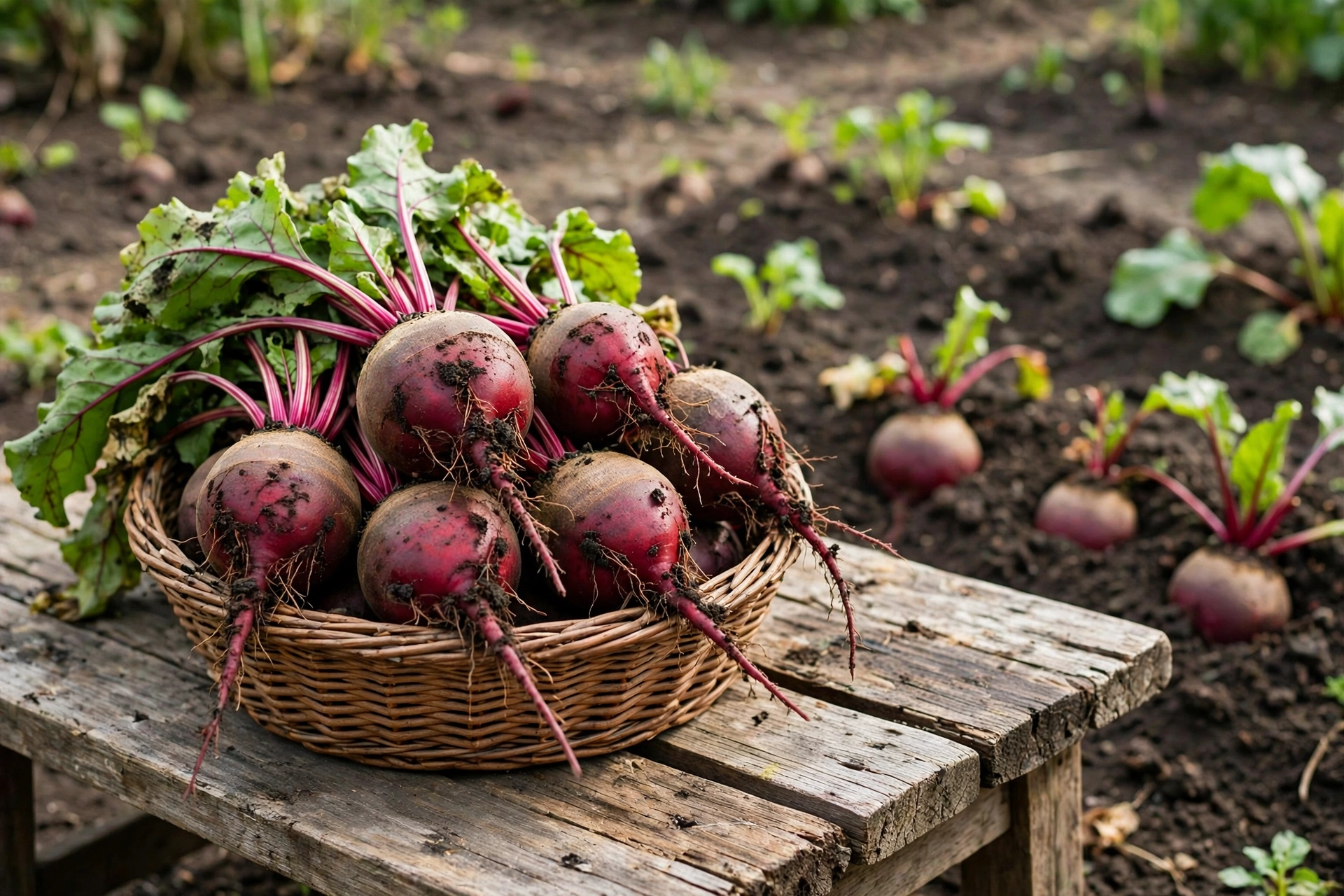
Detroit Dark Red has been the standard beet since 1892, and it is still the standard for a reason. The roots run 2½ to 3 inches, globe-shaped and blood red, and unlike smaller varieties they do not turn woody when they grow large. The greens are dark green on red stems, and Botanical Interests calls them out as particularly good eating — they rival chard and spinach for tenderness and flavor. It matures in 60 days, and gardeners rate it 4.6 from 15 reviews.
What makes it the overall pick is that it does everything well and nothing badly: pickling, roasting, raw in salads, and greens on the side. One packet sows 33 feet of row, so a single packet covers a serious bed. The honest trade-off is speed — at 60 days it is not the fastest beet here, and if you want roots in under seven weeks, Early Wonder beats it.
Pros: the standard since 1892; 2½–3-inch roots that stay tender when large; excellent greens; one packet sows 33 feet.
Cons: 60 days is mid-pack for speed; deep red means stained hands and boards.
Detroit Dark Red Beet Seeds
The standard since 1892 — tender 2½–3-inch roots and greens worth eating, for pickling, roasting, and salads.
Best Early Harvest: Early Wonder
Early Wonder has been delivering since 1911, and it earns its name twice over: the roots are ready in 48 days, and it grows well in cool spring soil when other beets are still sulking. The roots are smooth and slightly flattened, 1½ to 2½ inches across, and the greens run 18 inches tall — abundant enough that Botanical Interests calls this variety out as excellent for both greens and roots. Gardeners rate it 4.6 from 21 reviews.
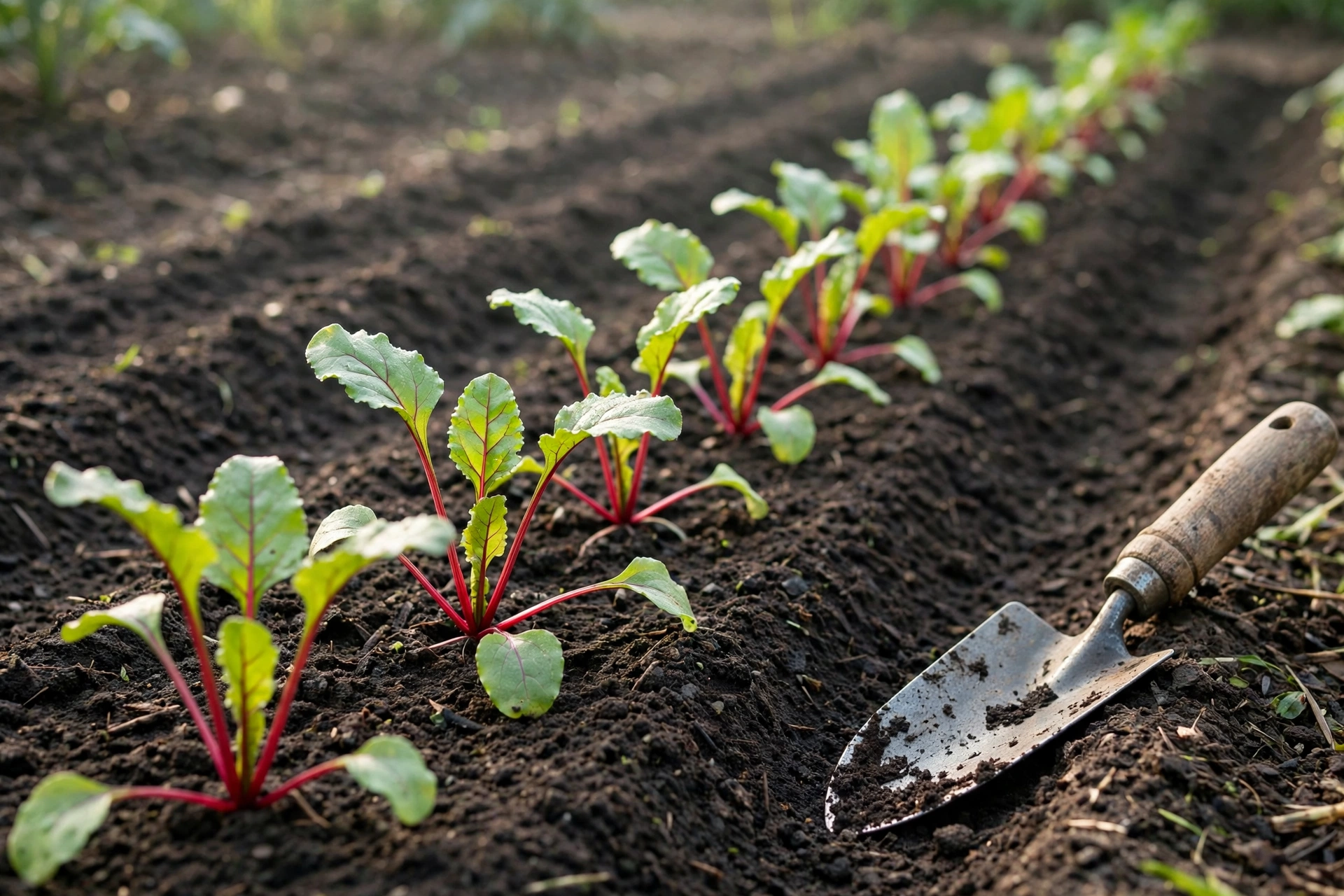
This is the beet to sow first, two to four weeks before your last frost, because it turns the earliest sowing into the earliest harvest. The trade-off is size: the roots stay smaller than Detroit Dark Red, so if you want big pickling beets, sow this one for the first cutting and Detroit for the main crop.
Pros: fastest here at 48 days; thrives in cool spring soil; 18-inch greens are a real harvest; 4.6 rating from 21 reviews.
Cons: smaller roots than Detroit Dark Red; best as an early crop, not the only crop.
Early Wonder Beet Seeds
Ready in 48 days with 18-inch greens — the beet to sow first, for the earliest roots of the season.
Best Blend: Gourmet Blend
Cannot decide between red, gold, and striped? Gourmet Blend decides for you. One packet holds three varieties — Detroit Dark Red, Chioggia, and Golden — and the roots come up 1 to 3 inches in red, orange, or pink-red, so a single row gives you a mixed harvest and a mixed plate. It matures in 65 days, and gardeners rate it 4.5 from 32 reviews.
The blend is the right buy when you want variety without buying three packets, and it is the only packet here that covers all three beet colors at once. Two honest notes: the organic heirloom variant is out of stock, so buy the conventional packet or the large packet, and at $5.99 it costs twice a single-variety packet — fair for three varieties in one, but not the cheapest way into beets.
Pros: three varieties, three colors, one packet; 4.5 from 32 reviews; the mixed plate, sorted.
Cons: $5.99, double a single-variety packet; organic heirloom variant currently out of stock.
Gourmet Blend Beet Seeds
Three varieties in one packet — red, gold, and candy-striped roots from a single row.
Best Baby Beet: Robin
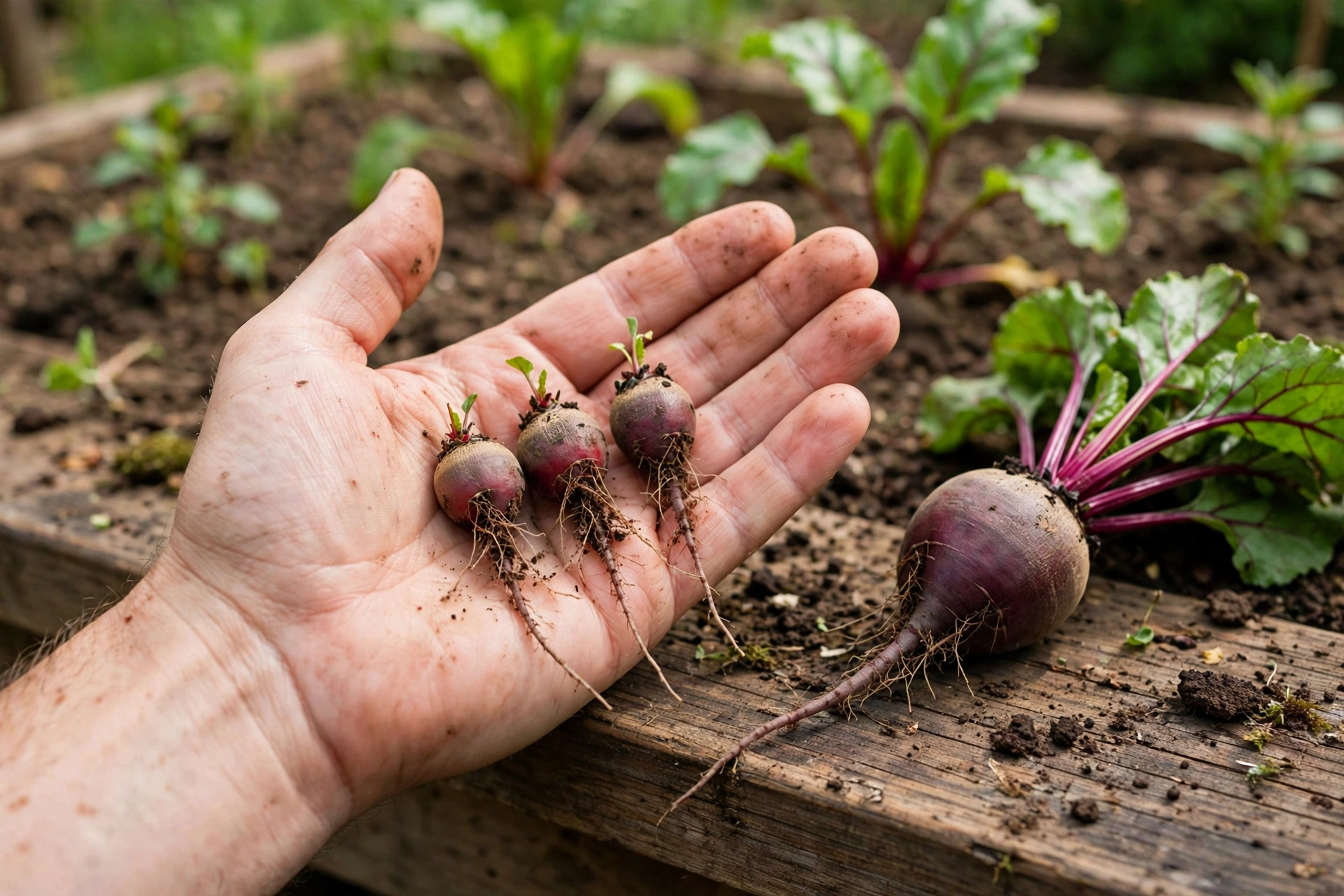
Robin is a hybrid bred for one job: baby beets. The roots are smooth, round, and red, meant to be pulled at just 1 to 1½ inches, when they are at their most tender and sweet — though they can reach 2½ inches if you let them. It matures in 45 to 60 days, it resists bolting, and it is marked as good for containers, which makes it the beet for a small bed or a big pot. Gardeners rate it 4.3 from 7 reviews.
Pull them young and they are excellent raw, roasted, or canned, and the baby greens are tender enough for salads. One packet tip worth following: soak the seeds for 2 to 24 hours before sowing to hasten germination. The trade-off is the small review count — 7 reviews is the thinnest pile here — and the roots are not the pick if you want big storage beets.
Pros: bred for tender 1–1½-inch baby beets; bolt resistant; good for containers; soak-and-sow germination tip on the packet.
Cons: only 7 reviews; baby-sized roots, not storage beets.
Robin Beet Seeds
A hybrid bred for tender 1–1½-inch baby beets — bolt resistant, and happy in a container.
Best Golden Flavor: Golden Boy
Golden Boy is the golden beet that makes converts. The flesh is golden-orange, the roots are uniform globes with refined taproots, and the flavor is deliciously mild — sweet, without the strong earthy edge that puts some people off red beets. It does not stain like reds, the greens are tender and delicious, and it is sweetest and most tender when picked young. It matures in 65 to 70 days, and gardeners rate it 3.9 from 22 reviews.
That 3.9 deserves a straight look, because the reviews split. One gardener calls it her favorite beet, sweet and hardy and pest resistant; another reports less than 20% of the seeds sprouting. Golden beets are simply harder to get going than reds, and Golden Boy shows it. Sow it thick, thin hard, and keep the row moist for the first two weeks, and the flavor is worth the fuss — but if spotty germination would ruin your season, Touchstone Gold below is the safer golden.
Pros: sweet, mild flavor with no staining; uniform golden globes; tender greens; strong stems make an attractive bunch.
Cons: 3.9 rating with germination complaints in the reviews; golden beets are harder to establish than reds.
Golden Boy Beet Seeds
Sweet, mild, and stain-free — the tastiest golden beet here, with germination that asks for patience.
Most Reliable Golden: Touchstone Gold
Touchstone Gold is the golden beet for gardeners who read Golden Boy’s reviews and flinched. The roots are golden globes up to 3 inches across, extra sweet and less earthy than red beets, and Botanical Interests says this variety offers improved germination and performance over other golden cultivars — the exact weakness in Golden Boy’s reviews. It matures in 85 to 90 days, and gardeners rate it 4.2 from 17 reviews.
The trade-off is time. At 85 to 90 days it is the slowest beet in this roundup by three weeks, so sow it with your earliest spring planting and give it the full season. Picked at 1 to 3 inches it is at its best, and grown alongside red and striped beets it turns a harvest into a plate of color. One packet sows only 11 feet, the shortest listed coverage here, so a big golden bed takes two packets.
Pros: improved germination over other golden varieties; extra sweet, less earthy; golden globes up to 3 inches.
Cons: 85–90 days, the slowest here; one packet sows only 11 feet; $5.99, tied with Gourmet Blend as the highest price here.
Touchstone Gold Beet Seeds
The golden beet with better germination — extra sweet, slow to mature, and worth the wait.
The One We Skipped: Chioggia
Chioggia is the Italian heirloom from the mid-1800s, named for a fishing village near Venice, and its pink and white rings are the prettiest thing in this roundup — on a raw slice. It matures in 55 days, the greens are delicious, and the roots are tasty roasted, steamed, and pickled. It is also the lowest-rated beet here at 3.8 from 8 reviews, and every beet above it outranks it. The rings fade when cooked, which takes away the one thing that sets it apart. If you already grow Chioggia and love the look of it raw, keep growing it. If you are buying fresh, Gourmet Blend includes Chioggia alongside Detroit Dark Red and Golden, so you get the stripes without betting the whole row on them.
How the Seven Compare
| Variety | Days to harvest | Root size | Best for | Price | Rating |
|---|---|---|---|---|---|
| Detroit Dark Red | 60 days | 2½–3 in., globe | Pickling, roasting, greens | $2.99 | 4.6 from 15 reviews |
| Early Wonder | 48 days | 1½–2½ in., flattened | Earliest harvest, greens | $2.99 | 4.6 from 21 reviews |
| Gourmet Blend | 65 days | 1–3 in., mixed colors | Three colors, one row | $5.99 | 4.5 from 32 reviews |
| Robin | 45–60 days | 1–1½ in. baby | Baby beets, containers | $3.49 | 4.3 from 7 reviews |
| Golden Boy | 65–70 days | Uniform golden globes | Sweet, mild, stain-free | $3.49 | 3.9 from 22 reviews |
| Touchstone Gold | 85–90 days | Golden globes to 3 in. | Reliable golden harvest | $5.99 | 4.2 from 17 reviews |
| Chioggia (our skip) | 55 days | 1–3 in., pink/white rings | Raw slices, color | $3.49 | 3.8 from 8 reviews |
Bottom Line
Start with Detroit Dark Red and Early Wonder. The first gives you the classic beet for pickling and roasting, the second gives you roots in under seven weeks, and together they cost $5.98. Add Gourmet Blend if you want all three colors from one row, Robin if baby beets are the point, and Touchstone Gold if you want golden beets without gambling on germination. Golden Boy has the sweetest flavor of the goldens, but only if you are willing to sow thick and thin hard. All six packets together cost under $25, and the two that matter most cost $2.99 each.