Landscape & Leisure is reader-supported. When you buy through links on our site, including Botanical Interests seed links, we may earn a commission at no extra cost to you. Prices change, so click through to confirm current pricing.
By the time the soil has warmed enough to work without clumping on the trowel, the beet row is one of the first things worth sowing. Beets are cool-season plants that tolerate frost, so they go in weeks before the tomatoes, and they ask for almost nothing after that — one careful thinning, steady water, and a harvest before the summer heat. Skip the thinning, though, and the row stays a crowd of seedlings fighting over the same four inches.
Our beet variety roundup sorts out which seeds to buy, and our direct-sowing guide for root vegetables puts beets alongside carrots and radishes.
When to Sow Beets
Beets want cool soil on its way up, sown in the weeks when spring is still warming the ground. Sow two to four weeks before your average last frost date, once the soil is at least 45°F and ideally 60° to 85°F — that is the window Botanical Interests prints on every beet packet, and it lines up with the University of Minnesota Extension planting window of mid-April to mid-June. A soil thermometer settles the question faster than the calendar does.
For a fall crop, sow six to eight weeks before your average first fall frost date, so the roots size up before the first heavy freeze. In mild climates you can sow fall through winter and harvest in early spring. And here is the timing rule that shapes everything else: beets do not tolerate transplanting, so direct sow is the only start they get. The University of Minnesota Extension says so plainly — root disturbance delays maturity — which means no indoor head start and no moving seedlings around later.
Sowing: Half an Inch, Four Inches Apart
Beet seed is not one seed. Each wrinkled cluster is a dried fruit holding one to five seeds, which is why a beet row always comes up crowded and why thinning is not optional. Sow the clusters half an inch deep, one every four inches, in rows 12 inches apart.
1. Work the bed loose first. Beets size up in loose soil and stall in crusty, compacted ground, so fork the top few inches and rake it smooth before you sow. University of Minnesota Extension researchers found higher marketable yields from raised beds than flat ground in their Waseca trials, and the reason is the same: loose soil lets roots swell.
2. Sow half an inch deep, one cluster every four inches. Shallower and the seed dries out; deeper and it struggles to emerge. Rows go 12 inches apart, which leaves room to hoe between them.
3. Keep the row moist until the seedlings are up. Germination takes 5 to 21 days, and beets are finicky about moisture in those first couple of weeks — University of Minnesota Extension notes that constant moisture matters most right after planting, especially in soils that crust. A strip of row cover or burlap over the row holds moisture near the soil, and it comes off once the seedlings are standing.
4. Soak if you are growing Robin. Robin’s packet carries a tip worth following: soak the seeds for 2 to 24 hours before sowing to hasten germination. It is the one variety here with that note on the packet, and it is the one bred for baby beets, where a fast, even start matters most.
Thinning: The Step That Decides the Harvest
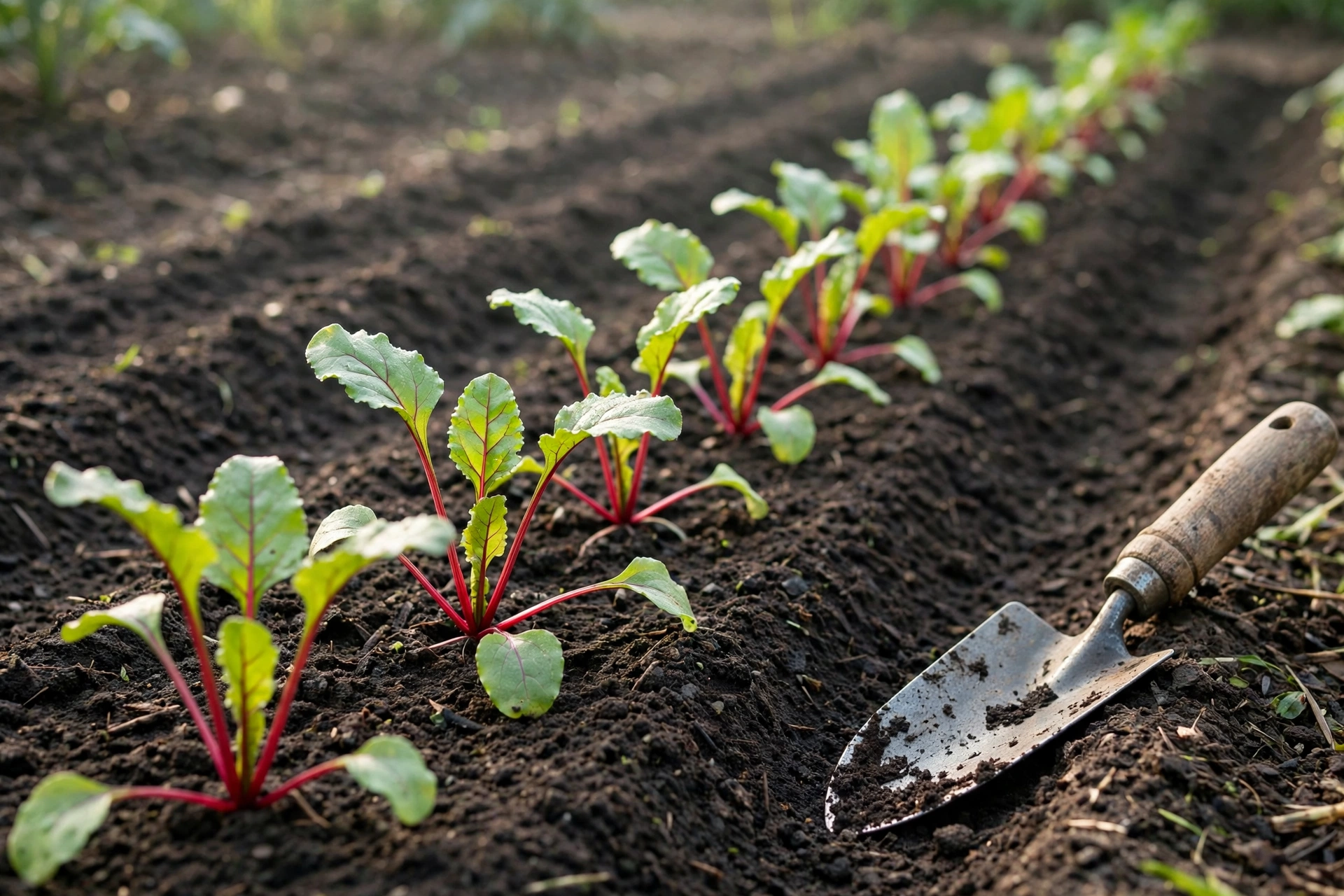
When the seedlings are two inches tall, thin to one plant every four inches. This is the step most people skip, and it is the step that decides whether you pull beets or marbles. Because each seed cluster holds several seeds, every spot in the row comes up as a clump, and a clump left alone grows into a tangle of thin roots instead of one fat one.
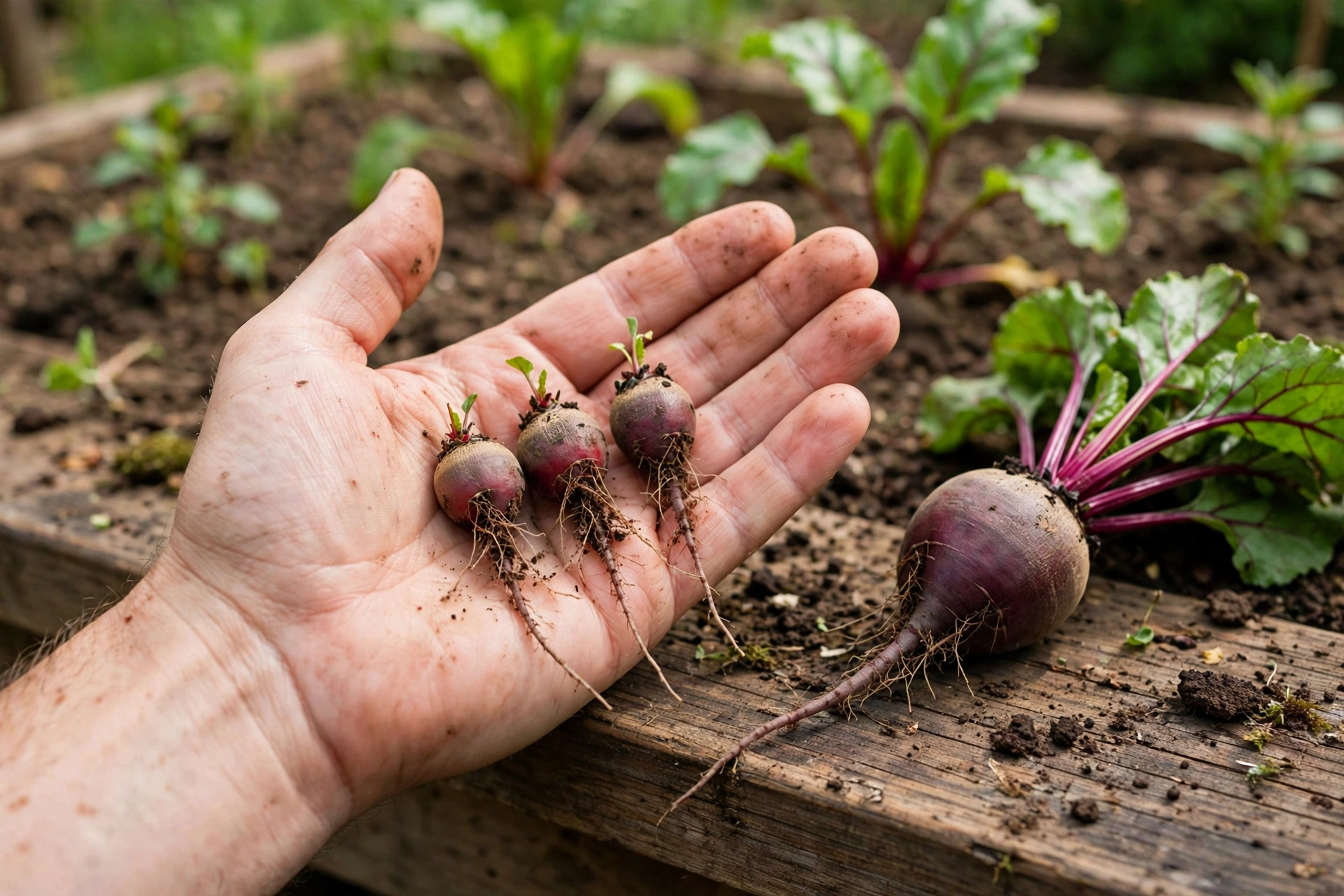
The thinnings are not waste. Snip them at soil level rather than pulling them, so you do not disturb the roots of the plant you are keeping, and eat the thinnings — young beet greens are tender in salads, and Botanical Interests notes that the greens of Detroit Dark Red rival chard and spinach. One packet of Detroit Dark Red sows 33 feet of row, so a single thinning session fills a salad bowl and leaves a properly spaced row behind it.
Watering Through the Season
Beets want steady moisture, not feast and famine. Water when the top inch of soil dries out, and water at the base rather than overhead where you can — wet leaves invite cercospora leaf spot, the circular spots with red borders and pale centers that University of Minnesota Extension flags as the common beet leaf disease, and limiting leaf wetness slows it down. A light mulch between the rows helps hold moisture and keeps the soil from crusting after a hard rain.
The first two weeks after sowing are the thirstiest, and a dry spell then can stall germination outright. After the plants are established, the rule is simpler: keep the soil evenly moist, and the roots will keep swelling. Our troubleshooting guide walks through the five usual causes.
Beet Varieties for This Guide
Three packets cover the sowing in this guide: Detroit Dark Red for the main crop, Early Wonder for the earliest roots, and Robin for baby beets and containers.
Detroit Dark Red Beet Seeds
The standard since 1892 — tender 2½–3-inch roots that stay tender when large, and greens worth eating.
Early Wonder Beet Seeds
Ready in 48 days with 18-inch greens — the beet to sow first, for the earliest roots of the season.
Robin Beet Seeds
A hybrid bred for tender 1–1½-inch baby beets — bolt resistant, and happy in a container.
Sowing and Harvest at a Glance
| Step | When / how | Why it matters |
|---|---|---|
| Sow | 2–4 weeks before last frost; soil 45°F+, ideally 60°–85°F | Cool-season crop; warm soil speeds germination |
| Depth and spacing | ½ inch deep; 1 cluster every 4 inches; rows 12 inches apart | Room for roots to swell without crowding |
| Germination | 5–21 days; keep the row moist; cover with burlap if the soil crusts | Dry seedbeds stall or fail outright |
| Thin | At 2 inches tall, thin to 1 plant every 4 inches; snip, do not pull | Each seed cluster holds 1–5 seeds; unthinned clumps stay small |
| Water | Steady moisture; water at the base; mulch between rows | Even water grows even roots; wet leaves invite leaf spot |
| Fall crop | Sow 6–8 weeks before first fall frost; harvest before heavy freeze | A light frost sweetens the roots |
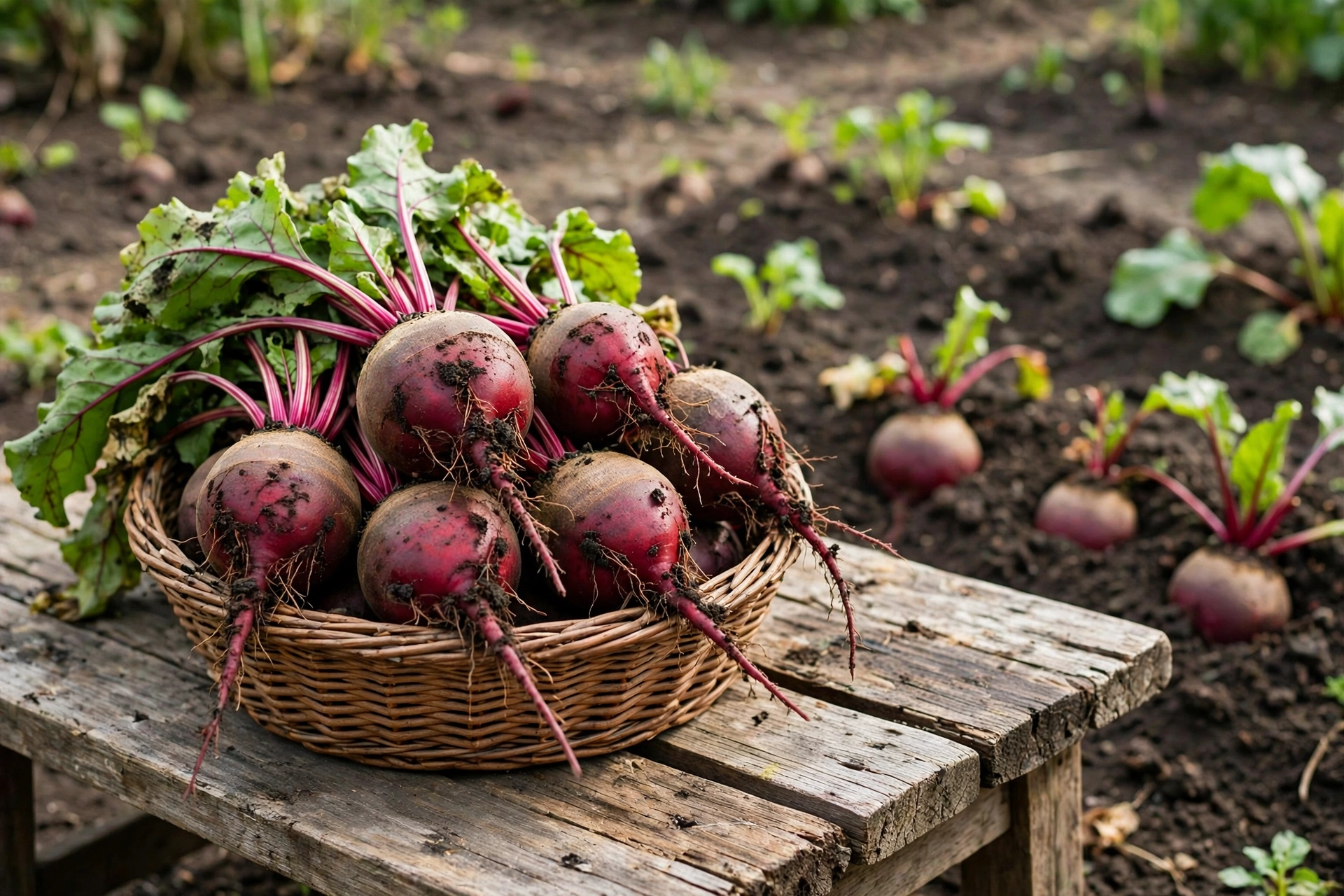
| Harvest | Roots 1–3 inches; greens from 2 inches tall, take at most a third of the outer leaves | Smaller roots are more tender; the plant keeps growing |
What to Watch Next
Once the seedlings are up and thinned, the signs of a good crop are simple: steady top growth, leaves standing upright, and shoulders starting to push out of the soil at the right size. The one mistake that undoes it is letting the row dry out in the first two weeks, when the seed is still deciding whether to sprout. Keep the row moist, thin on time, and pull them small — the rest of the season mostly takes care of itself.