Landscape & Leisure is reader-supported. When you buy through links on our site, including Botanical Interests seed links, we may earn a commission at no extra cost to you. Prices change, so click through to confirm current pricing.
Which broccoli variety should you actually plant? It is the right question to ask before the packet order, because the six varieties below do not do the same job — one makes a single big head and stops, another makes a small head on purpose and then pays you back in side shoots for weeks.
Get that choice wrong and the harvest feels thin no matter how well you grow it. Get it right and the same bed keeps producing long after the first cutting. This roundup settles the variety question first; the growing mechanics live in my guide to growing broccoli from seed, and the head-versus-stem decision gets its own treatment in broccoli heads vs broccolini.
The Six Varieties, Side by Side
| Variety | Days | Head | Spacing | Rating |
|---|---|---|---|---|
| Belstar | 65–70 | 6–8 in, tight | 24 in | 4.4/30 |
| Di Cicco | 48 | 3–4 in, then shoots | 18 in | 4.6/22 |
| Waltham 29 | 75 | 4–6 in | 24 in | 4.2/21 |
| Burgundy | 68–75 | Small, purple, sprouting | 24 in | 4.2/37 |
| Aspabroc (Broccolini) | 60 | 1–2 in florets on stems | 18–24 in | 3.8/5 |
| Rapini (Broccoli Raab) | 45 | Buds, stems, and leaves | 6–12 in | 4.2/25 |
Belstar — Best Overall
Belstar is the variety I would hand a first-time broccoli grower, because it forgives the mistake that ruins most first plantings: a warm spell arriving right as the head forms. The packet lists it as selected for heat tolerance, suited to spring or late-summer sowing, with big 6 to 8 inch blue-green heads that pack tightly.
The trade-off is patience and price. At 65 to 70 days it is not the fastest variety here, and at $4.49 the packet costs more than the heirlooms below. What you get for it is a head that holds together when the weather wobbles, followed by smaller side shoots after the main cutting.
- Pros: heat tolerant; large, tight 6–8 inch heads; side shoots follow the main head
- Cons: 65–70 days; pricier packet at $4.49
Belstar Broccoli Seeds
Heat-tolerant hybrid with tight 6–8 inch heads and a run of side shoots after the main cutting.
Check Price at Botanical InterestsDi Cicco — Best for Side Shoots
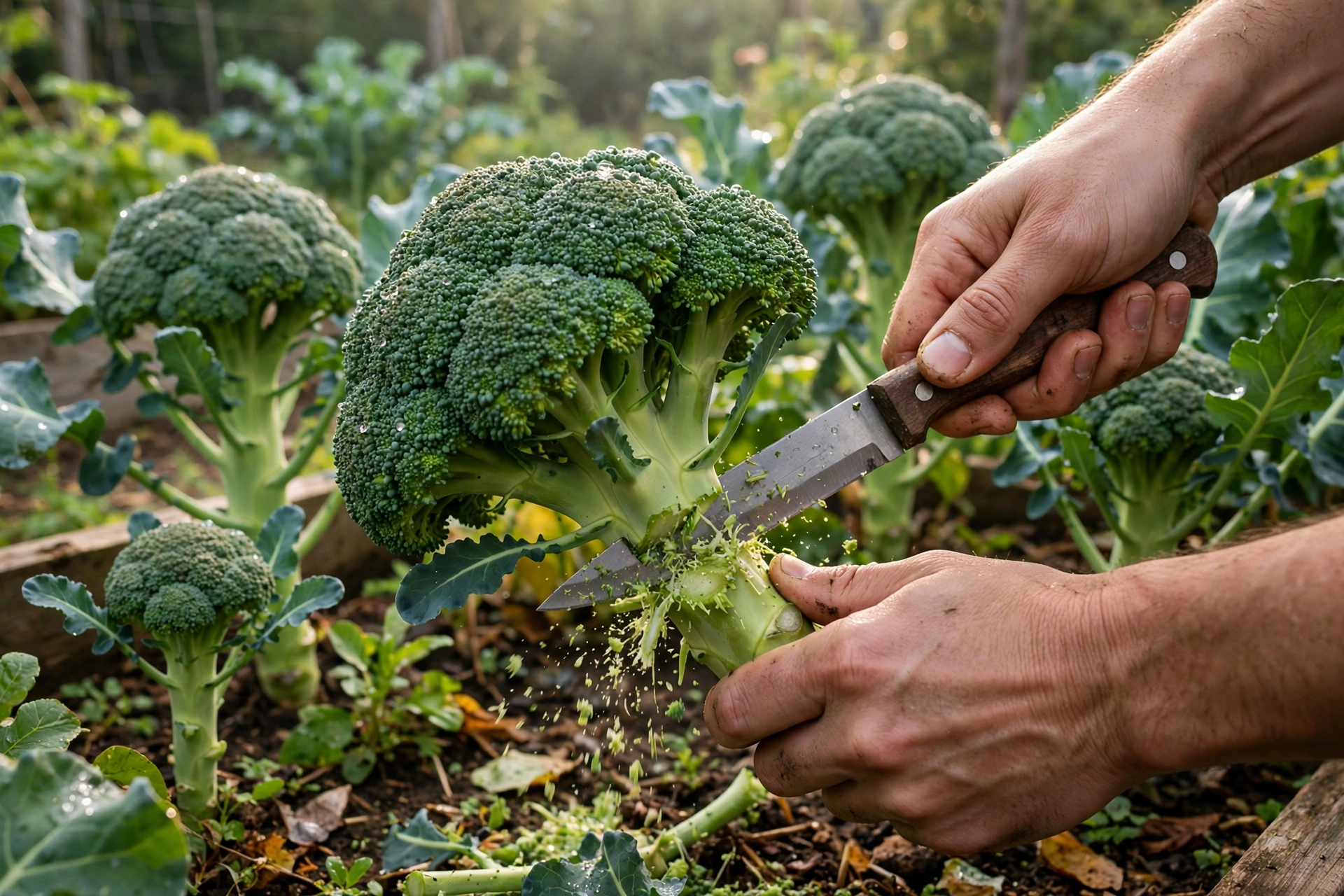
Di Cicco plays a different game entirely. This Italian heirloom, introduced in 1890, makes a modest 3 to 4 inch central head in just 48 days — cut it at 3 inches, the packet says, and the plant answers with lots of smaller florets over a long period.
I reach for Di Cicco when the bed is small and the kitchen wants broccoli a few florets at a time rather than one big haul. It also takes the tightest spacing of the heading types here, one plant every 18 inches, and the leaves cook like chard if you want them.
- Pros: fastest heading variety at 48 days; heavy side-shoot production; $2.69
- Cons: small 3–4 inch main head; tall plants, over 24 inches
Di Cicco Broccoli Seeds
48-day Italian heirloom that trades one big head for weeks of smaller florets.
Check Price at Botanical Interests
Waltham 29 — Best for Cold Climates
Waltham 29 is the cold-weather specialist of the list, specially adapted for cold tolerance per the packet, with 4 to 6 inch blue-green heads at 75 days and prolific side shoots behind them. It freezes well, which matters when a fall planting all comes ready in the same week.
Seventy-five days is the slowest finish here, so Waltham asks for an early start indoors — the timing math is in the growing guide. For a short-season garden that can start early, its cold tolerance is worth more than speed.
- Pros: bred for cold tolerance; freezes well; prolific side shoots; $2.69
- Cons: slowest at 75 days; needs the indoor head start in short seasons
Waltham 29 Broccoli Seeds
Cold-tolerant heirloom with 4–6 inch heads that freeze well and keep shooting after cutting.
Check Price at Botanical InterestsBurgundy — Best Sprouting Broccoli
Burgundy makes one moderate to small main head in purple, and then the real show starts: generous side shoots over a long harvest period. Purple broccolis have a reputation for wanting cool temperatures, and the packet is plain that Burgundy tolerates a wider range, which is why it keeps producing when a fussier sprouting type would sulk.
It is also the only variety here with a named disease resistance — Fusarium yellows resistant — and at $4.99 it is the priciest packet in the roundup. Plant it for the dinner plate, not the freezer bag: purple shoots picked a few at a time, over weeks.
- Pros: long side-shoot harvest; tolerates a wider temperature range; Fusarium yellows resistant
- Cons: priciest packet at $4.99; small main head by design
Burgundy Broccoli Seeds
Purple sprouting broccoli with a long side-shoot season and Fusarium yellows resistance.
Check Price at Botanical InterestsAspabroc — the Broccolini Pick, with a Caveat
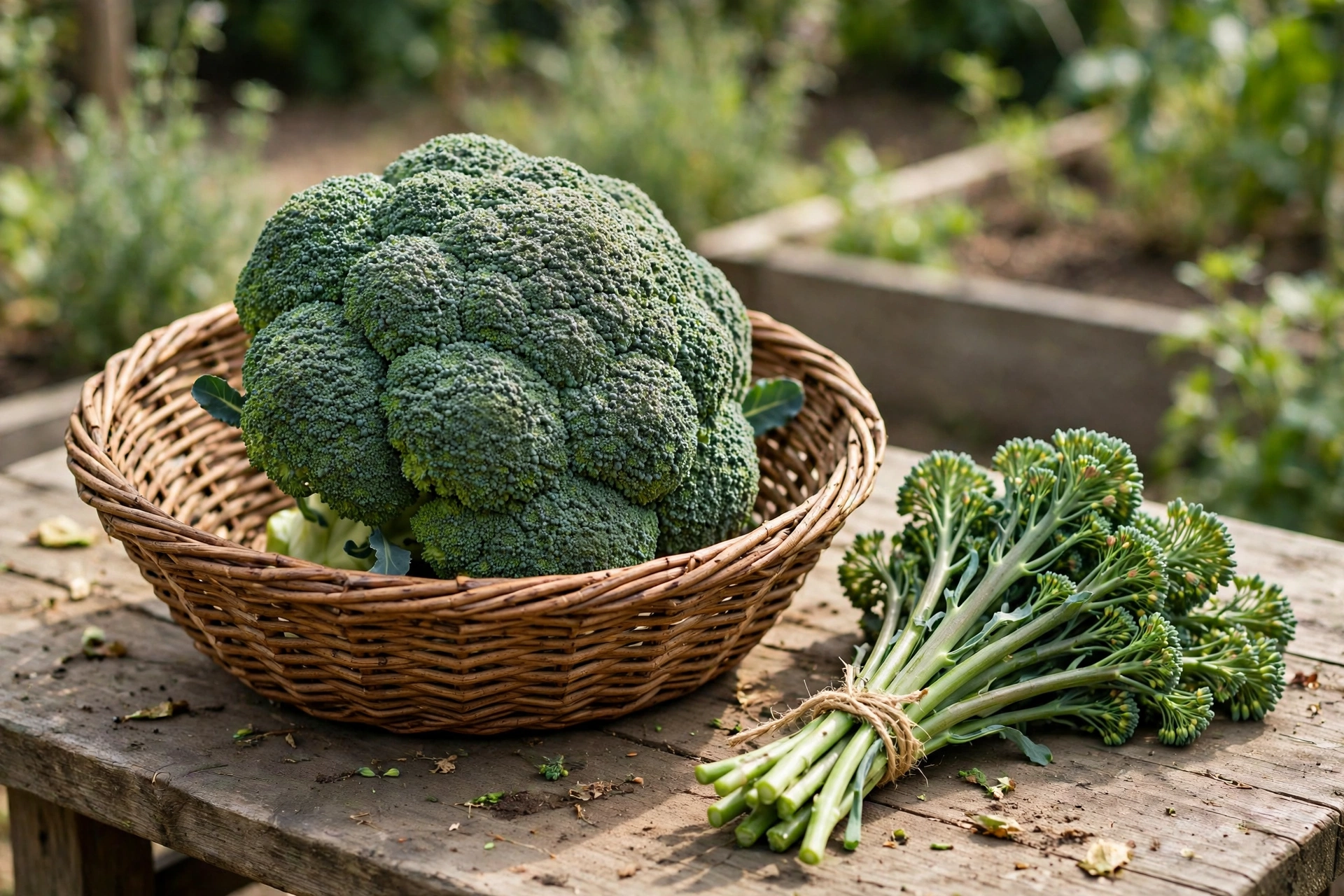
Aspabroc is the true broccolini of the list: a hybrid that pairs mild, sweet broccoli flavor with tender, asparagus-like stems, cut about 5 inches down when the florets are 1 to 2 inches across. After the first central shoot comes off, the plant sets 3 to 5 side shoots and keeps going for about four weeks in mild weather.
The caveat is in the rating: 3.8 stars from just 5 reviews, the lowest and thinnest record here, and the packet is $5.49. I would still plant it — nothing else on this page eats like it — but I would plant it as a small gourmet row, not as the bed the freezer depends on. The full head-to-stem comparison is in broccoli heads vs broccolini.
- Pros: true broccolini stems, mild and sweet; multiple harvests over about four weeks; good for containers
- Cons: lowest rating here at 3.8 stars from 5 reviews; $5.49 packet
Aspabroc Broccolini Seeds
True broccolini with tender asparagus-like stems and 1–2 inch florets, cut a few at a time.
Check Price at Botanical InterestsRapini — Fastest, and Not Quite Broccoli
Rapini needs one plain statement up front: the packet lists it as Brassica rapa, a turnip relative, not the Brassica oleracea of every other variety here. What you harvest is the whole top — tender stems, buds, flowers, and leaves — with a delicate, slightly bitter, peppery flavor, ready in 45 days.
That speed is real, and so is the second and possible third flush of florets over 2 to 4 weeks. Grow it as the Italian green it is, in salads and stir-fries, and it earns its row. Grow it expecting a heading broccoli and you will be disappointed by a plant that never intended to make one.
- Pros: fastest here at 45 days; whole plant edible; repeat flushes
- Cons: not a true broccoli; bitter, peppery flavor is not for everyone
Rapini Broccoli Raab Seeds
45-day broccoli raab with peppery buds, stems, and leaves — a green, not a heading broccoli.
Check Price at Botanical InterestsThe One I Would Skip
Chinese Broccoli, sold as Kailaan, is the variety I wanted for this list — thick stems, small buds, broad leaves — and it is sold out, so it gets no card and no link. If it comes back in stock, it slots in beside Aspabroc as a stem-first pick; until then, Di Cicco covers the small-and-often harvest style at $2.69.
Bottom Line
Plant Belstar if you want one reliable head per plant and your springs run warm. Plant Di Cicco if you would rather pick a little broccoli every few days for weeks. My own order would carry both, plus Waltham 29 for the fall bed — and if you are still deciding between a head and a stem, start with the short-season brassicas roundup for the wider family picture.