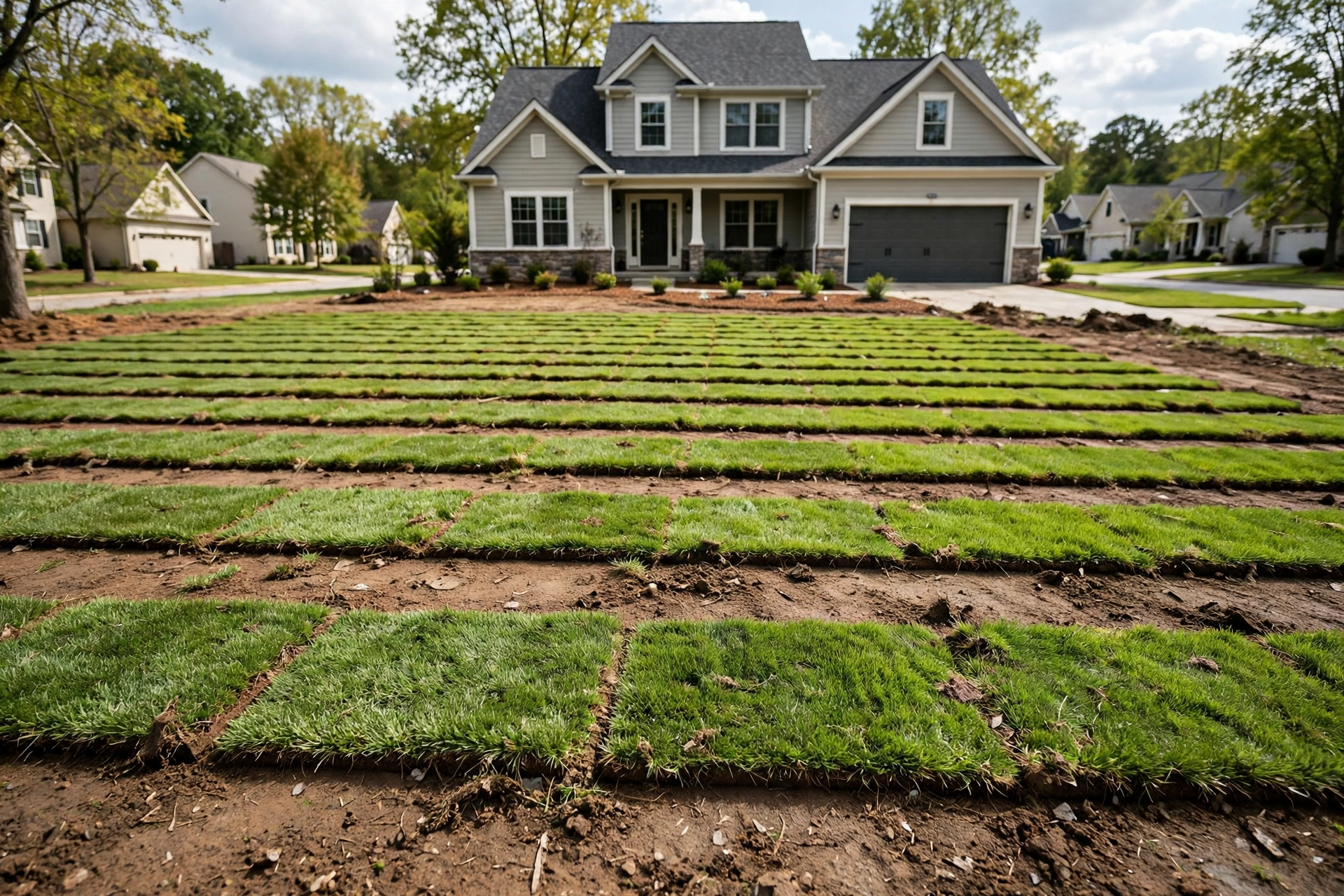
The mistake is feeding new sod like the lawn it replaces. The old lawn had roots. The new sod has a mat of severed roots sitting on bare soil, and the blades on top look fine for a week while the roots underneath stall. By the time the top goes yellow, the damage is already done.
New sod needs one thing first: roots reaching into the soil. Everything about the first bag should serve that job, and nothing about it should get in the way.
Start with a soil test, then pick the bag
A soil test decides the one question that changes the answer: whether your soil already has enough phosphorus. Phosphorus is the middle number on the bag, and it is the nutrient that drives early root growth. If the test says phosphorus is low, a phosphorus-forward starter is the right first bag. If the test says phosphorus is already high, a balanced bag does the job without adding what the soil does not need.
Check your local phosphorus rules before you buy. Several states restrict phosphorus on established lawns, and new establishment is usually treated differently, but the rule is local and worth a two-minute check.
The verdict: starter first, balanced second, weed-and-feed never
| Bag type | Verdict | Why |
|---|---|---|
| Phosphorus-forward starter | Best overall | High middle number pushes new roots into the soil; made for exactly this job |
| Balanced fertilizer (such as 10-10-10) | Runner-up | Feeds roots and blades evenly; the right call when the soil test already shows enough phosphorus |
| Weed-and-feed | Not recommended | Herbicide on unrooted sod stresses the grass you are trying to establish |
The trade-off on the starter is real: it is a one-job bag. Once the sod has rooted, usually within a few weeks, you switch to a regular maintenance fertilizer. The starter is not a season-long program, and treating it like one wastes money and phosphorus.
How to put it down
Spread it before the sod goes down. Work the starter into the prepared soil surface right before laying the sod, so the roots find nutrients waiting the moment they reach down. If you missed that window, spreading within a day or two after laying still helps, but before is better.
Cap the nitrogen. Penn State Extension puts starter fertilizer at 0.5 to 1 pound of nitrogen per 1,000 square feet, and warns that amounts above 1.5 pounds can burn young turf and set establishment back. Do the bag math for your lawn size. A heavy hand here does not speed anything up.
Water like it matters, because it does. New sod needs steady moisture until the roots knit into the soil below. Short, frequent watering keeps the mat and the top inch of soil damp while roots grow. Once you cannot easily lift a corner, the sod is rooting, and watering can shift toward deeper, less frequent soaks.
What comes next
Plan the second feeding about 4 to 6 weeks after installation, with a balanced or nitrogen-focused maintenance fertilizer, once the roots are established. That is also the point to start thinking about the season’s program rather than the installation job. The site’s fertilizer-after-aerating guide and the liquid vs granular comparison cover how to choose that second bag, including when a liquid touch-up beats another granular round.
Bottom line
Buy the starter before the sod arrives, spread it on the prepared soil, and keep the nitrogen at or below 1 pound per 1,000 square feet. Test the soil, skip the weed-and-feed, and let the roots do the first month’s work. A lawn that roots in the first month is a lawn you stop worrying about by the second.