November sits in an awkward spot for lawn advice. The bag in the garage says fall feeding, the calendar says winter, and the lawn itself is doing something in between: top growth has slowed or stopped, but the roots have not clocked out yet. Whether a November feed helps depends on which of those facts is true in your yard.
Short answer first: for a cool-season lawn that is still green, with unfrozen ground, early November is usually still in the window. For a brown, dormant lawn, or ground that is already frozen, it is too late — and spreading anyway wastes fertilizer and risks runoff.
Why late fall feeding works at all
Cool-season grasses — Kentucky bluegrass, tall fescue, perennial ryegrass — do much of their root work in fall. As days shorten, top growth slows, but roots keep taking up nutrients and storing carbohydrates for winter and spring green-up. That is the whole logic of a winterizer application: feed the roots while they are still working, not the blades.
Extension guidance commonly splits fall nitrogen into a September feed and a second, late-fall feed near or just after the last mowing, while the grass is still green. In many northern and transition-zone lawns, that second feed lands in the first few weeks of November. Purdue’s guidance puts that late application at roughly 0.5 to 1 pound of nitrogen per 1,000 square feet, using a quick-release source so roots can take it up before the ground freezes.
The three-part test: green, unfrozen, and not snow-covered
Forget the date on the bag for a moment and run this test in your yard.
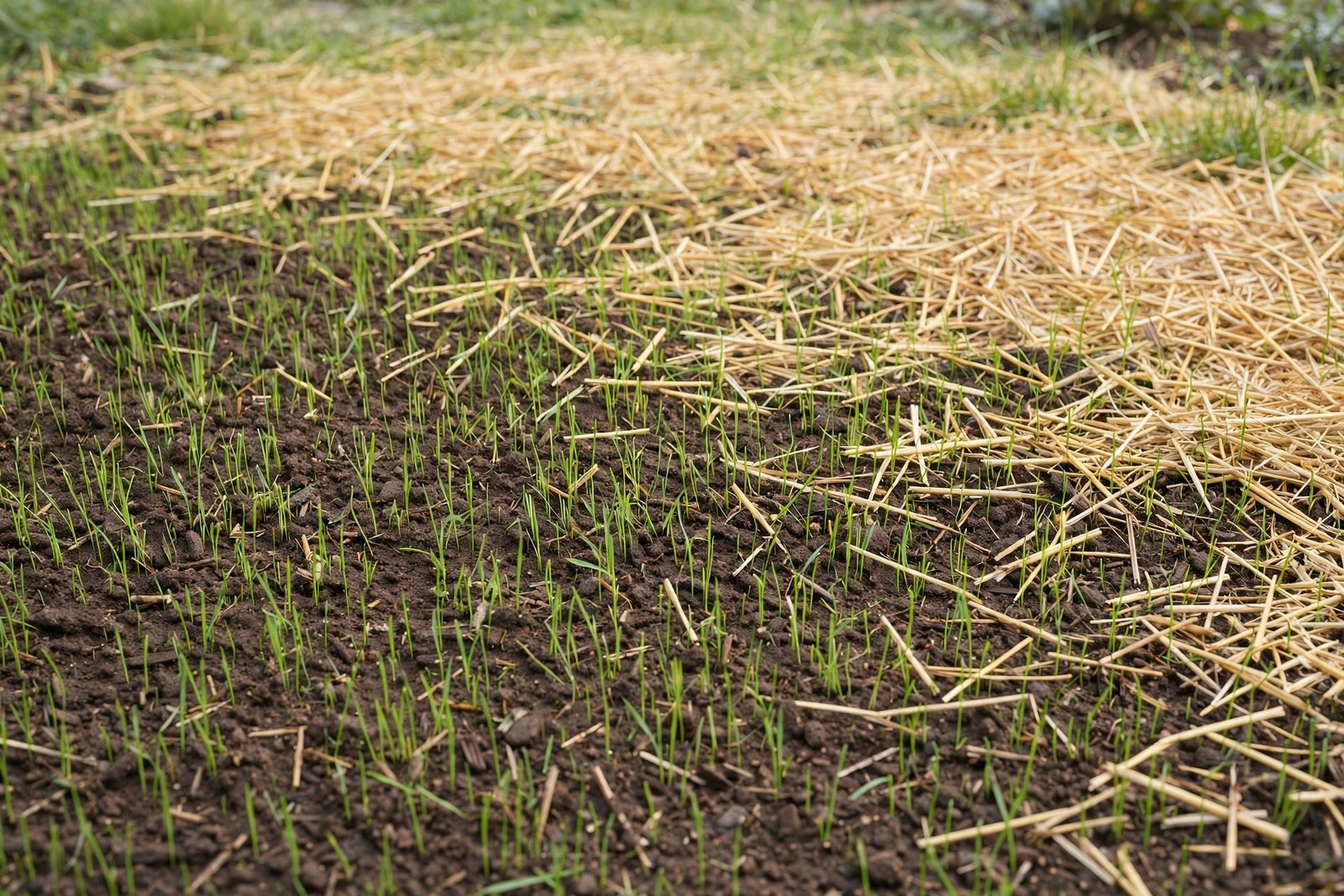
Is the grass still green? Green means the plant is still photosynthesizing and roots are still active. Brown and fully dormant means uptake has effectively stopped. A lawn that is half-green and half-brown is still a candidate in its green areas, but do not expect a dormant patch to wake up for fertilizer.
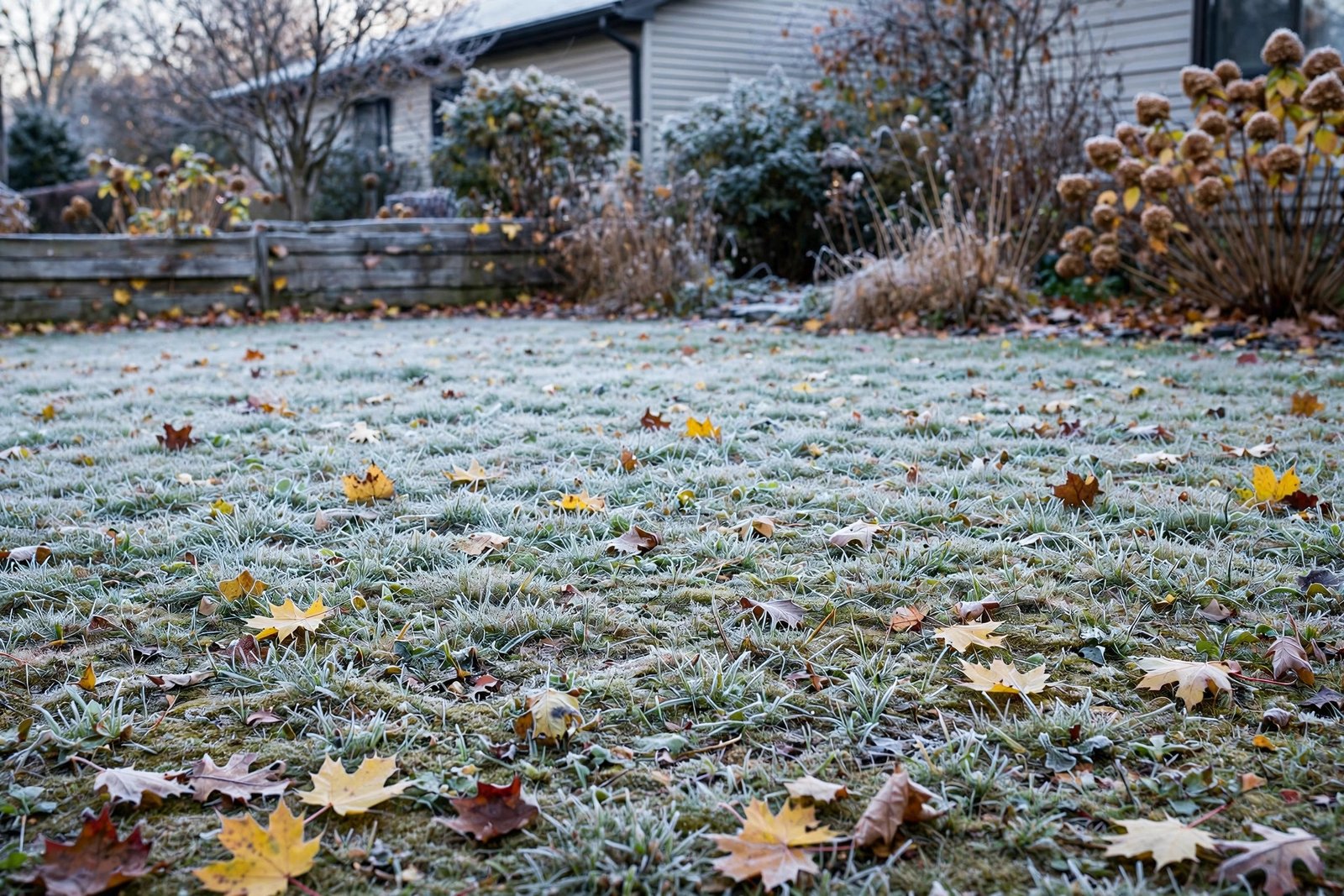
Is the ground unfrozen and workable? Fertilizer spread on frozen ground cannot move into the soil. It sits, then runs off with the next rain or melt. If a screwdriver will not push easily into the soil, wait — or skip it until spring.
Is there snow or ice on the lawn? Never spread fertilizer over snow or ice. The same runoff problem applies, with the added problem that you cannot see where it landed.
If all three answers are yes, a November feed is still a reasonable move. If any answer is no, the window has closed for this year, and spring is the next honest opportunity.
What changes by grass type
Cool-season lawns (Zones 2–7, roughly). Early to mid-November is often the tail end of the window, later in milder climates and the transition zone, where the last feed can run to Thanksgiving in a mild year. The deciding factor is still grass color and soil condition, not the zone map alone.
Warm-season lawns (bermuda, zoysia, St. Augustine). November nitrogen is the wrong move. Warm-season grasses are going dormant, and nitrogen after summer ends — generally after August — cannot be used and leaches away. If a soil test shows low potassium, a potassium-only application well before first frost is a different conversation; nitrogen in November is not.
Newly seeded or overseeded lawns. A lawn seeded this fall that is still establishing follows the same green-and-unfrozen test, but do not stack a winterizer on top of a starter fertilizer applied weeks ago. One feed at a time, at label rates.
How much, and what kind
For the late-fall cool-season feed, the commonly cited rate is 0.5 to 1 pound of nitrogen per 1,000 square feet. That is a light feed by design: the goal is root storage, not a growth flush. A heavy feed now pushes soft, tender growth into frost, which is exactly the winter injury a winterizer is supposed to prevent.
A winterizer-style formula — higher in nitrogen and potassium, lower in phosphorus unless a soil test calls for it — fits this job. If you already fed in September, this November application is the second half of that pair, not a third or fourth feed. More is not better here; it is how lawns get burned and how nutrients end up in runoff.
Water the application in lightly if rain is not coming, and keep it off driveways and walks, where it washes straight to the storm drain.
When November is already too late
Ground frozen solid. Grass fully brown and dormant. Snow on the lawn. A forecast of hard freeze within a day or two with no time for uptake. Any one of those closes the window, and no product changes that.
The cost of missing it is smaller than most gardeners fear. A skipped November feed means a slower spring green-up, not a dead lawn. The lawn will still green up in spring, just a little later and thinner at first. That is a fair trade against fertilizer washed into the street.
If you missed the window, put the bag away, keep mowing until growth truly stops, and plan the spring feed instead. For the winterizer choice itself, see the best winterizer fertilizer for cool-season lawns, and for the feed that should have come earlier in the sequence, the best fertilizer for your lawn after aerating.
What to watch next
After a well-timed November feed, expect nothing dramatic — and that is the point. The lawn should hold its color a little longer into winter, then green up earlier and more evenly in spring. If it instead pushes lush, soft growth in a warm spell and then browns hard after frost, the feed was either too heavy or too early, and next year the lighter rate is the lesson.
So: green grass, soft ground, no snow — feed, lightly. Anything else — wait for spring. The calendar is a hint. The lawn is the answer.