The chairs are out, the marshmallow sticks are already in somebody’s hand, and the first match is about to meet the kindling — which is exactly when a smokeless pit either earns its name or fills the whole circle with eye-watering smoke. The difference is rarely the pit itself. It is the first five minutes.
A smokeless fire pit works on a simple trick: air enters low, heats up inside the double wall, and feeds a second burn at the top rim that consumes the smoke before it escapes. That second burn only happens when the fire is hot enough, and it only stays hot when the wood is dry and the air can move. Light it cold, wet, or packed tight, and you get an ordinary smoky fire in an expensive steel cylinder.
Start With Dry Wood and an Empty Pit
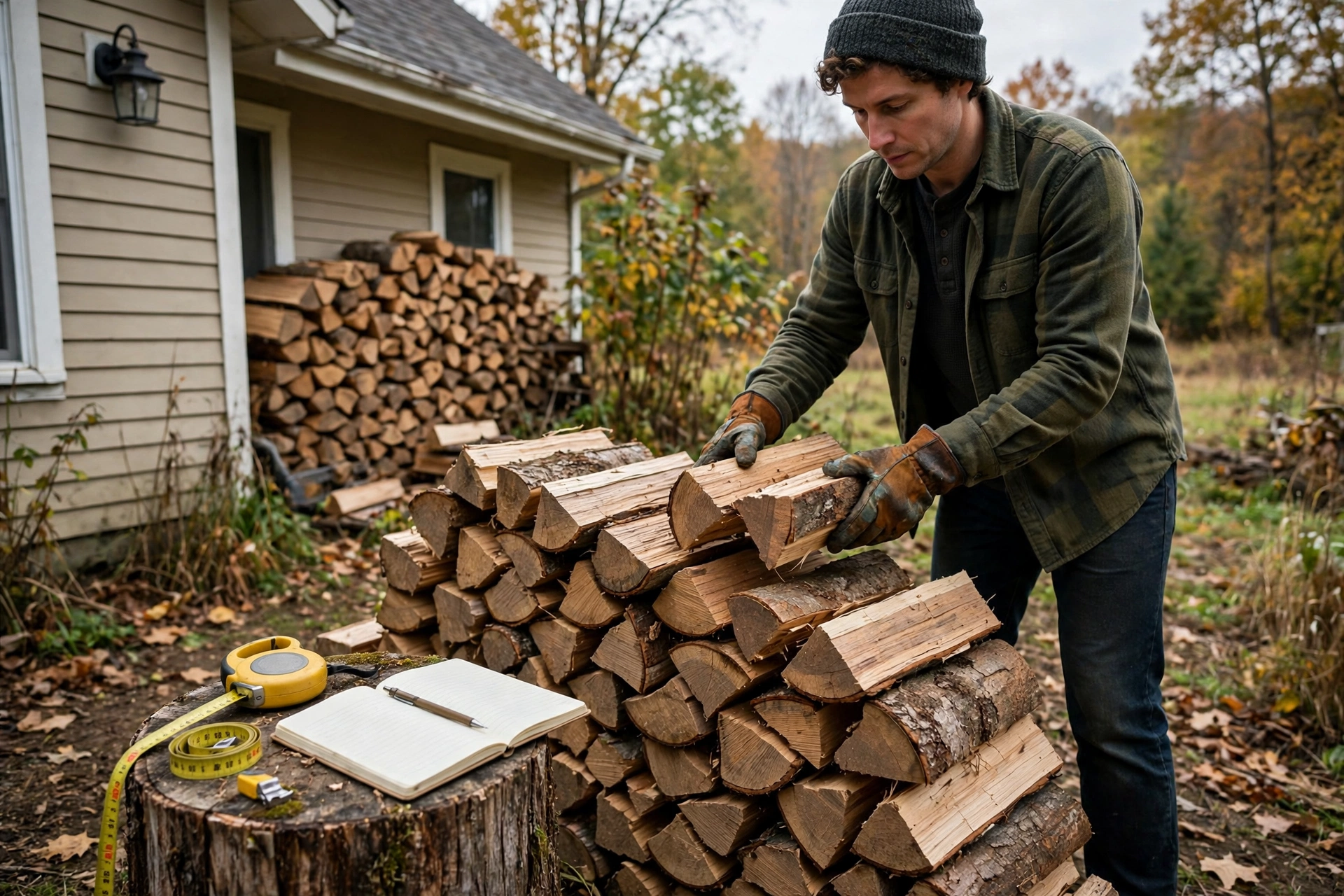
Empty the ash pan before you light anything. Old ash chokes the low air holes, and a smokeless pit with blocked airflow is just a smoky pit with better marketing. Then check your wood. Seasoned firewood should read under 20% moisture on a meter, and if you don’t own one, the knock test works: two dry splits ring when struck together, while wet wood thuds. Damp wood spends its first twenty minutes boiling off water instead of making heat, which is twenty minutes of smoke.
Use small splits, not the biggest logs in the pile. Pieces about the width of your wrist catch fast and leave gaps for air. Save the wrist-thick and bigger splits for once the fire is established. If all you have is large wood, split a few pieces down — a smokeless pit is the wrong place to burn whole rounds.
Build Small, Then Let It Grow
Set two or three fire starters in the center. Wax-and-sawdust starters, a handful of dry kindling, or a few twists of newspaper all work. What matters is that they sit in the middle of the pit with air around them, not buried under logs.
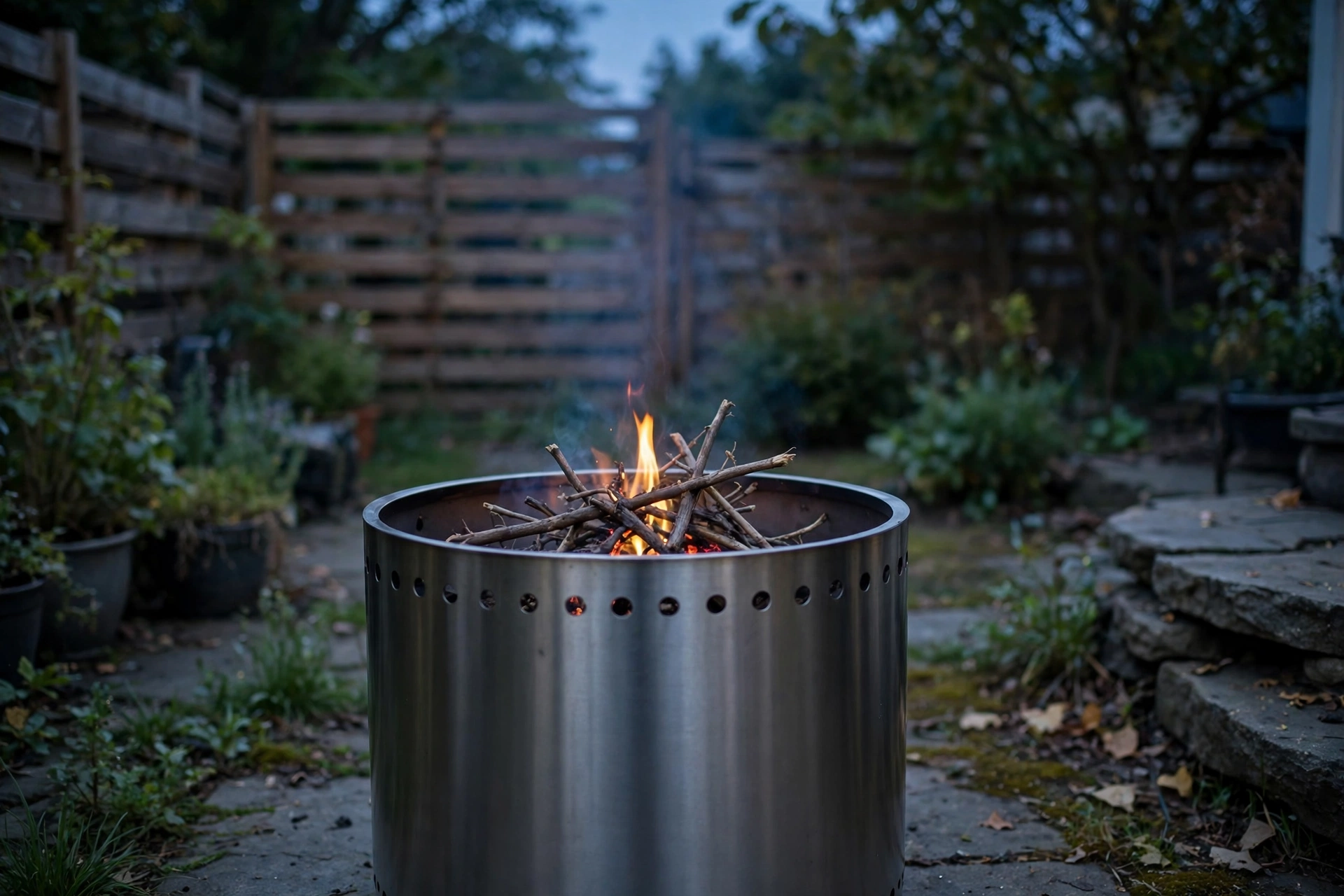
Lean kindling over the starters like a teepee. Six or eight pencil-thick sticks, leaning in from the edges so they meet at the top, give the flame something to climb while leaving the base open to air.
Light the starters and wait. Give the kindling a full two or three minutes to catch properly before you add anything. The most common lighting mistake is stacking splits onto a flame that hasn’t taken hold yet, which smothers it and starts the smoke.
Add one or two small splits at a time. Lean them against each other with gaps between, the way you built the kindling. When those are burning well, add more. A smokeless pit wants a fire that grows in stages, not a full load dropped in at once.
How to Tell It’s Working
Watch the top rim. When the pit is hot enough, you’ll see thin flames licking out of the holes around the upper edge — that is the secondary burn, and it means the smoke is being consumed before it leaves the pit. The fire looks cleaner, the flames run taller and steadier, and the smoke all but disappears. On a well-lit pit, that usually happens within ten to fifteen minutes of lighting.
If the smoke keeps coming after fifteen minutes, the cause is almost always one of three things: the wood is wetter than you thought, the pit is overloaded, or the ash pan is full. Pull a split or two out, let the fire breathe, and resist the urge to fix it by adding more wood. Piling more fuel onto a struggling fire only feeds the smoke.
The Mistakes That Undo a Good Light
Packing the pit full. A smokeless fire pit is not a wood stove. Fill it to the rim and the air can’t circulate, the secondary burn never starts, and you get a long, smoky smolder. Keep the fuel below the top holes and feed it as it burns down.
Using lighter fluid or gasoline. Never use accelerants in a fire pit, smokeless or otherwise. They flare dangerously, leave residue in the steel, and are entirely unnecessary when the kindling is dry and the build is right.
Burning pine needles, leaves, or trash. Loose, resinous material flares fast, throws sparks, and clogs the air channels with ash. Pine needles make poor fire-pit fuel for exactly that reason — a small handful as kindling is the most they should ever be.
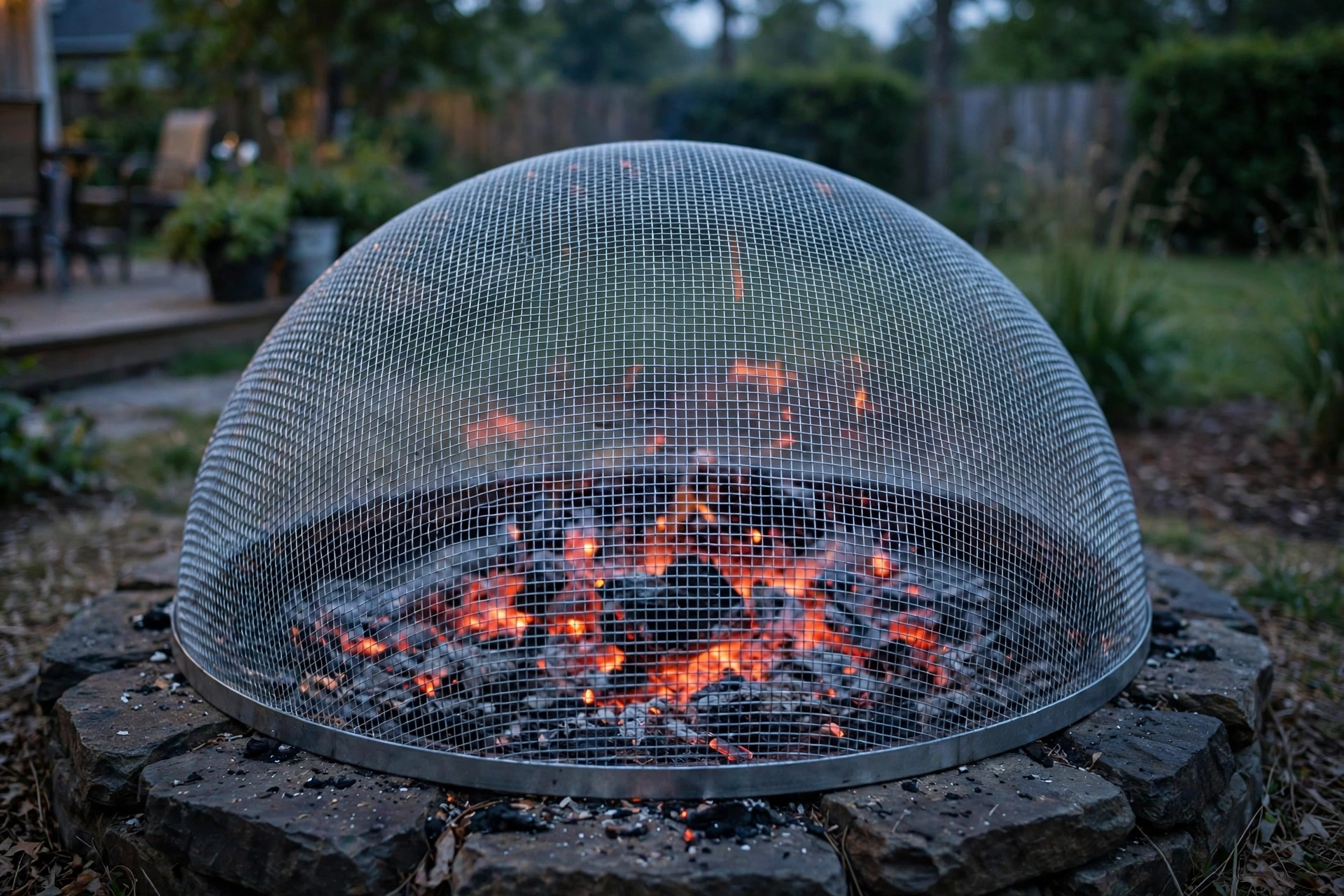
Putting the screen on too early. A spark screen is for a burning fire, not a starting one. Set it on before the secondary burn starts and it traps smoke, cools the fire, and slows the very thing you’re trying to achieve. Wait until the rim flames appear, then set the screen in place.
Once It’s Burning
Feed the fire one or two splits at a time, and give each addition a minute to catch before adding the next. Keep a pair of long-handled tongs nearby so you can shift a log without reaching over the flames, and keep the woodpile covered — a dry stack is the difference between a five-minute light and a twenty-minute smoke session. When the evening winds down, let the fire burn down on its own and don’t douse a hot steel pit with water, which can warp it. Cleaning a smokeless fire pit is a next-morning job, once everything is cold.
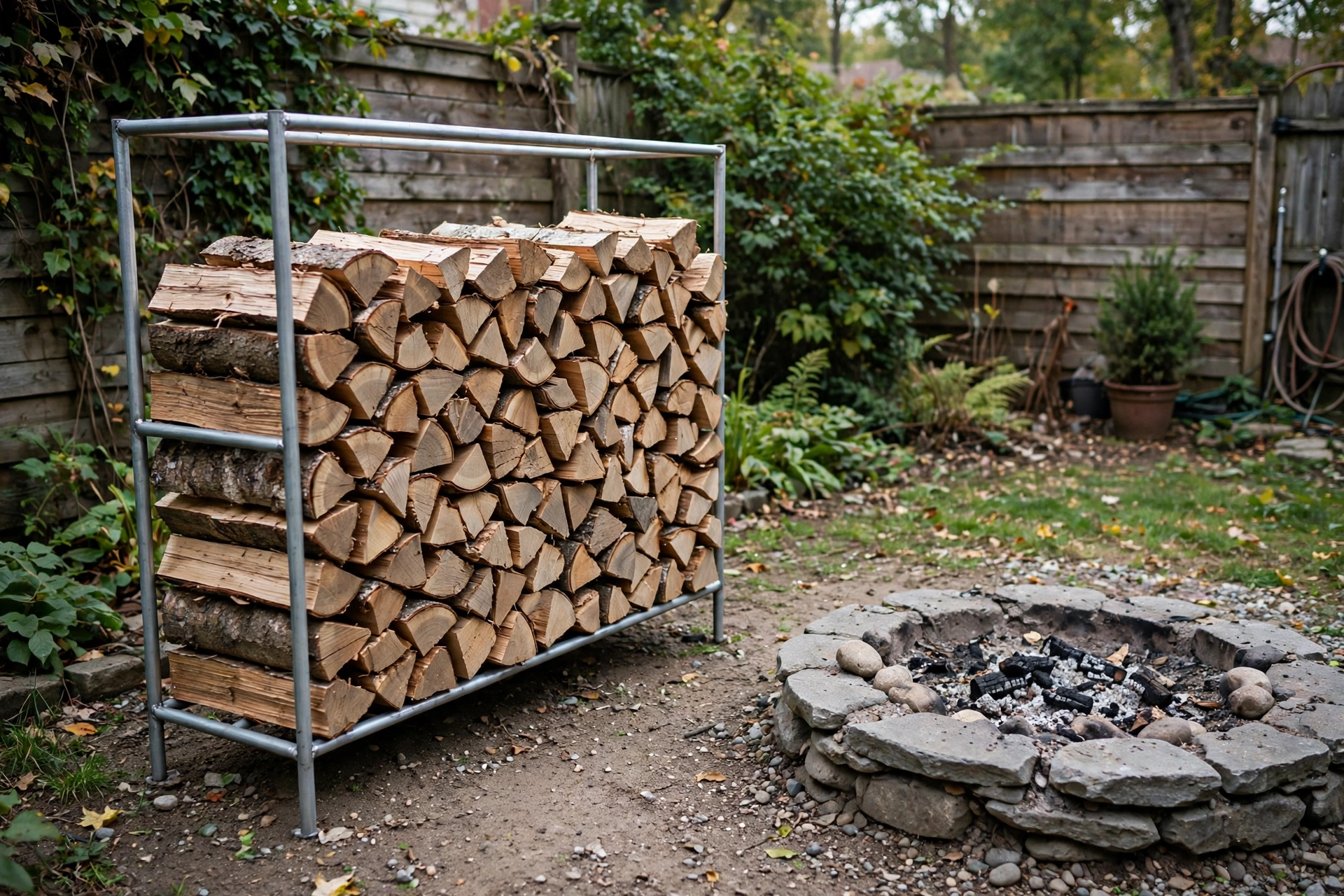
If your pit never seems to burn clean no matter how you light it, the problem may be the pit rather than the technique — some older or cheaper models simply don’t move enough air. Our smokeless fire pit roundup covers which designs actually deliver the secondary burn, and a rack that keeps your wood dry does more for clean burning than any lighting trick.
Bottom Line
Light small, light dry, and let the fire grow in stages — the secondary burn at the top rim is your proof it’s working. Get those three things right and a smokeless pit does what its name promises, with the smoke staying in the fire instead of in everyone’s eyes.