Landscape & Leisure is reader-supported. When you buy through links on our site, including Botanical Interests seed links, we may earn a commission at no extra cost to you. Prices change, so click through to confirm current pricing.
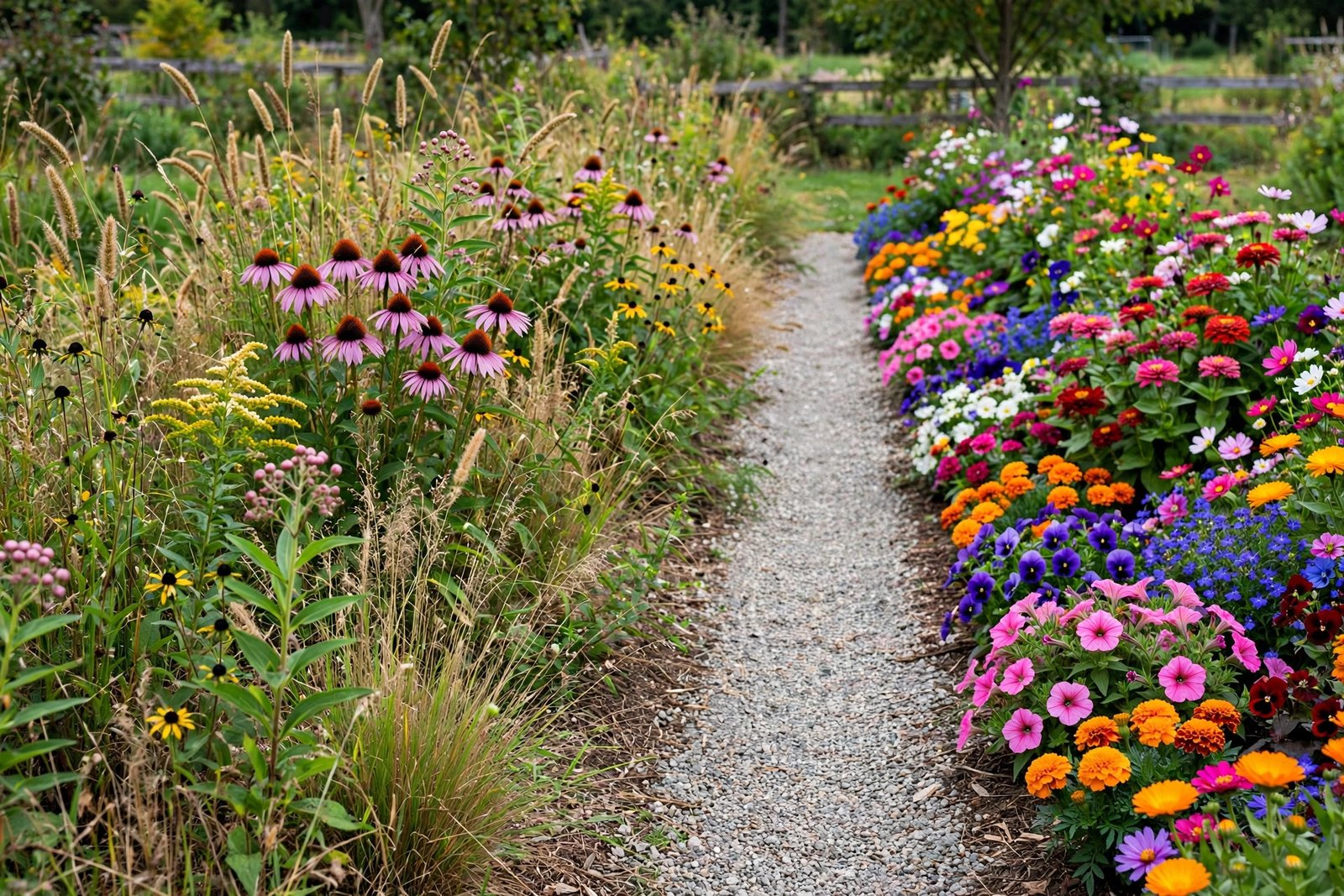
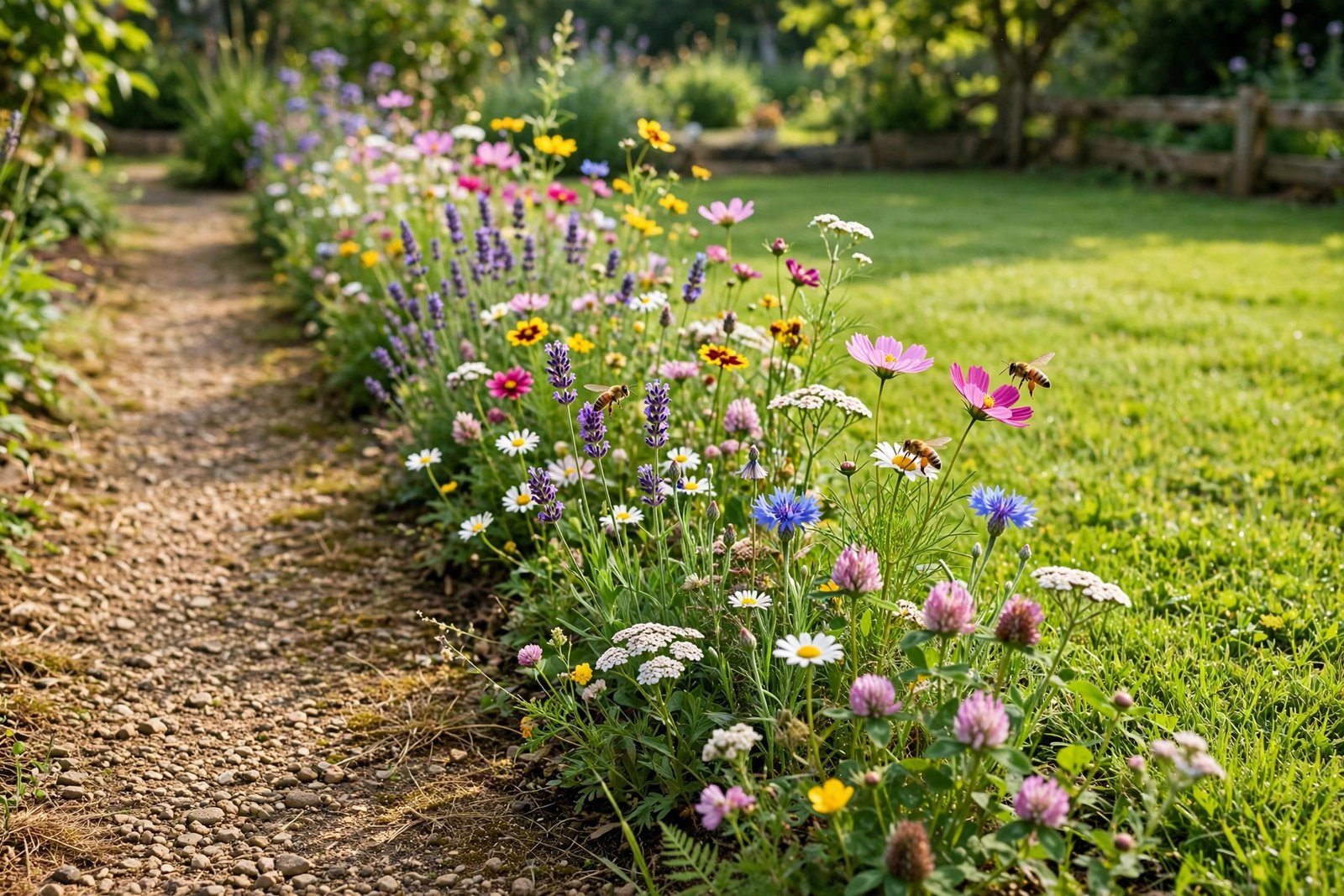
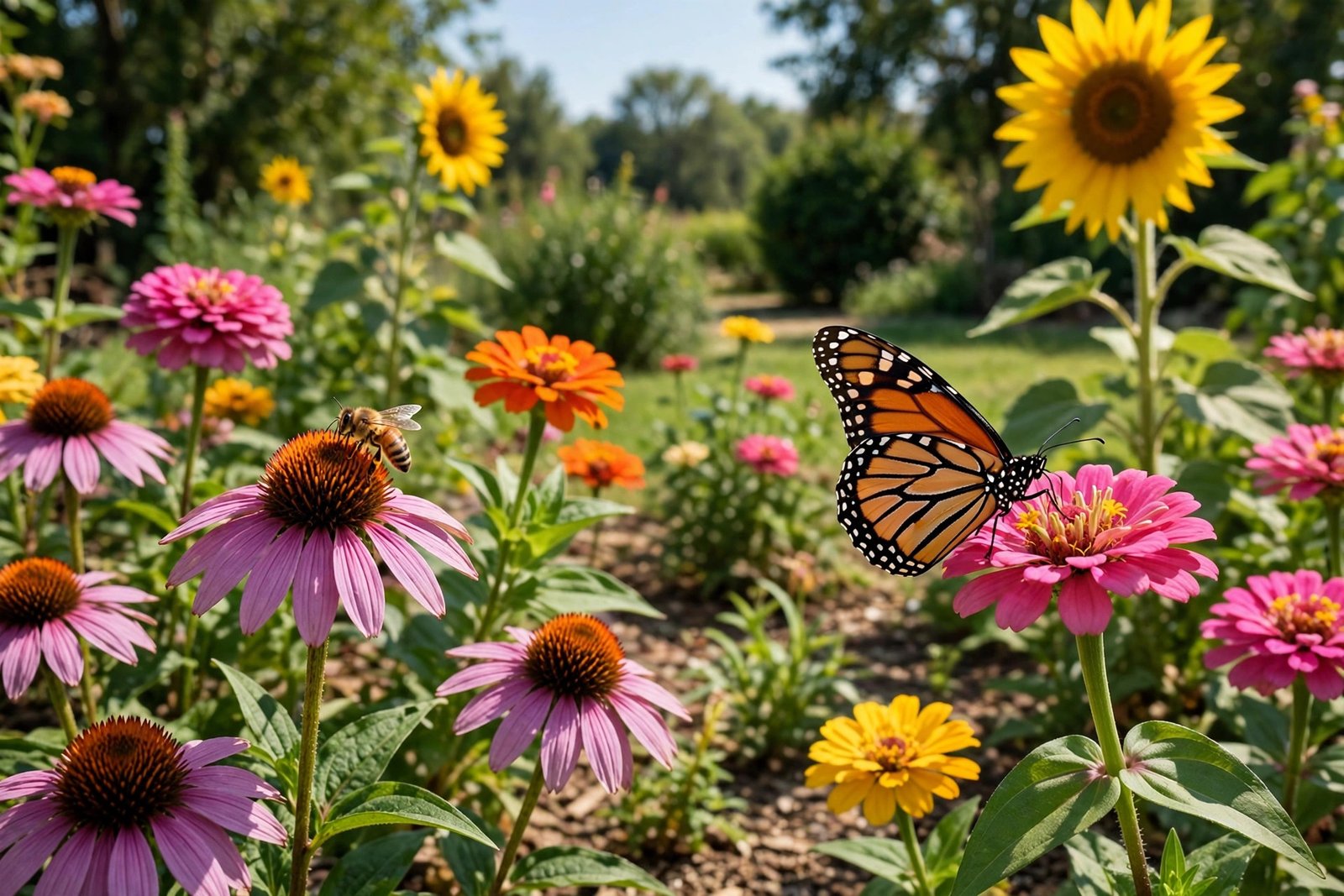
Stand still in a good flower bed on a July morning and you will hear it before you see it: a low, happy hum, bees working one flower after another like they have somewhere better to be and no intention of hurrying. That sound is the whole point. A pollinator garden is not a charity project. It is the liveliest corner of your yard, and it asks for almost nothing in return — sun, a little water while plants settle in, and flowers that actually offer something to eat.
The seven varieties below earn their place by feeding somebody. Each one does a different job, from the perennial backbone that comes back year after year to the annuals that throw color at the problem all summer. For how to lay them out in drifts instead of lonely singles, see our guide to planting a pollinator strip. For the question of whether native plants deserve the starring role, see our comparison of native and non-native garden flowers.
| Variety | Bloom | Best for |
|---|---|---|
| Purple Coneflower | Summer to frost, zones 3–8 | The perennial backbone — bees, butterflies, and birds |
| Lambada Bee Balm | Long bloom season | Bees first, above all else |
| Black-Eyed Susan | Summer to frost, at least 8 weeks | Butterflies and easy, generous color |
| California Giants Blend Zinnia | 4″–6″ flowers, summer to frost | Beginners and big, bold bouquets |
| Sea Shells Blend Cosmos | 3″–4″ quilled petals, summer to frost | Hummingbirds and drought-tough filler |
| Evening Sun Sunflower | 4″–6″ sunset-hued flowers, long bloom period | Branching stems and late-season birds |
| Munstead Lavender | Summer, zones 5–9 | Dry sun, fragrance, and patient gardeners |
Best Overall: Purple Coneflower
If a pollinator garden has a backbone, it is purple coneflower. This is a long-lived perennial, native to the eastern and central United States, that blooms for a month or more beginning in midsummer and keeps going until frost. The flowers are 2 to 3 inches across, lavender petals drooping around a dark cone, on tall stems above the foliage.
What makes it the best overall pick is that it feeds the garden three times over. Bees and butterflies work the blooms all summer. Then the cones fill with seed, and birds take over in fall and winter. Botanical Interests lists it as deer resistant and good for borders and water-wise gardens, and it grows well in a variety of conditions — which is a polite way of saying it forgives a lot.
Start it indoors 10 to 12 weeks before your average last frost if you want a chance at blooms the first year, or direct-sow 2 to 4 weeks before last frost. Space groups of 3 seeds every 18 inches, thin to one when seedlings are an inch tall, and expect germination in 10 to 20 days. Full sun to part shade suits it, in zones 3 through 8.
Pros: Native perennial, blooms a month or more, feeds birds after bloom, deer resistant.
Cons: Slow to establish from seed; first-year bloom is a maybe, not a promise.
Purple Coneflower Echinacea Seeds
A native perennial that blooms from midsummer to frost, then feeds the birds.
Best for Bees: Lambada Bee Balm
Bee balm does not hint at its purpose. It announces it, right there in the name, and Lambada lives up to it. Gardeners who grow it consistently describe the same scene: bees all over it, more than on anything else in the bed, over a long bloom time. It is the plant visitors notice first, and the one the bees clearly voted for.
That enthusiasm is the whole argument. You do not plant bee balm for a quiet, tidy border. You plant it because you want the garden to feel alive, and you want to watch that aliveness from the porch with your coffee. Give it sun, give it room to be itself, and let it do the loud, joyful work it was bred to do.
Pros: A standout bee magnet with a long bloom time, fast-growing once established.
Cons: Germination can be uneven — start more seed than you think you need, and give it warmth.
Lambada Bee Balm Seeds
The plant the bees visit most, with a long bloom time to match.
Best Value: Black-Eyed Susan
Black-eyed Susan is the flower that makes a new pollinator gardener look like an old hand. It is a North American native wildflower, the state flower of Maryland, with 2- to 4-inch yellow flowers around a purplish-brown center. It blooms for at least eight weeks, it may reseed itself, and it is an excellent addition to wildflower areas.
It is also, at the price Botanical Interests charges for a packet, the cheapest confidence you can buy in the garden. Start indoors 8 to 10 weeks before last frost for a shot at first-year bloom, or direct-sow 2 to 4 weeks before last frost and as late as 2 months before first fall frost. Press the seed into the surface — it needs light to get going — space groups of 3 seeds every 12 to 24 inches, and expect germination in 10 to 15 days.
Botanical Interests lists it for butterflies and pollinators generally, as a cut flower, and as deer resistant. It is a short-lived perennial in zones 3 to 7, often treated as an annual, which is fine: it earns its keep in one season and then volunteers to do it again.
Pros: Long bloom, self-sows, native, deer resistant, very low cost per packet.
Cons: Short-lived as a perennial; treat it as an annual and be pleasantly surprised when it returns.
Black-Eyed Susan Seeds
At least 8 weeks of yellow, butterfly-friendly bloom from one inexpensive packet.
Best for Beginners: California Giants Blend Zinnia
Zinnias are the flower for the gardener who wants proof, fast. California Giants has been delivering large blossoms since 1926: 4- to 6-inch flowers in red, pink, purple, and white on tall, heat-loving plants. And here is the beginner’s secret — the more you cut, the more they bloom.
For pollinators, that cutting habit is a gift. Every stem you take tells the plant to make another flower, which means fresh nectar all season instead of one flush and done. Zinnias do not benefit from being sown early, so wait for warm weather. Direct sowing is recommended, 1 to 2 weeks after your average last frost, in full sun. Germination takes 3 to 10 days, spaced a group of 3 seeds every 12 inches.
Pros: Huge flowers, fast germination, deer resistant, attracts pollinators, superb cut flower.
Cons: Frost sensitive and heat-loving; sowing early gains you nothing.
California Giants Blend Zinnia Seeds
Big 4″–6″ flowers since 1926 — cut more, and they bloom more.
Best for Hummingbirds: Sea Shells Blend Cosmos
Sea Shells is the cosmos with a party trick. The 3- to 4-inch blossoms, in white, pink, rose, and crimson, have rolled, quilled petals around yellow centers — little seashells on tall stems. Botanical Interests lists it for hummingbirds as well as pollinators generally, which is the distinction that matters here: most flowers on this list feed bees and butterflies, and this one brings the hummingbirds too.
Cosmos prefer neglect over attention, and Sea Shells is no exception. Once established it is drought tolerant, it likes full sun, and it blooms from summer to frost. Direct-sow 1 to 2 weeks after last frost, when the soil is at least 60°F, barely covering the seed. Germination takes 5 to 10 days.
Pros: Hummingbird appeal, distinctive quilled petals, drought tolerant, deer resistant.
Cons: Needs full sun and lean soil; too much richness grows leaves instead of flowers.
Sea Shells Blend Cosmos Seeds
Quilled, seashell-shaped petals that draw hummingbirds as well as bees and butterflies.
Best Branching Sunflower: Evening Sun Sunflower
Most sunflowers give you one flower and one moment. Evening Sun gives you dozens. This branching sunflower produces 4- to 6-inch flowers in sunset hues — several rich tones on one plant — over a long bloom period, keeping the garden lit with color and pollinators, and your vases full for many weeks.
The branching habit is what earns it a pollinator spot instead of a novelty spot. Cut a stem, and the plant answers with more. The seed heads that follow feed birds, and the petals are even edible, with a bittersweet flavor. Expect color to vary from plant to plant — some blooms come up plain yellow — and take that as part of the mix rather than a defect.
Pros: Many stems per plant, long bloom period, birds love the seed that follows.
Cons: Sunset coloring varies; you will get some plain yellow blooms in the mix.
Evening Sun Sunflower Seeds
Dozens of 4″–6″ sunset-hued flowers on branching, manageable plants.
Best for Dry Sun: Munstead Lavender
Lavender is the slow burn on this list, and worth every week of it. Munstead, introduced in 1916 and named for Munstead Woods in England, flowers earlier than other lavenders and stays compact, 12 to 24 inches tall. It is heat- and drought-tolerant, deer resistant, and a pollinator magnet in full sun, in zones 5 through 9.
The honest trade-off is germination: 15 to 90 days, which is the widest window on this list by a mile. Start indoors 10 to 12 weeks before your average last frost — Botanical Interests recommends indoor starting — thin to one plant every 18 to 24 inches, and do not give up on the tray too soon. The reward is fragrance, culinary flowers for syrups and baking, and a perennial that asks for very little once it is established.
Pros: Compact perennial, drought and heat tolerant, fragrant and edible flowers.
Cons: The slowest, most uneven germination here; start early and be patient.
Munstead Lavender Seeds
Compact, fragrant, and drought-tolerant — if you can wait out its slow start.
The One to Skip for a Pollinator Strip: Mammoth Sunflower
Mammoth Sunflower is magnificent, and it is the wrong sunflower for this job. It is a single-stalk giant grown for one enormous head and a harvest of seed — a screen, a shade provider, a bird feeder on a pole. In a pollinator strip, one plant eats the light and the space that a whole drift of branching flowers could have used.
Grow Mammoth if you want seed for the birds or the sheer delight of a flower the size of a dinner plate. For a strip meant to feed bees and butterflies all summer, Evening Sun above is the sunflower that actually delivers — many stems, many flowers, weeks of bloom.
Final Thoughts
Start with the backbone and the easy wins: purple coneflower and black-eyed Susan for the perennial return, zinnias and cosmos for color in year one, bee balm where you want the hum loudest. Add lavender only if you have the sunny, dry corner it loves and the patience its slow start demands. That is a garden that feeds somebody from midsummer to frost — and gives you the best seat in the yard to watch it happen.