Landscape & Leisure is reader-supported. When you buy through links on our site, including Botanical Interests seed links, we may earn a commission at no extra cost to you. Prices change, so click through to confirm current pricing.
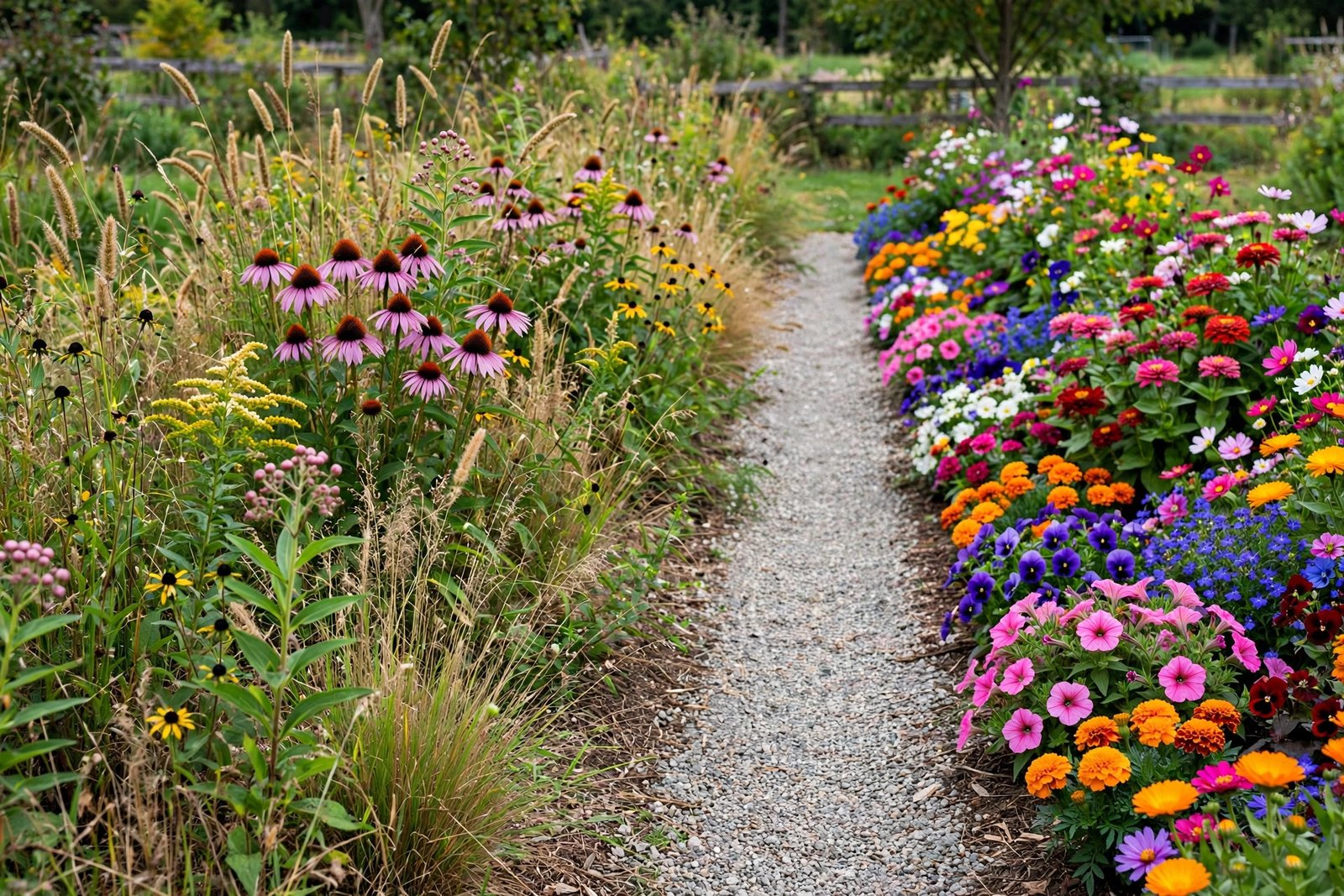
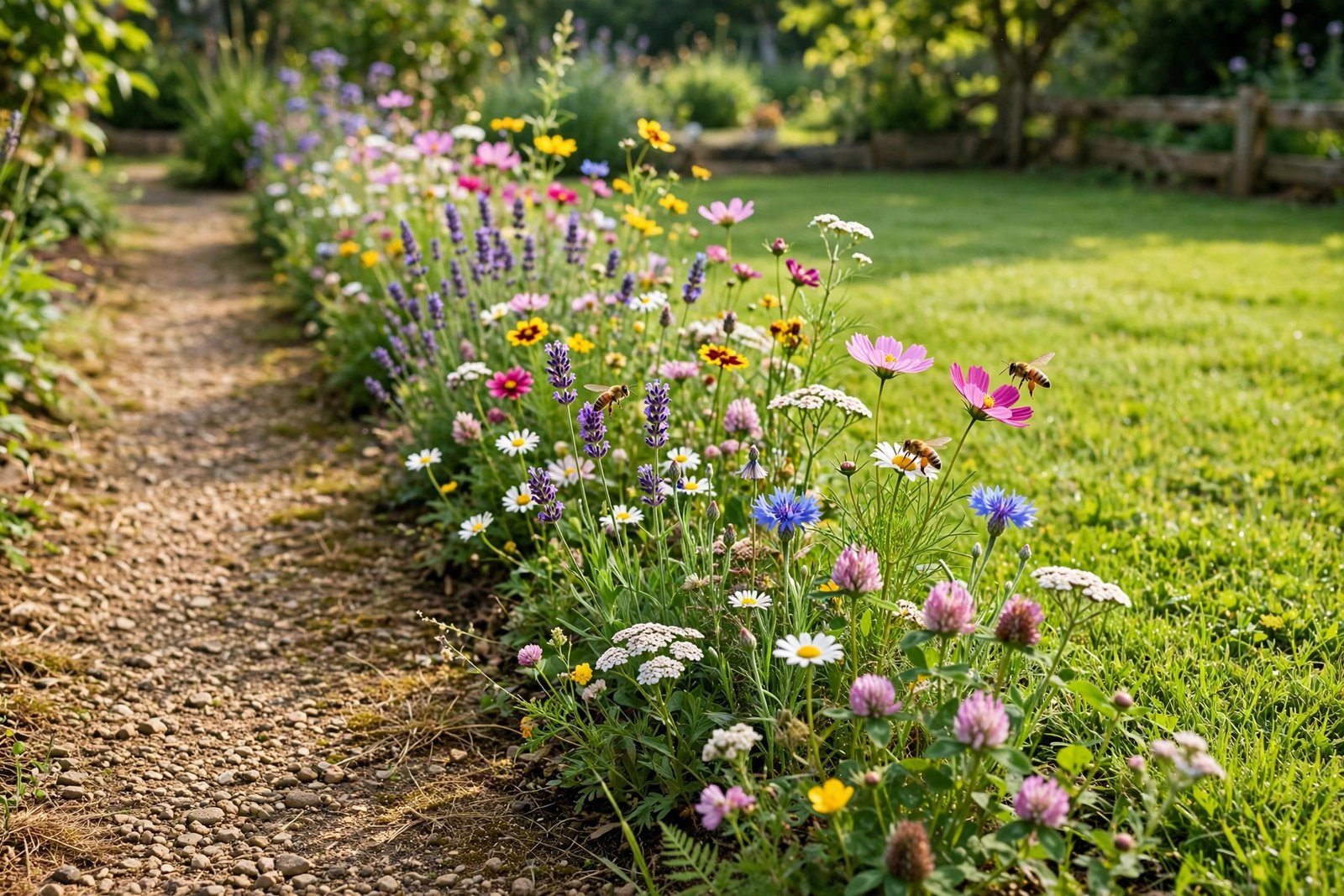
A pollinator strip is not a meadow. It is a border with a job: a sunny ribbon of flowers, planted thick enough that a bee can see it from the air and worth the trip once she gets there. The difference between a strip that hums and one that sits quietly pretty is rarely the flowers you chose. It is how you placed them — in drifts, in layers, with something blooming from the first warm weeks to the first frost.
This is the planting plan for the varieties in our roundup of the best flowers for bees and butterflies. If you are still deciding between native and non-native plants for the strip, read our native vs. non-native comparison first — the short version is that a native backbone with non-native annual fillers is the combination that actually works.
Pick the Sunniest Spot You Have
Almost every flower in this strip wants full sun, and the pollinators want it too. Bees forage on warmth-loving plants in the sun, and a shady strip stays quiet no matter how pretty it looks from the kitchen window. Aim for six or more hours of direct sun, on ground that does not sit wet after a storm.
Size is forgiving. A strip 4 feet deep and 12 feet long — about 48 square feet — is large enough to matter and small enough to finish in a weekend. A 4-by-8-foot bed works too, and even a 4-by-4-foot corner helps, because every patch adds to the mosaic of habitat around it. The Xerces Society’s Upper Midwest guidance makes the same point plainly: even a small area planted with the right flowers is beneficial, because each patch adds to the habitat available to bees.
Plant in Drifts, Not Singles
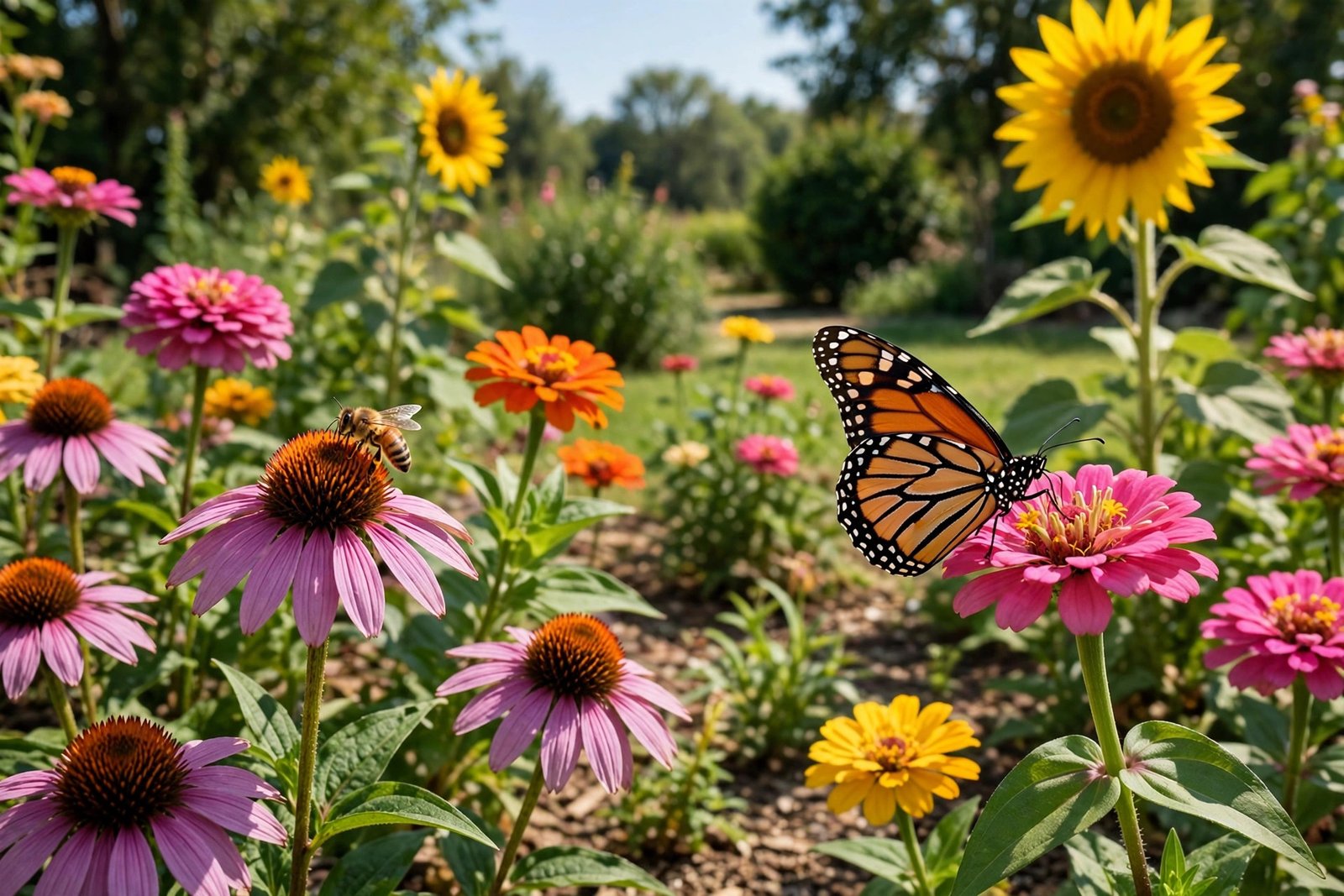
Bees forage efficiently. One coneflower alone in a corner is easy to miss; seven coneflowers together are a landmark. The Xerces guidance recommends clumps of one species, four feet or more across where space allows, and the same rule holds at a smaller scale: groups of three to five plants of the same kind, repeated along the strip, beat one of everything scattered about.
Drifts also make the strip look intentional instead of accidental, which matters if you share a fence line with neighbors. Repeat each drift at least once along the length of the bed. The eye travels, the bees travel, and nobody has to wonder whether the wildness was on purpose.
| Layer | Plants | Spacing |
|---|---|---|
| Back — tall, over 24 inches | Purple coneflower, Evening Sun sunflower, Sea Shells cosmos | Coneflower: groups of 3 seeds every 18″; cosmos: groups of 3 every 12″ |
| Middle — the summer workhorses | Black-eyed Susan, Lambada bee balm, California Giants zinnia | Black-eyed Susan: groups of 3 every 12″–24″; zinnia: groups of 3 every 12″ |
| Front — low edge, 12″–24″ | Munstead lavender | Thin to 1 plant every 18″–24″ |
Layer Tall at the Back, Low at the Front
Put the tallest flowers at the back of the strip and step down toward the path. Purple coneflower, Evening Sun sunflower, and Sea Shells cosmos all grow tall — over 24 inches — and they hold the back line without shading everything behind them, because there is nothing behind them. Black-eyed Susan, bee balm, and zinnias carry the middle. Munstead lavender, at 12 to 24 inches, seals the front edge, where you can brush it as you pass and get the fragrance for free.
That layering is not just tidiness. Short flowers hidden behind tall ones never get visited, and tall flowers flopping forward over short ones shade them out. Give each layer its own sightline to the sun, and every flower in the strip gets its turn with the bees.
Start the Slow Ones Indoors
Not every flower in this strip wants the same start, and timing is where a pollinator strip is won or lost. The perennials reward an early indoor start. Purple coneflower goes indoors 10 to 12 weeks before your average last frost, and it may bloom the first year if you do. Black-eyed Susan goes indoors 8 to 10 weeks before last frost, with the same first-year chance. Munstead lavender goes indoors 10 to 12 weeks before last frost too — and remember, its germination runs 15 to 90 days, so start it early and do not throw the tray away in week three.
The annuals are the opposite: they want warm soil and no fuss. California Giants zinnia and Sea Shells cosmos are both best direct-sown after last frost — zinnias 1 to 2 weeks after, cosmos 1 to 2 weeks after, when the soil is at least 60°F. Zinnias germinate in 3 to 10 days; cosmos in 5 to 10. Starting them indoors gains you nothing and, with zinnias especially, can set them back.
If you are starting the slow ones indoors, sturdy trays and gentle bottom heat make the wait easier. These are the seed-starting supplies worth having on hand:
Epic 6-Cell Seed Starting Trays
Sturdy cells for the slow starters — coneflower, black-eyed Susan, and lavender.
Seed Starting Heat Mat
Gentle bottom heat for trays that need warmth to wake up, lavender included.
Epic 1020 Universal Bottom Tray
A watertight tray under the cells, so watering stays where it belongs.
Keep Something Blooming All Season
The strip’s real job is continuity. A garden that is gorgeous in June and quiet by August leaves pollinators hungry in the busiest weeks of their year. This mix is chosen so the handoff never stops: lavender blooms in summer, coneflower blooms a month or more from midsummer, black-eyed Susan blooms at least eight weeks, and zinnias, cosmos, and Evening Sun keep going from summer to frost.
Deadheading helps the annuals most. Cut zinnias often — the more you cut, the more they bloom — and cut cosmos just as buds begin to open for the longest vase life. Leave the coneflower heads standing when bloom ends, though. The cones fill with seed, and birds work them through fall and winter. A strip that feeds bees in July and birds in December is doing two jobs for the price of one planting.
The Care That Actually Matters
Water while plants establish, then back off. Cosmos and lavender are both drought tolerant once established, and rich soil with heavy feeding grows cosmos leaves at the expense of flowers. Lean soil, full sun, and a little neglect suit this strip better than pampering.
Skip the insecticide in and around the strip. The whole point of the planting is to feed insects, and a spray that kills the pests kills the guests too. If aphids show up, a sharp spray of water or a few days of patience usually settles it — and the beneficial insects the strip attracts will do the rest of the work for you.
In fall, resist the tidy-up. Leave hollow stems standing through winter for cavity-nesting bees, leave seed heads for birds, and leave a little bare soil at the strip’s edge for ground-nesting bees. The strip will look a bit wild, and that wildness is the habitat. Cut it back in spring, when new growth shows you where last year ended.
What to Plant First
If you are planting this spring, start with three packets: purple coneflower for the backbone, California Giants zinnia for fast color, and black-eyed Susan for the long, easy middle. Add bee balm and cosmos in year one if you have the room, and lavender as soon as you have a sunny, dry edge to give it. The strip will not look finished in its first summer — perennials spend year one growing roots — but the annuals will carry the show, and by year two the hum will tell you it worked.