Landscape & Leisure is reader-supported. When you buy through links on our site, including Botanical Interests seed links, we may earn a commission at no extra cost to you. Prices change, so click through to confirm current pricing.
Here is the mistake most new pollinator gardeners make, and it is an understandable one: they buy whatever looks prettiest at the garden center, plant one of each, and wonder why the bees never showed up. The flowers were fine. The plan was not. Pollinators do not shop by looks. They shop by what is native to the neighborhood, what is planted in drifts big enough to find, and what keeps blooming when everything else has quit.
That is where the native vs. non-native question actually matters — not as a purity test, but as a practical decision about what your strip is for. Natives are the backbone. Non-natives are the fillers that keep the color going. Both have a job, and the garden that tries to run on one alone is the garden that disappoints somebody. For the full variety list behind this comparison, see our roundup of the best flowers for bees and butterflies, and for the layout that puts them to work, see our guide to planting a pollinator strip.
What Native Actually Means Here
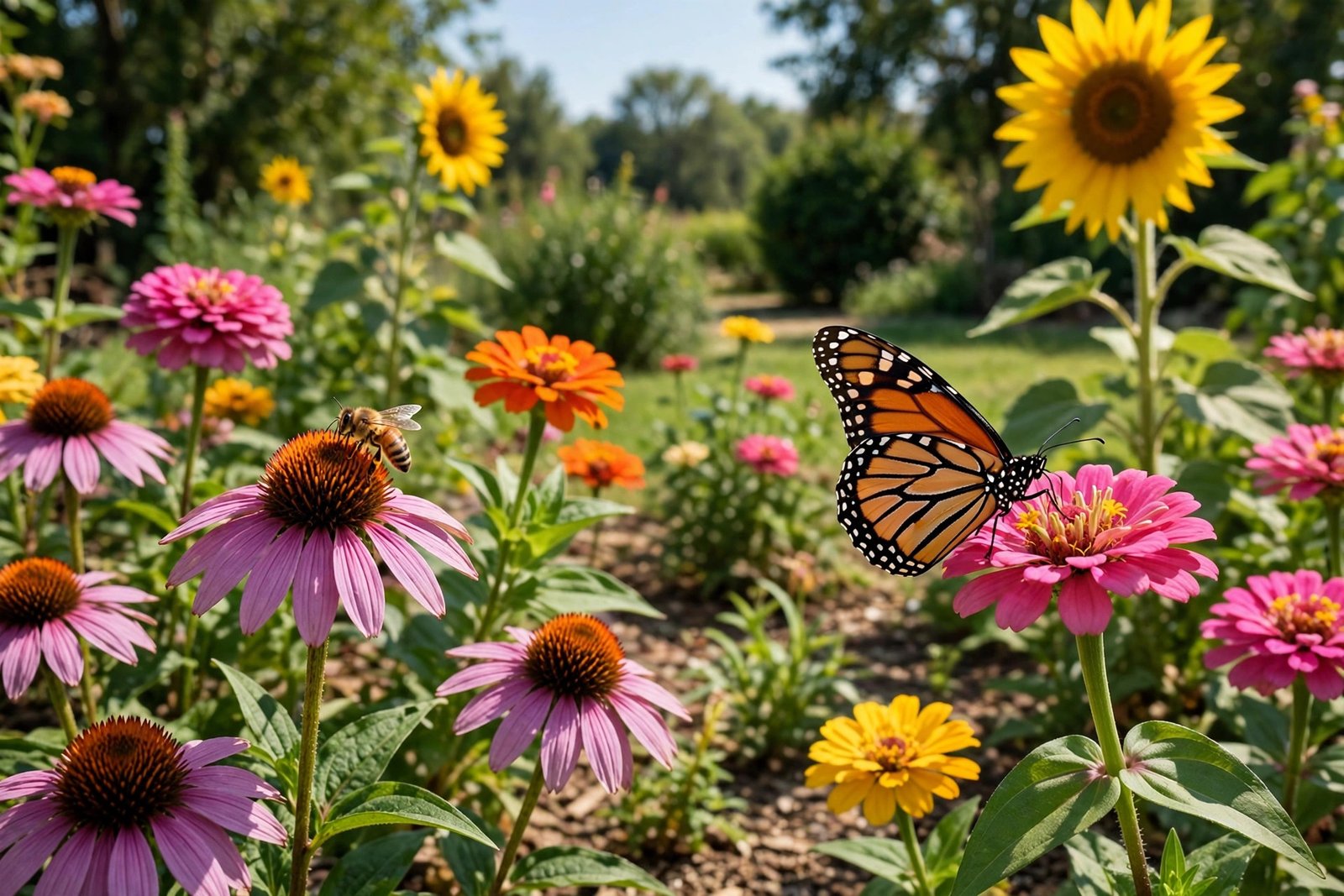
Native means the plant evolved in your region, alongside the insects that feed on it. Purple coneflower is native to the eastern and central United States. Black-eyed Susan is a North American prairie native. Those are not trivia facts for a plant label — they are the reason these two flowers work so hard. The Xerces Society’s guidance puts it plainly: native plants are best adapted to local conditions, provide superior nectar and pollen, and have co-evolved with native pollinators. Research the Xerces Society cites suggests native plants are four times more attractive to native bees than exotic flowers.
That co-evolution shows up in ways you can see. Coneflower blooms a month or more from midsummer, then its seed cones feed birds through fall and winter. Black-eyed Susan blooms at least eight weeks and reseeds itself. Neither needs pampering, because neither is a stranger to the soil, the weather, or the wildlife. They belong here, and they act like it.
| Side | Strength | Weakness |
|---|---|---|
| Native backbone | Best nectar and pollen for local pollinators; adapted to local soil and weather; returns year after year | Slower first year; coneflower may not bloom until year two from seed |
| Non-native annual fillers | Fast, heavy, all-season color in year one; zinnias and cosmos bloom from summer to frost | Must be replanted yearly; no caterpillar host value for local butterflies |
| Non-native perennial | Lavender is drought-tolerant, fragrant, and returns in zones 5–9 | Slowest start on the list — germination runs 15 to 90 days |
The Native Case, Stated Plainly
Plant natives first because they do the most work per square foot. They feed the pollinators that actually live near you, they host the caterpillars those pollinators need to reproduce, and they need less water, less fertilizer, and less fuss than plants still learning your climate. The Xerces Society lists native wildflowers, shrubs, trees, and grasses as the foundation of pollinator habitat for exactly that reason: they provide the nectar and pollen pollinators eat, the vegetation caterpillars feed on, and nesting resources for bees.
Two picks carry the native case in this cluster, and both earn pick cards on their own merits:
Purple Coneflower Echinacea Seeds
Native to the eastern and central U.S., zones 3–8, blooming a month or more from midsummer.
Black-Eyed Susan Seeds
A North American prairie native with at least 8 weeks of bloom, and it reseeds itself.
The honest trade-off with natives is patience. Coneflower started from seed may not bloom in its first year. Black-eyed Susan is a short-lived perennial, often treated as an annual, that may come back for a second or third year — or may not. You are planting for year two and year three, not for next weekend. If you want instant proof that the garden works, natives alone will test you.
The Non-Native Case, Stated Honestly
Non-natives earn their place by doing the job natives cannot do in year one: fast, heavy, reliable color from summer to frost. California Giants zinnia is native to Mexico, not to your backyard, and it does not care — it germinates in 3 to 10 days, grows 4- to 6-inch flowers, and blooms harder the more you cut it. Sea Shells cosmos, native to Mexico and Arizona, is drought tolerant, attracts hummingbirds as well as bees and butterflies, and blooms from summer to frost on neglect.
That speed is real value, not a consolation prize. A new pollinator strip planted only with slow perennials looks empty in its first summer, and an empty-looking garden is a garden the gardener gives up on. Annual fillers keep the strip alive, visible, and visited while the perennials get established underneath. Diablo cosmos makes the same case in bolder color: scarlet-orange blossoms from midsummer to first fall frost, providing pollen and nectar for bees, hummingbirds, and butterflies, on a drought-tolerant plant that won an All-America Selections award in 1974.
California Giants Blend Zinnia Seeds
Fast, heavy, all-season color in year one — the annual that carries a new strip.
Diablo Cosmos Seeds
Scarlet-orange blossoms in loads, from midsummer to frost, for bees, hummingbirds, and butterflies.
The limit is just as real. Annual fillers must be replanted every year, and they do not host the caterpillars local butterflies need. A strip of zinnias alone feeds adult butterflies beautifully and gives them nowhere to raise the next generation. That is not a reason to skip zinnias. It is a reason not to stop at zinnias.
Where Lavender Fits — and Where It Does Not
Munstead lavender is the exception that proves the rule, and the one non-native perennial worth arguing about. It is native to the Mediterranean, not to North America, and it still earns a place in a pollinator strip — for a specific job, in a specific spot. It is drought- and heat-tolerant, deer resistant, fragrant, and attractive to pollinators, in zones 5 through 9.
Put it where nothing else wants to live: the hot, dry, sunny edge. Every garden has one, and most gardeners waste it on a plant that sulks there. Lavender thrives there. Just go in with your eyes open about the start: germination runs 15 to 90 days, and indoor starting 10 to 12 weeks before last frost is recommended. If you want a perennial filler without that wait, coneflower is the faster, native answer. Lavender is the patient gardener’s dry-corner specialist, not the backbone.
The Verdict
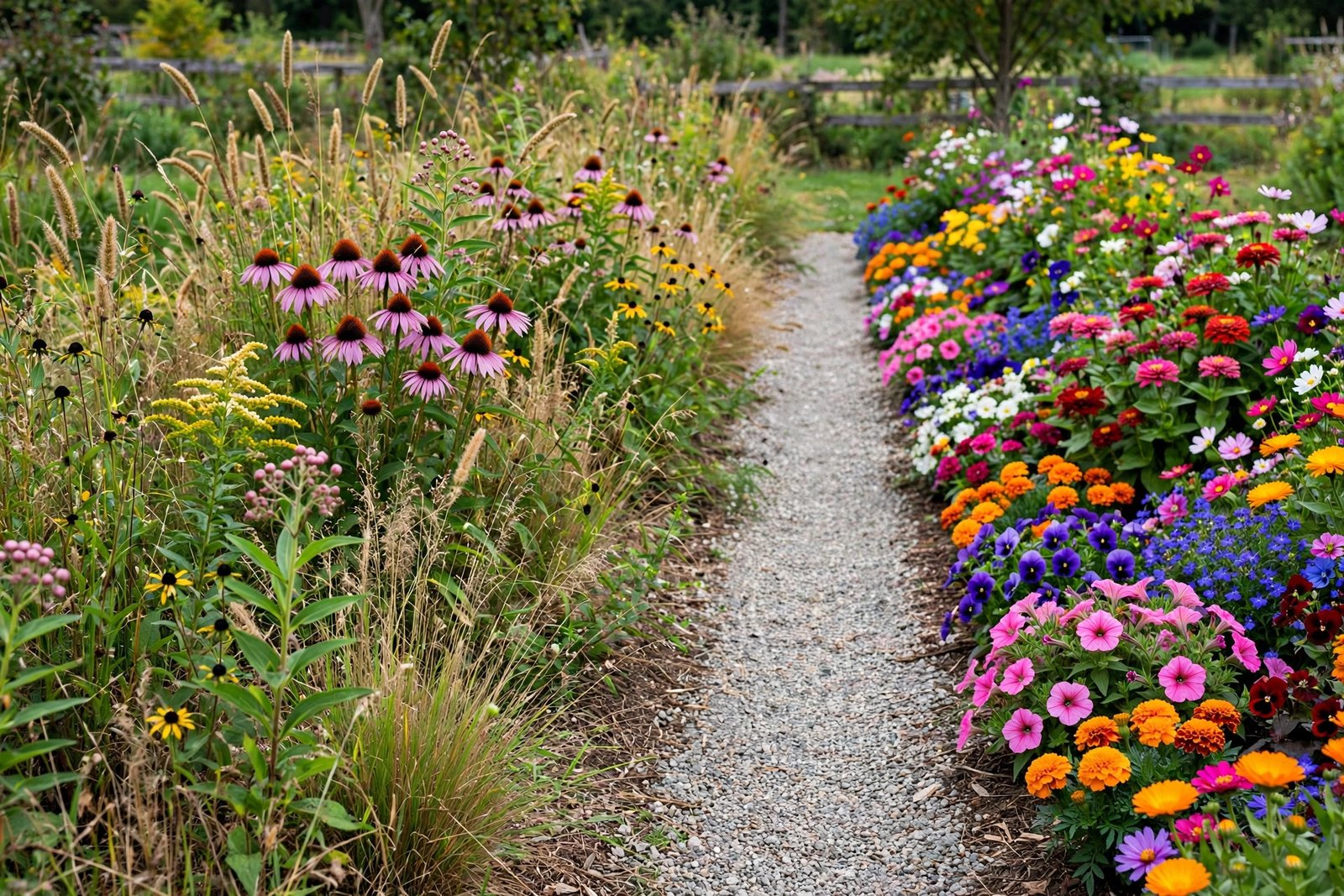
Build the strip the way a good neighborhood works: natives as the longtime residents, non-natives as the guests who bring the energy. Coneflower and black-eyed Susan are the backbone — plant them first, plant them in drifts, and give them two seasons to prove themselves. Zinnias, cosmos, and Diablo are the fillers that make year one worth looking at and worth visiting. Lavender takes the dry corner nobody else wants.
Skip the all-or-nothing version of this argument. An all-native strip that looks empty in year one gets ripped out. An all-annual strip that never hosts a caterpillar feeds this summer’s butterflies and starves next summer’s. The mix is not a compromise. It is the plan that still exists in year three, humming louder every summer. That is the one worth planting.