Landscape & Leisure is reader-supported. When you buy through links on our site, including Botanical Interests seed links, we may earn a commission at no extra cost to you. Prices change, so click through to confirm current pricing.
Your first salad of the spring does not have to come from the store, and it does not have to be lettuce. Three weeks after you push a few Mizuna seeds into cool soil, you can be snipping feathery green leaves into a bowl, and the bed you sowed them in will keep handing you salads for weeks after that. The only decision is which mustard to grow, because the three worth your money taste nothing alike.
All three varieties below come from Botanical Interests at $2.69 a packet, all three are in stock, and all three carry ratings above 4.9 from gardeners who have actually grown them. One is mild enough for a child to eat raw, one is bold enough to stand up to bacon, and one is not a mustard at all, though it answers to the name. Our growing guide covers sowing, thinning, and the cut-and-come-again harvest that keeps one sowing producing for weeks, and our mustard-versus-kale comparison settles which leafy green deserves the bed when you can only plant one. If you are building a whole salad bed, our cut-and-come-again greens roundup and our salad greens guide cover the lettuces and spinach that grow alongside them.
Best Overall: Red Giant Mustard
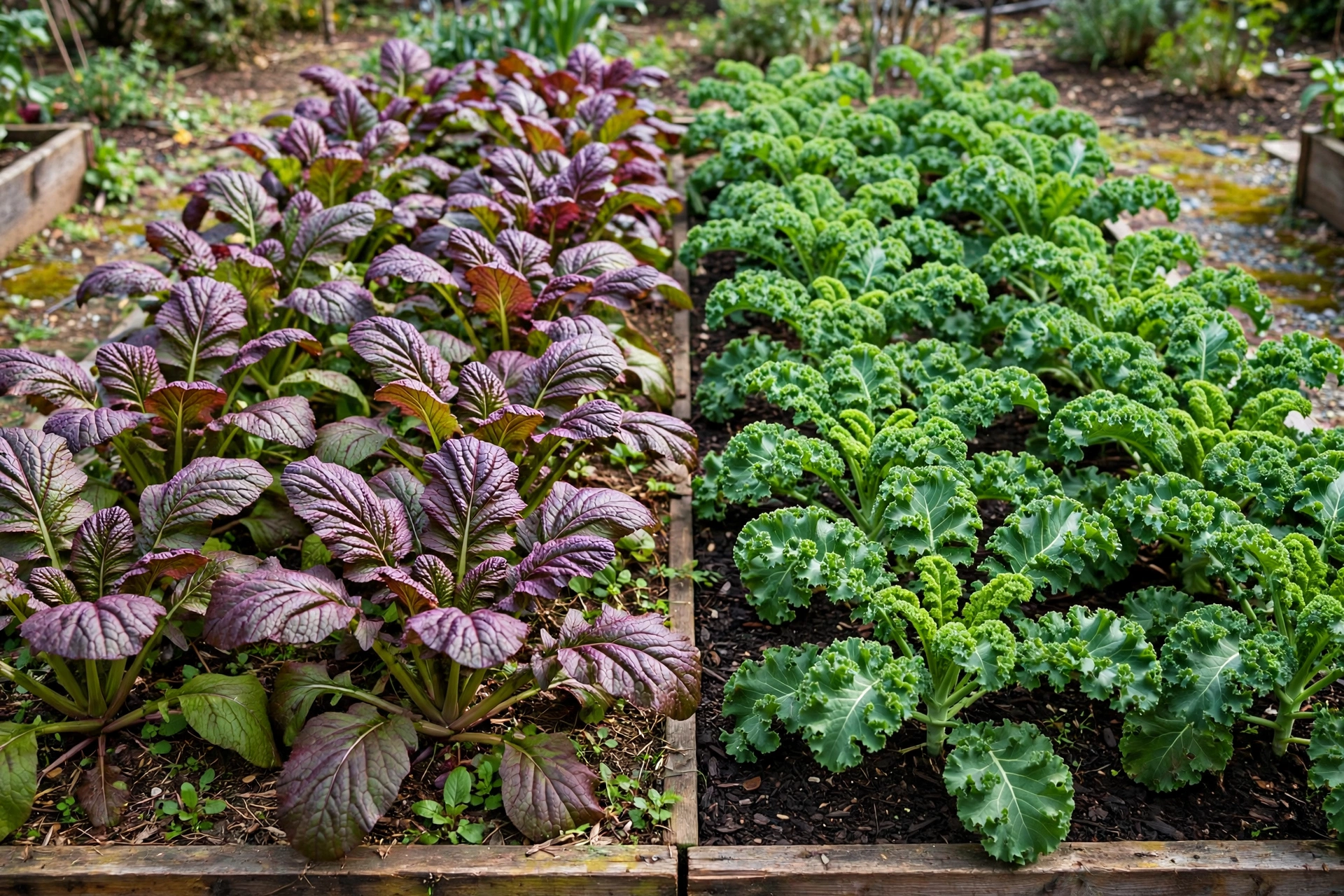
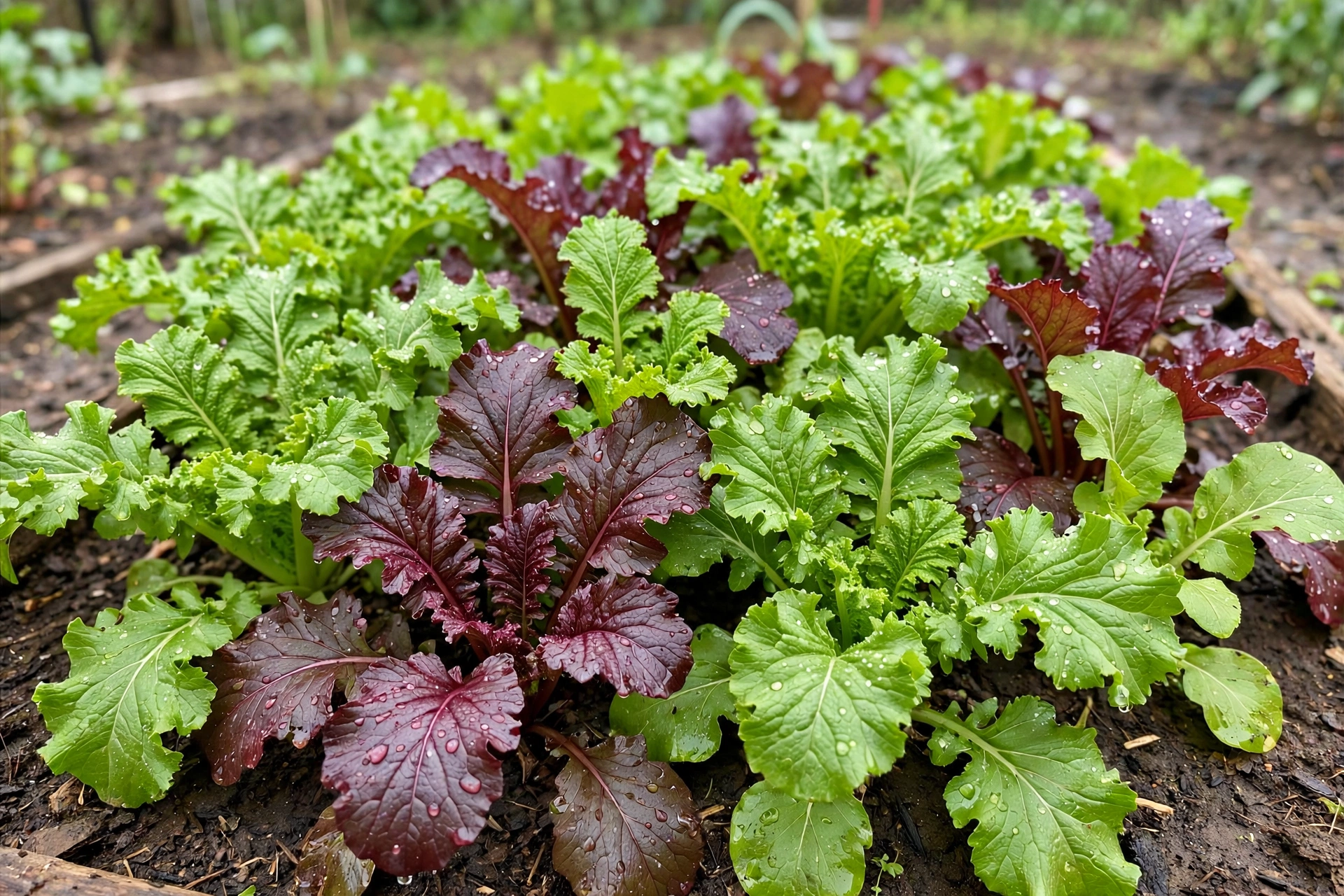
Red Giant is the mustard that earns its spot twice, once in the salad bowl and once in the flower bed. The leaves are big and bold, maroon with lime-green veins, the kind of plant neighbors stop to ask about, and the flavor backs up the looks: a real peppery bite that gets stronger in older leaves and hot weather, with hints of horseradish in the finish. Gardeners give it a perfect 5.0 from 13 reviews, the only perfect score in this roundup, and the review themes are consistent — huge plants, hardy plants, and the best peppery taste of any mustard they have grown.
It is also the most forgiving of the three when the season turns. Red Giant is cold tolerant and bolt resistant, which means it holds its flavor longer into warm weather than most mustards, and a gardener on the Texas coast picked it in mid-June without it bolting. The honest trade-off is in the kitchen: this is not the mustard for a long, slow pot of greens, because the leaves turn out better sautéed, raw in salads, or tucked into a sandwich than stewed for an hour. Grow it for the bold leaf, and cook it fast.
Pros: perfect 5.0 from 13 reviews; bold peppery flavor with horseradish notes; ornamental maroon leaves; cold tolerant and bolt resistant.
Cons: not suited to long stewing; flavor gets hot enough in older leaves that timid eaters may balk.
Red Giant Mustard Seeds
The boldest mustard here, with a perfect rating, ornamental maroon leaves, and real heat tolerance.
Runner-Up: Mizuna Mustard
Mizuna is the mustard for the gardener who wants salad greens fast and does not want to argue with anyone at the table about heat. It is a Japanese mustard, milder than other mustards, with small feathery leaves that are tender enough to eat raw straight off the plant, and it is ready to harvest as baby greens in as little as three weeks from sowing. That speed is the whole pitch: sow it when the soil is still cold and wet in early spring — it germinates under exactly those conditions — and you are eating from the bed while the tomatoes are still on the windowsill.
The other reason it earns the runner-up spot is that it outlasts lettuce when the weather warms. Mizuna withstands heat longer than lettuce without bolting, so the bed keeps producing into the part of spring when lettuce gives up, and gardeners rate it 4.9 from 15 reviews. It is a graceful plant, too, pretty enough for a flower bed or a container, which makes it the easiest mustard here to tuck into a gap. The trade-off is size: the leaves are small, so it takes more snipping to fill a salad bowl than a broad-leaf variety would, and gardeners have noted it pulls aphids toward itself, which is handy if you want a trap crop and a nuisance if you wanted a tidy bed.
Pros: baby greens in as little as 3 weeks; mildest true mustard here; germinates in cold, wet spring soil; outlasts lettuce in warm weather.
Cons: small leaves mean more snipping per salad; can draw aphids, for better or worse.
Mizuna Mustard Seeds
The fastest salad here — mild, feathery baby greens in as little as three weeks from sowing.
Best for Mild Flavor: Tendergreen Mustard Spinach
Tendergreen needs a plain word up front, because its name is a small fiction. It is komatsuna, a Japanese green also called mustard spinach, and Botanical Interests says it plainly on the product page: it is neither mustard nor spinach. What it is, is the mildest green in this roundup, with smooth, dark, glossy leaves and thin, lighter midribs, a flavor gentler than any true mustard here, and a plant that shrugs off the conditions that end other greens — it is slow to bolt and tolerates cold, heat, and dry weather, though it does its best work in cool weather. Gardeners rate it 4.9 from 12 reviews.
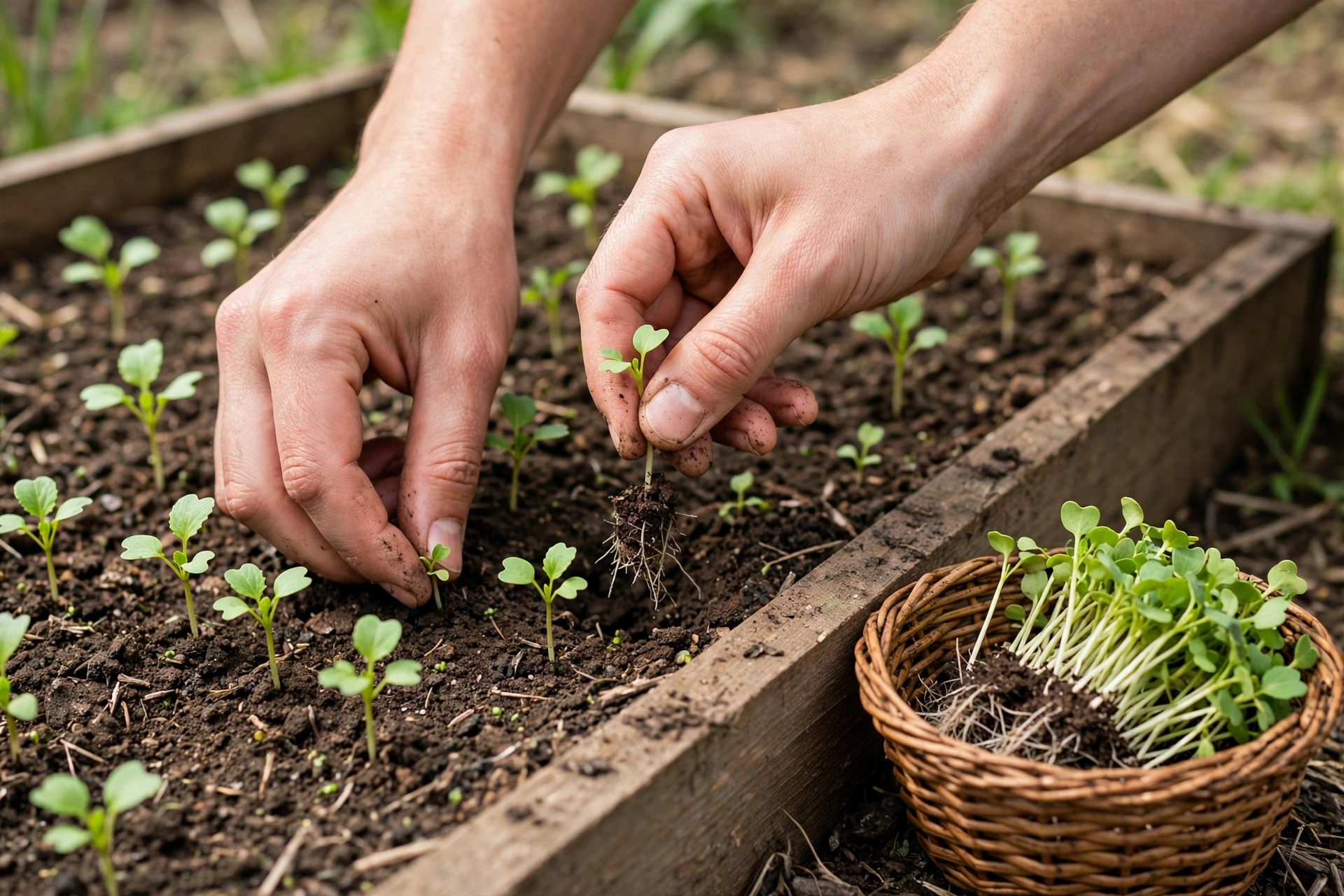
The practical case for Tendergreen is the harvest window. It reaches maturity in 30 to 60 days, and you can start picking leaves when they are 2 inches tall, taking no more than a third of the plant at a time so it keeps regrowing. Sow it in groups of three seeds every 4 to 6 inches, a quarter inch deep, thin to one plant every 4 to 6 inches when the seedlings are 3 inches tall, and one packet sows up to 200 feet of row. The one thing not to do is start it indoors: transplant stress can make it bolt, so direct sow is the way. The trade-off is that it will never give you the peppery kick of Red Giant, and if you wanted a true mustard, this is not one — it is the green to grow when you want mustard’s ease without mustard’s bite.
Pros: mildest flavor here; slow to bolt and tolerant of cold, heat, and dry weather; flowers, stalks, and buds are edible too; one packet sows up to 200 feet.
Cons: not a true mustard, so no peppery bite; direct sow only, since transplants can bolt.
Tendergreen Mustard Spinach Seeds
Komatsuna, not a true mustard — the mildest green here, slow to bolt, and generous with regrowth.
What Is Not Here
Three varieties is the whole mustard shelf at Botanical Interests, and the gap is worth knowing before you order. None of the three is a big, curly-leaf southern mustard, the kind grown for a pot of greens with pot liquor, so if that is the dish you have in mind, these Asian types will not give it to you. The closest thing in the catalog is Gai Choy Mustard, a broad-leaf Chinese mustard we already covered in our Asian greens roundup, and that is where it belongs — it is a bok choy bed companion, not a third pick in this roundup. What you get here instead is a fast mild salad green, a bold ornamental one, and a gentle imposter that outlasts them both, which covers most of what a home garden actually needs from mustard.
How the Three Compare
| Variety | Flavor | Best for | Price | Rating |
|---|---|---|---|---|
| Red Giant Mustard | Bold, peppery, horseradish notes | Sautéing, salads, ornamental beds | $2.69 | 5.0 from 13 reviews |
| Mizuna Mustard | Mild, slightly spicy | Baby greens, salads, containers | $2.69 | 4.9 from 15 reviews |
| Tendergreen Mustard Spinach | Mildest, gentle and smooth | Steady harvests, hot and cold weather | $2.69 | 4.9 from 12 reviews |
Bottom Line
Start with Red Giant if you want one mustard that does the most: the boldest flavor, the only perfect rating, and a plant pretty enough to earn its place in a flower bed. Add Mizuna if you want salad greens in three weeks, because nothing else here is that fast, and add Tendergreen if you want the mildest green with the longest harvest window. All three cost $2.69, all three are in stock, and any one of them will have you eating from the bed before the tomatoes are out of their pots. For the sowing and harvesting routine, read our growing guide, and if you are torn between mustard and kale, our comparison sorts out which one deserves the bed.