You step onto the lawn the morning after a hard rain and your boot leaves a print that fills with water — and the aerator is already rented for today. The question isn’t whether the machine will run. It will. The question is whether the holes it punches will do any good, or whether you’ll spend the day making a mess that takes the lawn a month to forgive.
Here’s the short version: damp is ideal, soaking wet is not. A core aerator does its best work in soil that is moist enough for the tines to slide in and pull a clean plug, and its worst work in soil so wet that the plugs smear shut behind the tines and the machine’s wheels rut the turf. The difference between those two states is usually a day of drying, and the test that tells them apart takes ten seconds.
The Screwdriver Test
Push a screwdriver into the lawn with steady hand pressure. In soil that is ready to aerate, it should slide in several inches without much fight — moist, not muddy. If it goes in easily and the hole you leave behind fills with water, the soil is saturated. If you have to lean on it to get it in at all, the soil is too dry, and the tines will bounce off the surface instead of pulling plugs.
Walk the lawn and test a few spots, not just one. The low corner by the fence dries slower than the sunny strip by the driveway, and the aerator doesn’t care about your average — it cares about the wettest patch it rolls over. If any large area fails the test, wait. A day of sun and wind usually moves a lawn from saturated to workable, and two days after a heavy rain is a safe bet in most soils. Clay holds water longer than sandy soil, so a clay lawn may need the extra day.
What Goes Wrong When You Aerate Too Wet
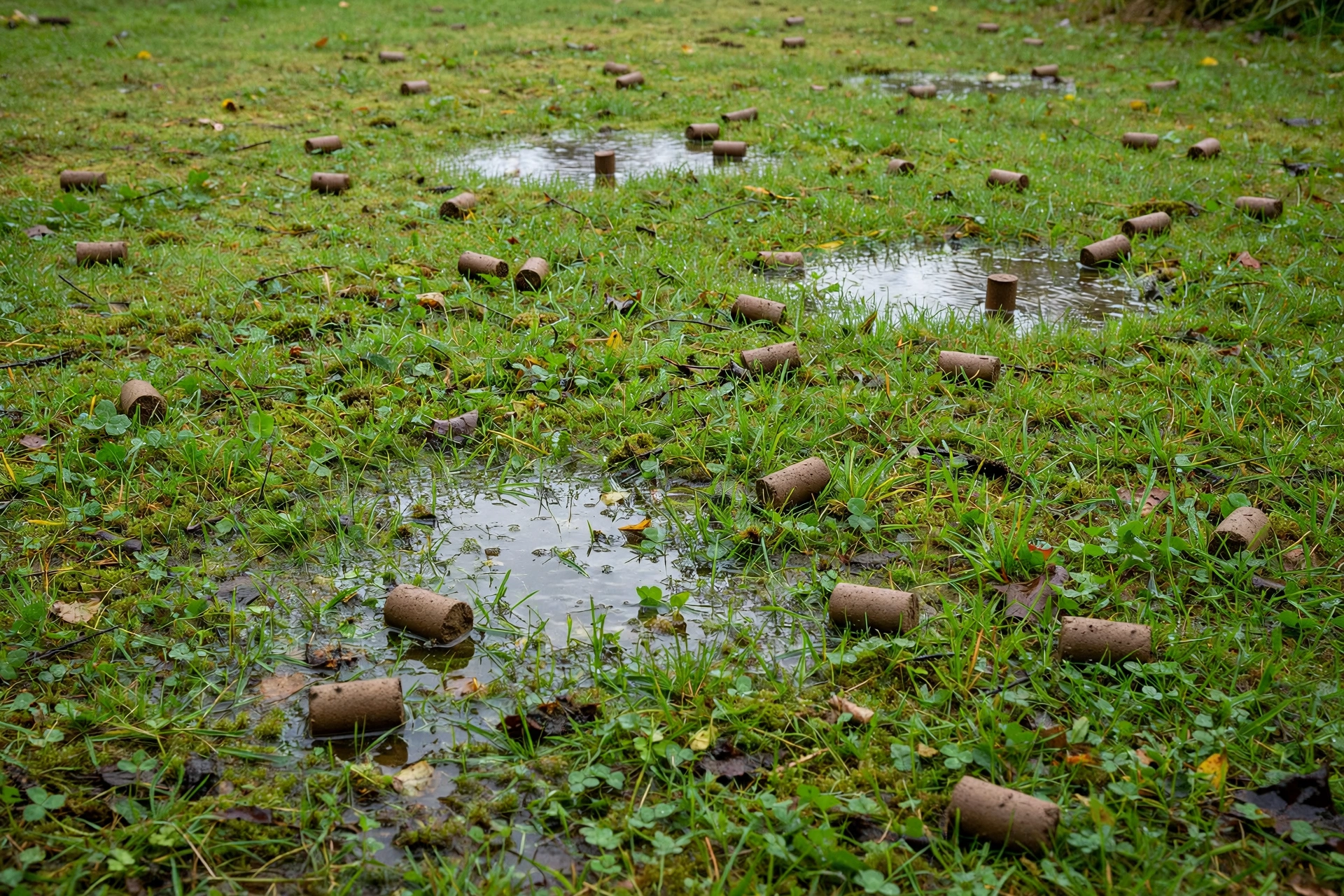
The plugs smear instead of pulling. A core aerator works by cutting a clean cylinder of soil and lifting it out. In saturated soil, the cylinder collapses as it lifts, the hole seals itself behind the tine, and you end up with a lawn full of shallow dimples instead of open channels. The aeration you paid for never actually happens.
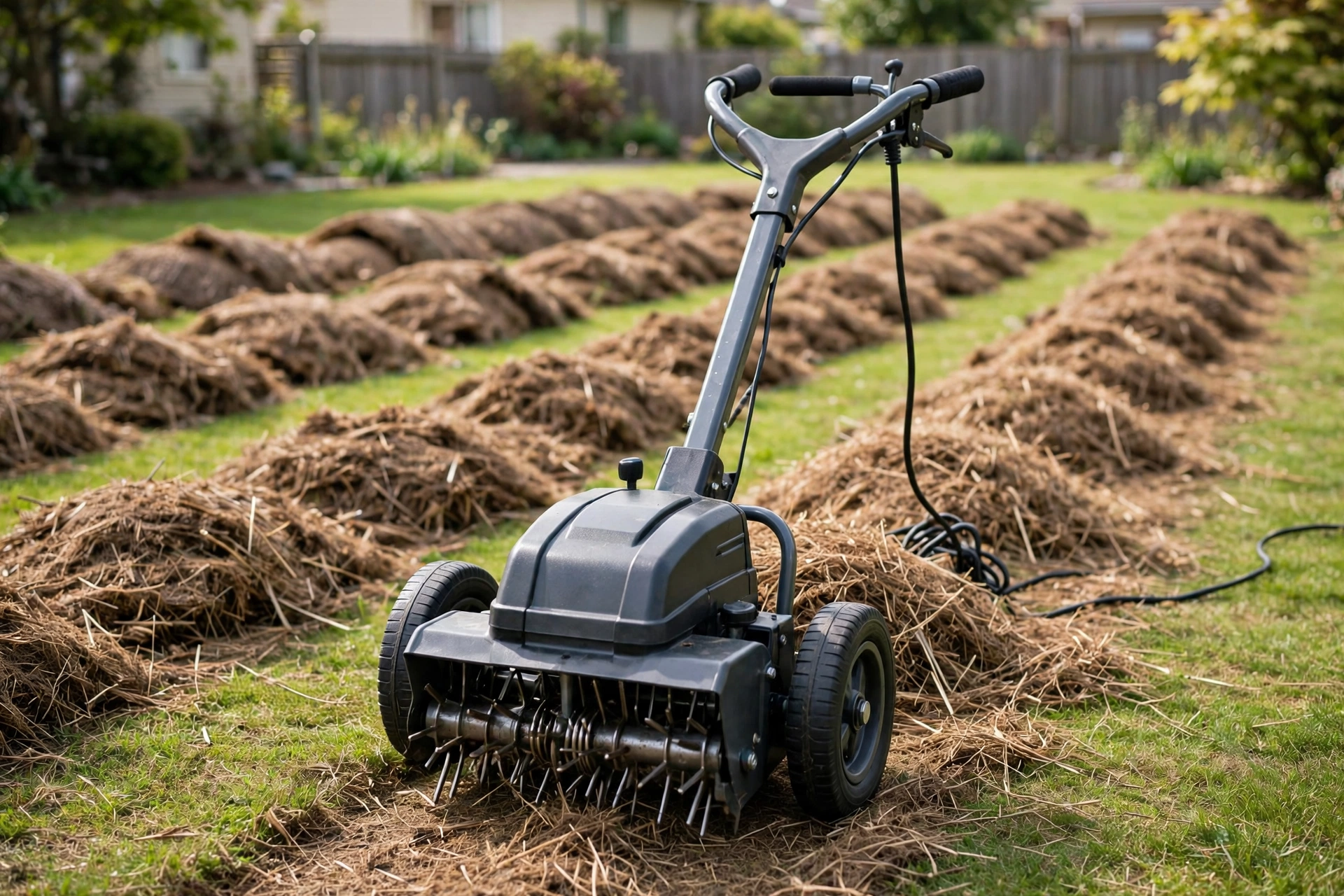
The machine ruts the lawn. A walk-behind aerator is heavy, and its wheels concentrate that weight on two narrow strips. On wet turf those strips sink, tear, and leave ruts that show for weeks. The damage is worst on turns, where the machine pivots on one wheel.
The plugs turn to mud. Clean plugs dry out and crumble back into the lawn within a couple of weeks, returning their nutrients to the soil. Wet plugs smear into a slick layer that seals the surface — the opposite of what aeration is supposed to do.
What About Damp — the Sweet Spot?
Don’t wait for the lawn to dry out completely. Bone-dry soil is the other failure mode: the tines can’t penetrate, the plugs come out shallow or not at all, and the machine bounces across the surface. The ideal window is the day after a good rain or a deep watering, when the top few inches are moist all the way through but the surface no longer squishes underfoot. That is the day the plugs pull clean and the holes stay open.
If you watered to prep for aeration — and watering before aerating is the right call — give it a few hours to soak in rather than running the machine while the surface is still puddled. The water needs to be in the soil, not on it.
If You Already Aerated While It Was Wet
Stay off the lawn until it dries, and don’t try to fix it by aerating again — a second pass over wet, rutted turf only deepens the damage. Let the plugs dry where they fell, then break up any smeared ones with a rake once they’re crumbly. The lawn will recover, and the ruts will fill in as the grass grows, but it takes a few weeks. Mark the lesson for next time: the rental clock is not a deadline, and most rental shops will let you push a reservation a day for a weather delay if you call before pickup.
Timing Around the Rest of the Job
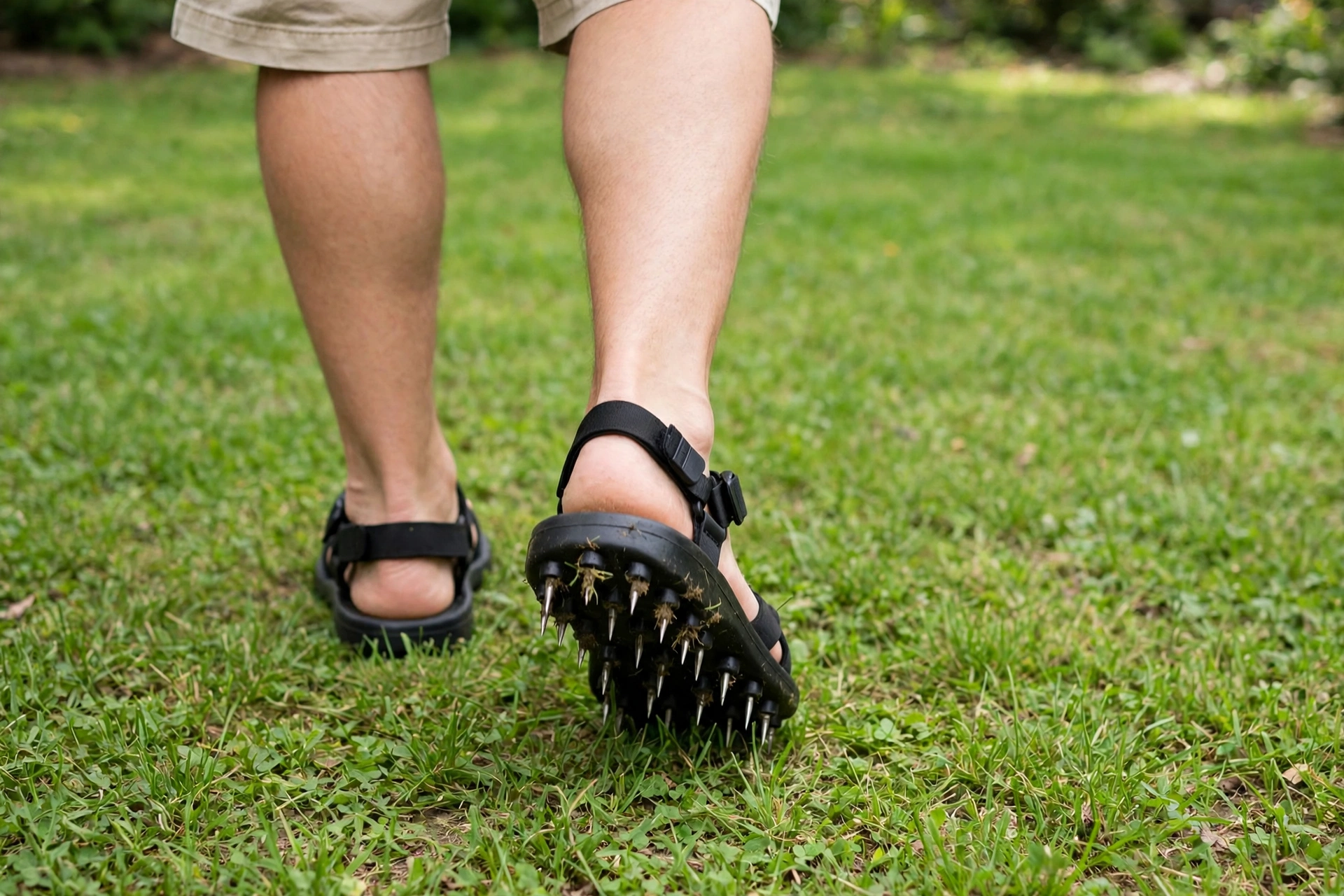
Wet-soil judgment matters most when aeration is part of a bigger job. If you’re overseeding after aerating, the seed needs the open holes and damp soil to germinate — but it also needs those holes to stay open, which is why after-aeration care starts with leaving the plugs alone and watering lightly. If you’re wondering whether the lawn needs aerating at all this season, how often to aerate by lawn type sets the schedule, and which aerator type fits your lawn covers the machine choice. Liquid aerators are a different question entirely — see liquid vs core aeration — and they don’t have the same wet-soil problem, because there’s no machine rolling over the turf. And once the plugs are pulled, the first mow after aerating waits until the grass has grown enough to cut, not until the calendar says so.
Bottom Line
Aerate when the soil is damp, not when it’s wet. Run the screwdriver test, wait the extra day if the holes fill with water, and save the rental for the morning the lawn is moist all the way through but firm underfoot. That one day of patience is the difference between open holes that help the lawn breathe and a rutted mess that needs a month to heal.