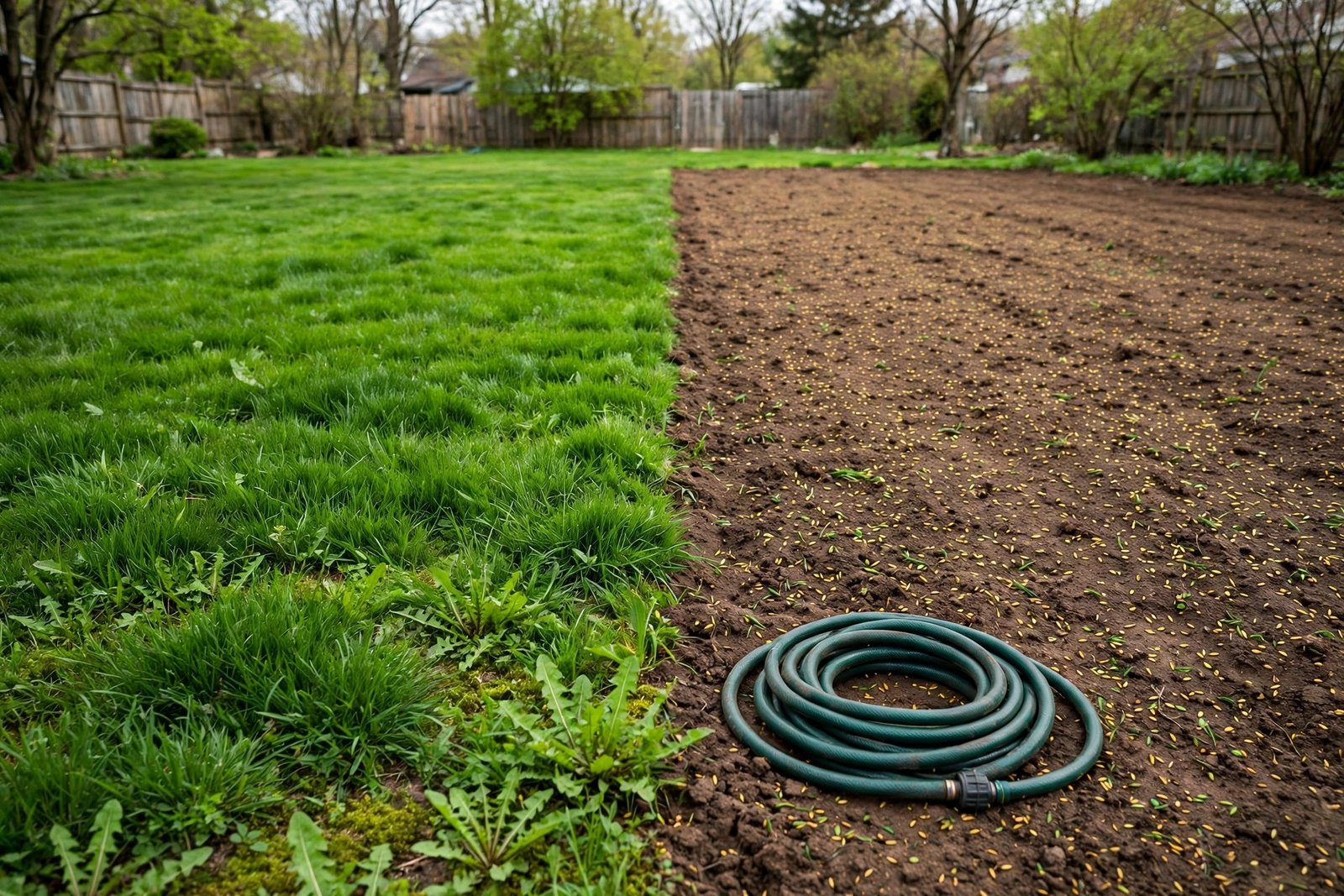
Every spring, the same two bags end up in the same garage: pre-emergent to stop the crabgrass, grass seed to fix the bare spots. They cannot both win. A pre-emergent barrier stops seeds from establishing, and it makes no distinction between a crabgrass seed and a fescue seed — so if you have already spread pre-emergent this spring, the question is not whether you can seed, it is when. The answer lives on the label of the product you used, and the first thing to check is which active ingredient was in the bag.
Why the wait exists
Pre-emergent herbicides work by interrupting root and shoot growth in seedlings as they germinate. New grass goes through exactly the stage these products attack, which is why a freshly treated lawn can be seeded too early, watered faithfully, and produce nothing at all — the seed germinates, touches the barrier, and stalls. The barrier breaks down over time through sunlight, microbes, and weather, and each active ingredient breaks down at its own pace. That pace is your waiting period, and it is measured in months, not days.
The waiting periods, by active ingredient
These are the planning numbers at typical lawn rates. Your product’s label is the final word, because a heavier application stretches every one of them.
Prodiamine (Barricade and generics): plan on about four months. Prodiamine earns its reputation on longevity, and the same persistence that makes it the best crabgrass barrier makes it the longest seeding lockout. A spring application at a full rate effectively closes the lawn to seeding until the fall window — which, for cool-season lawns, is the better seeding season anyway.
Pendimethalin (Scotts Halts and similar): plan on about three months. The barrier fades sooner than prodiamine’s, but a spring application still pushes seeding into summer, when heat makes establishment a fight. Most lawns are better served waiting for fall.
Dithiopyr (Dimension): plan on about three months. Dithiopyr’s early post-emergent talent does not extend to new seed. Same practical answer as pendimethalin: the calendar lands you in summer, so fall is the real seeding date.
Mesotrione (Tenacity): no wait — it is the exception. Mesotrione is labeled for use at the time of seeding on most cool-season grasses, which is precisely why it anchors the seeding side of our best pre-emergent herbicide roundup. The one caution is fine fescue, where the label restricts use around seeding, so fescue-dominant lawns read the label twice.
Siduron: no wait — the other exception. Siduron is the older, narrower chemistry sold in starter-fertilizer-with-crabgrass-control products made specifically for new seedings. It controls fewer weeds than the products above and costs more per square foot, but on a lawn being seeded from scratch this spring, it is the traditional answer.
The full product-by-product timing windows sit in the pre-emergent timing table, and if you have not applied anything yet, run the Crabgrass Pre-Emergent Timing Checker before you choose which side of this decision your spring lands on.
If you already spread pre-emergent and the bare spots are bad
You have three honest options. Wait it out and seed in fall, accepting a spring and summer of thin spots — mulch the worst bare patches or keep them mowed so weeds do not colonize them first. Spot-repair only the worst places with mesotrione as the weed control for those areas, understanding the rest of the lawn’s barrier stays in force elsewhere. Or, on small bare patches, rake down through the barrier zone aggressively before seeding — disturbing the treated surface layer breaks the barrier in that spot, which is exactly why it sometimes works and exactly why it is unreliable. It is a patch-level gamble, not a lawn-level plan.
What does not work is seeding on schedule and hoping the barrier has faded early. Seed is the expensive input in this equation, and a failed germination costs you the seed, the water, and the weeks you could have spent on the fall plan. Our guide to the best time to apply pre-emergent covers the timing method that keeps you out of this bind in future springs.
If you have not spread anything yet: choose the season’s priority
This decision is genuinely a fork, and the spring lawn care hub puts it early in the sequence for that reason. A thick, established lawn with a crabgrass history should take the pre-emergent and skip spring seed — its problem is weeds, not thinness. A thin, patchy lawn should take the seed, because bare soil grows crabgrass better than it grows anything, and thickening the stand is itself weed control by fall. The lawns in between can split the difference with mesotrione and the method in when to overseed in spring.
Frequently asked questions
I seeded two weeks after applying pre-emergent and nothing came up. Is the seed dead? Most likely, yes — that is the barrier doing its job. Do not reseed into the same treated soil until the waiting period for your product has passed.
Does watering or rain shorten the wait? No. The barrier’s breakdown runs on time, sunlight, and soil microbes. Rain activates the barrier; it does not wash it away on any schedule you can use.
Can I seed in the fall after a spring application? Yes — and for prodiamine users this is the intended rhythm. A spring barrier has faded by the fall seeding window, which is the best seeding season for cool-season lawns regardless.
If seeding matters more this spring, skip the standard pre-emergent and build the plan around mesotrione and thick grass. If the barrier matters more, spread it without guilt and put the seed money toward fall. The only losing move is paying for both bags and letting them fight it out in the soil.