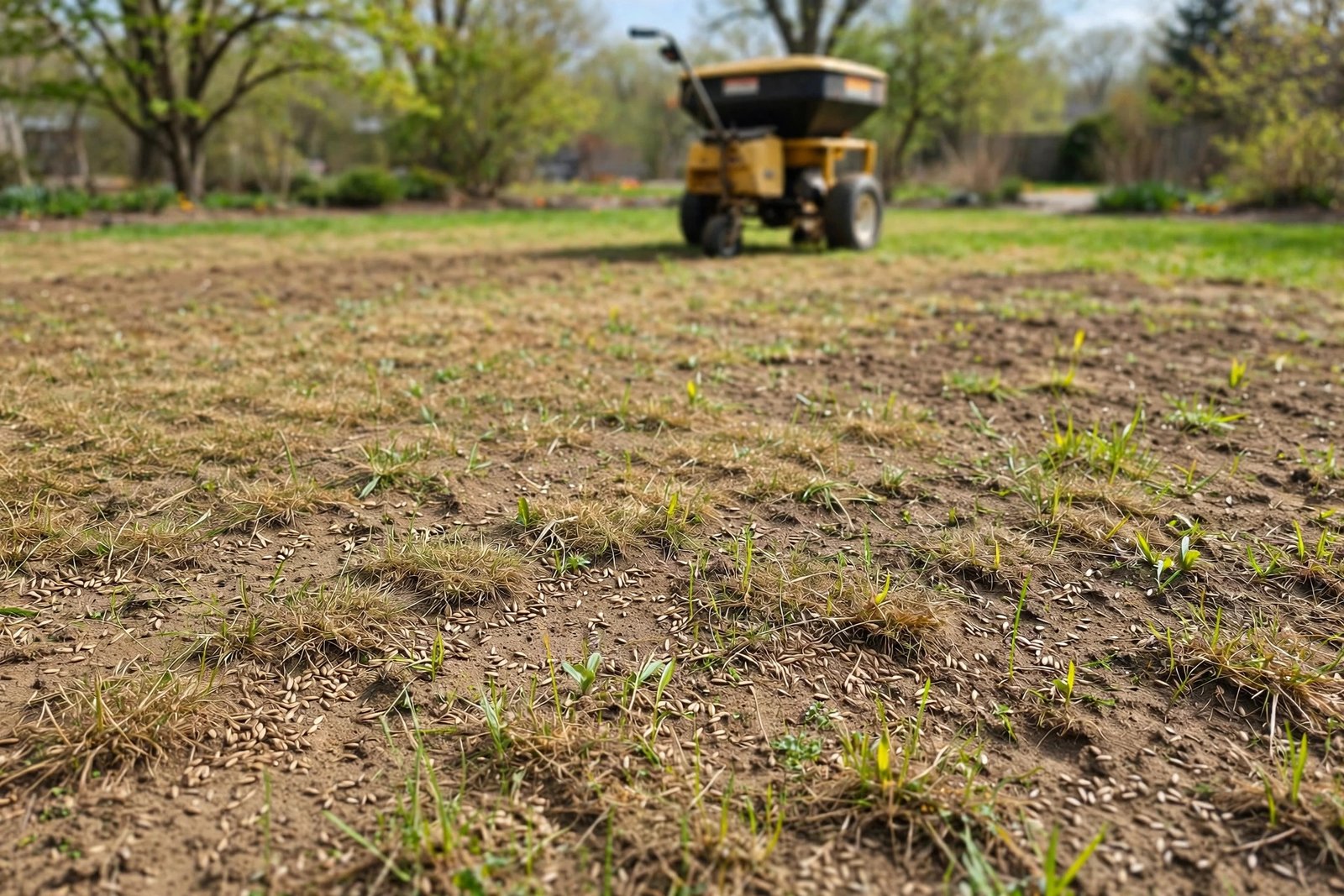
There is a week every spring when the lawn wakes up unevenly — most of it greening on schedule, and the bare spots standing out pale and obvious against the new growth, exactly where they were when the season ended. That is the moment everyone wants to overseed, and the good news is that the instinct is sound. Spring overseeding is a repair job with a real window; it just asks for honest expectations and better timing than the first warm weekend.
Start with the honest part: spring is the second-best seeding season
Fall is the best time to overseed a cool-season lawn, because the soil is warm, weed pressure is fading, and new grass gets two cool seasons to root before summer heat tests it. Spring seed faces the opposite arrangement — crabgrass pressure rising, summer heat arriving just as the seedlings should be establishing. None of that makes spring overseeding a mistake. It makes it a repair strategy: fix the bare and thin patches now so they do not spend the summer as weed colonies, and save the full renovation for fall. The spring lawn care hub shows where this job sits in the season’s order.
The window: soil between 50 and 65 degrees
Grass seed germinates on soil temperature, and cool-season seed does its best work between 50 and 65 degrees. Below that range seed sits dormant in cold soil, exposed to birds, rot, and washouts; above it, you are seeding into the teeth of summer. Perennial ryegrass is the fast member of the family, up in about a week in this window, tall fescue follows in roughly two weeks, and Kentucky bluegrass takes its time at three to four weeks — which is why bluegrass-heavy repairs are the ones spring serves worst, and why a fescue or ryegrass blend is the practical spring choice for most northern lawns.
Watch the trend, not the day. A few mornings of soil readings heading up through the 50s means the window is open; a single warm afternoon means nothing yet.
The conflict you have to settle first: pre-emergent
Standard pre-emergent herbicide stops grass seed as reliably as it stops crabgrass, so a lawn that received a spring application is closed to seeding for months afterward. If the bare patches bother you more than the crabgrass risk, skip the pre-emergent this spring and overseed — then lean on mowing height and spot treatment for the weeds that come. If you have already spread pre-emergent, can you seed after pre-emergent lays out the waiting periods by product and the one herbicide family that allows seeding the same season. Do not spread seed over a fresh barrier and hope; hope is not a germination strategy, and the seed is the expensive part of finding out.
Prep work that decides the result
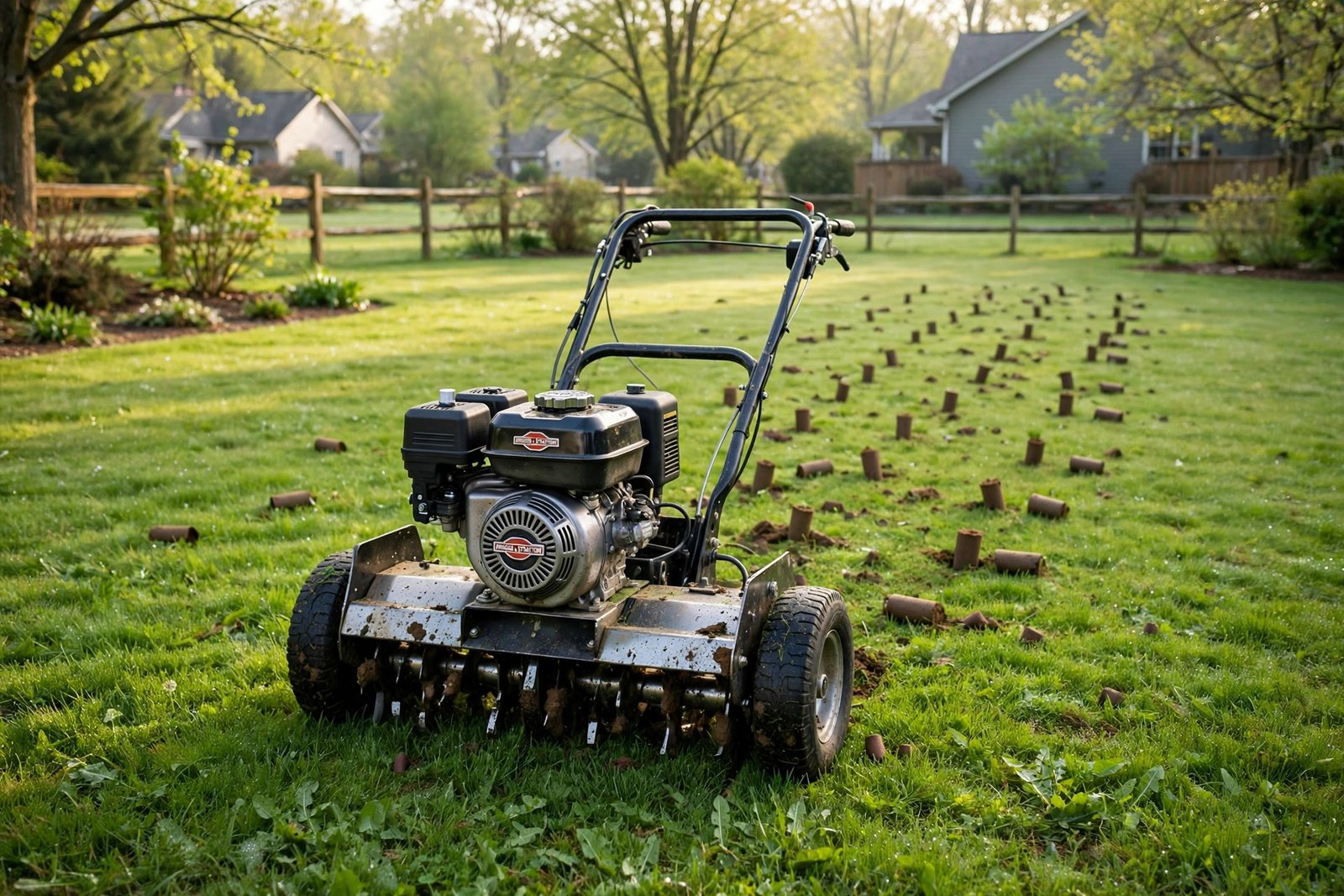
Seed that lands on thatch and stays there dries out and dies, so seed-to-soil contact is the whole game. Mow the repair areas shorter than usual and bag the clippings, then rake hard enough to scratch the soil surface and pull up the dead material. On compacted ground — the thin spots along driveways and paths usually qualify — pulling cores first gives seed somewhere to lodge and roots somewhere to go. When to aerate in spring covers when spring aeration helps, and aerate before or after overseeding settles the sequencing if you are doing both.
Rates: one number per grass
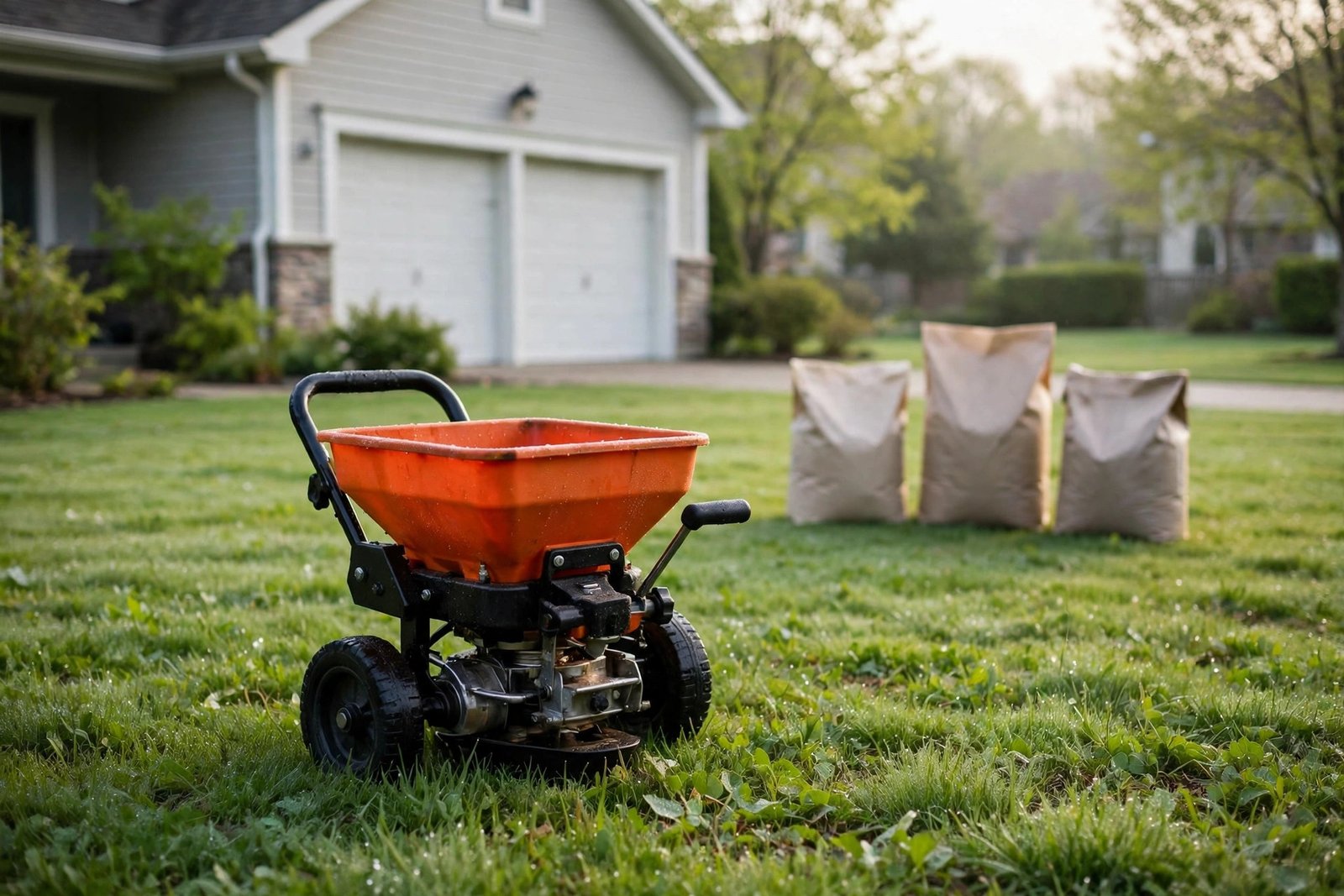
Overseeding an existing lawn takes less seed than starting from bare ground, because you are thickening a stand, not creating one. Use these rates per 1,000 square feet: tall fescue at 5 pounds, perennial ryegrass at 5 pounds, and Kentucky bluegrass at 1.5 pounds — bluegrass seed is far smaller, so a pound of it holds many more seeds. The tall fescue seeding rate calculator adjusts the math for your lawn’s size and how thin it is, which beats guessing at the store and coming home a bag short. Southern readers overseeding warm-season lawns with winter rye are running a different play, and the winter overseeding rate calculator is built for that job.
Water: light, frequent, and non-negotiable
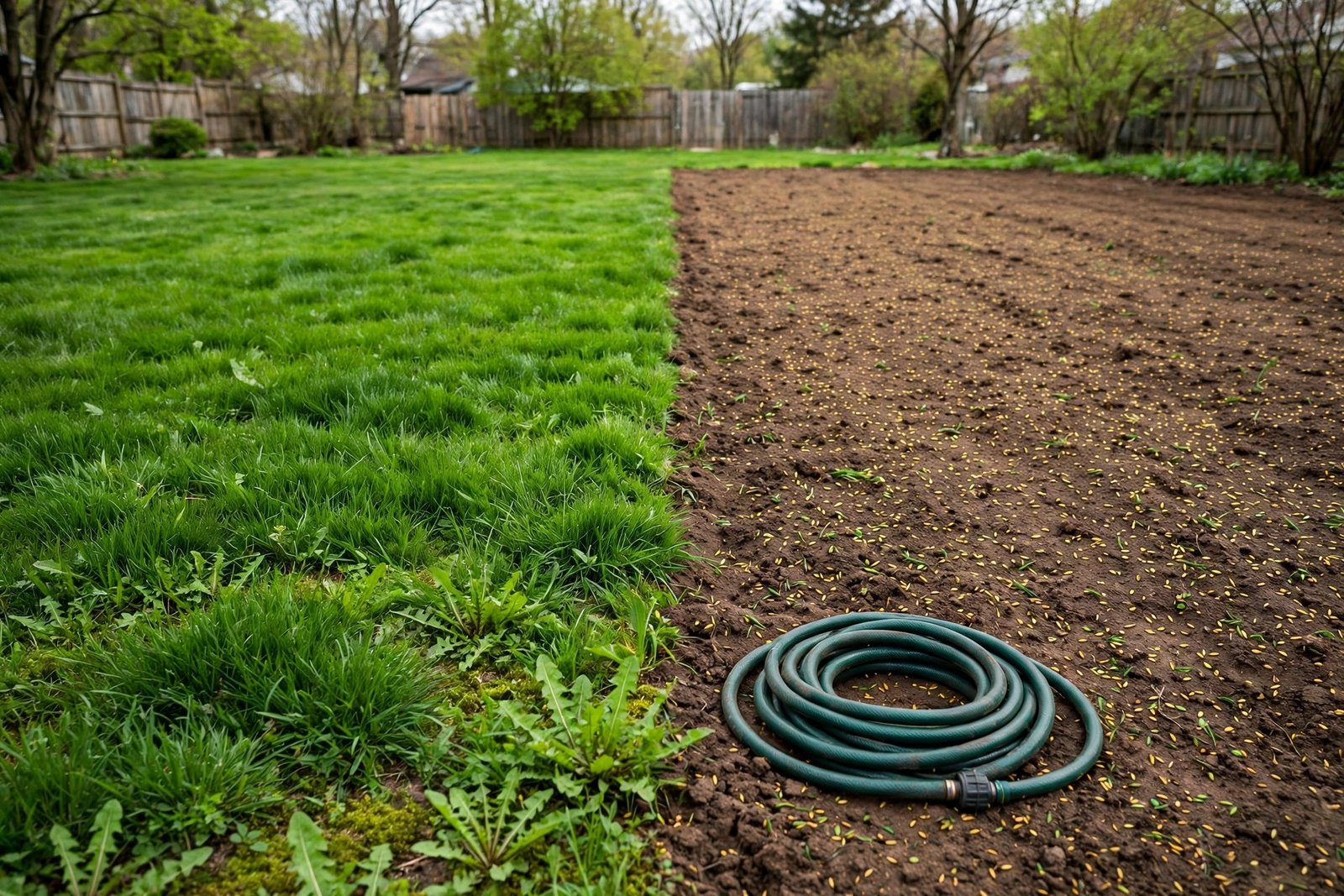
New seed needs the surface kept consistently moist until it germinates, which in practice means light watering two or three times a day rather than one deep soaking. The seed only lives in the top fraction of an inch of soil, and that layer dries out by afternoon on a sunny, windy day. Once the grass is up and growing, stretch the intervals and water more deeply so roots chase the moisture downward, and by the time the new grass has been mowed twice it can rejoin the lawn’s normal watering rhythm. Letting seedlings dry out once, at the wrong moment, undoes the whole job — this is the step where spring overseeding is actually won or lost.
The first mow and the summer ahead
Mow the repaired areas when the new grass reaches about 4 inches, cutting it back to 3, with a sharp blade — the blade-sharpness guidance in the first mow of the year applies double to tender seedlings a dull blade can pull out by the roots. Then be straight with yourself about June: spring-seeded grass goes into summer with shallow roots, so water it through dry spells instead of letting it go dormant with the rest of the lawn. A light spring feeding once the new grass is established is covered in the spring fertilizing guide.
Frequently asked questions
Can I overseed before the last frost? Light frosts will not hurt cool-season seedlings, and seeding into the 50-to-65-degree soil window matters more than the frost date. A hard freeze on brand-new seedlings is rough on them, but it is the less common risk.
Why did my spring seed come up thin? Usually one of three causes: seed never reached the soil, the surface dried out during germination, or pre-emergent was down first. All three are fixable, and none of them is the seed’s fault.
Should I put down starter fertilizer with spring seed? On thin, worn soil it helps; on a lawn that is already fed, it is optional. A soil test beats a guess here, especially for phosphorus, which many soils already hold in plenty.
Overseed the patches while the soil sits in the 50s and low 60s, keep the surface moist without fail, and let fall keep its title as the renovation season. Spring seed that is honestly scoped — repairs, not transformations — fills in, holds its ground, and earns its bag.