Landscape & Leisure is reader-supported. When you buy through links on our site, including Botanical Interests seed links, we may earn a commission at no extra cost to you. Prices change, so click through to confirm current pricing.
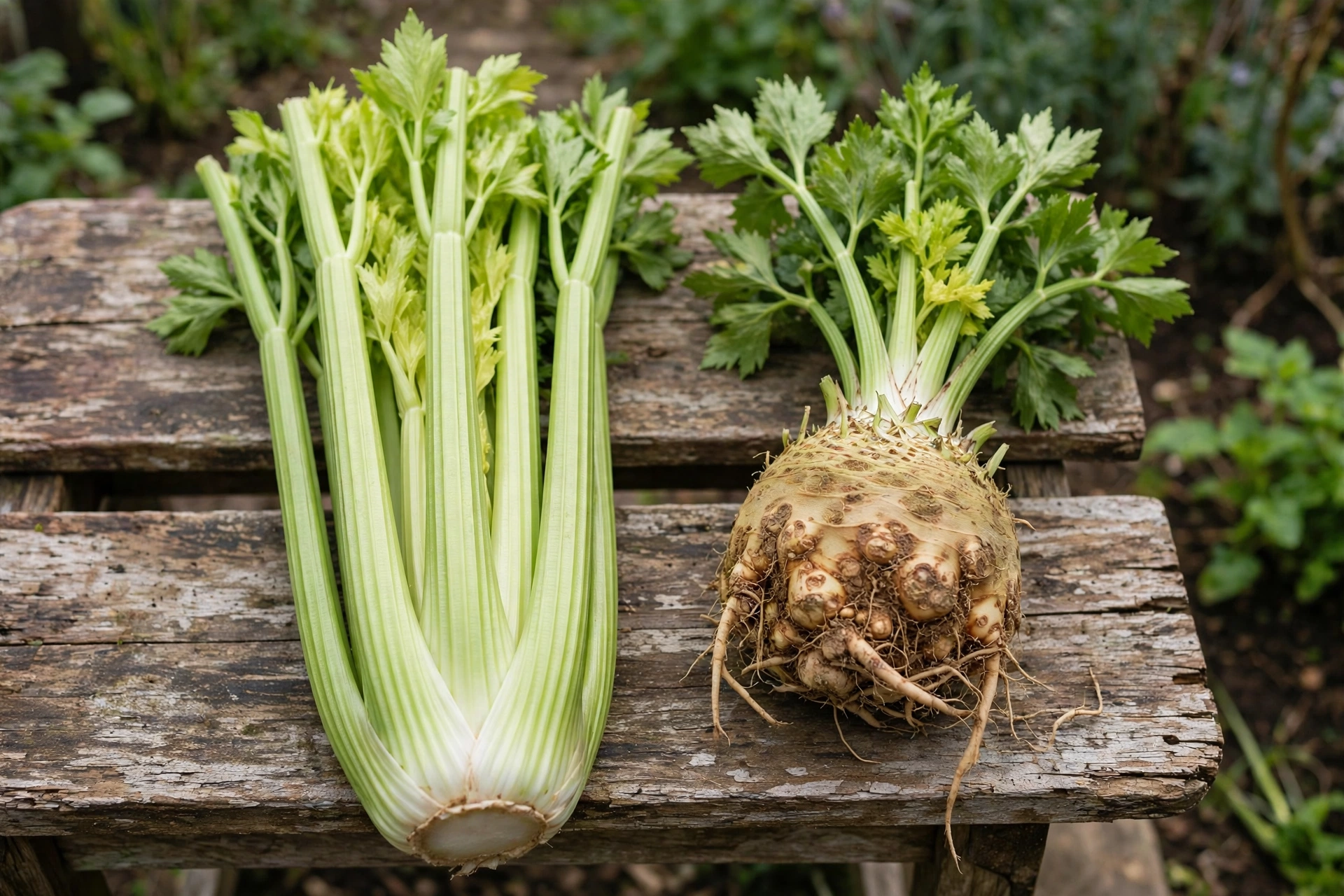
Celery puts its work into stalks you can pull all season. Celeriac puts its work into a single knobby root you dig once in fall and store for months. Same species, Apium graveolens, bred in opposite directions — and the right choice depends on whether your kitchen runs on fresh crunch or on soups, mashes, and roasts that carry celery flavor through winter.
Both plants ask the same thing of you up front: a very early indoor start, steady moisture, and a long, mild season. Where they part ways is the harvest — repeated and fresh on one side, singular and storable on the other — and that difference is what should make your decision.
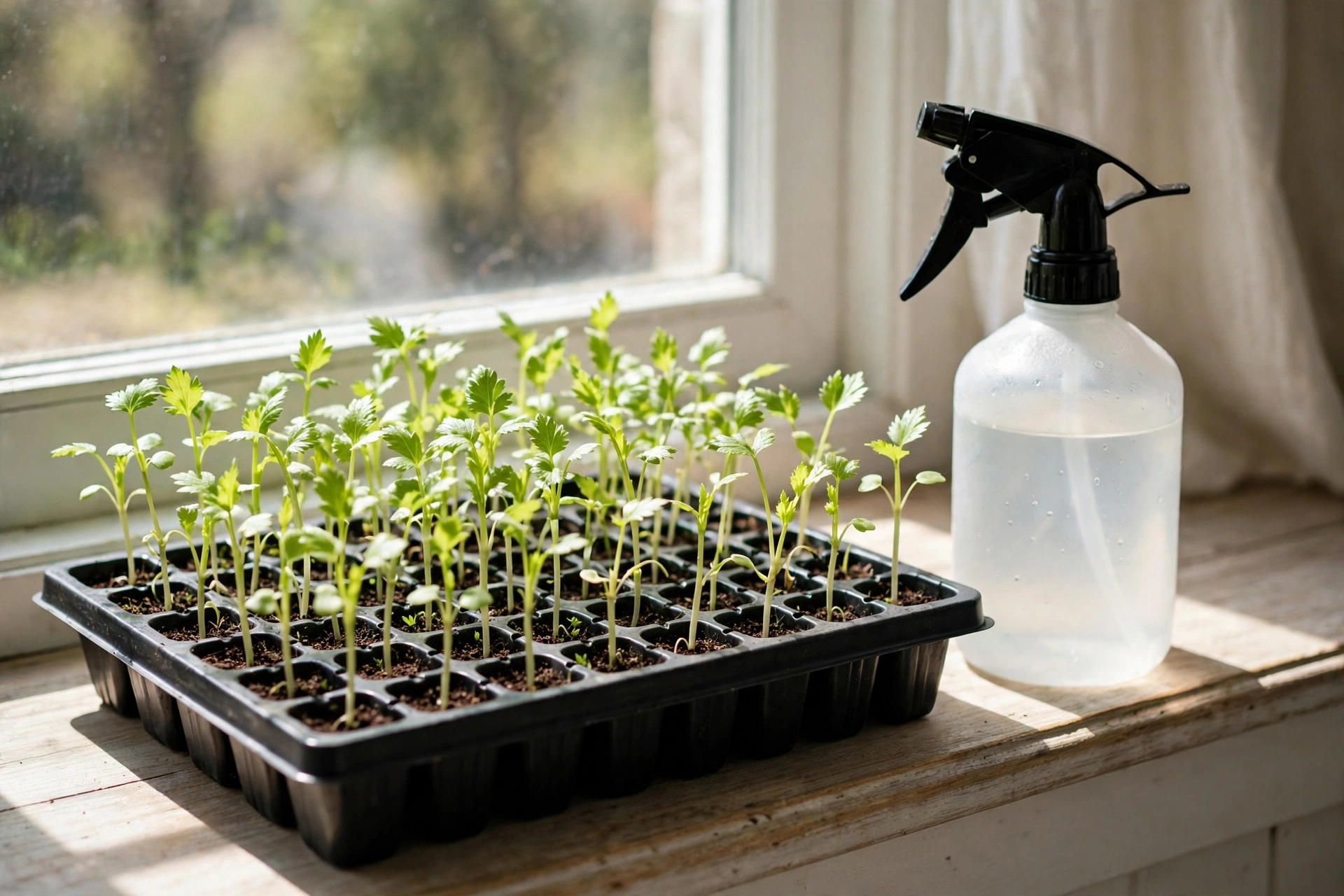
Our celery varieties roundup covers the two stalk varieties worth planting, and our growing celery from seed guide walks through the indoor start both plants share. For more storage-root thinking, our carrot, beet, and radish roundup covers the crops celeriac keeps company with in the fall bed.
The Two Harvests, Side by Side
| Trait | Celery | Celeriac |
|---|---|---|
| Grown for | Thick stalks (leaf petioles) | Swollen, knobby root |
| Season | 80–90 days (Merengo) to 100–200 days (Utah) | About 110 days from transplant |
| Harvest style | Outer stalks from 6″, or whole bunches | Roots dug once, at 3″–4″ across |
| Storage | Weeks in the refrigerator | Months in cold, moist storage |
| Kitchen strength | Raw crunch, salads, stuffing, snacks | Soups, mash, roasts, gratins |
Celery: The Case for Stalks
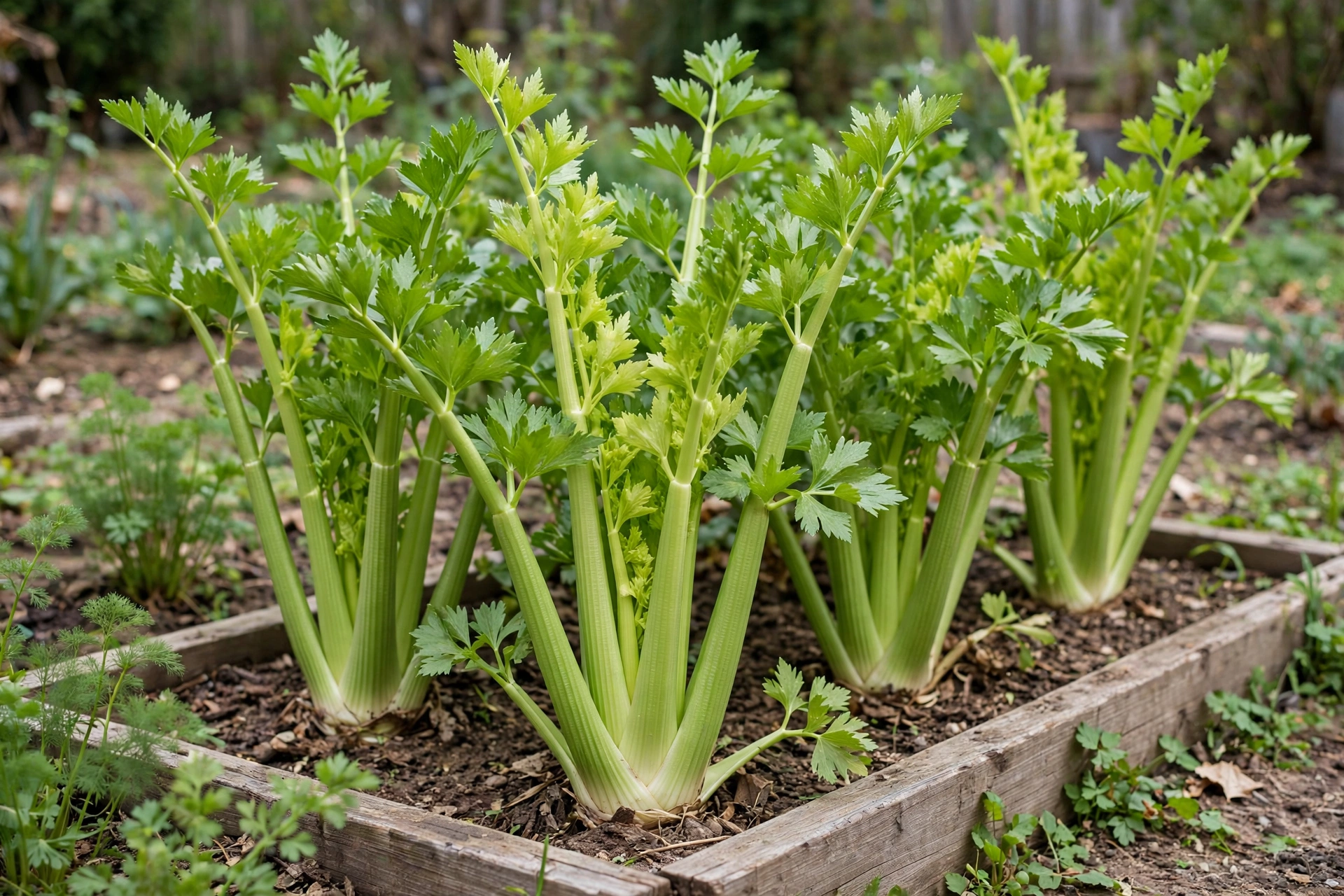
Celery is the generous harvest. A Utah plant gives you outer stalks from the time they reach 6 inches, then a full bunch at 10 to 12 inches if you let it finish — fresh stalks for salads, soups, and stuffing across the back half of summer. Merengo shortens the whole affair to 80 to 90 days for gardeners whose seasons will not carry Utah’s 100 to 200.
The cost of that freshness is storage. Celery keeps weeks, not months, and a big bunch harvest lands all at once in the refrigerator. Blanching the stalks for the final 2 to 3 weeks sweetens them, but it does nothing for the calendar — celery is a use-it-soon crop.
Utah Celery Seeds
Tall, thick, dark green stalks with a stalk-by-stalk harvest — 4.6/5 from 18 reviews.
Merengo Celery Seeds
Pelleted hybrid seed and an 80 to 90 day finish when Utah’s long season will not fit.
Celeriac: The Case for the Root
Celeriac is celery flavor with a storage plan. The plant spends its season swelling a dense, knobby root — celery root — that you dig in fall at about 3 to 4 inches across, peel hard, and cook: mashed with potatoes, roasted, grated raw into salads, or simmered into soups where its flavor deepens rather than fades.
Kept cold and moist with the foliage removed, those roots store for months, long after the last celery bunch has gone soft in the crisper. The growing rhythm will feel familiar if you have grown stalk celery — the same early indoor start and the same dislike of dry soil — but the harvest is a single digging day rather than a season of cutting.
One honest note on packets: Botanical Interests’ celery shelf is stalk celery — Utah and Merengo above — so celeriac seed comes from other seed houses, and the variety guidance here is about which plant to grow, not which packet to buy. Gardeners who want the root should look for established celeriac varieties such as Giant Prague from a supplier they trust.
What They Share (So the Choice Stays Simple)
Both forms are frost-tolerant biennials grown as annuals, both want full sun to part shade, and both punish drought with tough texture and strong flavor. Persistent cold below 55°F can push either toward bolting, and both reward rich, moist soil more than almost any other crop in the fall garden.
That shared temperament means the decision really is only about the harvest. You are not choosing an easy plant over a hard one — you are choosing fresh stalks in summer over stored roots in winter, with the same late-winter sowing date either way.
Harvest Basket
A sturdy carry for bunch harvests and fall root digging alike — 4.9/5 from 50 reviews.
Bottom Line
Grow celery if your kitchen uses fresh stalks weekly and you want a harvest that starts in summer — Utah for the classic bunch, Merengo when the season runs short. Grow celeriac if your celery mostly ends up cooked and you want that flavor stored into winter from a single fall digging. Gardeners with the bed space should grow both: the stalks carry summer, the roots carry January, and the two plants ask for nothing different from you until harvest day.