Landscape & Leisure is reader-supported. When you buy through links on our site, including Botanical Interests seed links, we may earn a commission at no extra cost to you. Prices change, so click through to confirm current pricing.
Spring soil is still cold when carrot seed goes in, and patience — not warmth — is what gets those tiny seeds to sprout. Carrots germinate slowly, in 10 to 25 days, while the weeds around them sprint, so the whole crop is won or lost on timing and steady moisture long before a root ever shows.
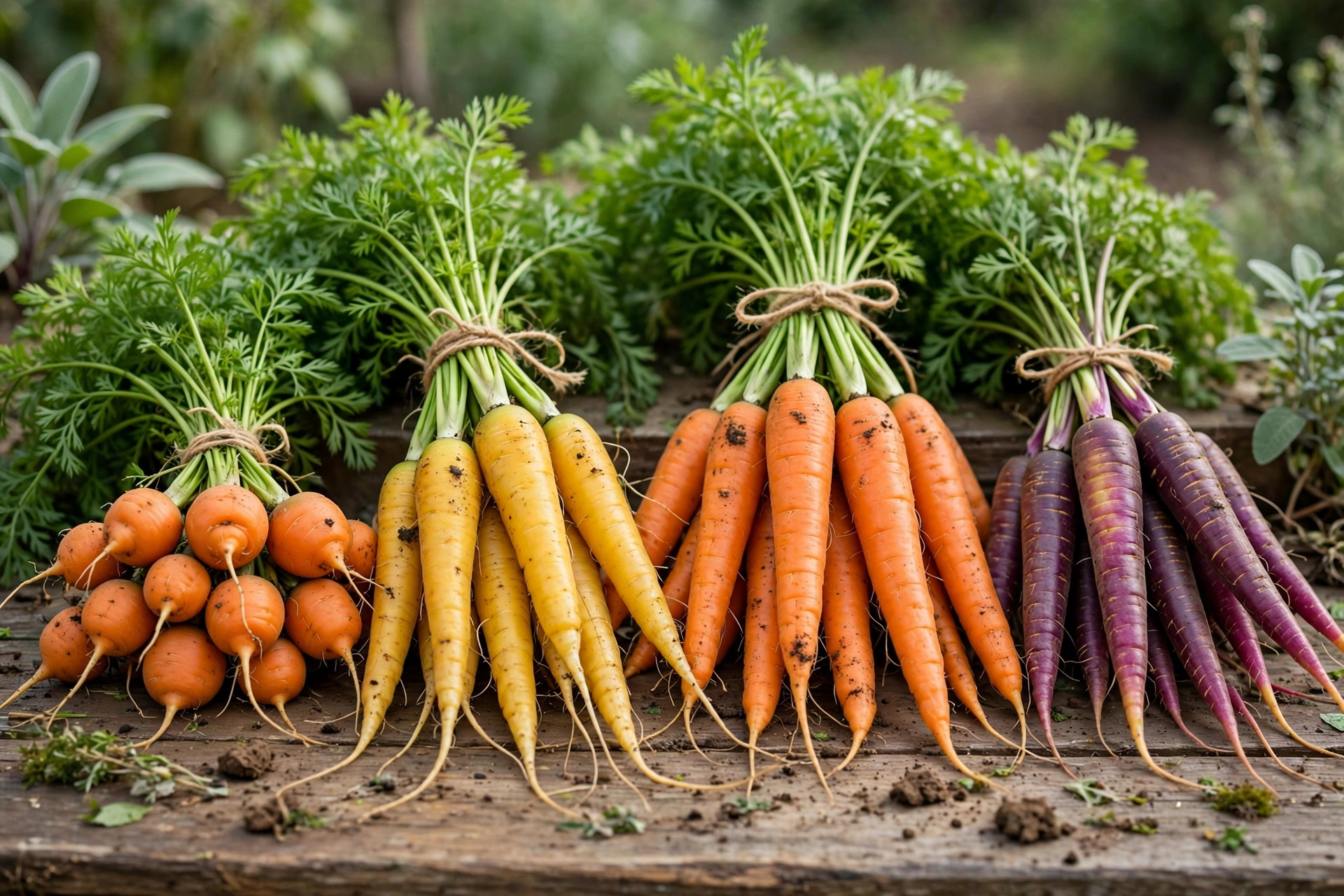
This guide covers when to sow, how to keep the seedbed moist through that long germination, the thinning pass that decides root size, and how to judge the harvest window. The varieties named here are compared in our carrot varieties roundup, and if a pulled carrot tastes bitter or chews woody, our bitter and woody carrot guide sorts out the cause. Forked roots are a separate fault with its own fixes, covered in our earlier guide to why carrots fork.
Why Carrots Are a Timing Crop
A carrot seed needs soil of at least 45°F to germinate at all, and it germinates best between 60°F and 85°F — which is why the standard window opens 2 to 4 weeks before your average last frost date, while the bed is still cool. Sow too early into cold, wet ground and the seed sits; sow the main crop too late into summer heat and germination turns patchy and flavor suffers.
The second timing fact is the harvest end. A carrot’s peak window lasts about 3 weeks at full size, longer in fall, and late summer-sown carrots are actually sweetened after a light frost. That is why succession sowing works so well here: a short row every 3 weeks, until 10 to 12 weeks before your first fall frost, keeps a fresh peak window always coming due.
When to Sow, Spring Through Fall
| Sowing | When | Varieties | Rhythm |
|---|---|---|---|
| Spring main crop | 2–4 weeks before last frost, soil at least 45°F | All five picks | Every 3 weeks |
| Late spring / summer | Into early summer where heat allows | Shin Kuroda (heat resistant), Little Finger | Short rows, extra moisture care |
| Fall crop | Until 10–12 weeks before first fall frost | Danvers 126 for storage, Scarlet Nantes for eating | One or two full sowings |
Skip starting carrots indoors entirely. The roots resent disturbance and transplanting stunts them, so direct sowing is not a preference for this crop — it is the method.
Sowing and Thinning, Step by Step
1. Sow shallow and close. Plant seed ¼ inch deep, about 1 inch apart, in rows 6 inches apart. The seed is small and the seedlings are frail, so a shallow, firm seedbed matters more than any tool you could buy for the job.
2. Keep the surface moist for up to 25 days. Germination takes 10 to 25 days, and a seedbed that dries and crusts in week two loses the crop before it starts. Water lightly and often enough that the top quarter inch never fully dries until the ferny tops are up and growing.
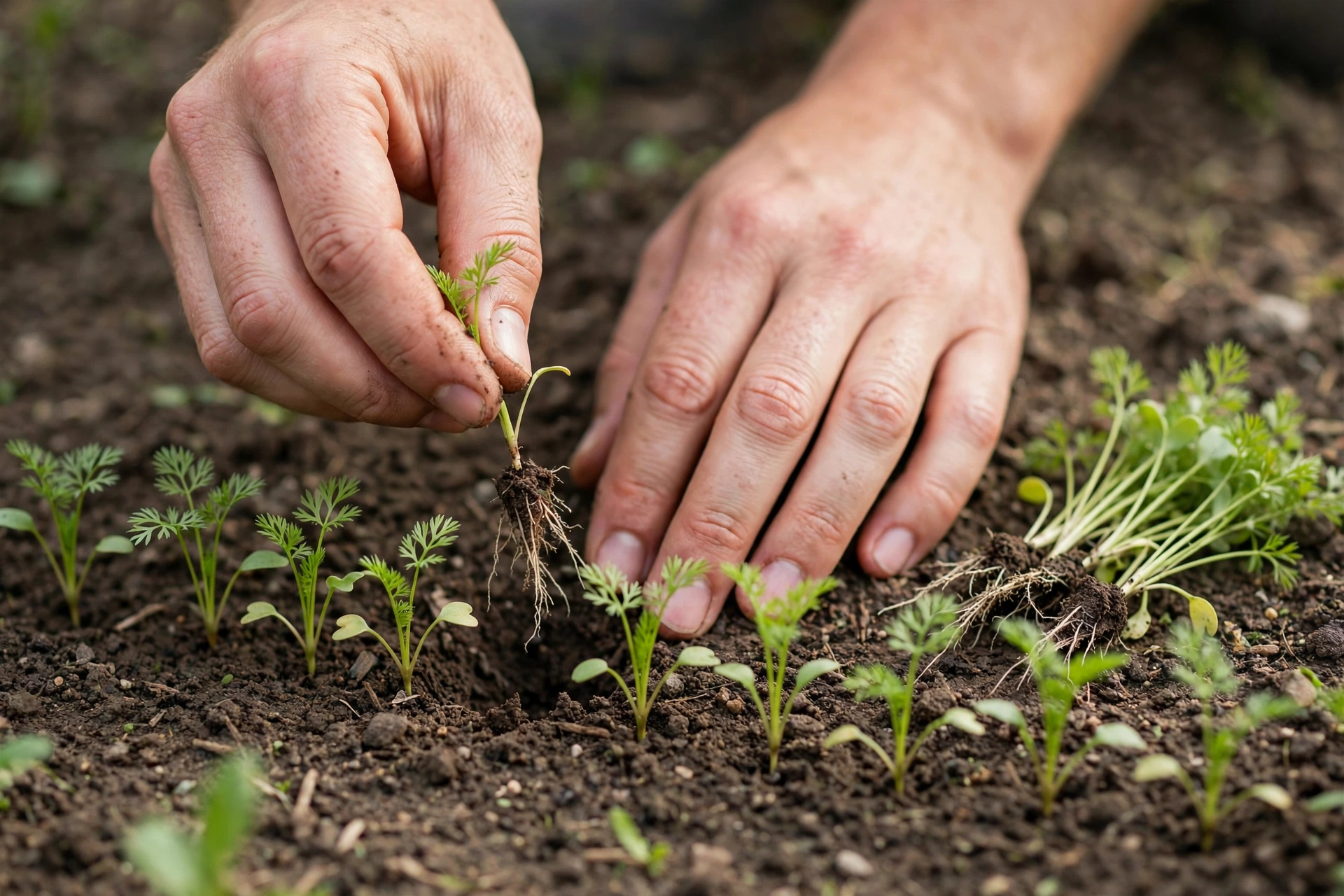
3. Thin in two passes. When seedlings are 1 inch tall, thin them first, then finish to 1 plant every 3 inches for full-size varieties such as Danvers 126 and Scarlet Nantes, or 1 every 2 inches for Little Finger. Crowded carrots stay thin carrots, because the swelling root needs that room sideways, not just down.
There is a quiet satisfaction in the second thinning pass on a cool evening, the row suddenly standing in even ranks, each plant with space to become a real root. It feels ruthless the first time you do it. By the second season it just feels like gardening.
Harvest: Judge by Size, Then by Frost
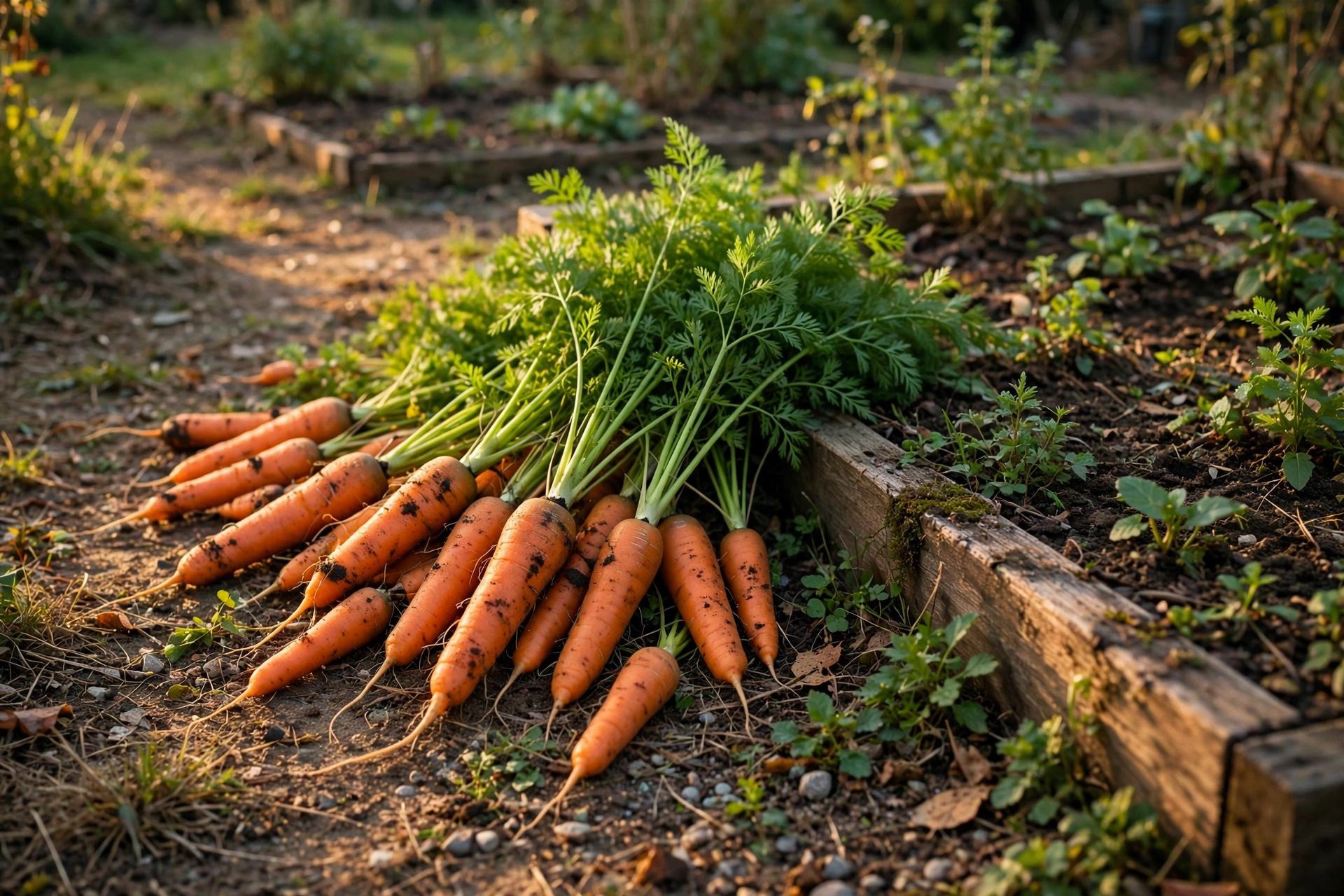
Harvest carrots any time before, and until, they reach their best size — Little Finger at 3 inches in 57 days, Danvers 126 and Tonda di Parigi at 65 days, Shin Kuroda and Scarlet Nantes at 75 days. Roots pulled a little young are tender; roots left far past their window turn fibrous, which is the fault our FAQ companion covers.
For the fall crop, let light frost do its sweetening work, then harvest before the soil freezes. In USDA zone 5 or warmer, carrots can also stay in the ground under heavy mulch and be dug as needed on days the ground is not frozen — the bed itself becomes the storage box, and Danvers 126 is the variety bred for exactly that patience.
Shin Kuroda Carrot Seeds
Sweet, heat-tolerant Chantenay roots that push through heavy soil — rated 4.7 out of 5.
Scarlet Nantes Carrot Seeds
Nearly coreless, sweet, and crisp — the fresh-eating carrot for a well-prepared bed.
Little Finger Carrot Seeds
True 3-inch baby carrots in 57 days — bred for pickling and canning whole.
What to Watch Next
Write the sowing date on the row marker every time, because a carrot row gives you almost no above-ground clue about the calendar underneath it. If germination comes up patchy, resow the gaps promptly rather than waiting — the next 3-week succession row will cover the miss, and a fall sowing of Danvers 126, thinned on time and left to sweeten in cool soil, is the most forgiving carrot crop of the year.