Landscape & Leisure is reader-supported. When you buy through links on our site, including Botanical Interests seed links, we may earn a commission at no extra cost to you. Prices change, so click through to confirm current pricing.
You bite into a homegrown carrot and get bitterness instead of sweetness — the cause is usually timing, heat, or a harvest left too long. A flavor fault feels like a variety failure, but the same packet sown into cooler weather and pulled on time usually eats completely differently, so diagnose before you blame the seed.
Start with what you taste and see, match it to the likely cause below, and the fix follows from there. Our carrot varieties roundup matches each type to the soil and season it handles best, and our sowing, thinning, and harvest guide gives the timing rhythm that prevents most of these faults. Forked roots are a different problem entirely — shape, not flavor — and they have their own guide in why carrots fork.
Symptom 1: The Bite Is Bitter or Harsh
What you taste: a sharp, soapy, or harsh edge instead of sweetness, worst in roots pulled during or just after a hot, dry stretch.
Likely causes, ranked: heat stress comes first — carrots sweeten in cool soil and turn harsh when roots finish growing in summer heat, which is why late summer-sown carrots kissed by light frost taste noticeably sweeter. Uneven watering runs second, since dry spells followed by a soak stress the root while it is sizing up. A variety pushed past its season is third: a spring-sown row left to mature through July heat will taste like the weather it finished in.
The fix: shift the main harvest into cool weather. Sow so roots size up in spring or fall rather than midsummer, keep the bed evenly moist while roots are swelling, and choose a heat-resistant variety such as Shin Kuroda when a later sowing cannot be avoided. A bitter row will not sweeten in the ground during a hot spell, so pull it for cooking, where heat and a little fat soften the edge, and resow for fall.
Symptom 2: The Texture Is Woody or Fibrous
What you see: the root looks generous, but the center is pale, tough, and fibrous, and slices chew like wood rather than snapping.
Likely causes, ranked: a late harvest is the most common one — a carrot’s peak window lasts about 3 weeks at full size, and roots left well past it keep building a fibrous core. Variety runs second: types with a pronounced core show it more as they age, while nearly coreless Nantes types stay tender longer. Heat and drought during the final weeks make the core tougher still.
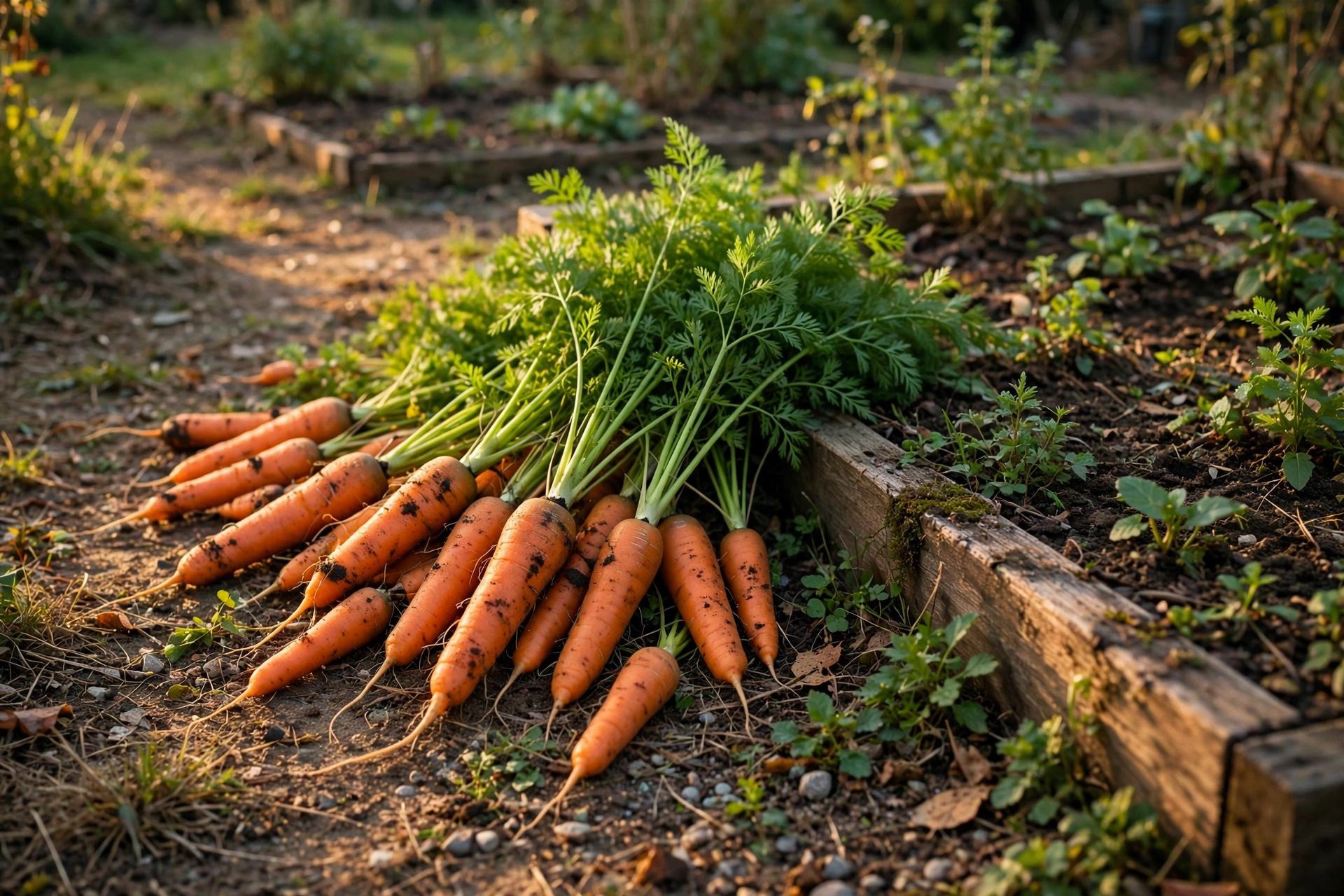
The fix: harvest on the calendar and on size, not on appetite. Little Finger is ready at 57 days, Danvers 126 and Tonda di Parigi at 65 days, and Shin Kuroda and Scarlet Nantes at 75 days — start test-pulling a week before those dates and finish the row inside its peak window. There is a sound a good carrot makes when you snap it — a clean, wet crack — and a root going woody loses that snap before it loses its color, so test one from each row before you pull the rest for the table.
Symptom 3: Green Shoulders That Taste Bitter
What you see: the top of the root, where it meets the leaves, has turned green, and that green band tastes distinctly bitter even when the rest of the carrot is sweet.
Likely causes, ranked: sun exposure is the cause, nearly every time — shoulders that push up out of the soil as the root grows are exposed to light and green up, and the greened tissue concentrates the bitter flavor. Shallow sowing and soil washed away by heavy watering make it worse by exposing more of the shoulder sooner.
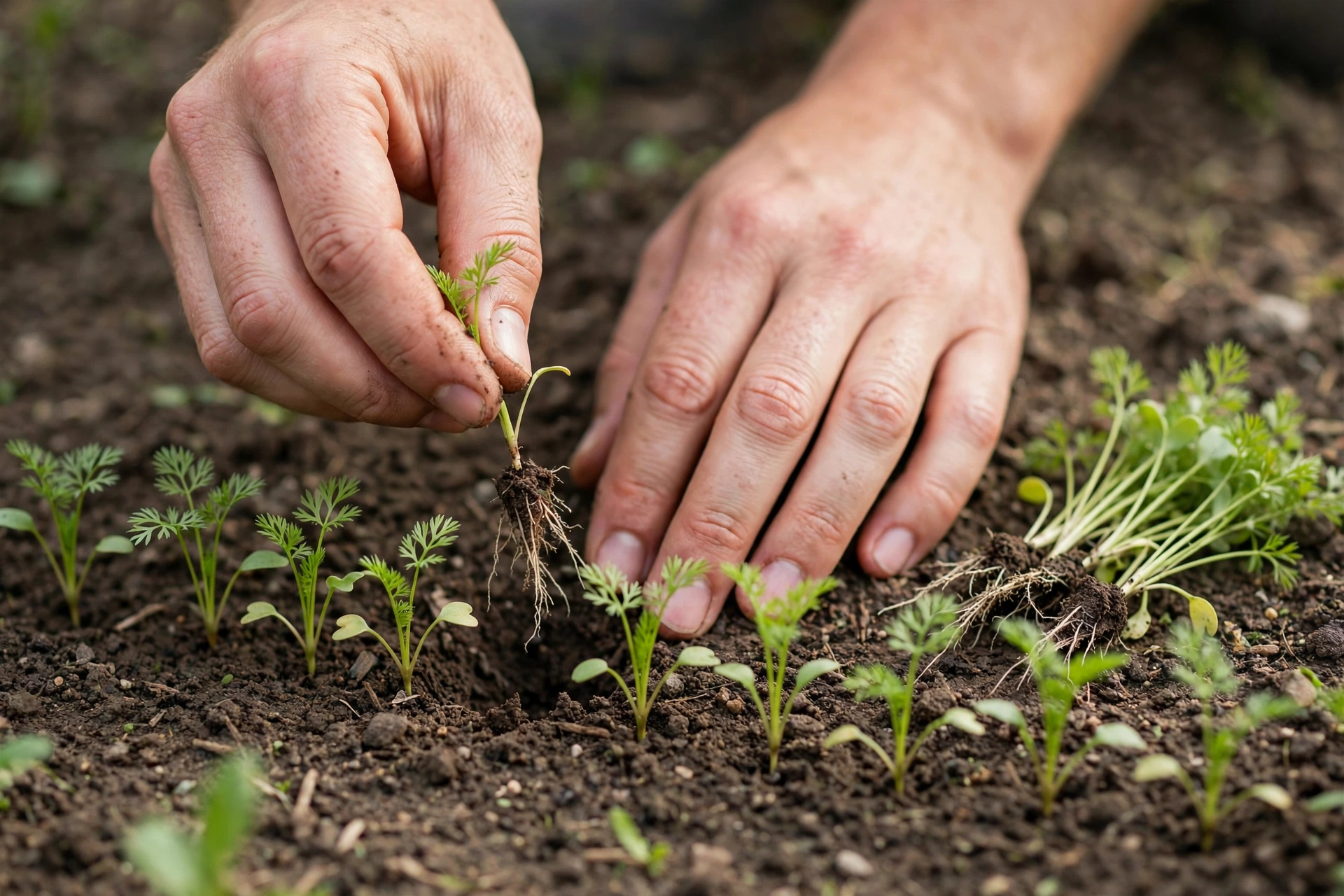
The fix: hill a little soil or mulch up over exposed shoulders when you see them lifting during the thinning pass, and keep rows evenly watered so the surface does not erode. At the table, simply cut the green band away — the rest of the root is fine, and the next row, kept covered, will not need the trim.
| Symptom | Most likely cause | Fix |
|---|---|---|
| Bitter, harsh bite | Heat stress, then uneven watering | Size roots up in cool weather; water evenly; choose heat-resistant types for late sowings |
| Woody, fibrous core | Harvested past the roughly 3-week peak window | Test-pull before the days-to-maturity date; finish the row on time |
| Green, bitter shoulders | Shoulders exposed to sunlight | Hill soil or mulch over shoulders; trim the green band at the table |
Three Varieties That Forgive Flavor Faults
If flavor keeps disappointing you, choose varieties with slack built in. Scarlet Nantes is nearly coreless, so it resists the woody-center fault longer than most, Shin Kuroda tolerates the heat that makes other carrots bitter, and Danvers 126 finishes in 65 days and sweetens in fall soil, which shortens the window in which anything can go wrong.
Scarlet Nantes Carrot Seeds
Nearly coreless, sweet, and crisp — the fresh-eating carrot for a well-prepared bed.
Shin Kuroda Carrot Seeds
Sweet, heat-tolerant Chantenay roots that push through heavy soil — rated 4.7 out of 5.
Danvers 126 Carrot Seeds
A heavy-soil workhorse that resists cracking and stores exceptionally well after harvest.
What Success Looks Like
A fixed row announces itself at the first bite: flesh that snaps cleanly, sweetness all the way through, and no bitter band at the top. Sow Scarlet Nantes for a fall harvest, keep its shoulders covered and its moisture even, and pull it inside its peak window — that single row, timed right, will tell you more about carrot flavor than a season of rescuing summer rows.