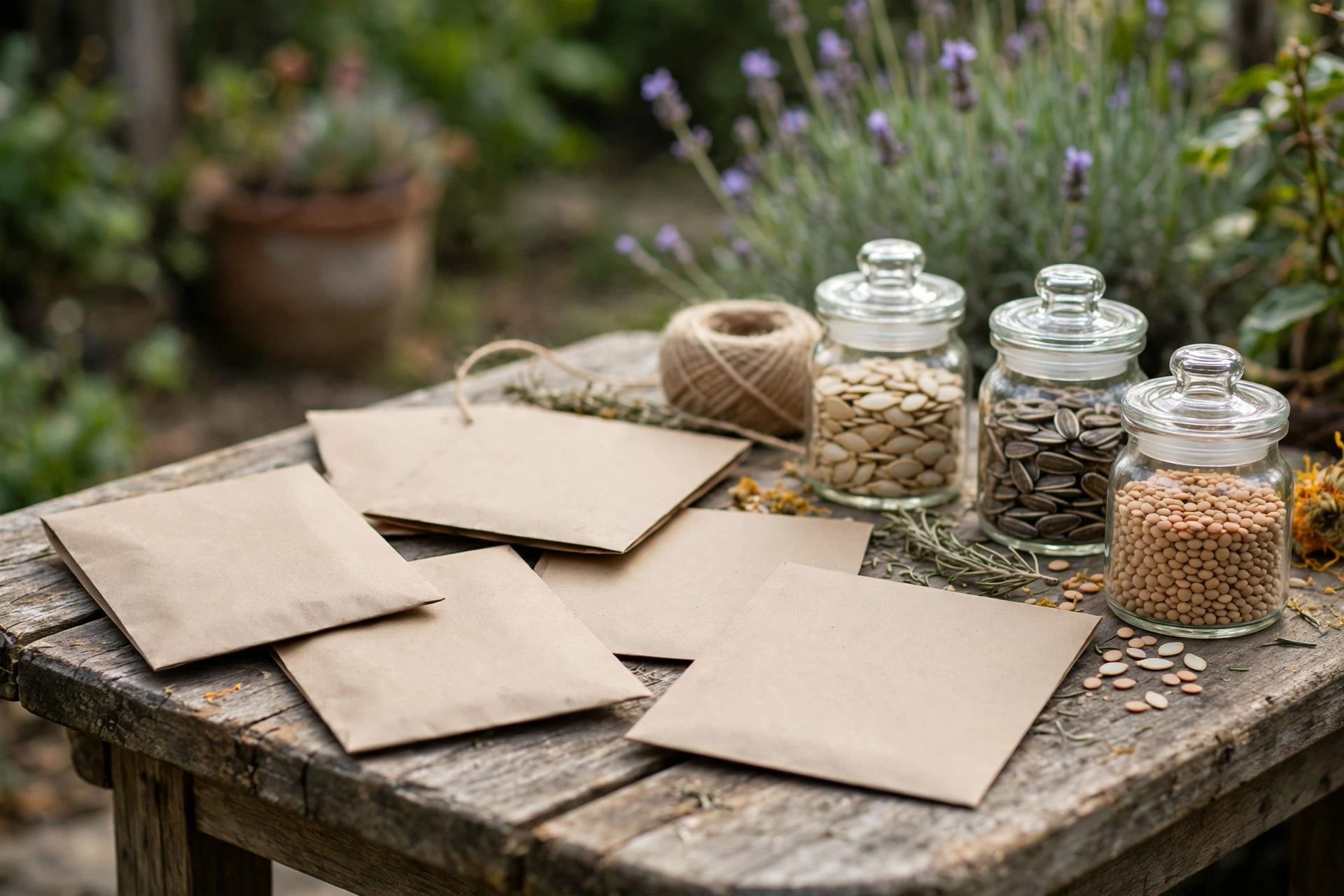
You open the seed drawer in January and the packets slide toward you in a small avalanche — this spring’s new orders on top, last year’s half-used envelopes underneath, and one tomato packet old enough that you have stopped remembering which spring it came from. Some of those seeds are still perfectly good, while a few were finished after a single season, and which is which has less to do with the packet than with the crop inside it.
This table gives the average number of years vegetable seed stays viable when it is stored properly — cool, dry, and dark — for eighteen common vegetables. Onions sit at the short end with a single year, and seven crops, cabbage among them, hold for five, so the same drawer can hold one packet that is past its best and another that has years left in it.
How long vegetable seeds stay viable, by crop
The years below are averages for seed that stayed cool, dry, and dark the whole time. A packet that spent two summers in a hot garage will not match its row, no matter which crop it holds.
| Vegetable | Viable for | Source |
|---|---|---|
| Onions | 1 year | UW–Madison Extension |
| Corn | 2 years | UW–Madison Extension |
| Peppers | 2 years | UW–Madison Extension |
| Beans | 3 years | UW–Madison Extension |
| Carrots | 3 years | UW–Madison Extension |
| Peas | 3 years | UW–Madison Extension |
| Beets | 4 years | UW–Madison Extension |
| Pumpkins | 4 years | UW–Madison Extension |
| Squash | 4 years | UW–Madison Extension |
| Tomatoes | 4 years | UW–Madison Extension |
| Watermelon | 4 years | UW–Madison Extension |
| Broccoli | 5 years | UW–Madison Extension |
| Cabbage | 5 years | UW–Madison Extension |
| Cantaloupes | 5 years | UW–Madison Extension |
| Cucumbers | 5 years | UW–Madison Extension |
| Lettuce | 5 years | UW–Madison Extension |
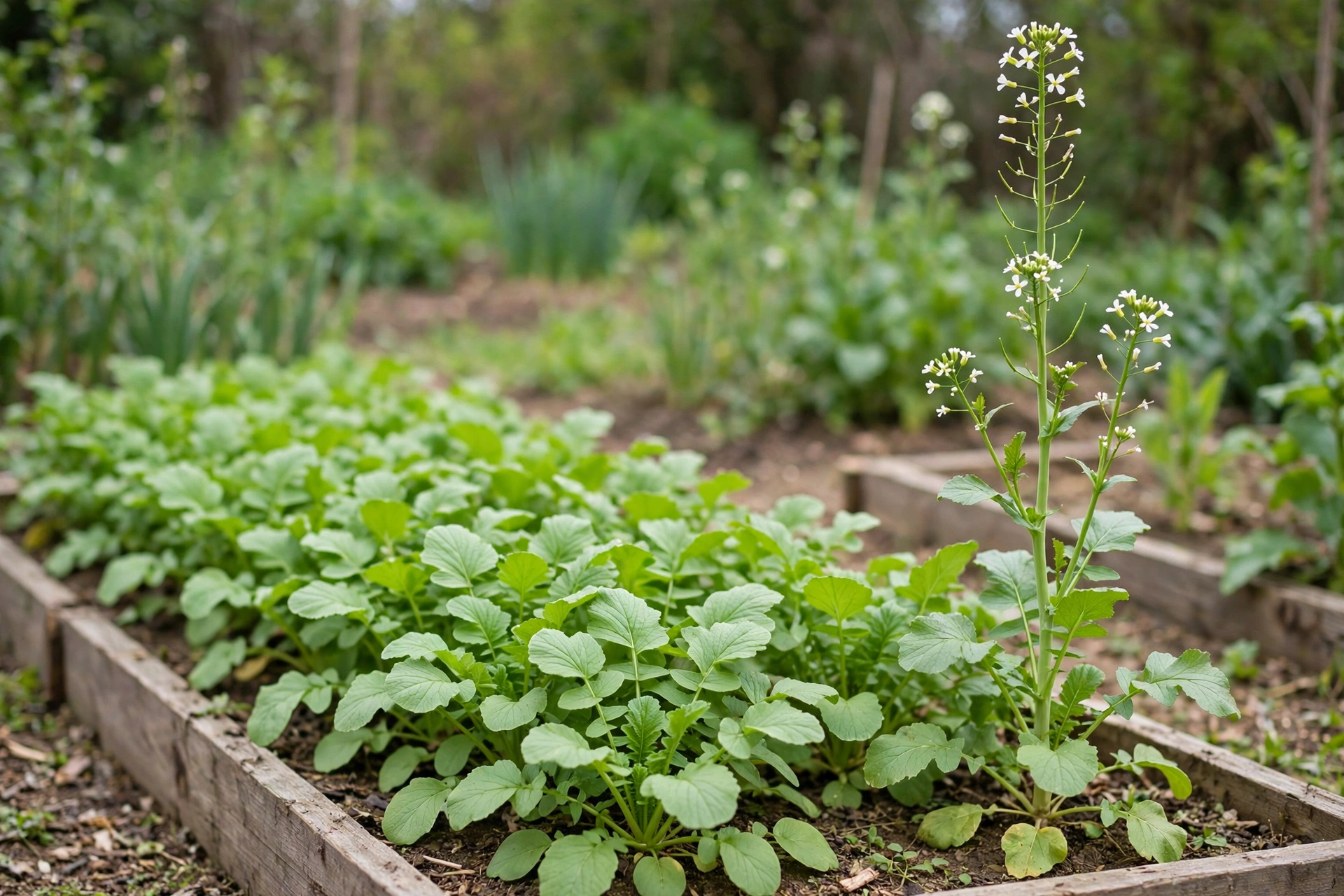
| Radish | 5 years | UW–Madison Extension |
| Spinach | 5 years | UW–Madison Extension |
Storage is what makes the years true
Proper storage is doing quiet work in every row of that table. Keep seed cool, dry, and out of the light, ideally around 40°F, and if the refrigerator is the cool spot you have, the container needs to be airtight so moisture stays out.
Keep packets away from ripening fruit as well, because aging fruit gives off ethylene gas that works against germination. Our guide to how to store seeds so they actually sprout next year covers containers and the best spots around the house in detail.
The date printed on a packet is the date the seed is best used by, and seed usually stays viable past it. Viability fades gradually rather than switching off all at once, which is why a three-year-old bean packet is a question worth testing instead of a packet to toss on sight.
Test before you toss: the roll test
When a packet is past its row in the table, or anywhere near it, ten seeds and a paper towel will tell you what you actually have. The roll test takes a few minutes to set up, and it answers with a percentage instead of a guess.
- Moisten half a sheet of paper towel, or an undyed paper napkin, until it is very moist but not dripping, and lay it out flat.
- Set ten seeds along one edge and roll the towel into a loose cylinder, so every seed keeps good contact with the damp surface.
- Slip the roll into a sealable plastic bag and close the bag about 70% of the way, leaving a little air to move so the roll does not mold, then keep the bag somewhere warm.
- Label the bag with the date, the crop and variety, and the germination time printed on the back of the packet, so you know when to check.
- Look in every two or three days to make sure the towel has not dried out, and add moisture if it has.
- When the germination window closes, unroll the towel and count. Eight sprouted seeds out of ten is an 80% germination rate, and that packet is in good shape.
There is a particular pleasure in unrolling that towel to a line of pale roots and split seed coats, because it settles the keep-or-toss question with evidence you grew yourself. Below about 40% germination, though, buy fresh seed instead, since the few seedlings that do come up at a rate that low tend to be stunted and unproductive.
At half — five out of ten — the packet is still worth planting. Sow more thickly than usual to make up for the seeds that will not come up, and let the strong half carry the row.
What is not in this table
A few familiar crops do not appear here — parsnips, celery, and most herbs among them — because the chart behind this table does not list them. Do not borrow a number from a neighboring row for an unlisted crop; run it through the roll test above and let the seeds speak for themselves.
Bottom line
Sort the drawer by the table before you order a single new packet: plan on fresh onion seed nearly every year and fresh pepper seed not long after, while a well-stored cabbage or cucumber packet from four springs ago is still worth its row in the garden. When the keepers go back in the ground, the Reference Table: Soil Temperatures for Germinating Vegetable Seeds has the soil temperatures those same crops want before they will sprout.
Sources
University of Wisconsin–Madison Extension, Dane County, “Testing Seed Viability” — https://dane.extension.wisc.edu/2023/02/17/12915/ — fetched November 16, 2026.