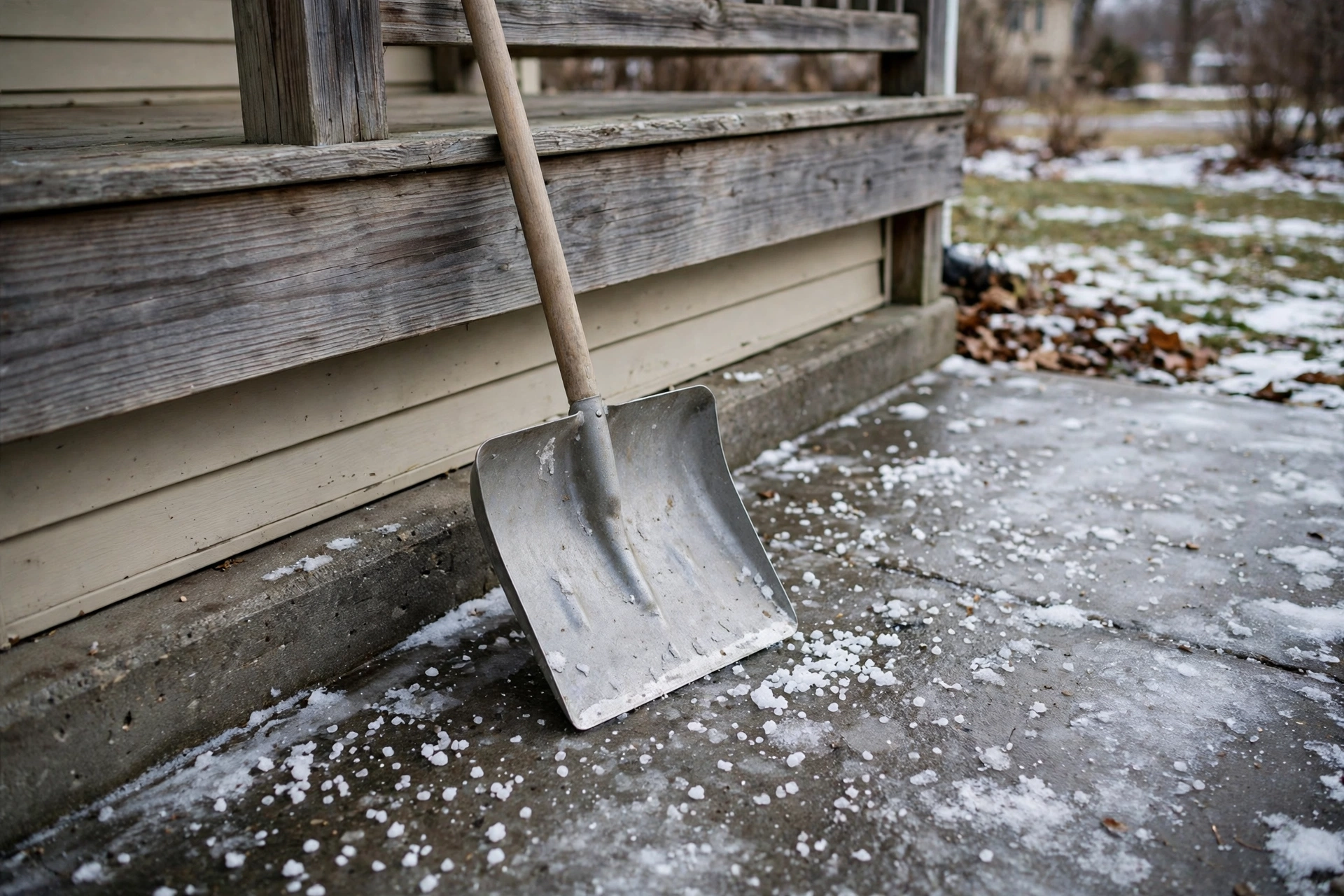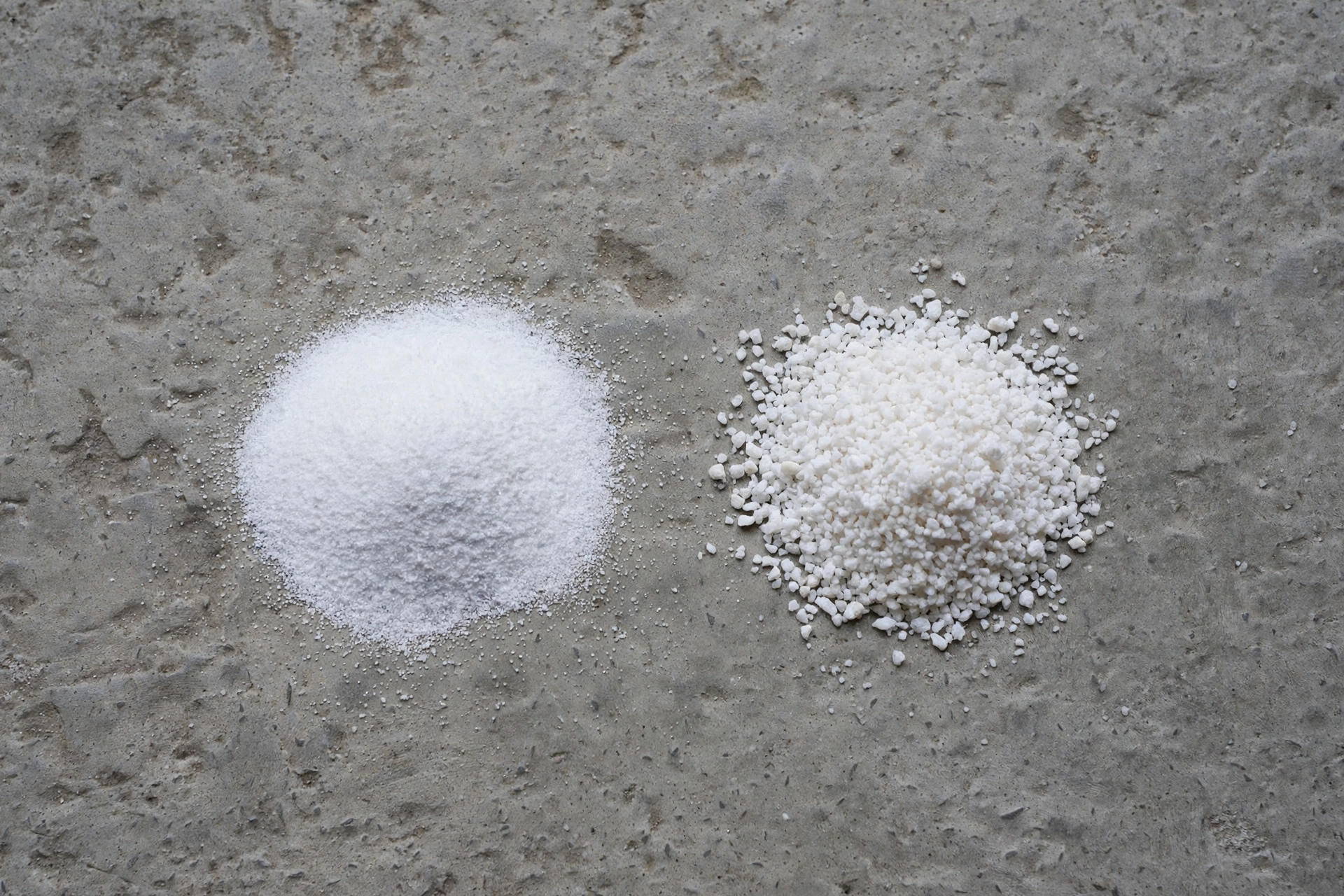
That first hard freeze is coming, and the bag in the garage is smaller than you remember. You tip it over the driveway, guessing — a little here, a little more there — and by the time the ice is gone, half the bag is gone with it. Or the opposite: you sprinkle it like seasoning, the ice laughs, and you are out there again at midnight with a shovel.
There is a number for this, and it is printed on the bag. Every melt has a label rate — pounds per square foot, or square feet per pound — and once you know your driveway’s size, the math takes about thirty seconds. Getting it right saves money, saves the lawn along the driveway’s edge, and saves the concrete from the extra chloride a heavy hand leaves behind.
Why the Rate Matters
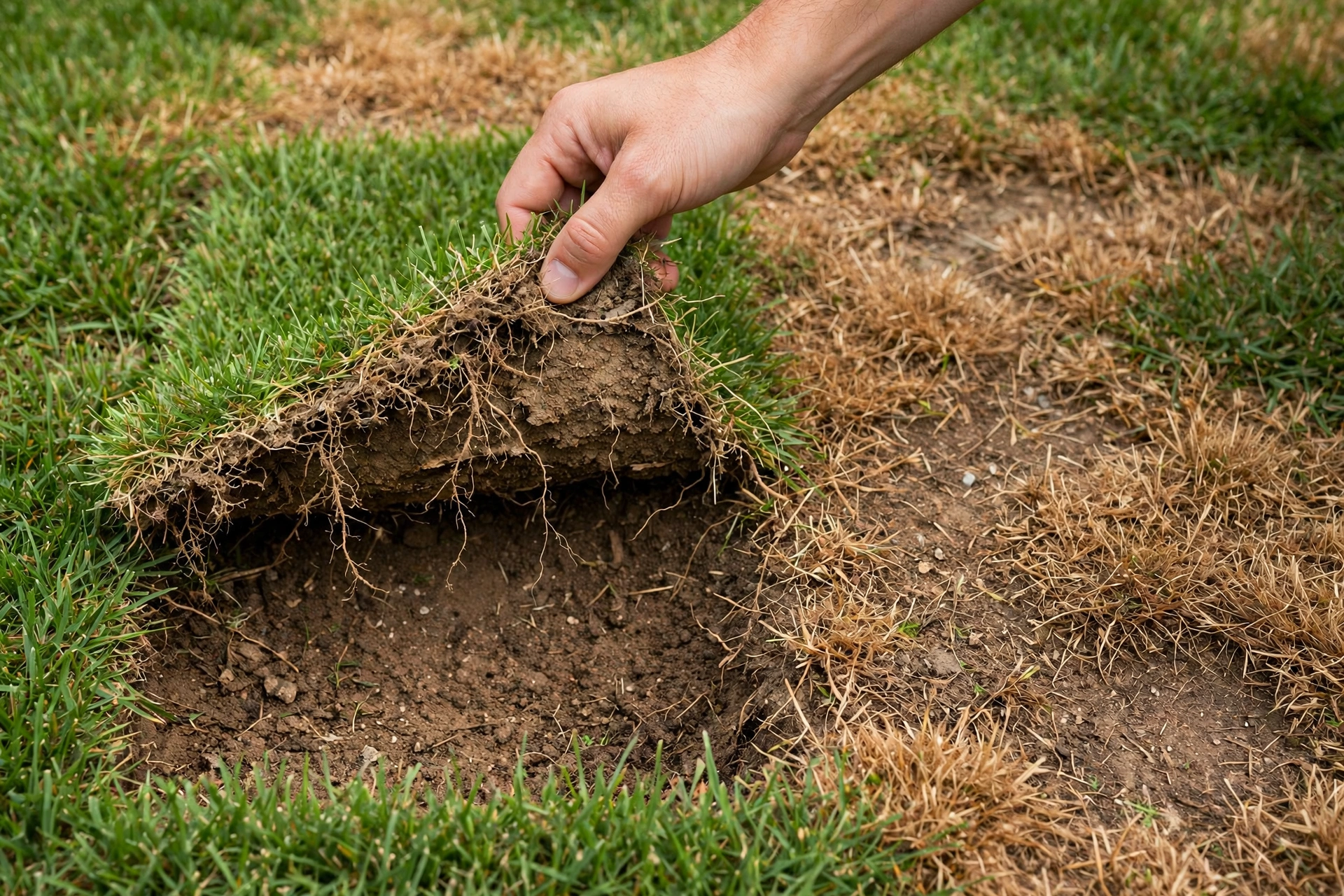
Too little melt and the ice never fully lets go. The surface refreezes overnight into a slicker sheet than the one you started with, because the half-melted brine has filled every low spot and frozen solid. Too much melt and you have not bought safety — you have bought damage. Extra chloride sits on the concrete, soaks into the pores, and washes onto the lawn and garden beds at the driveway’s edge, where it burns grass and shrubs come spring.
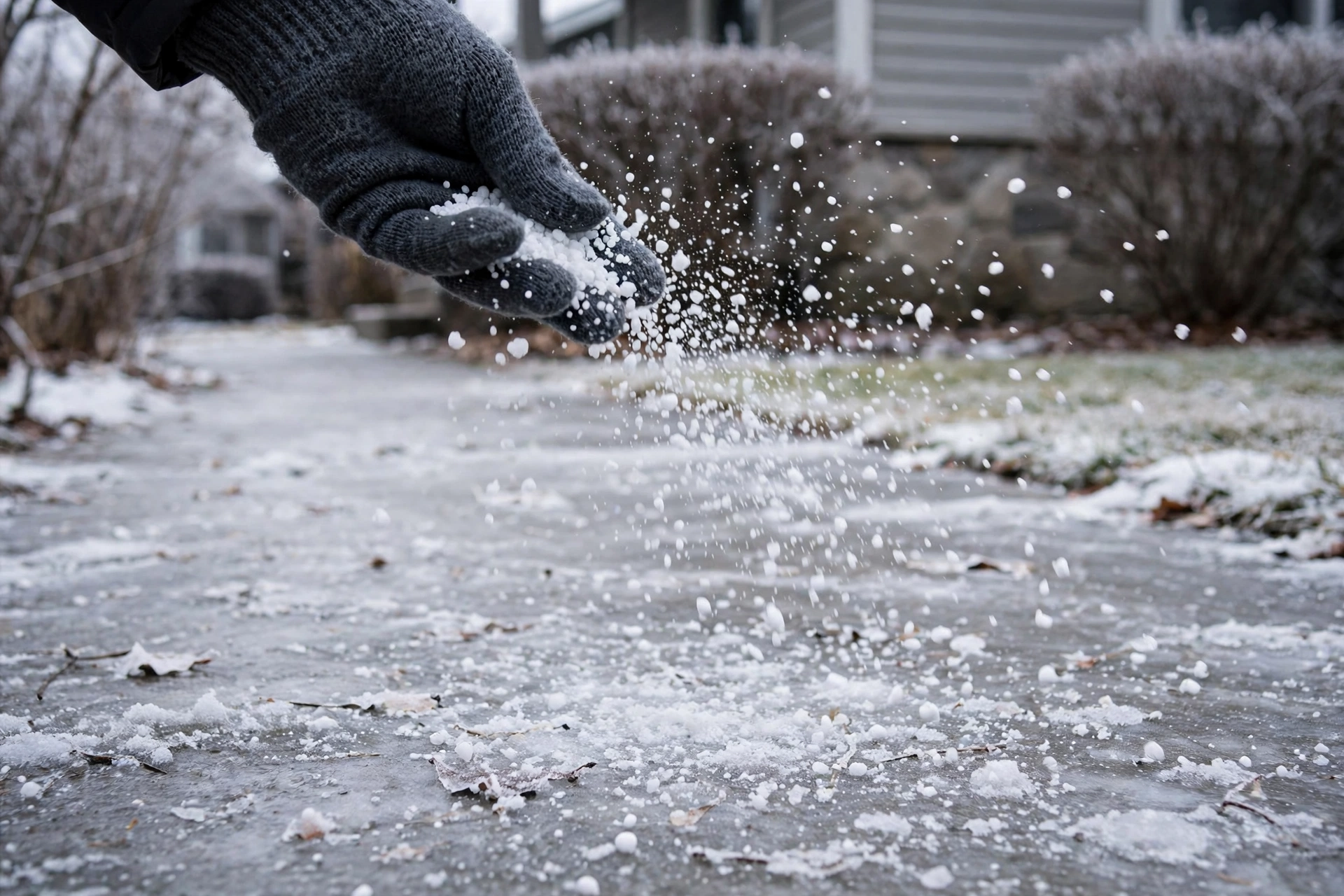
The right rate is a thin, even layer you can still see pavement through. If the driveway looks white with product, you have used too much. If you can count the granules, you have used too little. The table below gives the published rates for the melts most homeowners actually buy, so you can stop guessing and start measuring.
The Label Rates
Rates are always per application, for a thin sheet of ice — not for snow, and not for the whole winter. Read your bag’s label first; these are the published figures behind the labels.
| Product | Label rate | Per 1,000 sq ft |
|---|---|---|
| Safe Paw | 100 sq ft per pound | 10 lb |
| Calcium chloride | 14–28 lb per 1,000 sq ft | 14–28 lb |
| Redmond Ice Slicer | About 400 sq ft per pouch | About 2.5 pouches |
| Rock salt | No single label rate | Use the lightest dusting that works |
Safe Paw’s label rate is 100 square feet per pound. The maker states it plainly on the listing: an 8-pound jug treats up to 800 square feet. That is the most concentrated rate here, and it is why the small jug goes further than it looks.
Calcium chloride’s published band is 14 to 28 pounds per 1,000 square feet. That figure comes from OxyChem, the chemical maker, and it is stated for a specific job: melting a thin sheet of ice at 20 degrees in half an hour. Thicker ice or colder pavement needs the top of the band, or a second pass. The band is also given as 2 to 4 ounces per square yard, if your bag prints it that way.
Redmond Ice Slicer is rated at about 400 square feet per pouch, per the maker’s own guidance. That is the number to use if you keep this melt for the front walk — and the reason it gets expensive fast on a full driveway.
Rock salt has no single label rate, because it is sold as a commodity, not a branded product. The practical rule is the lightest dusting that still melts the ice, and the honest limit is the temperature: rock salt stops working near 15 degrees, so no amount of it will save a driveway on a truly cold night. The full comparison of ice melt vs. rock salt explains why, and which melts take over below that line.
Do the Math for Your Driveway
Measure the driveway first. A standard two-car driveway runs about 20 feet wide and 40 feet long — 800 square feet. A single-car drive is closer to 10 by 30, or 300 square feet. A long rural drive can run 2,400 square feet or more. Pace it off or check a satellite view; a rough number beats a guess.
A two-car driveway, 800 square feet, one storm. With Safe Paw at 100 square feet per pound, that is 8 pounds — exactly one 8-pound jug. With calcium chloride at the published band of 14 to 28 pounds per 1,000 square feet, that is 11 to 22 pounds: use the low end on a mild night near freezing, the high end when the ice is thick or the temperature is dropping.
A long driveway, 2,400 square feet, one storm. At a mid-band rate of 20 pounds of calcium chloride per 1,000 square feet, that is 48 pounds — about one 50-pound bag per application. With Safe Paw, the same driveway takes 24 pounds, or three jugs. That is the moment the big bag starts winning on price, even if the premium melt is kinder to the concrete.
For the whole winter, not one storm. One storm often takes two or three applications — a pass before the ice sets, a pass after the first melt, and sometimes a third on the refreeze. Multiply your per-storm number by the number of icy mornings you expect, then buy that much, plus one bag in reserve. Running out in February, when the shelves are empty, is worse than storing one extra bag in the garage.
How to Spread It
Step 1: Shovel first. Melt spread on snow mostly melts snow. Clear the driveway down to the thin ice layer, then spread on that. This one step cuts your usage in half.
Step 2: Measure, don’t pour. A kitchen scale and a coffee can will tell you what a pound looks like in your hand. After one measured application you will know the dose by feel, and you will stop over-pouring.
Step 3: Spread thin and even. A handheld spreader is worth the few dollars for a big driveway; for a walk, a scoop and a steady hand will do. You should still see pavement through the granules.
Step 4: Wait 15 to 30 minutes, then shovel the slush. The melt has done its job once the ice turns to slush. Clear it off instead of letting the brine sit and refreeze overnight. Reapply only where ice remains — not across the whole driveway.
Step 5: Sweep up the leftovers in spring. Granules that survive the winter wash into the lawn with the first heavy rain. A quick sweep of the driveway’s edge in March keeps the chloride off the grass.
The Mistakes That Waste a Bag
Spreading before the storm. A light pre-treatment on bare pavement before freezing rain can help, but spreading melt on a dry driveway hours before snow arrives just gives the snow something to bury. Wait until the snow is shoveled and the ice is showing.
Piling it on the same spot. More product does not melt ice faster. It melts the same ice and leaves a stronger salt solution sitting on the concrete. If the ice has not moved after 30 minutes, the problem is the temperature, not the dose — check whether your melt is rated for the cold you actually have.
Forgetting the walk and the steps. The driveway gets the bag and the front steps get whatever is left. Measure the walk too — a 3-by-10-foot walk is only 30 square feet, which takes about a third of a pound of Safe Paw — and treat it with the same thin, even hand.
What to Watch Next
After the first few storms, you will know your number. Watch how much of the bag one storm actually eats, and how the lawn along the driveway’s edge looks in April. If the grass is brown in a strip along the concrete, you are over-applying or the melt is washing off the edge — spread thinner, and sweep the edge clean after each storm.
And while the bag is out, finish the rest of the winter prep: winterize the sprinkler system before a hard freeze finds water in the lines, put faucet covers on exposed spigots, and keep a snow pusher by the door so the shovel does the heavy work and the melt only has to finish the job. Our roundup of the best ice melt for driveways compares the three melts worth buying, with the per-storm cost for each.
Measure the driveway once, read the label once, and the bag will last the winter it was bought for.