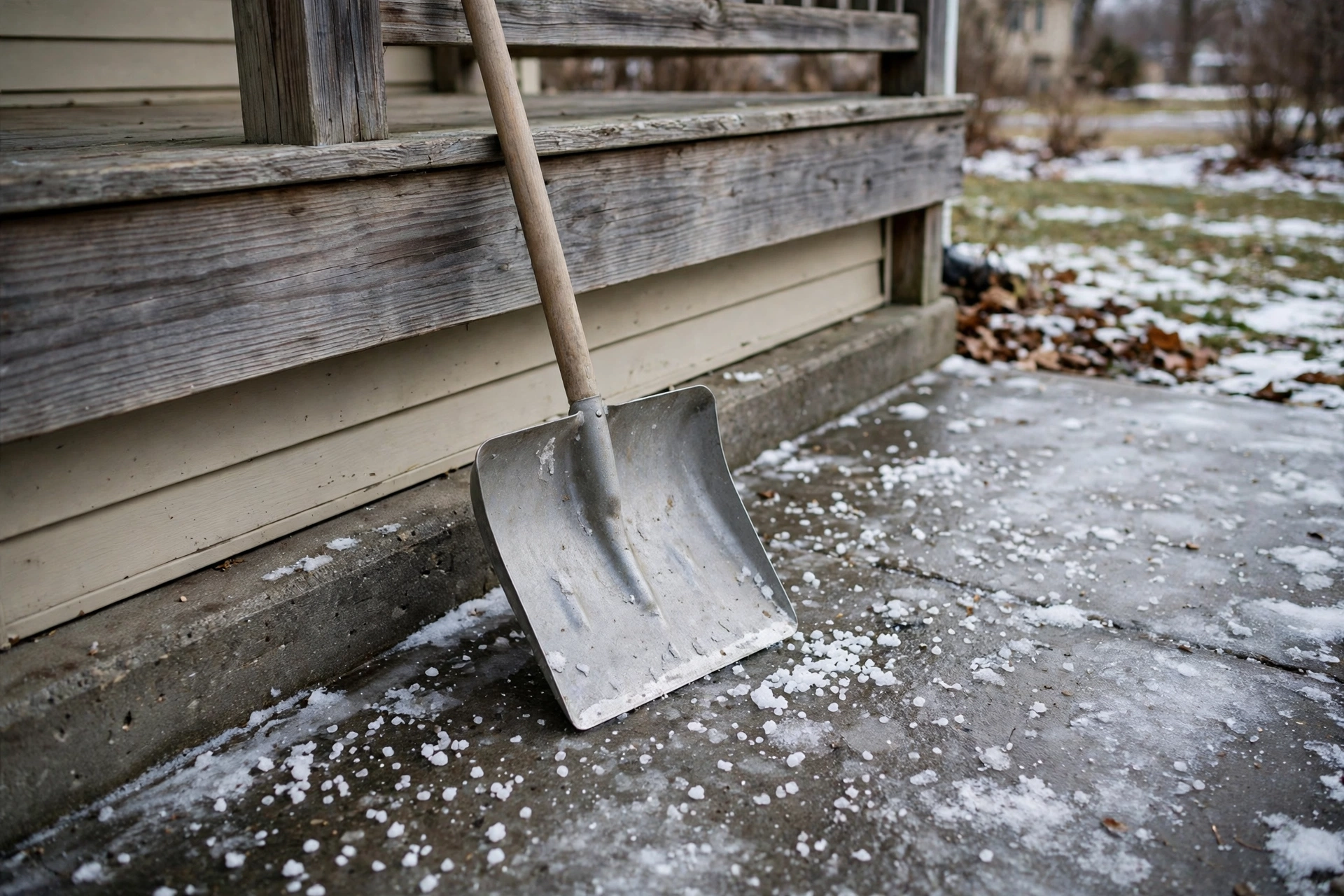
Your driveway made it through winter looking fine — then spring showed the pitting. Little flakes and shallow pits across the surface, worst where the melt pooled by the garage door. Was it the salt, or just the cold? The honest answer is usually both, with the salt doing the part that could have been avoided.
Concrete does not fail from one cold night. It fails from freezing and thawing, over and over, with water trapped in tiny pores. Salt makes that cycle worse: it melts ice into salty water, the water soaks a little deeper into the concrete, and the next freeze expands it a little harder. Do that fifty times in a winter and the surface starts to scale. The question is not whether salt damages concrete — it does — but how much, and whether a different melt would have been kinder.
What Is Actually Damaging the Concrete?
Three causes stack up, and they are worth ranking, because the fix for each one is different.
1. Freeze-thaw cycles, made worse by deicer. This is the big one. Every time ice melts and refreezes, water works deeper into the concrete’s pores and pries a little more loose. Salt does not cause freezing and thawing on its own, but it creates more cycles by melting ice at temperatures where plain water would have stayed frozen. Older concrete, concrete with a weak surface finish, and concrete that was never sealed are the most vulnerable.
2. Too much product. The second most common cause, and the easiest to fix. A heavy hand does not melt ice faster — it leaves a stronger salt solution sitting on the surface longer, and more chloride to soak in. The bag’s label rate exists for a reason, and most driveways get two or three times that rate on a bad morning. Our guide to how much ice melt you need per square foot has the label rates and the arithmetic.
3. Deicer on new concrete. Concrete poured within the last 12 months has not finished curing, and its surface is far more open to salt damage than a mature slab. Every deicer maker says the same thing: do not use their product on concrete under a year old. If your driveway is new, use sand for traction this winter and wait for next year.
The Four Deicers, Ranked for Concrete
Not all melts are equally hard on a driveway. Here is how the four common chemistries compare, ranked from gentlest to harshest on concrete.
| Deicer | Stops working near | Concrete risk | Cost |
|---|---|---|---|
| CMA blend | About -10°F | Lowest of the chlorides | Moderate |
| Calcium chloride | About -25°F | Low — less product needed | Higher per bag, less per storm |
| Magnesium chloride | About -13°F | Moderate | Moderate |
| Rock salt (sodium chloride) | About 15°F | Highest | Cheapest per bag |
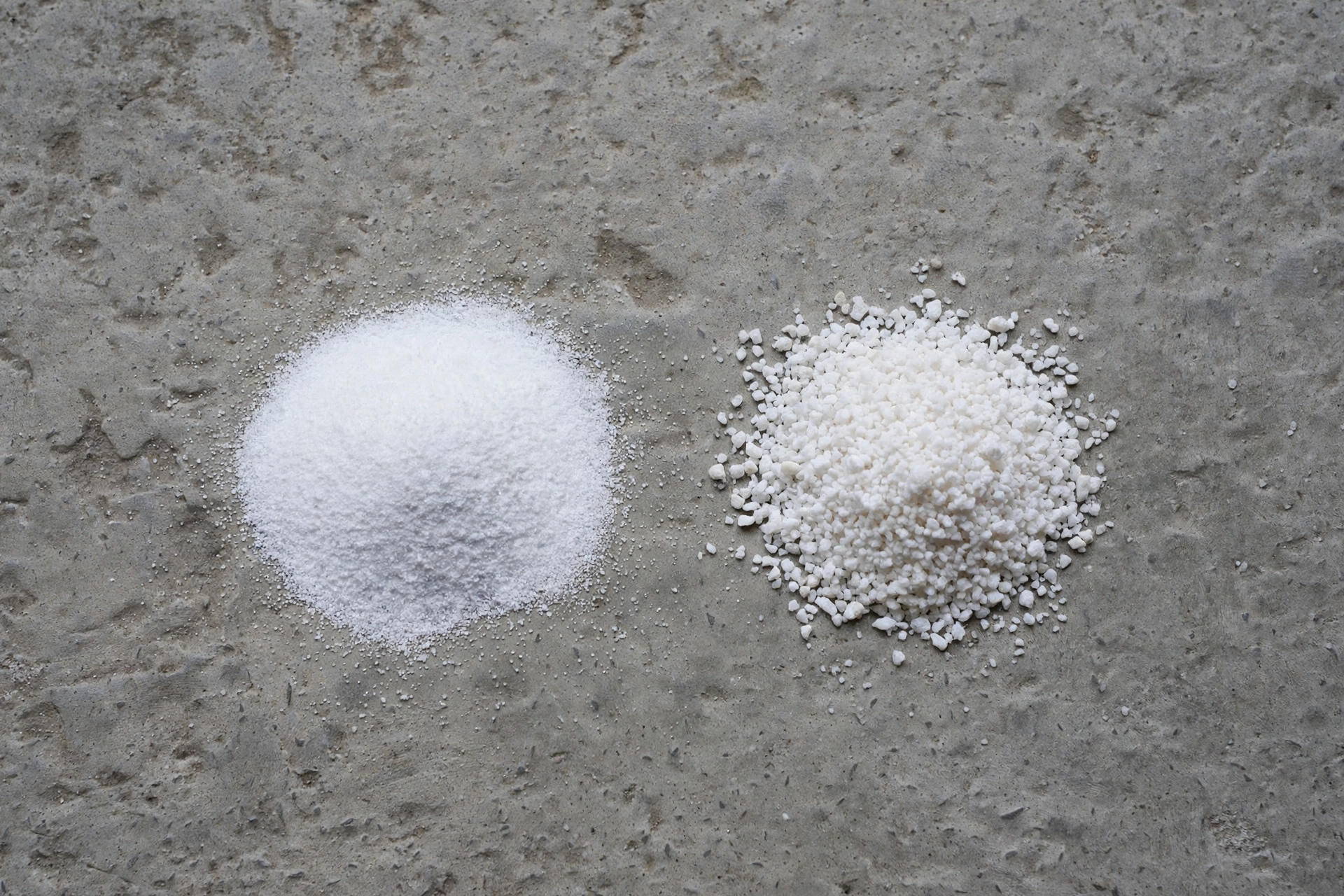
Rock salt is the harshest and the weakest at the same time. It stops working around 15 degrees — the Minnesota Pollution Control Agency is blunt about this: road salt does not work on cold days — so on the coldest nights it just sits there, doing nothing for traction while its brine soaks into the concrete. It is also the cheapest bag on the shelf, which is why it is everywhere. The bag is cheap, but you use more of it, more often, and the surface pays the difference.
Calcium chloride is the strongest performer and surprisingly gentle in practice. It keeps working down to about -25 degrees, and because it generates heat as it dissolves, it needs far less product per storm — the manufacturer’s published band is 14 to 28 pounds per 1,000 square feet for a thin sheet of ice at 20 degrees. Less product on the surface means less chloride soaking in, which is why a stronger chemical can be easier on concrete than a weaker one used by the shovelful.
Magnesium chloride sits in the middle. It works to about -13 degrees and is less corrosive than rock salt, which is why it shows up in most “pet safe” blends. It is a solid compromise, but it still needs more product than calcium chloride in deep cold.
CMA — calcium magnesium acetate — is the gentlest chloride option. It is an anti-corrosion agent rather than a straight salt, and blends that include it are measurably easier on concrete, metals, and vegetation than plain rock salt. The trade-off is cold performance: CMA blends typically quit around -10 degrees, so they are a good choice for milder winters and a poor one for the coldest nights of the year.
One more option sits outside the table entirely: salt-free melts like the ones built on an amide core instead of chloride. They carry no salt at all, which makes them the kindest choice for concrete, but they cost the most per pound and usually stop working around -2 degrees. Our roundup of the best ice melt for driveways compares the leading salt-free pick against the best CMA blend, with the per-storm math for each.
The Fix: What to Spread Instead
Step 1: Shovel first, always. Melt spread on snow mostly melts snow. Clear the driveway down to the thin ice layer, then spread on that. You will use half as much product and get twice the result.
Step 2: Match the melt to the temperature. Check the pavement temperature, not the air temperature — concrete holds cold longer. If the slab is below 15 degrees, rock salt is already useless; reach for calcium chloride or a CMA blend rated for the cold you actually have.
Step 3: Spread thin and even. You should still see pavement through the granules. If the surface looks white with product, you have used too much. A handheld spreader beats a coffee can for even coverage, and it keeps the dose honest.
Step 4: Wait, then clear the slush. Give the melt 15 to 30 minutes to work, then shovel off the slush and brine instead of letting it sit and refreeze overnight. Reapply only where ice remains, not across the whole driveway.
Step 5: Seal the concrete in fall. A penetrating sealer applied before winter keeps brine out of the pores in the first place. It is the single best thing you can do for an older driveway, and it costs less than one bag of premium melt.
What to Watch for in Spring
When the snow finally clears, look for the early warning signs: small flakes lifting off the surface, shallow pits near the garage door and the bottom of the steps, and a white crust that keeps coming back after rain. Light scaling is cosmetic and often stabilizes if you ease up on the salt. Deep pitting or exposed aggregate means the surface is failing, and no melt choice will reverse it — that is a resurfacing conversation, not a shopping one.
A driveway that shows no damage after one winter of rock salt has not proved salt is harmless — it has only proved the concrete was in good shape and the winter was mild enough for the salt to mostly work. The next cold winter is the one that tests it.
Winterize the Rest of the Yard, Too
Ice melt is only one piece of getting the yard through winter. While you are thinking about freeze protection, winterize your sprinkler system before a hard freeze finds water still in the lines, and put faucet covers on any exposed spigots. And a good snow pusher clears the driveway faster than a shovel, which means less ice left for any melt to handle.
Bottom Line
Rock salt is the worst choice for concrete: it quits near 15 degrees, it takes the most product, and it drives the most freeze-thaw damage. A calcium chloride melt or a CMA blend costs more per bag and less per winter, and your driveway will show the difference by spring. Switch the bag before the surface tells you to.