Thirty seconds in hot oil is the difference between chili powder that tastes dusty and chili that tastes like chili. Bloom the spices first and the same pot of chili tastes deeper, rounder, and more like itself.
Blooming is the move: cooking spices briefly in hot fat before anything else goes into the pot. It takes half a minute, it costs a tablespoon of oil, and it is the cheapest upgrade in the kitchen. Once you have done it in a pot of chili, you will do it everywhere.
What Blooming Actually Does
Most of the flavor compounds in spices dissolve in fat, not water. Stir ground cumin into a simmering broth and only a fraction of its flavor ever leaves the spice — the rest stays locked in the dry powder, and the chili tastes flat and dusty. Bloom the same cumin in hot oil first and the fat pulls those compounds out, carries them through the whole pot, and turns them into flavor you can actually taste.
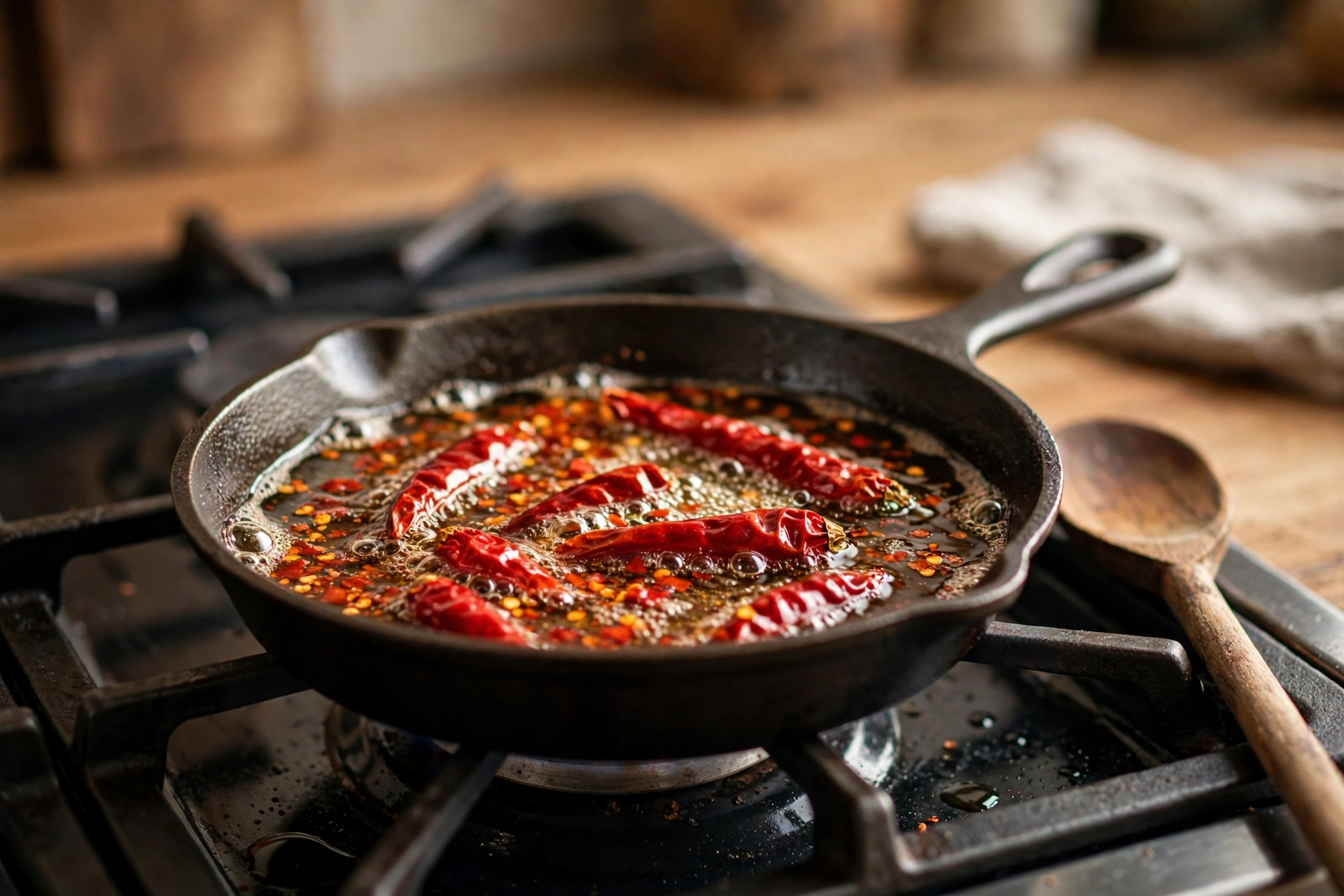
The heat matters as much as the fat. Warm oil wakes up the volatile aromatics trapped in a dried spice — the smell that rises off the pan in the first thirty seconds is the flavor leaving the spice and going into the oil. That is the whole technique: hot fat, brief heat, and the next ingredient added at the moment the smell peaks.
How to Do It
- Heat the fat first. Put a tablespoon or two of oil, ghee, or butter in a heavy pan or Dutch oven over medium heat. You want it shimmering, not smoking — if the oil smokes, the pan is too hot and the spices will burn before they bloom.
- Whole spices go in first. Cumin seeds, mustard seeds, fennel seeds, cardamom pods, cinnamon sticks — the whole ones need more time than the ground ones. Cook 30 to 90 seconds, stirring, until mustard seeds begin to pop and cumin seeds darken slightly and smell fragrant.
- Ground spices go in last, and fast. Chili powder, ground cumin, paprika, turmeric — add them and stir constantly from the moment they touch the pan. Ground spices have so much surface area that they can burn in about 20 seconds at high heat, so keep them moving and keep the heat at medium.
- Stop at fragrant, not brown. The bloom is done when the raw, dusty smell has shifted to a deeper, toasted aroma — usually 30 to 60 seconds for ground spices. The oil should darken and smell assertive. The moment it smells right, add the next ingredient — onions, meat, or liquid — right away. The liquid stops the cooking and carries the bloomed flavor into the dish.
What Goes Wrong
Burnt spices are the one failure, and there is no fixing them. A burnt spice tastes bitter, and the bitterness spreads through the whole pot. If the spices darken to brown or black, or the smell turns sharp and acrid, throw them out, wipe the pan, and start over with fresh oil. Thirty seconds lost beats a ruined pot.
Two mistakes cause most burns. The first is heat that is too high — medium is the setting, not medium-high, and the pan should be shimmering, not smoking. The second is waiting too long after the spices hit the oil. Have the next ingredient measured and standing by before the spices go in, so the liquid or the onions can go in the moment the smell peaks.
Too little fat is the quieter mistake. The spices need enough oil to coat every particle; a dry pan scorches them before the flavor extracts. One to two tablespoons in a Dutch oven is the right amount for a pot of chili — enough to carry the flavor, not so much that the dish turns greasy. Paprika is the quickest to burn, so if your spice mix includes it, add it last and count to fifteen.
Where It Earns Its Keep
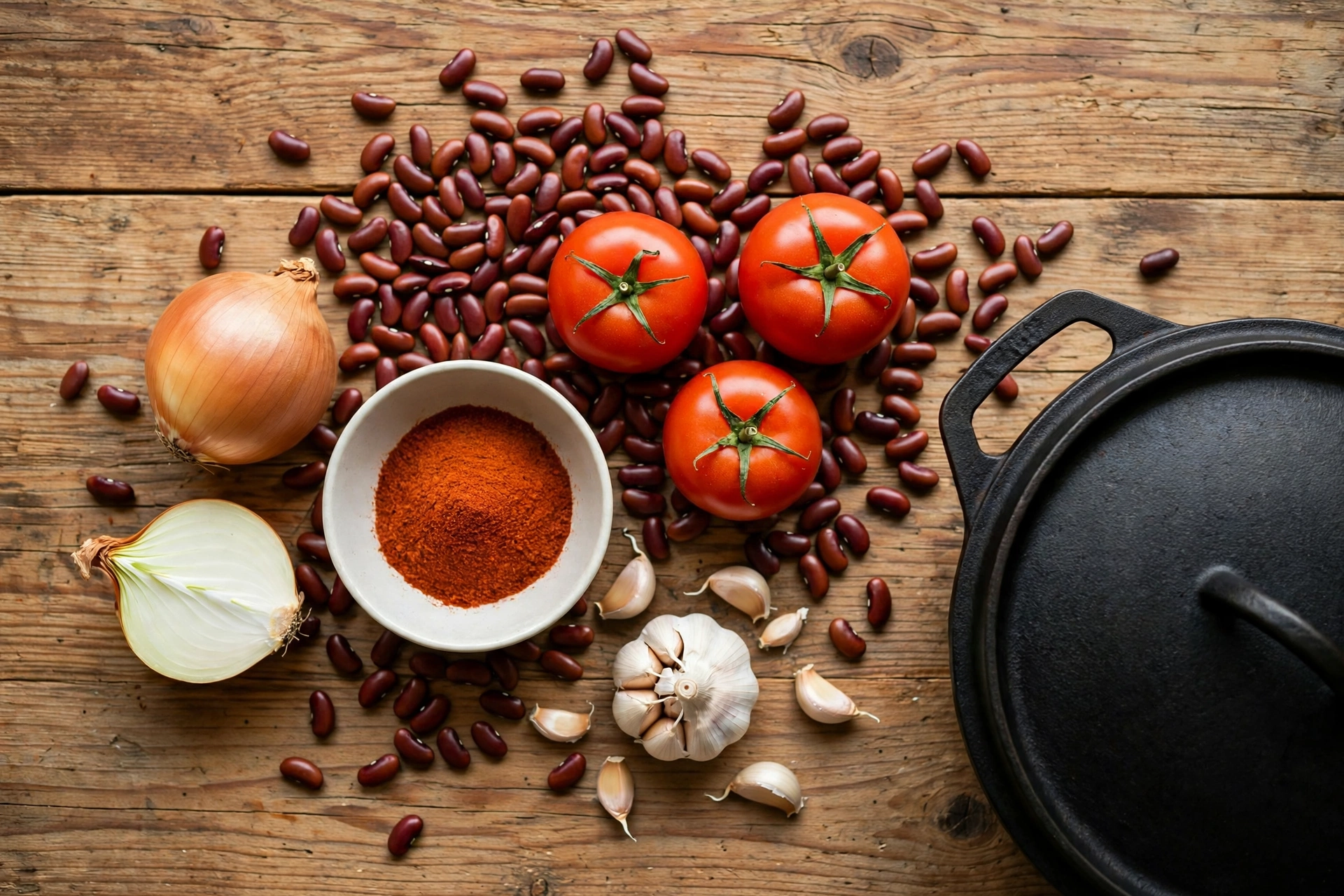
Chili is the clearest example. Our Dutch oven chili over a fire pit blooms its chili powder and cumin in hot oil with the onions before the beef goes in, and that five minutes is the reason the finished chili tastes deep instead of dusty. The same move works in any pot where spices meet liquid: stews like our slow cooker beef and vegetable stew, soups like our butternut squash soup, beans, lentils, and curries.
It is worth doing even when the recipe does not say to. Any soup or stew that starts with oil and onions has a natural moment for it: when the onions go in, the spices go in with them. Thirty seconds, one stir, and the pot tastes like someone knew what they were doing — because for those thirty seconds, you did.
Bottom Line
Bloom your spices in hot oil before the liquid goes in: whole spices first for 30 to 90 seconds, ground spices last for 30 to 60 seconds, stirring constantly, and stop the moment the smell turns deep and toasted. The flavor compounds are fat-soluble, so the oil is what carries them — and the difference between a dusty chili and a real one is the thirty seconds you spent on the oil.