Your bearded iris used to put on a show. Now the clump is a thicket of leaves, the blooms are fewer and smaller, and the middle of the clump looks tired. That is not a plant in decline. That is a plant that has run out of room, and it is telling you so in the one language it has: fewer flowers.
Bearded iris are different from most perennials you divide, because what you are splitting is not a crown of roots. It is a rhizome, a thick, fleshy horizontal stem that sits at the soil surface and stores food. Divide it the way you would a daylily and you will bury it too deep and wonder why it never blooms again. Divide it the way iris want, and the same clump comes back stronger for years.
What Is Wrong: Crowding, Depth, or Shade?
Start with the diagnosis, because dividing fixes only one of the three usual causes of poor iris bloom. If the clump is overcrowded, with rhizomes stacked on top of each other and pushing out of the bed, dividing is the fix. Iris should be divided every three to five years to reduce crowding and keep clumps vigorous, according to Iowa State Extension, and crowded plants are also more prone to disease.
If the clump is not crowded, check depth and light before you dig. Rhizomes planted too deep are a classic cause of bloom failure: the rhizome needs to sit at or just below the soil surface, where sun warms it. North Carolina State Extension, cited by the Buncombe County Master Gardeners, adds two more suspects: excessive shade and excessive nitrogen fertilizer, both of which grow leaves at the expense of flowers. A clump in deep shade will not be fixed by dividing. Move it to full sun with well-drained soil instead.
One more check while you are looking: dark streaks on the leaves can signal iris borer, whose caterpillars tunnel down into the rhizomes. If you find soft spots or holes when you lift the clump, that is borer damage, and those pieces get discarded, not replanted. Dividing is the perfect moment to catch it, because the rhizomes are in your hands and visible for the first time in years.
When to Divide Bearded Iris
The window is after flowering, not before it. The Royal Horticultural Society recommends dividing rhizomatous iris about six weeks after flowering, giving the plant time to produce new growth before winter. Iowa State puts it more plainly for cold climates: July or August is the best time to dig, divide, and transplant, so the replanted pieces have time to anchor before freezing weather.
Spring division is possible, but it usually costs you that year’s flowers, and any stems that do appear will likely need staking. If your clump is badly overcrowded in spring, dividing is still better than leaving it, but the after-flowering window is the one to plan for. Finish the job before October in cold climates so the divisions root in before the ground freezes, as Missouri Botanical Garden advises.
The Fix: Divide and Replant, Step by Step
Step 1: Water the bed a day ahead. If the soil is dry, water thoroughly the day before you dig. Wisconsin Extension notes that moist soil makes lifting the shallow, heavy rhizomes easier and reduces the chance of snapping them.
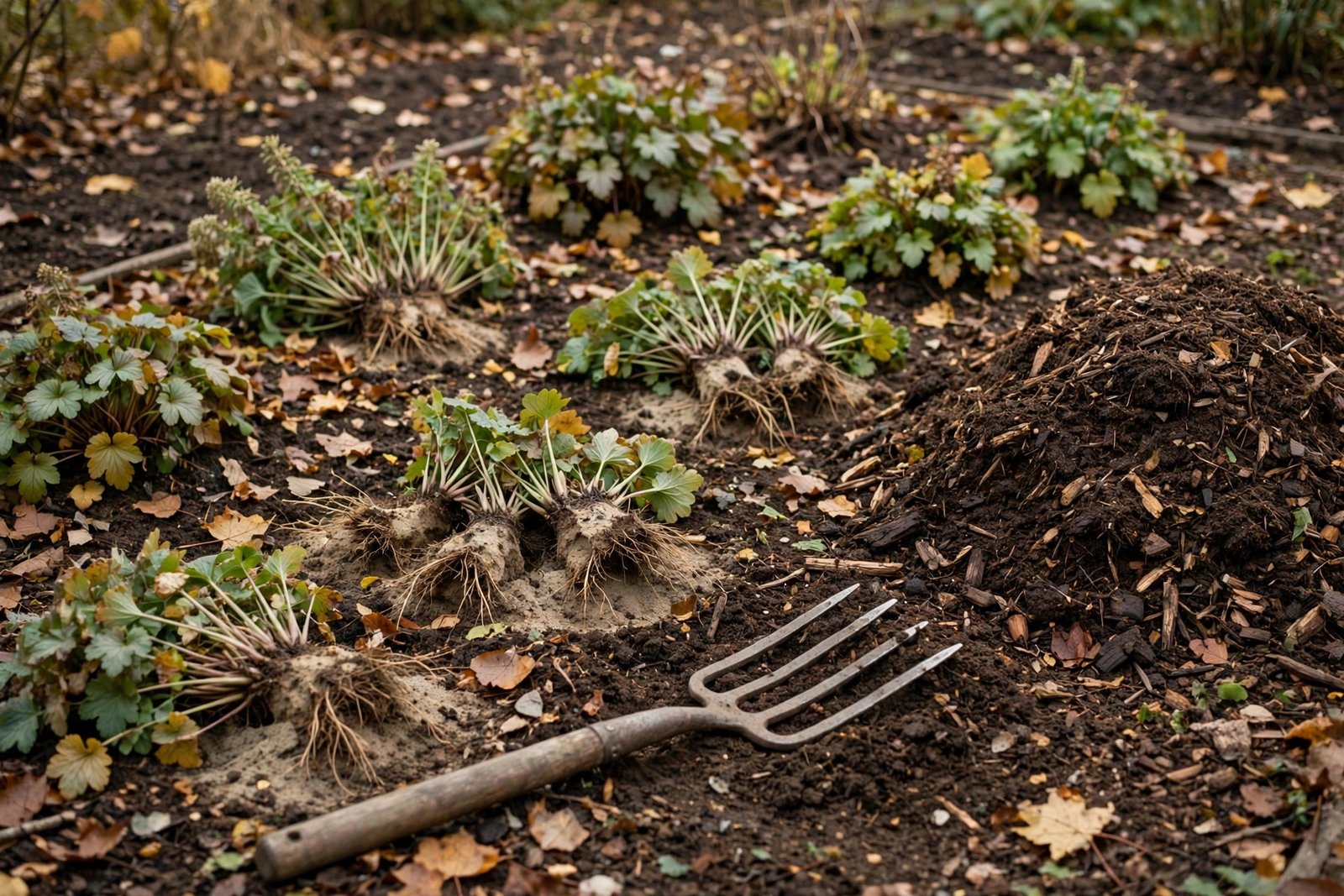
Step 2: Lift the whole clump. Work a spade or pitchfork around the clump and lift it as one piece rather than breaking it apart in the ground. Shake off the loose soil, and rinse the rest away with a hose so you can see what you are working with. This is also when you pull out perennial weeds tangled in the clump.
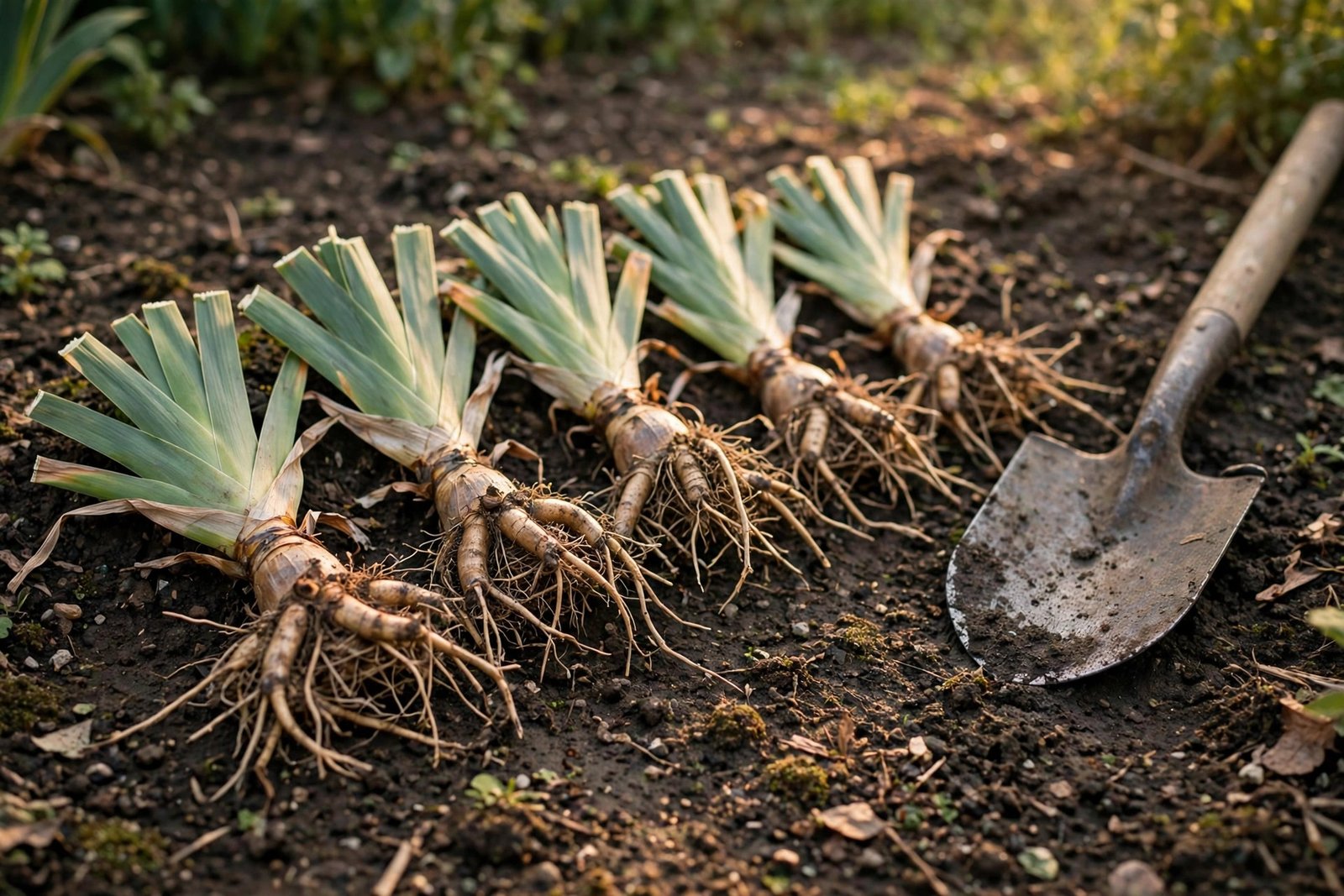
Step 3: Cut the rhizomes apart. Pull tangled rhizomes apart by hand where they separate cleanly, and cut the rest with a sharp knife. Each division needs one fan of leaves, a healthy section of rhizome several inches long, and several large roots. Discard old, spongy rhizomes and any pieces with borer holes or soft rot. Disinfect the knife between cuts if you find damage, so you do not carry disease from one division to the next.
Step 4: Trim the leaves. Cut the leaf fan back to about one-third of its original height, or roughly 6 inches. Shorter leaves lose less water while the division re-roots, and the trimmed fan shape is the classic iris-division look for a reason: it works.
Step 5: Replant shallow. Dig a hole wide enough for the rhizome and roots, build a small cone of soil in the center, and set the rhizome on top with the roots spread into the surrounding trench. The rhizome should sit level with the soil surface on heavy soils, or just below the surface on light, sandy soils. Space divisions 12 to 24 inches apart, and plant at least three rhizomes of one variety together for a good flower display. Water each plant thoroughly to settle the soil.
Step 6: Mulch lightly, if at all. A heavy mulch layer over iris rhizomes holds moisture against them and invites rot. If you mulch, keep it away from the rhizome itself. Our guide to soil and mulch after dividing perennials covers the aftercare in detail, and the best tools for dividing perennials guide covers the spading fork and knife that make this job easier.
What to Expect After Dividing
Do not expect a full show next spring. Flowers will be sparse the first year after dividing, then good thereafter, as the University of Washington’s horticulture library puts it. That is normal, not failure: the plant is spending its first season rebuilding roots and rhizome, and the bloom follows the roots.
Watch for the one mistake that undoes the whole job: replanting too deep. If a division sits buried, it will grow leaves and skip flowers year after year. Check the rhizome tops after the first heavy rain, when soil settles, and brush soil back off any rhizome that has ended up covered. Shallow is not sloppy here. Shallow is the entire point.
If you are deciding which perennials to divide this season and which to leave alone, our guide to dividing perennials in fall sorts the whole bed by timing. Iris pair well in a dividing afternoon with peonies and daylilies, which share the after-flowering window and the same basic tools.