A face cord sounds like a fixed amount of wood, until two sellers quote two different prices and the cheaper number turns out to buy the smaller pile.
This calculator sorts that out before you pay. Type in what the quote is for and what it costs, and it turns the stack into true cords, cubic feet, and a price per cord, so two loads that look nothing alike can be compared on the same terms. Pick a species and it adds the heat each cord gives, too.
How much wood — and heat — is in your quote?
How long each piece is. This is the number that decides how much wood a face cord holds.
The price on the ticket for this load. The calculator never sets a price of its own.
Without JavaScript, the tables and worked examples below give the same answers by hand.
How the math works
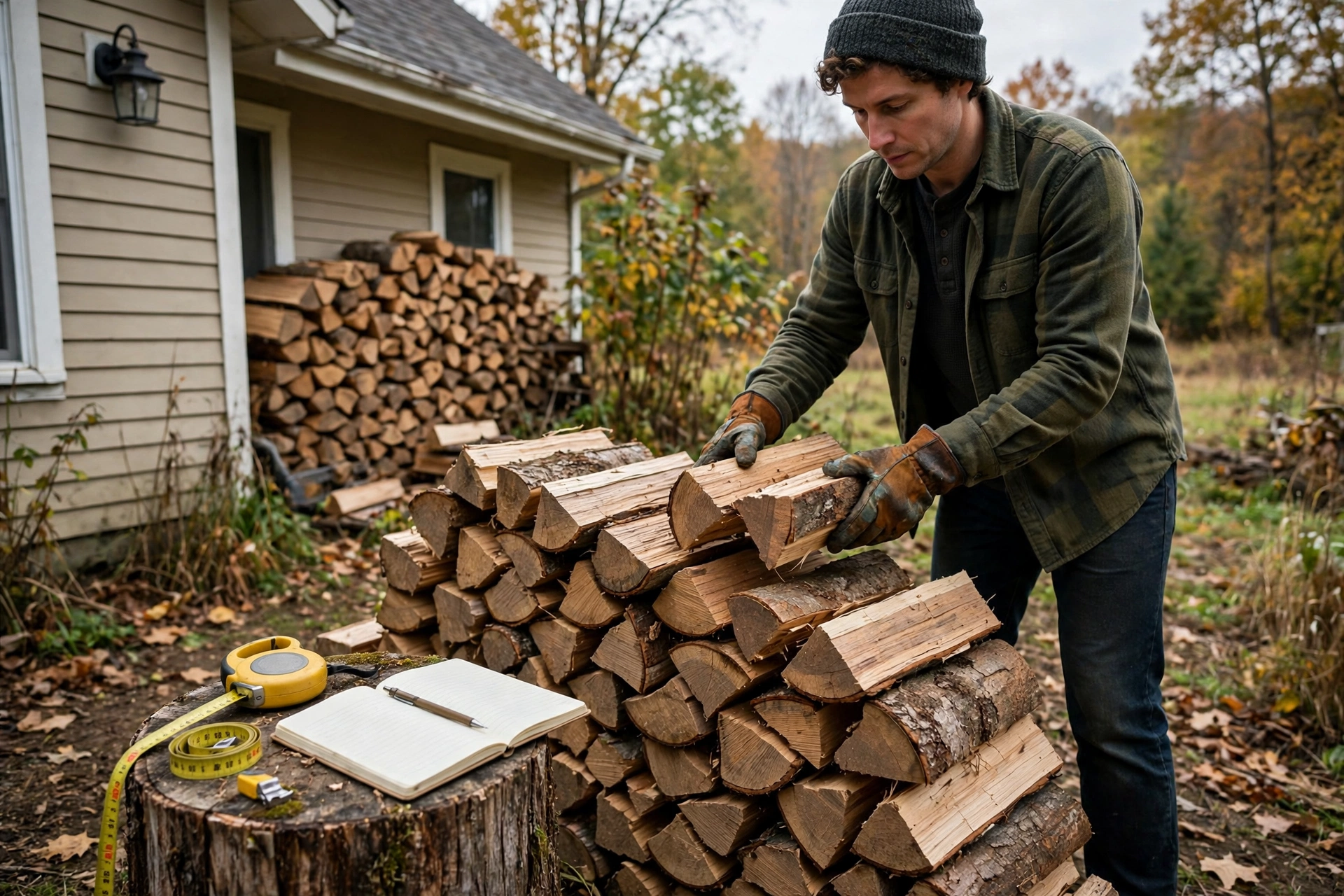
A cord is the one number every seller shares: 128 cubic feet of stacked wood, whether that stack is 4 feet high, 4 feet deep, and 8 feet long or any other shape that multiplies out to the same total. A face cord is a stack 4 feet high and 8 feet long, so the piece length decides how much wood it holds — short pieces mean a thin stack and less wood, long pieces mean a deep stack and more.
The calculator works out the cubic feet first, divides by 128 for true cords, and then divides your quoted price by the cords to get a price per cord. When you pick a species, it multiplies the cords by that wood’s heat value, so you can see the total heat and what each million Btu costs.
How much wood is in a face cord
Five cut lengths, and what each one actually holds.
Face cord volume by cut length
| Cut length | Cubic feet | Share of a cord |
|---|---|---|
| 12 inches | 32 | ¼ cord |
| 14 inches | 37.3 | 0.29 cord |
| 16 inches | 42.7 | ⅓ cord |
| 18 inches | 48 | ⅜ cord |
| 24 inches | 64 | ½ cord |
A rick has no fixed size. The word gets used for a third of a cord, a half of a cord, or just a pile of wood, so a price quoted by the rick tells you nothing until you know the stack’s length, height, and cut length. Ask the seller for those three numbers before you compare it with anything.
Which wood gives the most heat
Denser wood gives more heat per cord, once it is properly seasoned, and the gap between the best and the weakest species on this list is nearly double. Osage orange sits at the top, cottonwood at the bottom, and the familiar oaks and hickory sit near the top.
Heat per cord, in million Btu
| Species | Million Btu per cord |
|---|---|
| Osage orange | 30.7 |
| Hickory | 29.1 |
| Locust (black) | 28.1 |
| Oak, white | 27.0 |
| Oak, red | 25.3 |
| Ash | 23.6 |
| Elm | 21.4 |
| Pine (shortleaf) | 19.0 |
| Redcedar | 18.9 |
| Boxelder | 17.5 |
| Cottonwood | 16.1 |
Published heat values for the same species vary by a few million Btu per cord between tables, so use these figures to compare species, not to predict your stove to the decimal.
These figures are for seasoned wood, cut and left to dry at least six months, until the bark pulls off by hand. Green wood burns cooler and leaves creosote in the flue, so the species matters far less than the drying.
Worked examples
One seller quotes $150 for a face cord cut to 16 inches, and another quotes $200 for a face cord cut to 24 inches. The 16-inch face cord holds a third of a cord, so it costs $450 per cord. The 24-inch face cord holds half a cord, so it costs $400 per cord. The $200 quote is the cheaper wood, even though the number on the ticket is higher.
Two cords of white oak give about 54 million Btu, since each cord gives 27.0. At $300 a cord, a cord of hickory gives 29.1 million Btu, which works out to $10.31 per million Btu.
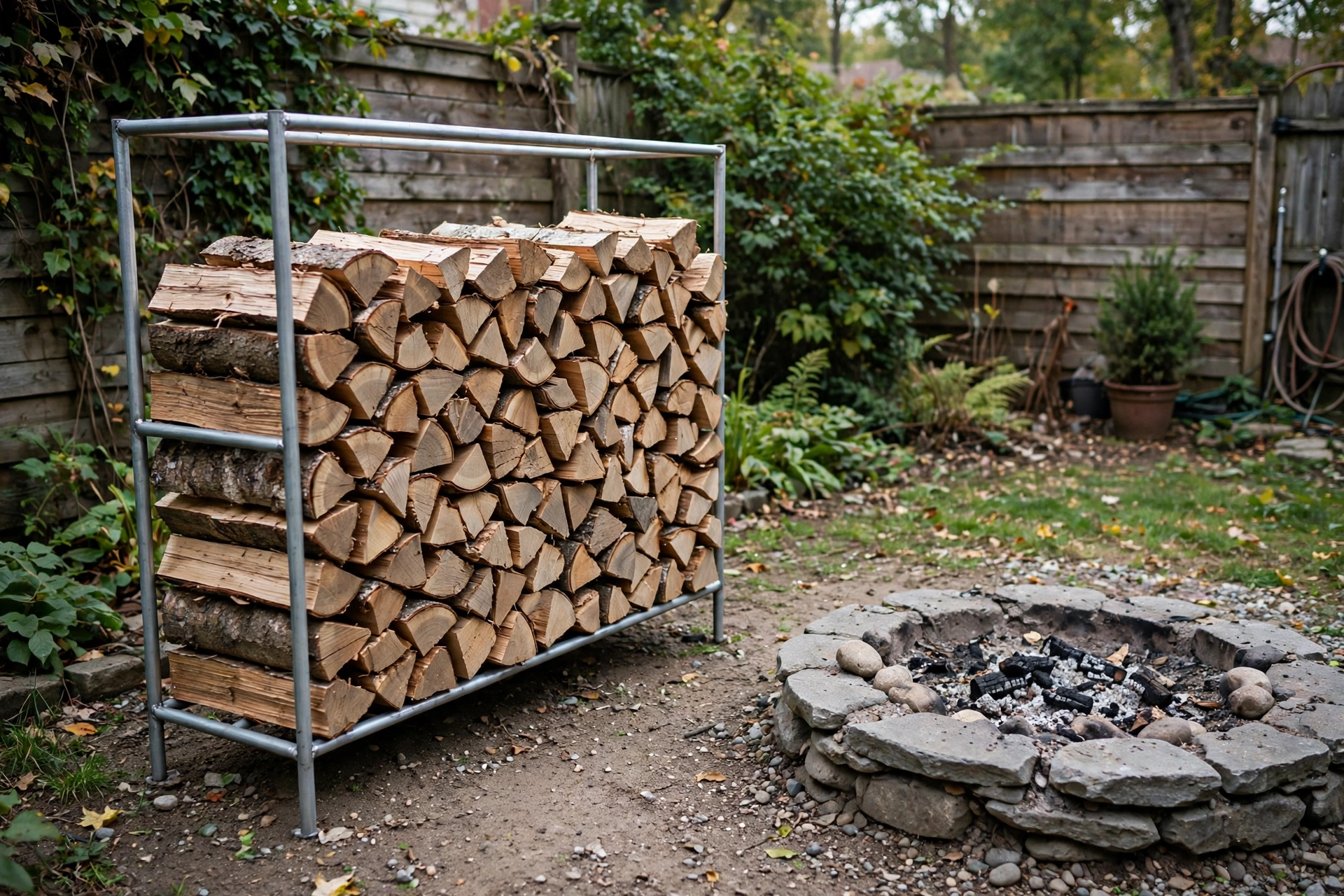
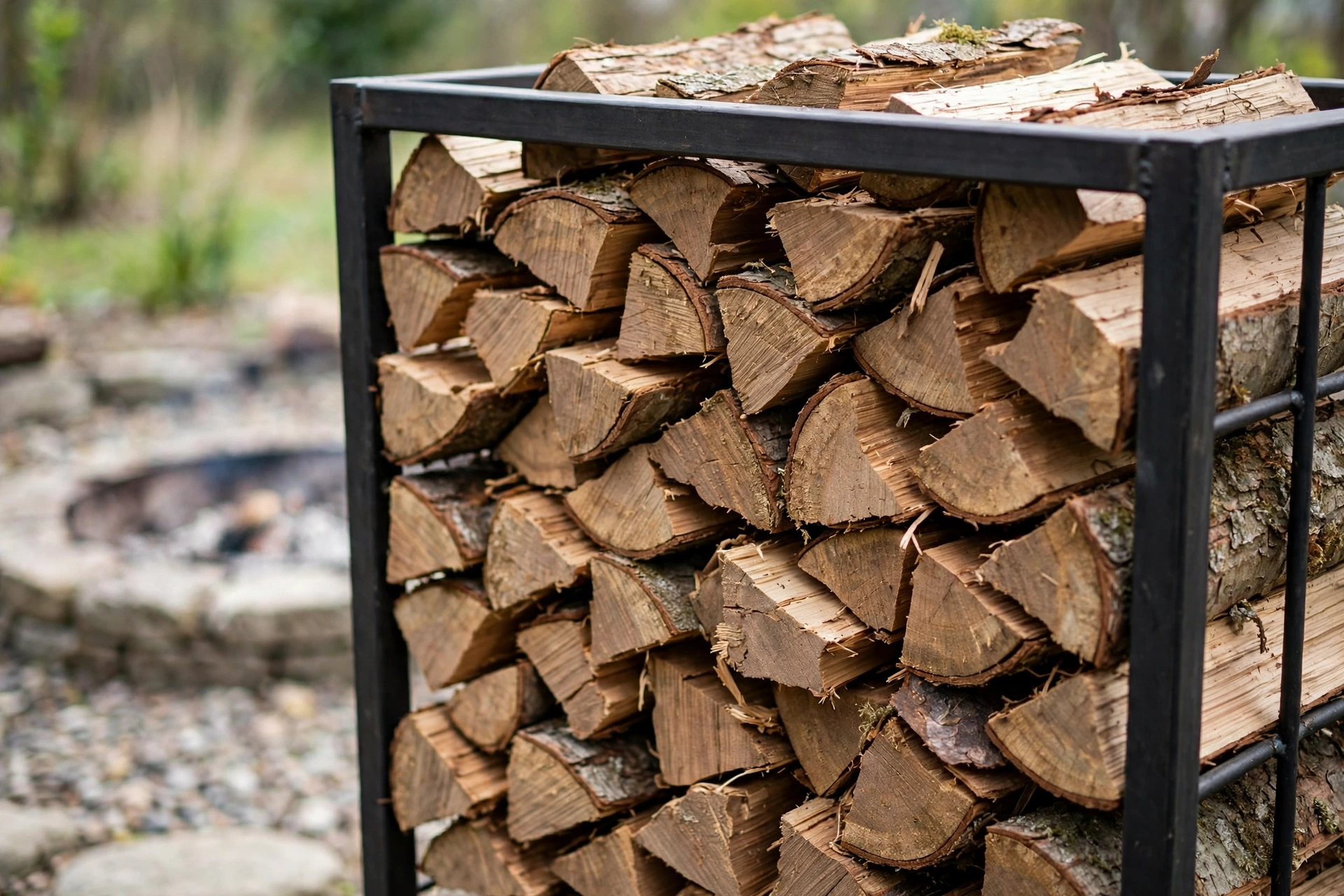
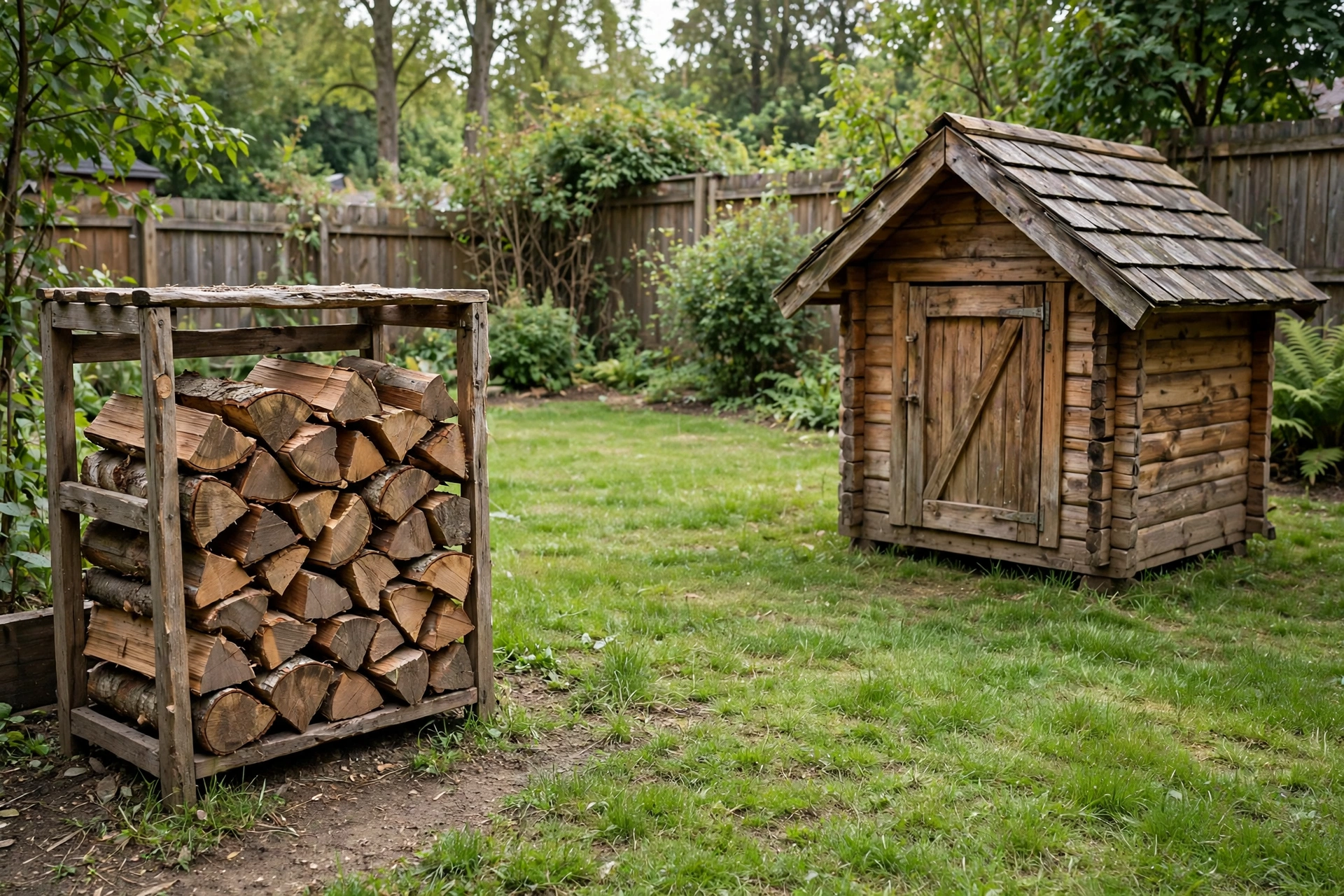
Once you know how much wood you are buying, it needs somewhere dry to sit while it seasons. See how to stack firewood so it dries, and the best firewood racks for backyard fire pits, including whether a firewood rack or a firewood shed fits your yard better.
If the wood is for evenings outside rather than heating the house, the choice between a wood fire and gas changes the math entirely. See propane vs. wood fire pits.
What this calculator won’t tell you
This tells you how much wood is in a quote and what each cord costs — not how often you will need to order, and it does not know your stove, your weather, or how wet the wood is when it arrives. The heat figures assume seasoned wood, and the only price in the answer is the one you typed in. Run the quote through the calculator before you pay for it: the cord is the only number every seller shares, and it is the one that tells you what the wood actually costs.
Sources
Missouri Department of Conservation, “Home Heating,” Conservationist, January 2007 — https://mdc.mo.gov/magazines/conservationist/2007-01/home-heating — fetched November 12, 2026. Governs the cord volume, the face-cord sizes, and the heat-value table.