This post contains affiliate links. We may receive a commission if you make a purchase after clicking on one of these links.
The cones are not the hard part — the two hundredth bend is. Your knees find it first, then your lower back, and a job that looked like twenty minutes on the porch turns into an afternoon you feel the next day.
You can clear pine cones standing upright with three methods that between them cover every yard size: a rolling gatherer for open lawn, a long grabber for beds and stragglers, and a sweeper when the drop is large. Each one keeps your hands off the ground and your back out of the work, and each is covered in depth in our pine cone tools roundup.
Method 1: roll a nut gatherer
Roll, do not press. A wire-cage gatherer picks up with a smooth, steady roll. Pressing down flattens the cage and makes it skip, while a light roll lets the wires spread and trap cones in the tool’s size window — 1.5 inches and larger on the large model.
Empty over the bucket. Carry the bucket to the work instead of carrying armloads to the bucket. Spread the wires, drop the cones, and roll on.
Work in lanes. Walk the lawn in straight lanes the way you mow, so you can see at a glance which ground is done. Missed cones hide surprisingly well in unmown-looking grass.
Garden Weasel Large Nut Gatherer
Rolling steel cage sized for items 1.5 inches and larger, emptied by spreading the wires.
Method 2: use a 32-inch grabber for beds and stragglers
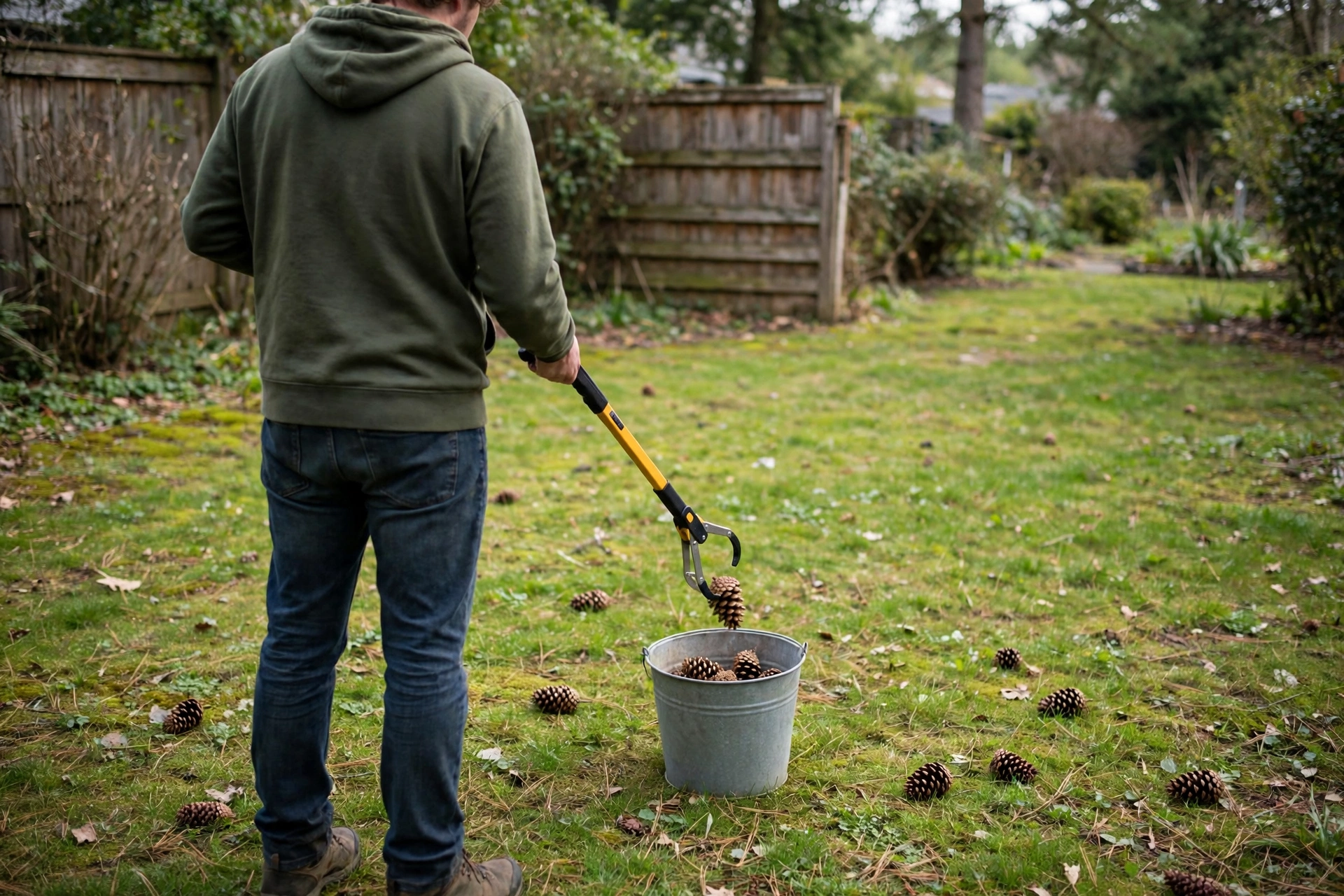
A grabber will never be the fastest way to clear an open lawn, and it is exactly right everywhere a roller cannot go: cones in mulch beds, cones against a fence, and the large cones a cage skips. A 32-inch reacher adds nearly three feet to your arm, so you pick from a standing position with a trigger grip instead of a squat.
Work with a bucket in your other hand and drop each cone straight in. The sound of cones thocking into an empty bucket is oddly satisfying, and it keeps count for you — when the sound changes to a softer landing, the bucket is full and it is time to dump it.
Unger 32-Inch Grabber Plus Reacher Tool
32-inch reach with an ergonomic grip and built-in magnet, sized for standing pickup in beds and along fences.
Method 3: sweep when the drop is large
When cones cover the lawn rather than dotting it, walking a roller lane by lane stops being efficient. A push sweeper covers a 30-inch path and a tow-behind covers 44 inches, collecting into a hopper as you go — the full comparison is in our gatherer vs sweeper guide. You still finish with a grabber for the handful the brush missed, but the bulk of the job happens upright and moving.
Habits that save your back on any method
Shorten the job, not your posture. Two twenty-minute sessions beat one long one, and cones will wait a day without hurting the lawn.
Pick up dry. Dry cones weigh less, roll better, and release from grass cleanly. After rain, give the lawn a sunny afternoon first.
Keep the load close. A full bucket of cones is heavier than it looks. Half-fill it, dump it, and come back — your shoulders will thank you on the last lane as much as the first.
Bottom line
Roll the open lawn, grab the beds and the big cones, and sweep when the drop is heavy. Standing upright is not a compromise on any of those methods — on a cone-covered lawn, it is the fastest way to finish and still feel like walking the yard tomorrow.