The pastry tore, the butter leaked, and the bites came out flat — the fix is temperature, not talent, and it starts in the fridge. Puff pastry is the most forgiving dough in the freezer aisle once you know the one thing it asks of you, and the most punishing if you ignore it. It asks to stay cold. Everything else — the thaw, the cut, the oven — follows from that.
What puff pastry actually is
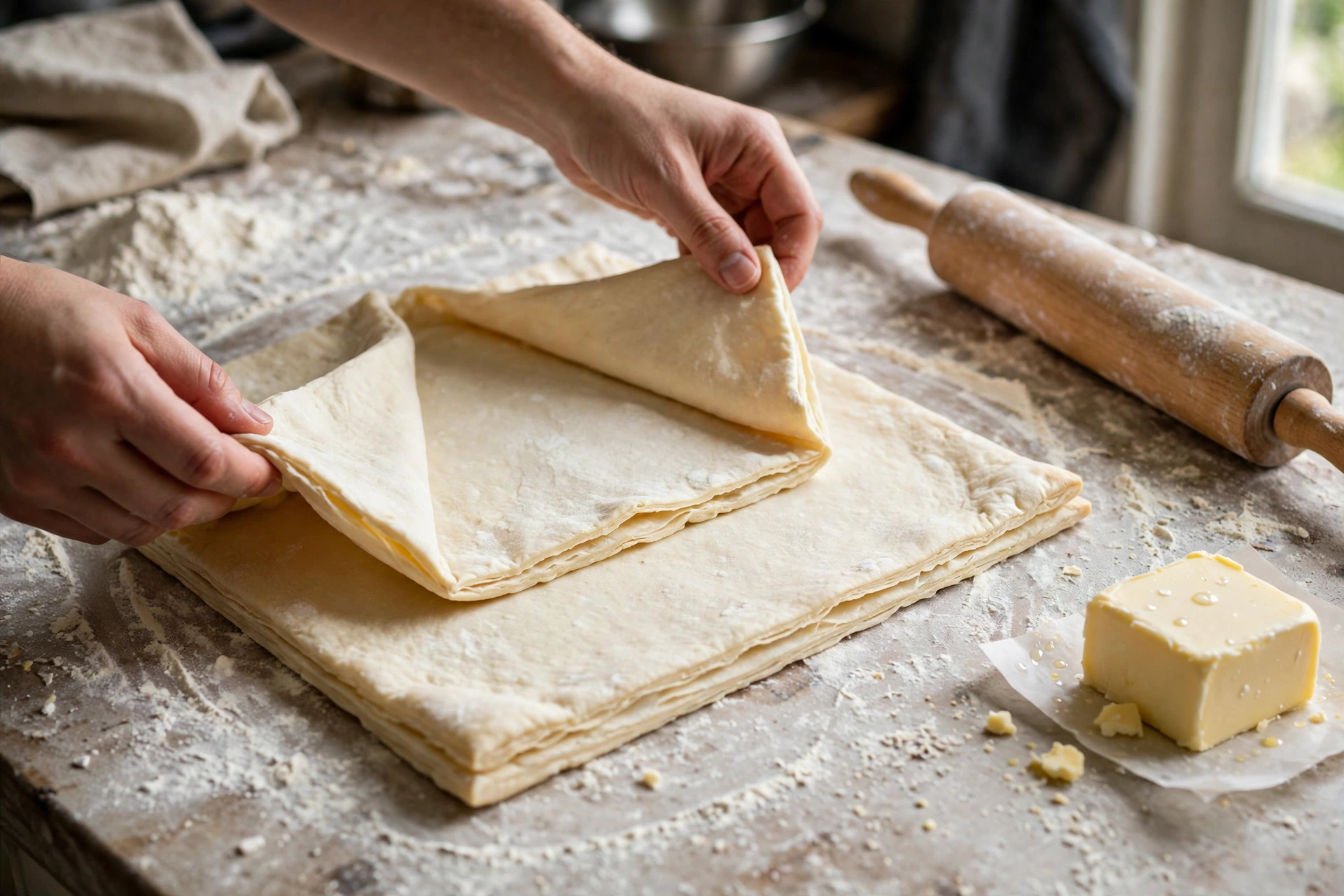
Puff pastry is a laminated dough: thin layers of dough and butter, folded and rolled over and over until there are hundreds of them. When it bakes, the water in the butter turns to steam, and that steam lifts the layers apart — that lift is the puff. If the butter melts into the dough before the oven, there are no layers left to lift, and you get a flat, greasy sheet instead of a pastry. So every rule below is really the same rule, said three ways: keep the butter solid until the oven does its work.
Rule one: thaw it cold
Take the package out of the freezer and thaw it in the fridge overnight. That is the whole method, and it is the one most people skip. Once thawed, use it within one to two days and keep it refrigerated until you are ready to bake. If you are baking at the last minute and do not have overnight, set it on the counter and watch it closely — you want the moment when it is pliable enough to unfold without cracking, but still cold to the touch. If it feels limp or the butter looks like it is starting to melt, slide it back into the fridge for 30 minutes and try again. A warm kitchen makes this worse, so work fast and keep the box in the fridge between steps if you are cutting a big batch.
Rule two: cut it clean, never stretch it
Roll the sheet out gently, just enough to smooth the fold lines, and cut it with a sharp knife or a pizza cutter. A dull blade drags the layers together and seals the edges shut, which is exactly what stops them from rising. Do not pull or stretch the dough to fit a pan — stretching makes the pastry shrink back in the oven and pulls the layers out of line. If a piece tears, patch it with a scrap and press the seam together; a small tear is not a ruined batch, and the oven is forgiving about a patch that is pressed flat.
If you do not want the pastry to puff dramatically — a flat base for a tart, say — prick the dough all over with a fork before baking, the way you would dock a pie crust. That lets the steam escape and leaves a thin, shatteringly crisp base instead of a pillow. For anything that should rise, leave the surface alone and let the steam do its work.
Rule three: bake it hot
Set the oven too low and the pastry falls flat, because the steam never forms fast enough to lift the layers. As a rule of thumb, 400°F is the ideal baking temperature for puff pastry — hot enough to make steam the moment the pastry goes in. Preheat fully before the pastry goes in, and do not open the door to check on it in the first ten minutes. If the top is browning too fast, lower the heat to 375°F rather than pulling the pan early, and let the pastry finish until it is deep golden and dry to the touch. A pale, soft pastry is an underbaked one, and it will collapse as it cools.
An egg wash — one beaten egg brushed over the exposed pastry — gives a deep golden color and a little shine, and it helps seal the edges. It is optional, and it never rescues a pastry that went in warm. The color comes from the wash; the lift comes from the cold.
Use it with
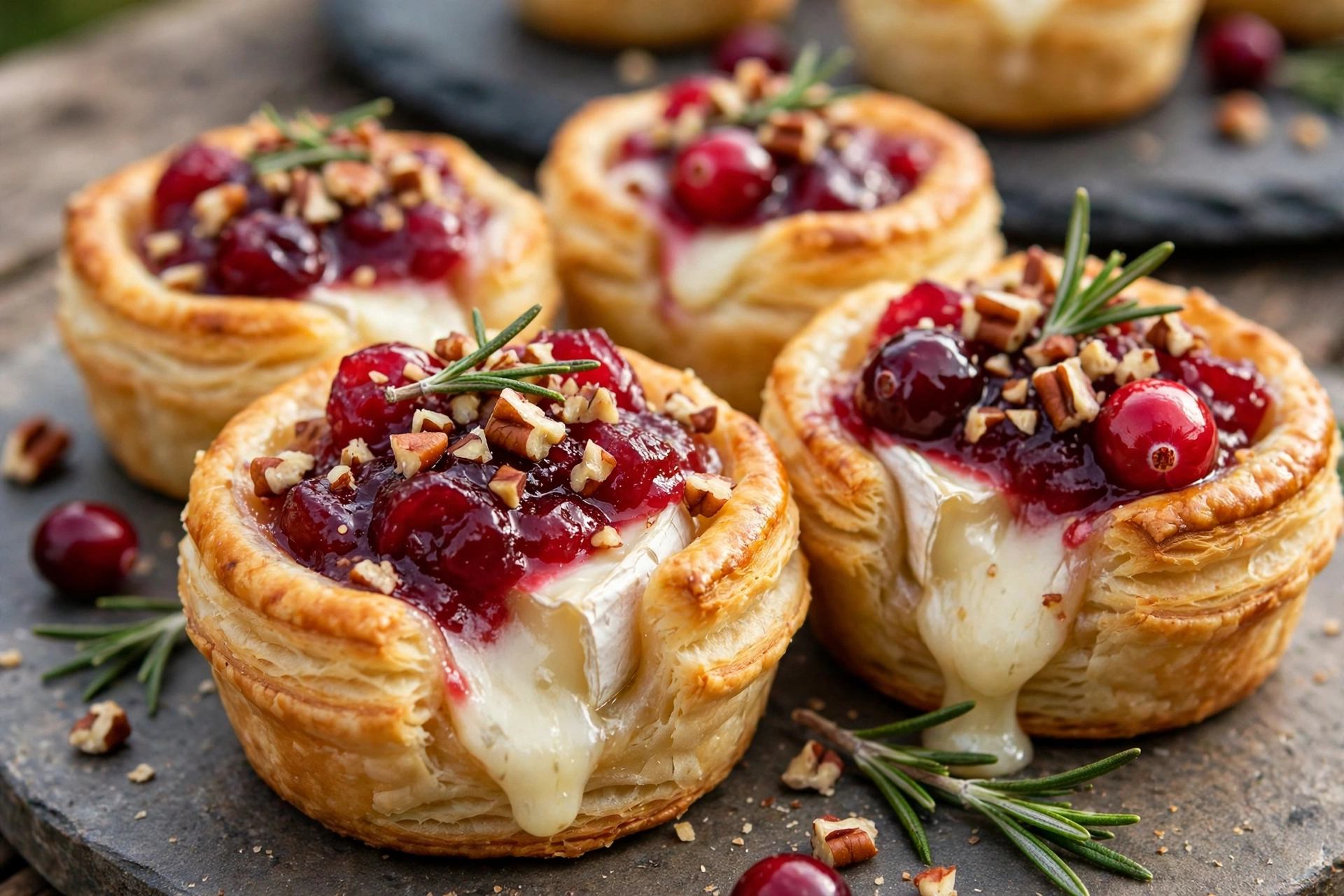
Put the rules to work on cranberry brie bites, where one cold sheet of pastry, eight ounces of brie, and a spoonful of cranberry sauce make 24 bites in half an hour — the mini muffin tin does the shaping, and the cold pastry does the puffing. The same three rules carry over to turkey pot pie with puff pastry, where the pastry is the lid and the lift is what makes it look like a bakery pie instead of a covered casserole.
Thaw it cold, cut it clean, bake it hot — and keep it in the fridge whenever you are not touching it. That is the whole technique, and it is the one that turns a freezer-aisle box into pastry that actually puffs.