Two tools that look like they do the same job — until the edge along your driveway tells you otherwise. A string trimmer and a lawn edger both work the border between lawn and concrete, but they do it in completely different ways, and buying the wrong one is how you end up owning both anyway.
The short version: an edger cuts a trench, a trimmer clips grass. If that sounds like a small difference, look at the edge along any driveway that has not been touched in a year. The grass has crept an inch or two over the concrete, the soil underneath is compacted, and clipping the top off does nothing. That edge needs a blade, not a string.
What Each Tool Actually Does
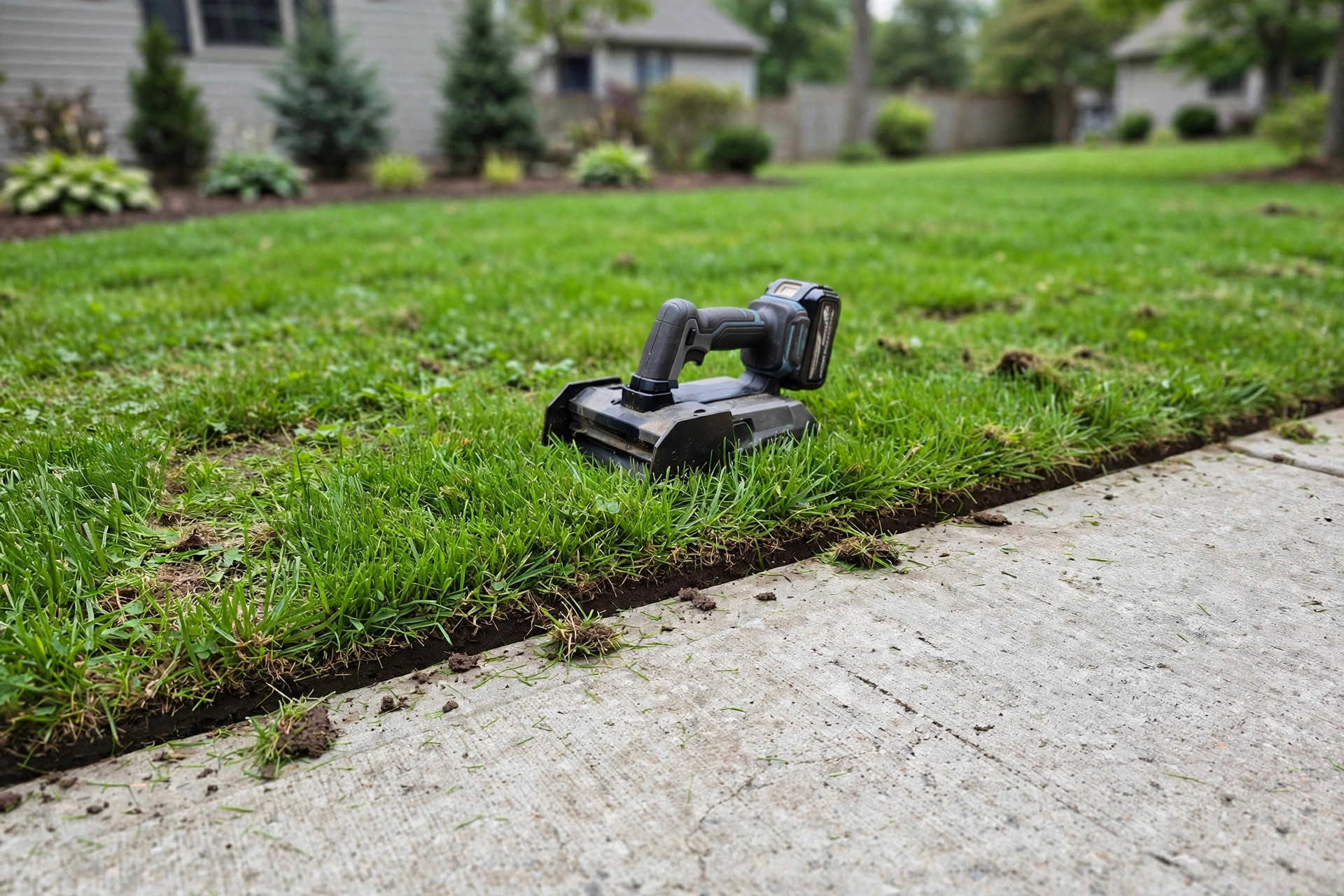
A lawn edger spins a steel blade vertically and cuts a clean slot between the lawn and the hard surface, 2 to 3 inches deep. It removes a strip of grass and soil, so the edge it leaves is a visible line — lawn on one side, concrete on the other, with a gap between them. That gap is the whole point: grass has to grow across it before the edge disappears again.
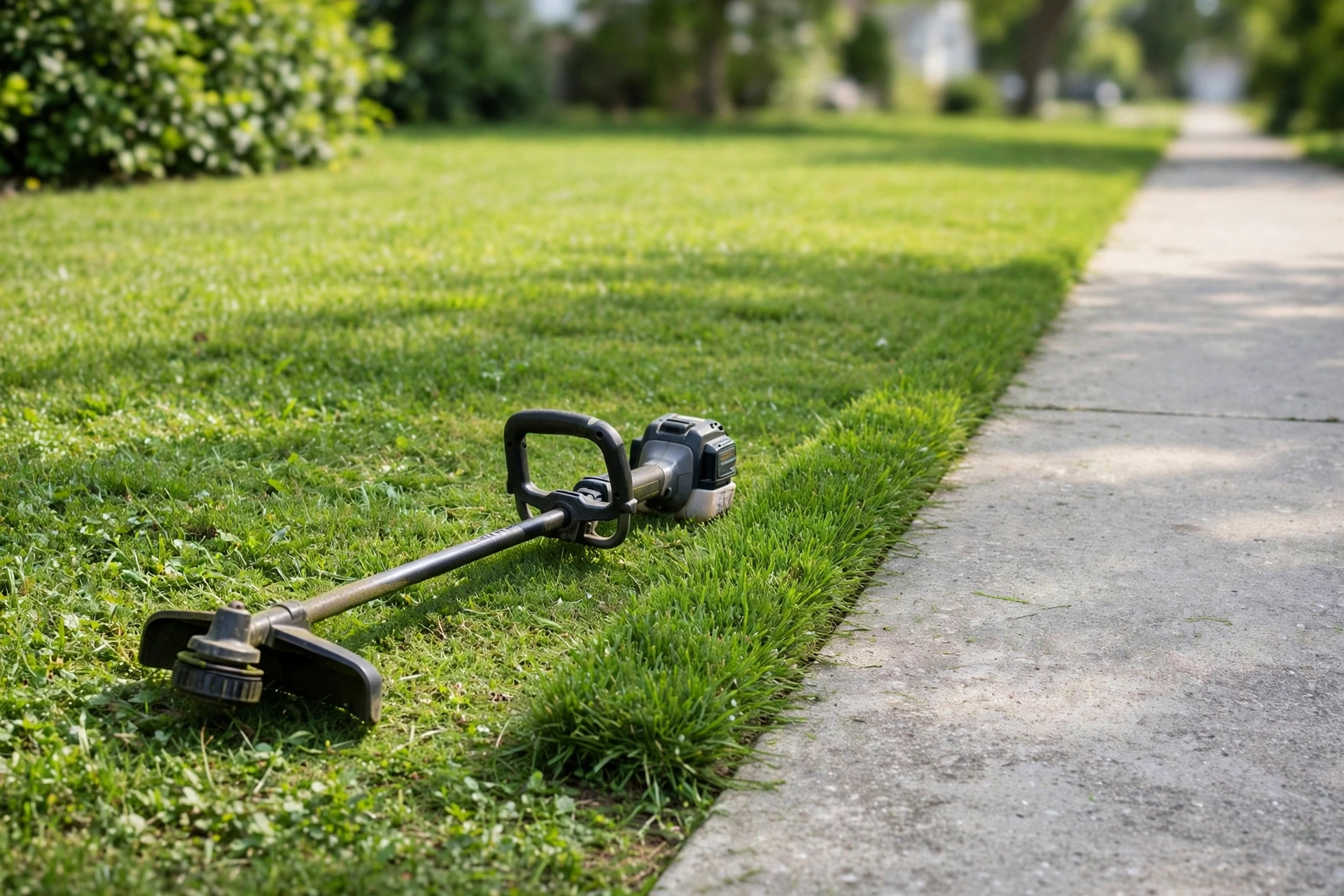
A string trimmer spins a nylon line at high speed — the BLACK+DECKER LST136 runs at 8,500 RPM — and cuts whatever the line touches. Held vertically along a border, it clips grass flush with the concrete. It is fast, light, and brilliant at maintenance. What it cannot do is cut through compacted soil or a grass mat to create an edge that was never there.
Put another way: the edger makes the edge, the trimmer keeps it. One is a construction tool, the other is a maintenance tool, and no amount of spinning line turns one into the other.
Which Yard Needs Which
Buy the edger first if: your edges have disappeared under grass, you just moved into a house whose borders have never been cut, or you want a crisp line that lasts a season. A blade edger is also the right call along curbs and sidewalks where the grass has grown thick and the soil is hard — a string head bounces off that and leaves a ragged line.
Buy the trimmer first if: your edges already exist and you mow weekly. A trimmer handles the weekly pass in minutes, reaches under fences and around trees, and does the edging as part of the same job. For a suburban yard with established edges, a trimmer with an edging mode is enough on its own.
Own both if: you care about the look and you have the storage. The edger comes out two or three times a season to re-cut the line; the trimmer comes out every week to keep it. That is how most well-kept yards actually work — the two tools split the job by frequency, not by territory.
The 2-in-1 Middle Ground
Combination tools — a string trimmer whose head rotates 90 degrees to run as an edger — are the honest compromise. They do the weekly job well and they can dress up an existing edge. What they cannot do is trench. The line is 0.065 inches of nylon; it clips grass, it does not cut soil.
If you can only buy one tool and your edges are in decent shape, a 2-in-1 trimmer-edger is the right single purchase. If your edges are overgrown, it is a purchase you will regret by the second weekend — you will end up buying the blade edger anyway, and the 2-in-1 becomes the trimmer you should have bought first.
Cost and Effort, Honestly
A good cordless blade edger kit runs about $180 with a battery in the box; a good cordless trimmer-edger runs $100 to $165 with a battery. The edger costs more and does less often — which is exactly why people talk themselves out of it. But the math flips when you count the hours: re-cutting a lost edge by hand with a half-moon edger takes an afternoon and a sore back, and a string trimmer will not do it at all.
Weight matters too. A blade edger is a two-handed push tool, usually around 12 pounds, with a guide wheel to follow the concrete. A trimmer is a one-handed tool you carry. If you have a bad back or a long border, the trimmer is the friendlier tool for the weekly pass — and the edger is still the tool you want twice a season.
The Mistake to Avoid
The mistake is buying a trimmer, discovering it cannot cut an edge, and then buying a cheap blade edger to fix the problem — two tools, neither of them the right one. Decide on the edge first: if the edge exists, buy the trimmer. If it does not, buy the blade edger first and add the trimmer later. The gas-vs-cordless edger comparison covers the power question, the manual-vs-powered guide covers the hand-tool option for small borders, and if you want to try the job by hand before spending anything, the hand-edging guide shows what that afternoon actually looks like.
For most yards with edges already in place, a string trimmer with an edging mode is the one tool to own. For yards whose edges have vanished, start with a blade edger — it is the only tool that makes an edge instead of maintaining one.