The mistake is buying the powered edger first. Most homeowners assume the hand tool is the slow, old-fashioned option, so they spend real money on a machine before learning that a half-moon edger cuts the neatest line on a small lawn, with no fuel, no cord, and nothing to winterize.
Hand edging is not a punishment for a small budget. It is the right tool for short runs, tight curves, and edges you want to look sharp rather than merely short. This guide covers the three hand tools, the cut depth that actually holds, and the order of operations that keeps the line straight.
The depth that holds an edge
Depth is the whole job, and it changes with what you are cutting. A maintenance pass along an existing edge runs about 2 inches deep. Cutting a brand-new edge through established turf takes more: This Old House’s edging guide puts a half-moon edger 4 to 5 inches down when opening a new edge, then rocks the tool to lift the sod out.
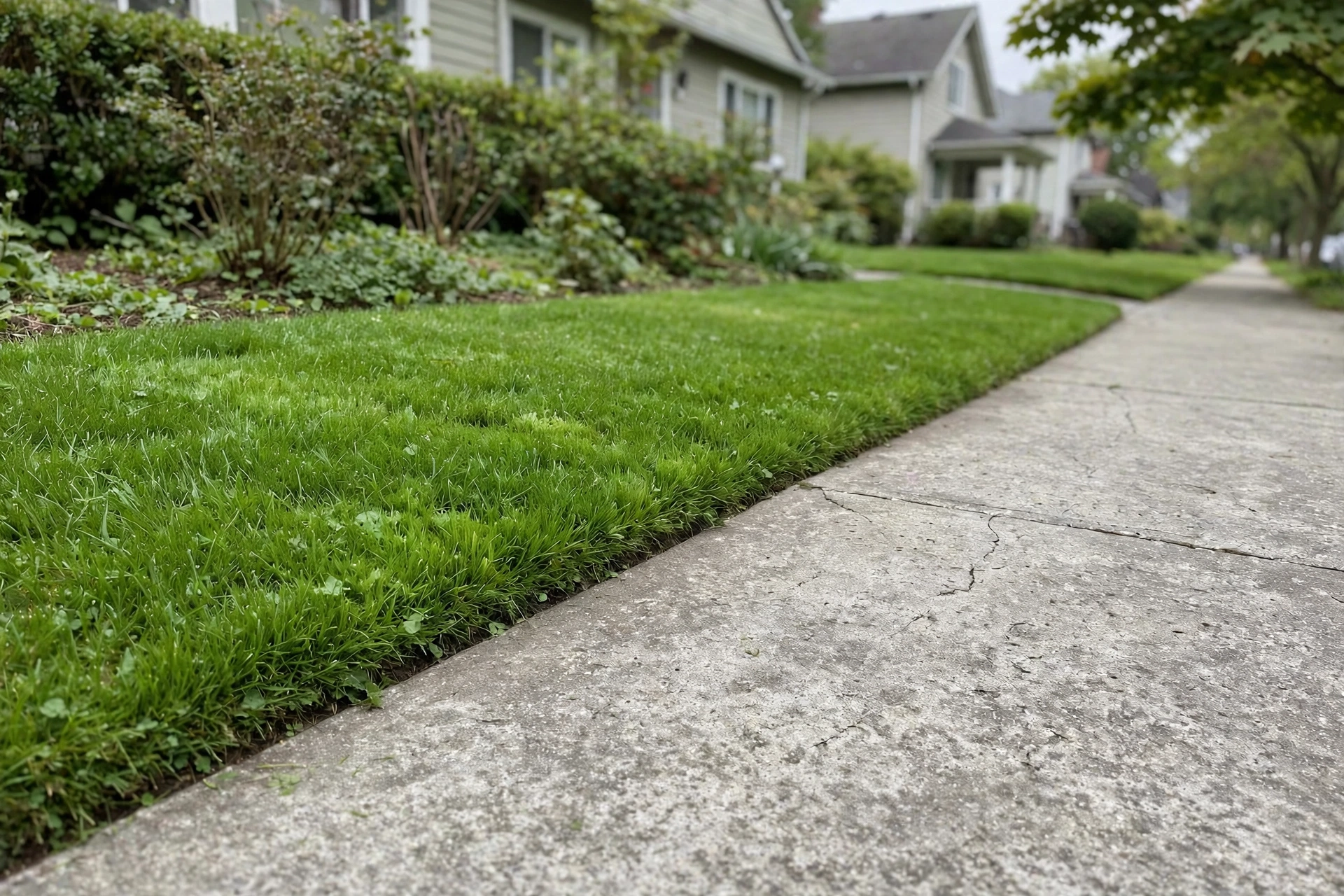
That gap between 2 inches and 5 inches is the point. A shallow cut looks tidy for a week, then the grass grows straight back across it, because the roots underneath were never severed. A cut at the right depth severs the runners and rhizomes that creep over the paving, and it stays invisible from the street because the trench is narrow.
Go deeper than the job needs and you get a visible ditch that collects water and dries out the grass at the edge. Two inches for upkeep, up to 5 inches when you are opening ground that has never been edged.
The three hand tools
Not every hand edger is the same tool, and picking the wrong one is how a fifteen-minute job turns into an hour. There are three worth knowing.
The half-moon edger
This is the workhorse. A long shaft, a half-moon steel blade at the bottom, and a footrest on each side of the blade. You place it on the line, step down, and rock it to cut a clean slice of turf.
It is the best choice for opening new edges and redefining bed borders that have gone soft over a season. The long handle keeps your back straight, and the wide blade holds a straight line.
The rotary edger
A rotary edger is a wheeled tool with a star-shaped steel wheel that rolls along the paving and slices as it goes. You push it forward like a small mower, and the wheel does the cutting.
It is faster than the half-moon on long, straight sidewalk runs, and it follows the pavement edge on its own. It struggles on curves and cannot open a new edge through thick turf, so treat it as a maintenance tool, not a first-cut tool.
Hand shears
Long-handled grass shears are for corners, tight spots around posts, and the last few inches where neither edger fits. They are a finishing tool, not a way to edge a whole sidewalk.
If you buy only one, buy the half-moon edger. It opens new edges, maintains old ones, and handles curves the rotary wheel cannot.
How to edge by hand, step by step
Work in this order and the line comes out straight. Skip the order and the edge shows it.
- Mow first. Cut the grass to its normal height before you edge. A freshly mown lawn shows you exactly where the edge belongs, and the edger cuts cleaner through short grass than through long, floppy blades.
- Mark a new line, or follow the old one. On an existing edge, the old cut is your guide — set the blade in it and go. On a new edge, lay a garden hose or a length of rope along the line you want, then cut along it. A straight line drawn by eye from a standing position is almost never straight.
- Work when the soil is moist, not wet. A day after rain, the soil gives under the blade and the sod lifts in clean pieces. Bone-dry soil fights the blade and crumbles; soaked soil smears and leaves a ragged cut. If your footprint leaves a wet print, wait a day.
- Place the blade, step down, rock. Set the half-moon blade exactly on the line, perpendicular to the ground. Step firmly on the footrest to drive it to depth — about 2 inches for maintenance, deeper for a new edge. Rock the handle side to side to widen the cut, then lift. Move the blade forward so it overlaps the last cut by an inch, and repeat.
- Lift the sod and clear the trench. On a new edge, pry the cut strip of turf up with the blade and set it aside. On a maintenance pass, flick the crumbs of grass and soil out of the cut with the blade edge. A trench full of loose clippings hides a sloppy line.
- Check the line from the street. Step back to the curb and look at the edge the way a neighbor would. Small wobbles you cannot see from above show up immediately from ten feet away. Touch them up now, while the tool is still in your hand.
Mistakes that ruin a hand-cut edge
Most bad hand edging comes from four errors, and all four are easy to avoid.
Sawing instead of stepping. Pushing the blade back and forth like a saw tears the turf instead of cutting it. Step down, rock once, lift. The blade is sharp for a reason.
Cutting too shallow. A half-inch scratch looks finished for about a week. Then the grass grows back across it, because the roots below were untouched. If the edge disappears within two weeks, depth was the problem, not the tool.
Edging before mowing. Long grass hides the line and drags under the blade, so the cut wanders. Mow first, every time. It takes ten minutes and saves the edge.
Working dry, hard soil. In a dry spell, a half-moon edger bounces off the ground instead of cutting it. Water the edge the evening before, or wait for rain. Forcing a dull blade through baked soil is also how blades get chipped, so keep the edge sharp — a dull blade tears, and a torn edge browns fast. See how to sharpen and replace a lawn edger blade when the cut starts to drag.
When the hand tool is the wrong tool
Hand edging has a limit, and it is measured in feet. A small lawn with short sidewalk and bed runs is the hand edger’s home turf. A corner lot with two hundred feet of curb, or an edge buried under an inch of two-year overgrowth, is a powered edger’s job.
The overgrown edge is the clearest case. When grass has grown an inch or more over the paving, a hand tool has to fight through a mat of runners before it reaches soil. A powered edger clears that in one pass. Once the line is re-established, the hand tool can maintain it — and maintenance is where hand edging wins.
Physical limits count too. Hand edging is real work: stepping, rocking, and lifting for every few inches of edge. If the yard is large or your knees object, the powered route is the sensible one. Compare the options in gas vs cordless lawn edgers and manual vs powered lawn edgers before you spend anything — the right machine follows how much edge you actually have.
One more timing note: the edge you cut in spring does not hold itself all year. How often to re-cut it follows your grass and your season, and the schedule is worth getting right — see when to edge your lawn.
What to do next
For a small lawn with short runs, the hand edger is the tool to buy first, not the one to settle for. Learn the cut at 2 inches for maintenance and deeper for new ground, mow before you edge, and keep the blade sharp. A hand edger asks almost nothing of you between jobs — wipe the blade, hang it up, and it is ready next time. If you do add a machine later, read how to winterize and store your lawn edger before the season ends. Start with the hand tool, and let the yard tell you when it has outgrown it.