A screen guard and a micro-mesh guard look like the same purchase at the store — a flat strip of metal that sits on the gutter — and the difference only shows up in the first storm that drops an inch of rain in an hour, when one of them keeps the needles out and the other one lets them in.
The two styles are built for different debris, and under pines that difference is the whole decision. Here is what each one is, what it actually stops, what it costs per foot, and the one case where the cheaper screen is the right buy.
What each one actually is
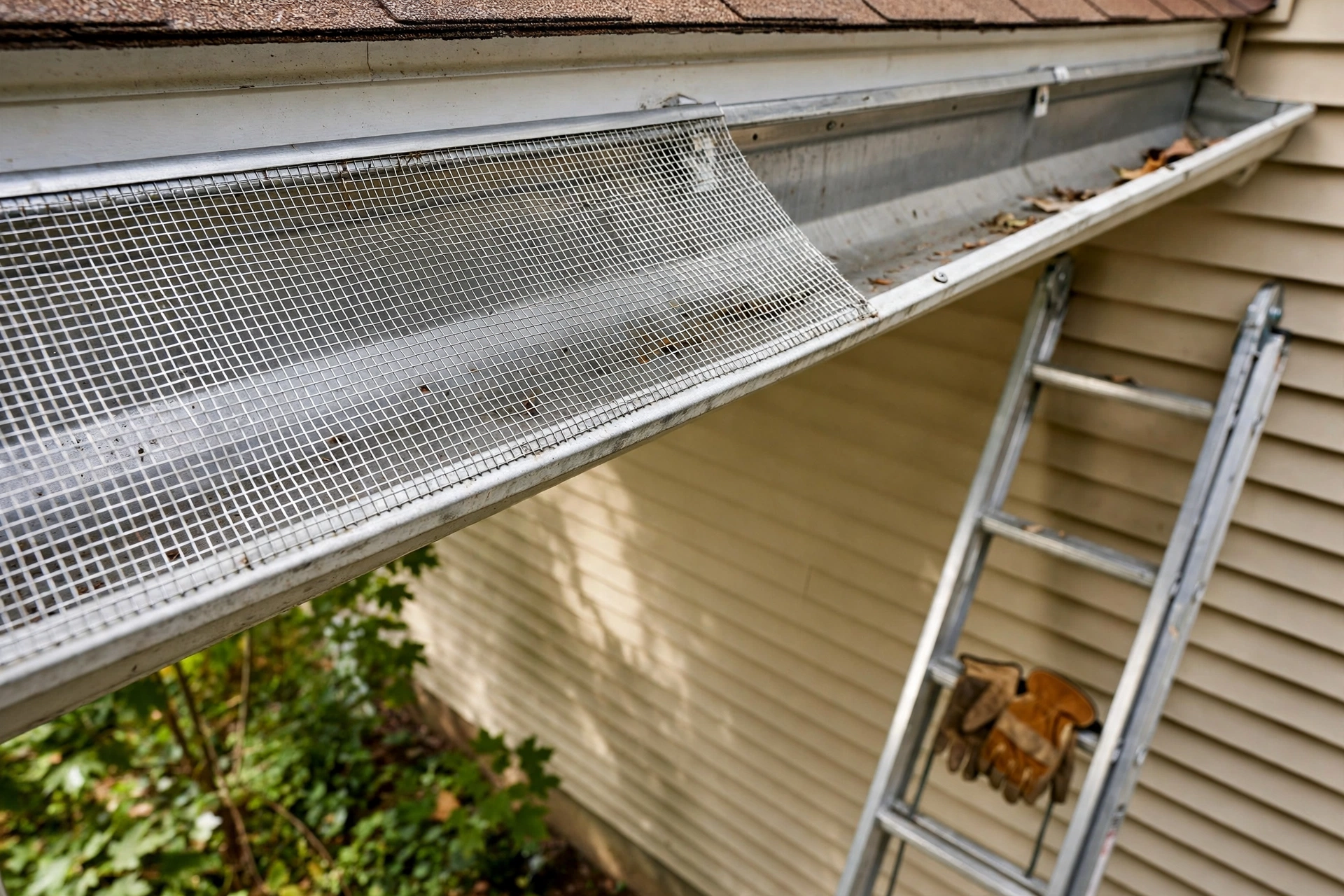
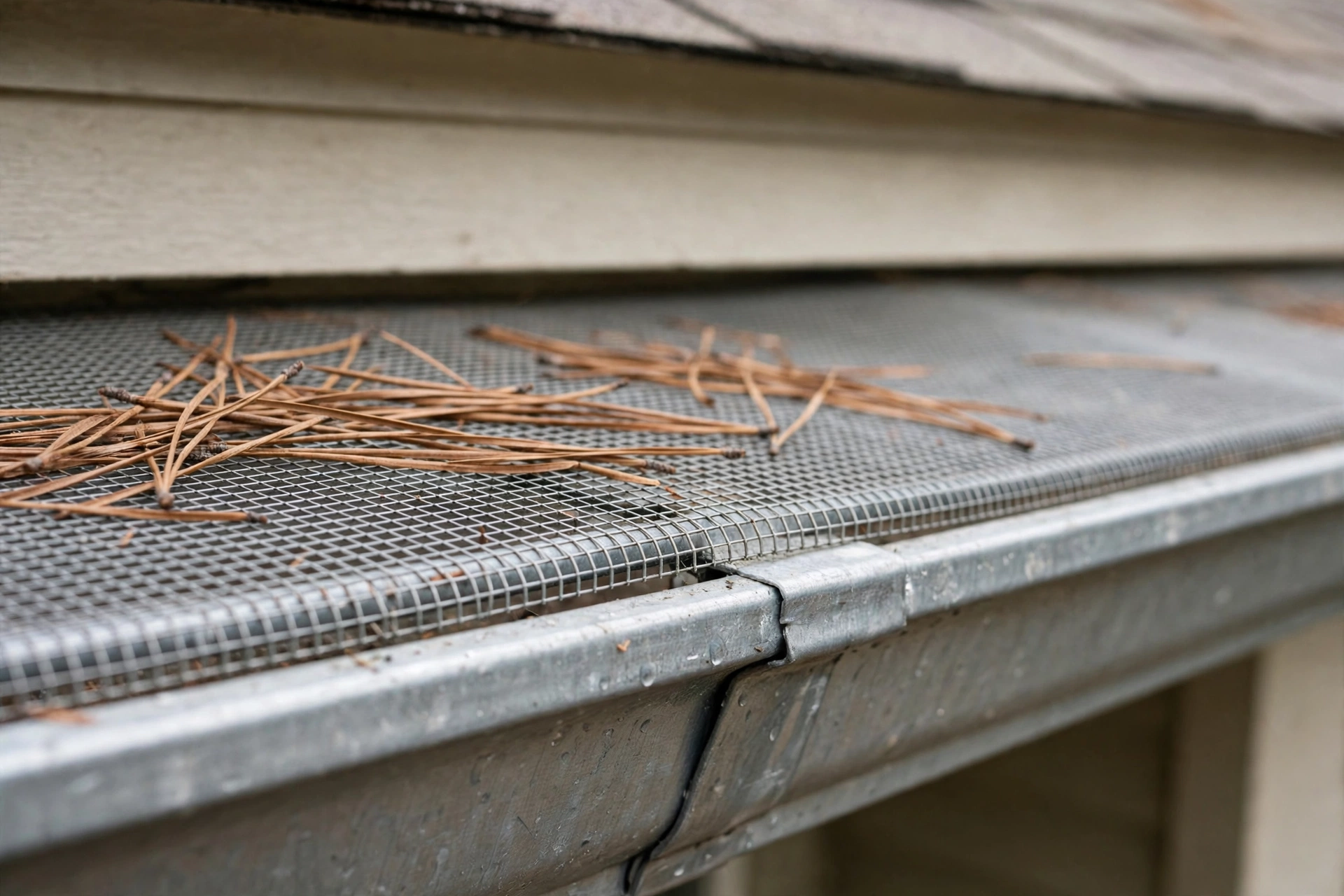
A micro-mesh guard is a sheet of fine stainless steel mesh — openings around 275 microns — bonded to an aluminum frame. It sits flat on the gutter and screws to the front lip. The mesh is fine enough that pine needles, seed pods, and shingle grit stay on the surface while water drops through.
A screen guard is a perforated aluminum panel with visible holes. The A-M guard is .018-gauge aluminum with 380 eighth-inch holes per linear foot. The holes are big enough to see, and big enough to pass a lot of water fast — which is both the selling point and the problem.
Micro-mesh vs screen, side by side
| Factor | Micro-mesh | Perforated screen |
|---|---|---|
| Opening size | Around 275 microns | Eighth-inch holes, 380 per foot |
| Stops pine needles? | Yes — needles stay on the surface | Mostly — thin needles work through |
| Stops shingle grit? | Yes | No — grit washes through |
| Water flow in heavy rain | Good, until debris mats on top | Excellent — big holes pass water fast |
| Cost per foot | About twice the screen | About half the micro-mesh |
| Upkeep | Brush the mat off twice a year | Flush the trough when grit builds up |
Where micro-mesh wins
Under pines, and anywhere the roof sheds fine debris. A pine needle is thin enough to thread an eighth-inch hole, and once a few needles get through, they catch on the next ones and build a clog from the inside — the one place you cannot see it. Micro-mesh stops that at the surface, where a brush can reach it. The same goes for shingle grit and seed pods, which a screen passes straight into the trough.
The Raptor stainless micro-mesh kit is the usual pick here: 48 feet per box in 4-foot panels, 900 holes per square inch, screws and a hex driver included, and a 25-year warranty. It is the best overall guard in our roundup of the best gutter guards for pine needles, and the reason is the opening size — nothing else in the category keeps fine debris on the surface as reliably.
Where a screen still makes sense
A screen is the right buy when the debris is big and the budget is tight. Broad leaves from maples and oaks dry on top of a screen and blow off, which is exactly the job a screen is built for, and it does that job at roughly half the per-foot cost of micro-mesh. For a long roofline — a ranch with 200 feet of gutter — that difference adds up to real money.
A screen also moves water faster in a downpour, because the holes are bigger. On a steep roof in a storm-prone area, that matters: micro-mesh with a debris mat on top can sheet water over the edge, while a screen keeps taking it in. If your trees are mostly broadleaf and your roof sheds leaves rather than needles, a screen is not a compromise. It is the right tool.
The honest trade-off
Every guard trades one clog for another. Micro-mesh keeps the trough clean and puts the debris where you can see it — on top, where it needs brushing off twice a year. A screen keeps the surface clear and puts the fine debris where you cannot see it — inside the trough, where it builds up slowly and needs a flush. Neither one ends gutter maintenance, and anyone who tells you otherwise is selling you something.
The mistake is buying the screen for a pine problem because it costs less. The savings disappear the first time you pay for a clogged downspout, or spend a Saturday lifting panels to dig needles out of a trough.
Bottom line
Under pines, buy micro-mesh. The openings are measured in microns, the needles stay on top, and the trough stays clean. Where the trees are broadleaf and the roofline is long, a perforated screen is the honest, cheaper answer — and the A-M guard is the one to buy. Either way, the guard is only half the job: cleaning pine needles off gutter guards twice a year is what keeps either style working, and installing gutter guards yourself takes an afternoon and a drill.