Disclosure: This page contains affiliate links. We may receive a commission if you make a purchase after clicking on one of these links.
Iowa State Extension gives Iowa gardeners one set of planting dates — for Central Iowa — and a single instruction for everyone else: shift about a week earlier in the south, a week later in the north. That is the whole system, and it works because Iowa’s season is long enough to forgive a week either way: Des Moines gets 184 frost-free days on the NOAA 1991–2020 normals, 34 more than Mason City in the north, and even the north’s 150 days beats Duluth’s 140 and St. Cloud’s 144. But the chart’s real trick is not the dates. It is repetition. Plant a little every 7 to 10 days, tuck fast crops between slow ones, and the same bed feeds you twice — once in early summer, and again from a July replanting that Minnesota’s shorter season does not allow.
This calendar covers 43 vegetables from Iowa State Extension’s Planting and Harvesting Times for Garden Vegetables (HORT 3124, July 2024), transcribed from the publication’s chart and checked against its three supporting articles (see the transcription note in Varieties and sources). The dates are Central Iowa dates; the shift rule and its limits are explained below. Frost anchors are NOAA 1991–2020 normals at the 50% probability for 32°F, re-fetched October 27, 2026. Days to maturity come from two different places that are kept separate on this page: Iowa State Extension’s own ranges, and Botanical Interests variety pages checked October 27, 2026. Iowa State Extension’s summary of the 2023 USDA map places nearly all of Iowa in Zone 5 (5a in the northern half, 5b in the southern half), with small Zone 4b areas in the northeast and small Zone 6a areas in the southeast and southwest — check your exact zone on the USDA Plant Hardiness Zone Map. Zones measure winter cold, which matters for perennials; your frost dates decide when annual vegetables go in.
Plant in waves, not on one day
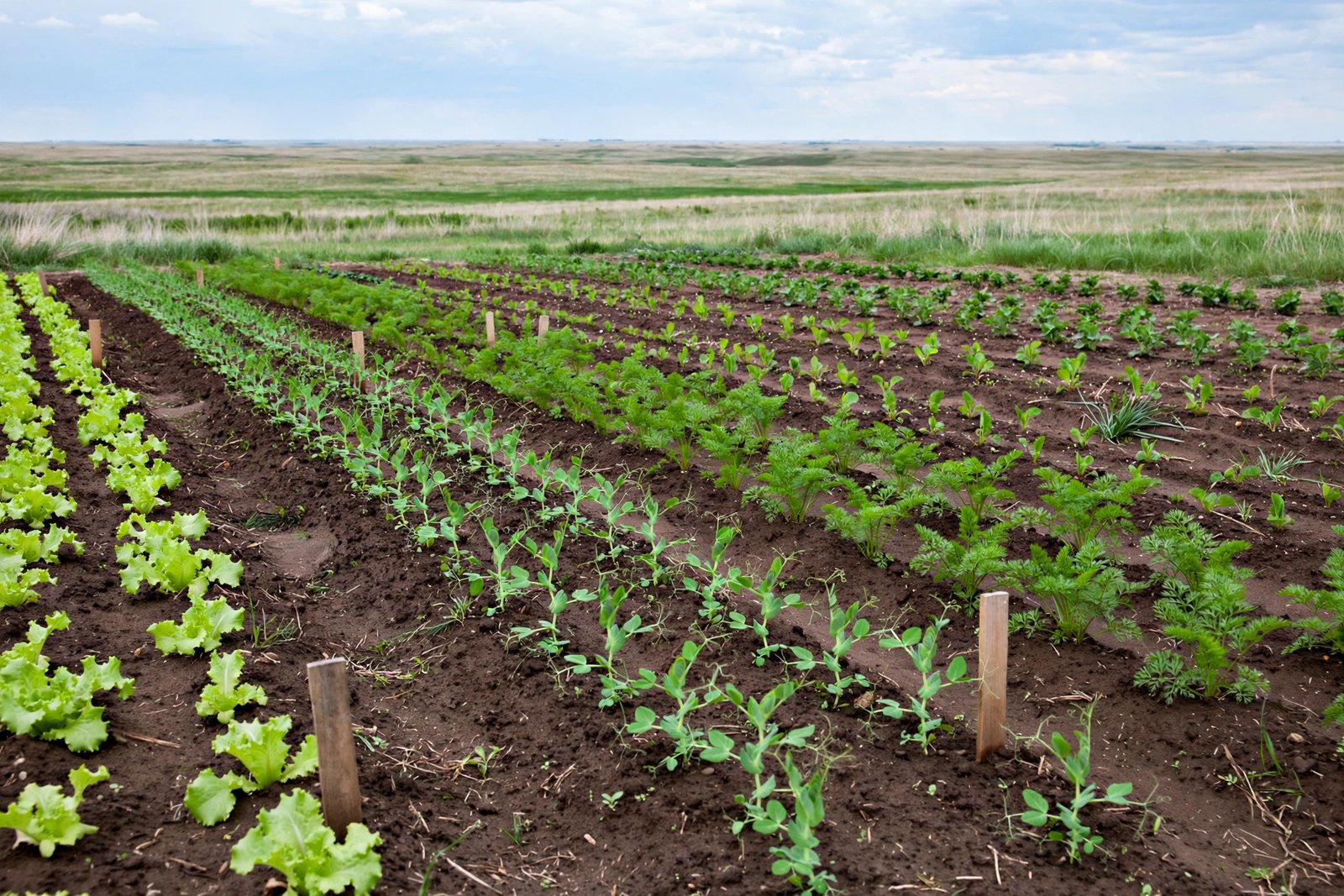
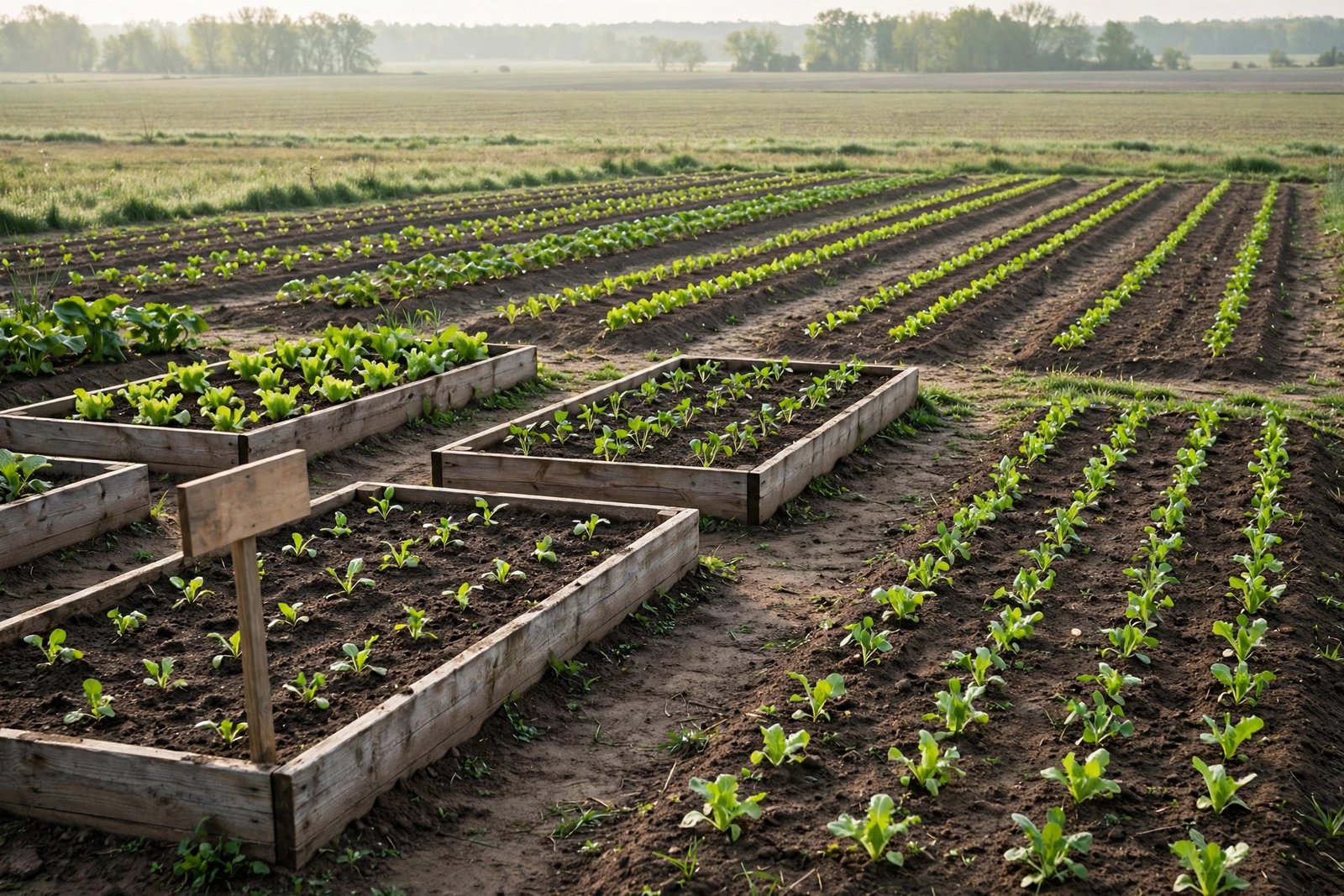
The chart is built around staggered planting, and Iowa State’s Planning Your Vegetable Garden article says why: succession planting every 7 to 10 days spreads the harvest out instead of delivering it all at once. The crops it names for succession are radish, sweet corn, carrots, beets, lettuce, and beans — and the chart itself prints stagger notes for beets (every 4 weeks), carrots (every 3–4 weeks), sweet corn (every 2 weeks), baby-leaf lettuce (every 3–4 weeks), and radish (every 7–10 days). Sow a short row, wait, sow another. The first sowing is ready while the last is still sizing up.
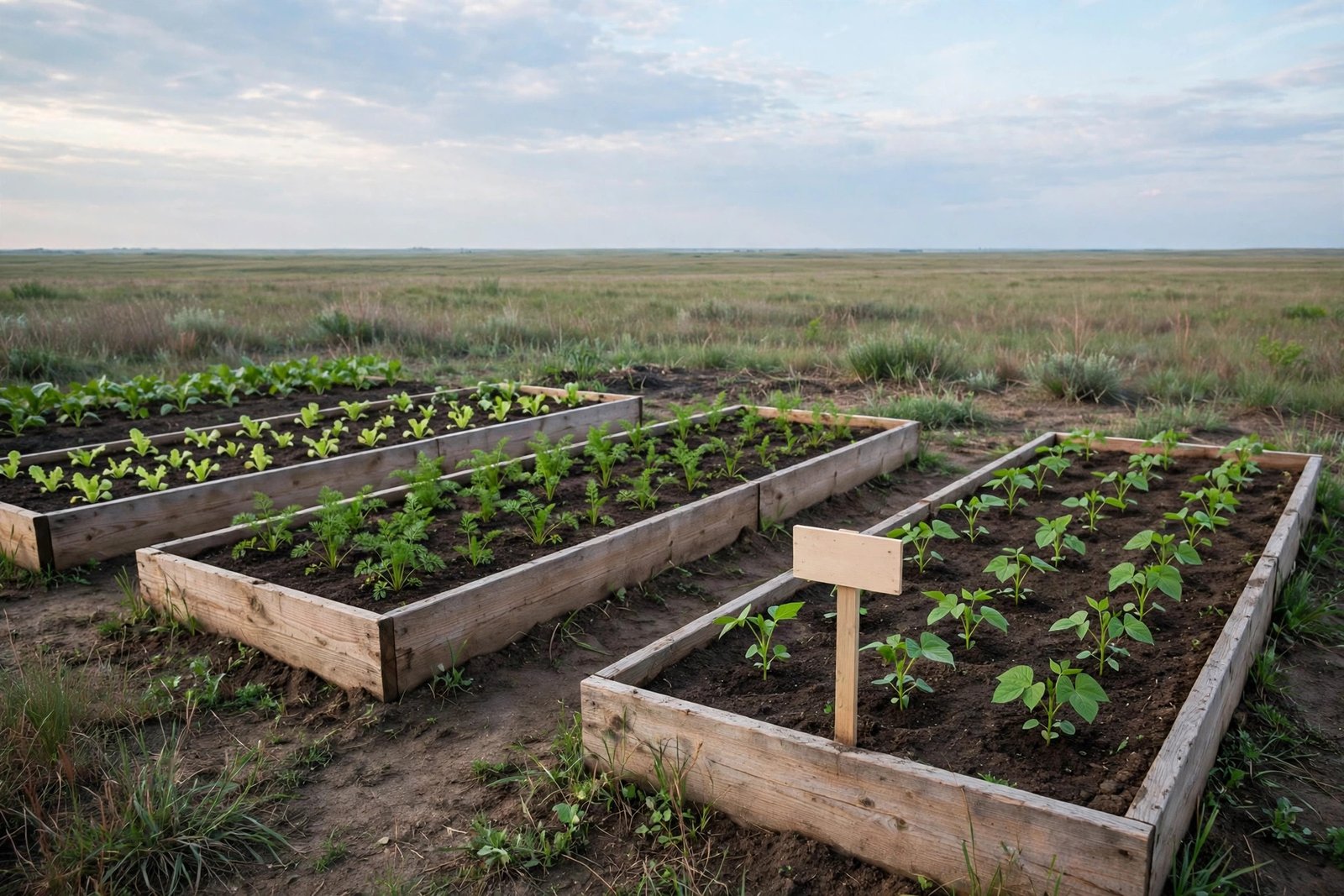
Intercropping is the same idea sideways. The Planning article’s worked examples put radishes between tomatoes, leaf lettuce between broccoli, spinach between peppers, and lettuce beneath trellised pole beans, where the taller crop shades the cool-season crop in summer heat. In late summer the direction reverses: sow fall spinach between tomato rows, plant lettuce between maturing sweet corn, seed radishes around cabbage a few weeks before harvest. The fast crop is out before the slow crop needs the space. Our guide to growing salad greens from seed covers the cut-and-come-again approach that makes succession greens productive, and the best vegetable seeds for beginners is the short list if you are planting your first Iowa bed.
Fast crops out, long crops stay
Iowa State’s Early Spring Planting of Vegetables article splits the spring garden in two: crops that mature fast and leave the bed early, and crops that occupy it all season. The split decides everything else — fast crops can be interplanted with warm-season crops and replanted in fall; long crops cannot. The ranges below are Extension’s own days-to-maturity figures, shown separately from the seed-company variety figures in the last section. Where the two disagree, that is normal: Extension gives the range for the crop, a variety page gives the number for one variety.
| Crop | Days to maturity (Extension) | Notes |
|---|---|---|
| Beet | 50–70 | Stagger every 4 weeks; greens can be harvested earlier. |
| Lettuce, leaf | 45–60 | Stagger every 3–4 weeks. |
| Green onion / scallions | 30–50 * | From plants or sets. |
| Kale | 55–75 | Greens keep coming into fall. |
| Kohlrabi | 55–70 | Direct sow or transplants. |
| Peas | 55–85 | Spring and fall plantings. |
| Radish | 25–40 | Stagger every 7–10 days. |
| Winter radish / daikon | 45–70 | Spring and fall plantings. |
| Spinach | 45–60 | Spring and fall plantings; bolts in heat. |
| Turnip | 45–70 | Greens can be harvested earlier. |
| Crop | Days to maturity (Extension) | Notes |
|---|---|---|
| Brussels sprouts | 80–90 | Harvest after the fall frost. |
| Broccoli | 60–65 | Start indoors 6–8 weeks before planting. |
| Cabbage | 60–90 | Start indoors 6–8 weeks before planting. |
| Carrot | 60–80 | Stagger every 3–4 weeks. |
| Cauliflower | 55–80 | Start indoors 6–8 weeks before planting. |
| Collards | 60–80 | Harvest greens into the fall. |
| Leek | 90–100 * | From plants. |
| Parsnip | 110–130 | Can overwinter in the ground; mulch and dig before new growth starts in spring. |
| Rutabaga | 80–100 | Fall harvest crop. |
| Swiss chard | 60–65 | Direct sow or transplants. |
* Days to maturity is for vegetables started from plants or sets (Extension’s footnote). Broccoli, lettuce, and cabbage should be started indoors 6 to 8 weeks before planting, and longer-maturing crops generally can be transplanted outside as late as mid-May.
The 50-degree gate
Iowa’s garden sources give one soil-temperature rule, not a ladder: cool-season vegetables can be planted once soil temperatures reach 50°F, because germination is poor below it. In central Iowa that typically means early to mid-April — about a week earlier in the south, a week later in the north. A warm week in March does not mean the soil has caught up, and the chart’s earliest April dates assume the gate has been met. Check with a soil thermometer rather than the calendar alone. The Iowa Environmental Mesonet publishes a daily soil-temperature map, but its 4-inch 50°F rule of thumb was published for corn and soybeans, not garden vegetables — useful as a current-conditions check, not as garden guidance. The one warmer-soil figure on this page, for okra, comes from the seed seller, not Extension: Botanical Interests lists 70°F soil (ideally 80–90°F) for okra germination. Treat it as a variety-page statement, not an Extension rule.
One table, three shifts
The table below is the HORT 3124 chart in readable form: one row per crop, Central Iowa dates, with the shift rule applied as a column. Southern Iowa shifts sowing, planting, and harvesting about one week earlier; northern Iowa about one week later. Read the shift column with the station table below it: the ±1-week rule is Extension’s rule, and it understates the east–west variation — Cedar Rapids and Sioux City run two to three weeks shorter on the fall end than Des Moines at similar latitudes, so eastern and western gardeners should anchor on their own station, not just shift the Central Iowa dates. The chart’s own warning applies to every row: these dates are approximate, and lateness of spring, onset of hot weather, fall frost date, and wetness or dryness all move them. “Sow indoors” means sow seeds to start transplants indoors; “Transplant outdoors” means set seedlings (or, where stated, tuber pieces, sets, or slips) outdoors. Harden off every transplant before it goes out — our guide to hardening off seedlings walks through the steps, and the beginner’s guide to starting seeds indoors covers the setup. If seedlings stretch and go leggy, why seedlings go leggy — and how to fix them has the causes.
| Crop | Sow indoors | Transplant outdoors | Direct sow | Harvest | Succession | Shift |
|---|---|---|---|---|---|---|
| Green beans | — | — | Mid-May–early July | Late July–early Oct | Sow every 7–10 days; replant to mid-July | ±1 wk |
| Lima beans | — | — | Mid-May–early July | Mid-Aug–early Oct | One planting; needs a long warm season | ±1 wk |
| Beets | — | — | Mid-Apr–mid-July | Mid-June–early Nov | Stagger every 4 weeks | ±1 wk |
| Broccoli | Mar–early Apr; again mid-May–early July | Early Apr–mid-May; again mid-June–early Aug | — | Early June–early July; again mid-Sep–late Oct | Spring + fall plantings | ±1 wk |
| Brussels sprouts | Early May–early June | Early June–early July | — | Mid-Sep–mid-Nov | One planting; harvest after frost | ±1 wk |
| Cabbage | Mar–early Apr; again late May–early July | Early Apr–early May; again mid-June–late July | — | July–early Aug; again early Sep–early Nov | Spring + fall plantings | ±1 wk |
| Cantaloupe | Late Apr–mid-May | Mid-May–early July | Mid-May–mid-June | Early Aug–early Oct | One planting | ±1 wk |
| Carrots | — | — | Mid-Apr–mid-July | Mid-June–early Nov | Stagger every 3–4 weeks | ±1 wk |
| Cauliflower | Mar–early Apr; again June | Early Apr–early May; again July | — | Early June–early July; again early Sep–mid-Oct | Spring + fall plantings | ±1 wk |
| Collards | Early Mar–early Apr; again mid-June–mid-July | Early Apr–mid-May; again mid-July–late Aug | Apr–mid-May; again mid-July–early Aug | June–late Sep; again early Sep–early Nov | Spring + fall plantings | ±1 wk |
| Corn, pop | — | — | Late May–mid-June | Late Sep–mid-Oct | One planting | ±1 wk |
| Corn, sweet | — | — | Mid-Apr–early July | Mid-July–mid-Oct | Stagger every 2 weeks; replant to early–mid-July | ±1 wk |
| Cucumber | Late Apr–mid-May | Mid-May–mid-July | Mid-May–early July | Aug–mid-Oct | Replant to mid-July | ±1 wk |
| Edamame | — | — | June | Mid-Aug–mid-Sep | One planting | ±1 wk |
| Eggplant | Apr–mid-May | Mid-May–late June | — | Aug–mid-Oct | One planting | ±1 wk |
| Garlic | — | Plant cloves: Oct–early Nov | — | Mid-July–early Sep, following year | Fall-planted; harvest the next summer | ±1 wk |
| Kale | Mar–early Apr; again mid-June–mid-July | Early Apr–mid-May; again mid-July–late Aug | Apr–mid-May; again mid-July–early Aug | June–late Sep; again early Sep–early Nov | Spring + fall plantings | ±1 wk |
| Kohlrabi | Mar–early Apr; again late May–early July | Early Apr–mid-May; again mid-June–early Aug | Apr; again mid-July–mid-Aug | June–early July; again early Sep–late Oct | Spring + fall plantings | ±1 wk |
| Leek | Mar–early Apr | Early Apr–mid-May | — | Late Aug–early Nov | One planting | ±1 wk |
| Lettuce, baby leaf and salad mixes | — | — | Mid-Mar–mid-Sep | Late Apr–late Oct | Stagger every 3–4 weeks | ±1 wk |
| Lettuce, head | Early Mar–early Apr; again mid-July–mid-Aug | Early Apr–mid-May; again mid-Aug–mid-Sep | — | Mid-May–mid-June; again late Sep–late Oct | Spring + fall plantings | ±1 wk |
| Melon, honeydew | Late Apr–mid-May | Mid-May–early July | Mid-May–mid-June | Early Aug–early Oct | One planting | ±1 wk |
| Muskmelon | Late Apr–mid-May | Mid-May–early July | Mid-May–mid-June | Early Aug–early Oct | One planting | ±1 wk |
| Okra | Mid-Apr–mid-May | Mid-May–mid-June | Mid-May–mid-June | Mid-July–early Oct | Replant to mid-July (Fall article) | ±1 wk |
| Onions, dry | Mar–early Apr (from plants) | Early Apr–mid-May (plants and sets) | Late Mar–late Apr | Aug–early Sep | One planting | ±1 wk |
| Onions, green and scallions | Mar–early Apr; again July–mid-Aug | Early Apr–mid-May; again mid-Aug–mid-Sep | Late Mar–late Apr; again Aug–early Sep | Mid-May–late June; again late Sep–early Nov | Spring + fall plantings | ±1 wk |
| Parsnips | — | — | Late Apr–late May | Early Oct–late Nov | One planting; can overwinter in the ground | ±1 wk |
| Peas | — | — | Early Apr–mid-May; again mid-Aug–early Sep | Early June–early July; again Oct | Spring + fall plantings | ±1 wk |
| Peppers | Apr–mid-May | Mid-May–late June | — | Aug–early Oct | One planting | ±1 wk |
| Potatoes | — | Tuber pieces: early Apr–mid-May | — | July (new potatoes)–mid-Sep | One planting | ±1 wk |
| Pumpkin | Late Apr–mid-May | Mid-May–late June | Mid-May–early June | Early Aug–early Oct | One planting | ±1 wk |
| Radish | — | — | Early Apr–mid-May; again mid-Aug–mid-Sep | May–late June; again early Sep–early Nov | Stagger every 7–10 days | ±1 wk |
| Radish, winter / daikon | — | — | Mid-Apr–early May; again Aug–early Sep | June; again late Sep–early Nov | Spring + fall plantings | ±1 wk |
| Rutabaga | — | — | Mid-June–mid-July | Oct–early Nov | One planting | ±1 wk |
| Spinach | — | — | Apr; again mid-Aug–early Sep | Mid-May–late June; again Oct–early Nov | Spring + fall plantings | ±1 wk |
| Squash, summer | Late Apr–mid-May | Mid-May–late June | Mid-May–early July | Early July–early Oct | Replant to mid-July | ±1 wk |
| Squash, winter | Late Apr–mid-May | Mid-May–late June | Mid-May–early June | Mid-Aug–early Oct | One planting | ±1 wk |
| Sweet potatoes | — | Slips: late May–mid-June | — | Early Sep–early Oct | One planting; slips, not seed | ±1 wk |
| Swiss chard | Early Mar–early Apr; again mid-June–mid-July | Early Apr–mid-May; again mid-July–mid-Aug | Apr–mid-May; again mid-July–early Aug | June–late Sep; again early Sep–early Nov | Spring + fall plantings | ±1 wk |
| Tomatoes | Apr–mid-May | Mid-May–late June | — | Early Aug–mid-Oct | One planting | ±1 wk |
| Tomatoes, cherry | Apr–mid-May | Mid-May–late June | — | Mid-July–mid-Oct | One planting; earliest tomato harvest | ±1 wk |
| Turnips | — | — | Mid-Apr–early May; again early Aug–early Sep | June; again mid-Sep–early Nov | Spring + fall plantings | ±1 wk |
| Watermelon | Late Apr–mid-May | Mid-May–early July | Mid-May–mid-June | Early Aug–mid-Oct | One planting | ±1 wk |
One row deserves a warning. The chart’s sweet-corn direct-sowing range starts in mid-April, but the Planning article puts warm-season planting after the last frost, typically in early May in central Iowa. Do not take the chart’s earliest sweet-corn date as permission to sow into cold soil — use the frost date and the 50-degree gate for the first sowing, and use the chart’s range for the succession sowings that follow. Basil does not appear in the chart at all and has no row here; the second-tier chart crops (bok choy, celeriac, salsify, shallots, radicchio/escarole/endive, tomatillos, and Chinese/Napa cabbage) are held out of this table — see the sources note.
The July replant: Iowa’s second warm season
Iowa gets a second warm season because its first frost is late enough to finish one. Iowa State’s Fall Planting of Vegetables article frames the first frost as arriving between September 30 and October 15 statewide — a general framing, earlier than the NOAA 50% first-freeze dates for the station anchors below — and then gives latest-planting dates by frost tolerance. The method is arithmetic: count back the days to maturity from the average first frost, add time for slower growth in cool weather and for the harvest itself, and plant no later than the date you land on. Tender crops need the extra time most, because a light frost ends them.
| Crop | Frost tolerance | Latest / planting time (Central Iowa) | Days to maturity (Extension) | Note |
|---|---|---|---|---|
| Green beans | Tender | Mid-July | 50–70 | Latest planting; damaged by light frost. |
| Corn | Tender | Early to mid-July | 70–105 | Latest planting. |
| Cucumber | Tender | Mid-July | 55–65 | Latest planting. |
| Okra | Tender | Mid-July | 50–65 | Latest planting; runs past the chart’s June sowing end — the Fall article governs replanting. |
| Summer squash | Tender | Mid-July | 50–60 | Latest planting. |
| Beets | Semi-hardy | Mid-July | 50–70 | Tolerates the upper 20s°F. |
| Carrots | Semi-hardy | Mid-July | 60–80 | Tolerates the upper 20s°F. |
| Lettuce, leaf | Semi-hardy | Early Aug–early Sep | 45–60 | Tolerates the upper 20s°F; cold frame extends it into winter. |
| Green onion / scallions | Semi-hardy | Mid-Aug–mid-Sep | 30–50 | From plants or sets. |
| Kohlrabi | Semi-hardy | Mid-July–mid-Aug | 55–70 | Tolerates the upper 20s°F. |
| Radish | Semi-hardy | Mid-Aug–mid-Sep | 25–40 | Tolerates the upper 20s°F. |
| Winter radish / daikon | Semi-hardy | August | 45–70 | Tolerates the upper 20s°F. |
| Spinach | Semi-hardy | Mid-Aug–early Sep | 45–60 | Tolerates the upper 20s°F. |
| Swiss chard | Semi-hardy | Mid-July–early Aug | 60–65 | Tolerates the upper 20s°F. |
| Brussels sprouts | Hardy | Mid to late June (from transplants) | 80–90 | Tolerates the mid to low 20s°F; start indoors 6–8 weeks before planting. |
| Broccoli | Hardy | Late June–early Aug (from transplants) | 60–65 | Start indoors 6–8 weeks before planting. |
| Cabbage | Hardy | Mid-June–early July (from transplants) | 60–90 | Start indoors 6–8 weeks before planting. |
| Cauliflower | Hardy | Early to mid-July (from transplants) | 55–80 | Start indoors 6–8 weeks before planting. |
| Kale | Hardy | Mid-July–early Aug | 55–75 | Tolerates the mid to low 20s°F. |
| Rutabagas | Hardy | Mid-June–mid-July | 80–100 | Tolerates the mid to low 20s°F. |
| Turnips | Hardy | August | 45–70 | Tolerates the mid to low 20s°F. |
Two honest tensions sit inside this section. First, the Fall article’s latest-planting dates for okra (mid-July) and corn (early to mid-July) run past the ends of the chart’s sowing windows — the chart’s direct sowing ends in mid-June for okra and July 1 for sweet corn. Both are Extension publications; the Fall article is the one written for replanting decisions, so its dates govern here, and the table above says so where it matters. Second, July sowing has a heat problem the spring garden does not: high soil temperatures can keep seed from germinating. Extension’s fix is a light mulch to cool the soil, roughing up the soil surface so seedlings can break through, and watering periodically — and blankets, sheets, milk jugs, or floating row covers to stretch the harvest past the first light frosts. Peas are the one fall-planting gap: the chart gives peas a fall sowing (mid-August to early September) that none of the Fall article’s tables include, so the chart stands alone for fall peas.
Your anchor station
These are the 50%-probability dates for 32°F from NOAA’s 1991–2020 U.S. Climate Normals: in a typical year, there is about a 50% chance of a 32°F freeze after the spring date, and about a 50% chance of one before the fall date. Plan on the cautious side of them — a 50% date is a coin flip, not a guarantee. Your own yard can run warmer or colder depending on elevation, slope, and nearby water.
| Anchor | Station | Last spring freeze (50%) | First fall freeze (50%) | Frost-free days |
|---|---|---|---|---|
| North | Mason City Municipal AP (USW00014940, 1,225 ft) | May 3 | October 1 | 150 |
| Central | Des Moines International AP (USW00014933, 957 ft) | April 18 | October 20 | 184 |
| Southeast | Burlington Municipal AP (USW00014931, 692 ft) | April 15 | October 20 | 187 |
| East (alternate) | Cedar Rapids Municipal AP (USW00014990, 868 ft) | April 27 | October 11 | 165 |
| West (alternate) | Sioux City Gateway AP (USW00014943, 1,095 ft) | April 29 | October 5 | 159 |
The east and west alternates are the reason this table has five rows instead of three. Cedar Rapids (165 days) and Sioux City (159 days) are both markedly shorter than Des Moines (184 days) at similar latitudes, and a north/south shift alone would misstate their fall ends by two to three weeks. If you garden near either city, use its anchor. Iowa State also publishes county-level frost and freeze likelihoods for all 99 counties, but those use Midwestern Regional Climate Center data from 1950–2021 — a different period and a different statistic from the NOAA normals above — so use them as a cross-check, never averaged together with these anchors.
Varieties and sources
The days-to-maturity figures in the master table’s crop notes come from the variety pages in Botanical Interests’ vegetable seed collection, checked October 27, 2026: ‘Glacier’ tomato (55 days from transplanting), ‘Sun Gold’ cherry tomato (57 days from transplanting), ‘California Wonder’ pepper (75 days from transplanting), ‘Kentucky Wonder’ pole bean (63 days), ‘Sugar Snap’ pea (70 days), ‘Danvers 126’ carrot (65 days), ‘Black Beauty’ summer squash (55 days), ‘Waltham’ butternut squash (100 days), ‘Spacemaster’ cucumber (62 days), ‘Clemson Spineless 80’ okra (55 days), ‘Minnesota Midget’ muskmelon (60–70 days), and ‘Crimson Sweet’ watermelon (85 days), with the rest of the figures from the same variety pages. Seed-starting gear lives in the seed-starting collection if you need trays or heat mats.
How the chart was transcribed: HORT 3124’s dates live in graphical chart bars, not text, so each bar was read visually off the official PDF at 200 DPI, re-read at 300 DPI zoom, and cross-checked against the PDF’s own vector bar positions — all three reads agreed, and the table above rounds the readings to half-month granularity because the chart itself says its dates are approximate. Every bar position, conflict with the supporting articles, and omission is recorded in the build’s source trace. Three crops on this page carry no Botanical variety link because no Botanical product page with a published maturity figure was found for them: sweet potatoes (sold as slips; no Botanical product found), lima beans, and edamame. Leek, rutabaga, and pop corn have live Botanical pages but no maturity figure verified on the fetched pages, so no figure is claimed for them here — their rows rest on the chart and Extension ranges alone. For the crop-by-crop detail behind these windows, start with when to start tomato seeds indoors in Zone 4 and starting peppers indoors: timing and heat, then how to start tomato seeds indoors. Variety picks live in 7 tomato varieties that ripen in short growing seasons, the best sweet and hot pepper varieties, the best lettuce and greens for cut-and-come-again harvests, and the best carrot, beet, and radish varieties.
Sources
Frost dates: NOAA National Centers for Environmental Information, U.S. Climate Normals 1991–2020, Summary of Annual Normals freeze-data tables (50%-probability, 32°F), re-fetched October 27, 2026 — Mason City USW00014940, Des Moines USW00014933, Burlington USW00014931, Cedar Rapids USW00014990, and Sioux City USW00014943. Planting windows: Iowa State University Extension and Outreach, Planting and Harvesting Times for Garden Vegetables (HORT 3124, July 2024), chart transcribed as described above; Early Spring Planting of Vegetables (updated June 13, 2025); Fall Planting of Vegetables (updated June 11, 2025); Planning Your Vegetable Garden (updated October 2, 2026). Zone summary: Iowa State University Extension, HORT 3123, summarizing the USDA 2023 Plant Hardiness Zone Map. Days to maturity: Botanical Interests variety pages, checked October 27, 2026.