Ninety-four days. That is the difference between the frost-free season at Blairsville, in the Blue Ridge Mountains, and the one at Savannah, on the coast — 176 days against 270, inside one state, on the same NOAA 1991–2020 normals.
A Georgia planting calendar that prints one date per crop is quietly choosing which Georgia it means. The University of Georgia’s Extension service handles the problem in the open: its planting chart gives statewide spring and fall windows, and its garden calendar is written for middle Georgia — a belt from Columbus through Macon to Augusta — with the shifts for everyone else stated in plain numbers.
So the dates on this page are UGA’s chart dates, and the shift rules travel with them. Plant spring crops two to three weeks earlier in extreme south Georgia, one to three weeks later as you climb into the mountain counties, and pull fall dates about two weeks earlier in the north and two weeks later in the south. This calendar is one of the state calendars collected in planting calendars by state.
Three shifts, four frost anchors
Georgia spans USDA Zones 7a to 9a on the 2023 map. Zones describe the coldest night of an average winter, which is perennial information; vegetables run on frost dates, and Georgia’s frost dates move by weeks, not days, as you travel.
| Region | Where | Last spring frost | First fall frost | Frost-free days |
|---|---|---|---|---|
| Mountains | Blairsville and the Blue Ridge counties | April 26 | October 19 | 176 |
| Piedmont | Atlanta, Athens | March 24 | November 8 | 231 |
| Middle Georgia | Columbus through Macon to Augusta — the belt UGA’s calendar is written for | March 21 | November 10 | 235 |
| South and coast | Valdosta, Savannah | March 2 | November 30 | 270 |
Blairsville’s anchor is the Blairsville Experiment Station at 1,950 feet, and it is the honest warning for mountain gardeners: a last frost of April 26 means a tomato transplanted on Atlanta’s schedule meets cold it cannot take. Atlanta’s dates come from the Fulton County Airport station, Macon’s from its NOAA station, and Savannah’s from Savannah International Airport. All four are the 50% probability dates for 32°F — in half of years, frost comes later in spring than the date printed. What that coin flip means for a tender transplant is covered in frost dates explained.
The planting table, from UGA’s chart
The windows in this table are the University of Georgia Extension Vegetable Planting Chart (Circular 963), spring and fall. Crops the chart moves as plants — cabbage, broccoli, cauliflower, tomatoes, peppers, eggplant — are marked as transplants, and their indoor start is counted back from the transplant date: UGA’s calendar starts pepper and eggplant seed boxes eight weeks out and tomato seed six weeks out. The counting itself is laid out in how planting calendars work.
| Crop | Spring | Fall | How it goes in |
|---|---|---|---|
| English peas | Jan 15 – Feb 15 | — | Seed |
| Irish potatoes | Jan 15 – Mar 1 | — | Seed pieces |
| Cabbage | Jan 15 – Mar 15 | Aug 1 – Oct 1 | Transplants |
| Carrots | Jan 15 – Mar 20 | Aug 20 – Sep 15 | Seed |
| Lettuce | Jan 15 – Mar 1 | Sep 1 – Oct 1 | Seed |
| Radish | Jan 15 – Apr 1 | Sep 1 – Oct 15 | Seed |
| Spinach | Jan 15 – Mar 15 | Sep 1 – Oct 15 | Seed |
| Turnips | Jan 15 – Apr 1 | Aug 10 – Sep 15 | Seed |
| Mustard | Jan 15 – Apr 1 | Aug 15 – Sep 15 | Seed |
| Beets | Feb 15 – Apr 1 | Aug 1 – Sep 20 | Seed |
| Broccoli | Feb 15 – Mar 15 | Aug 1 – Sep 1 | Transplants |
| Collards | Feb 1 – Mar 15 | Aug 1 – Sep 1 | Seed |
| Kale | Feb 1 – Mar 10 | Aug 1 – Sep 1 | Seed |
| Cauliflower | Mar 1 – Apr 1 | Jul 15 – Aug 15 | Transplants |
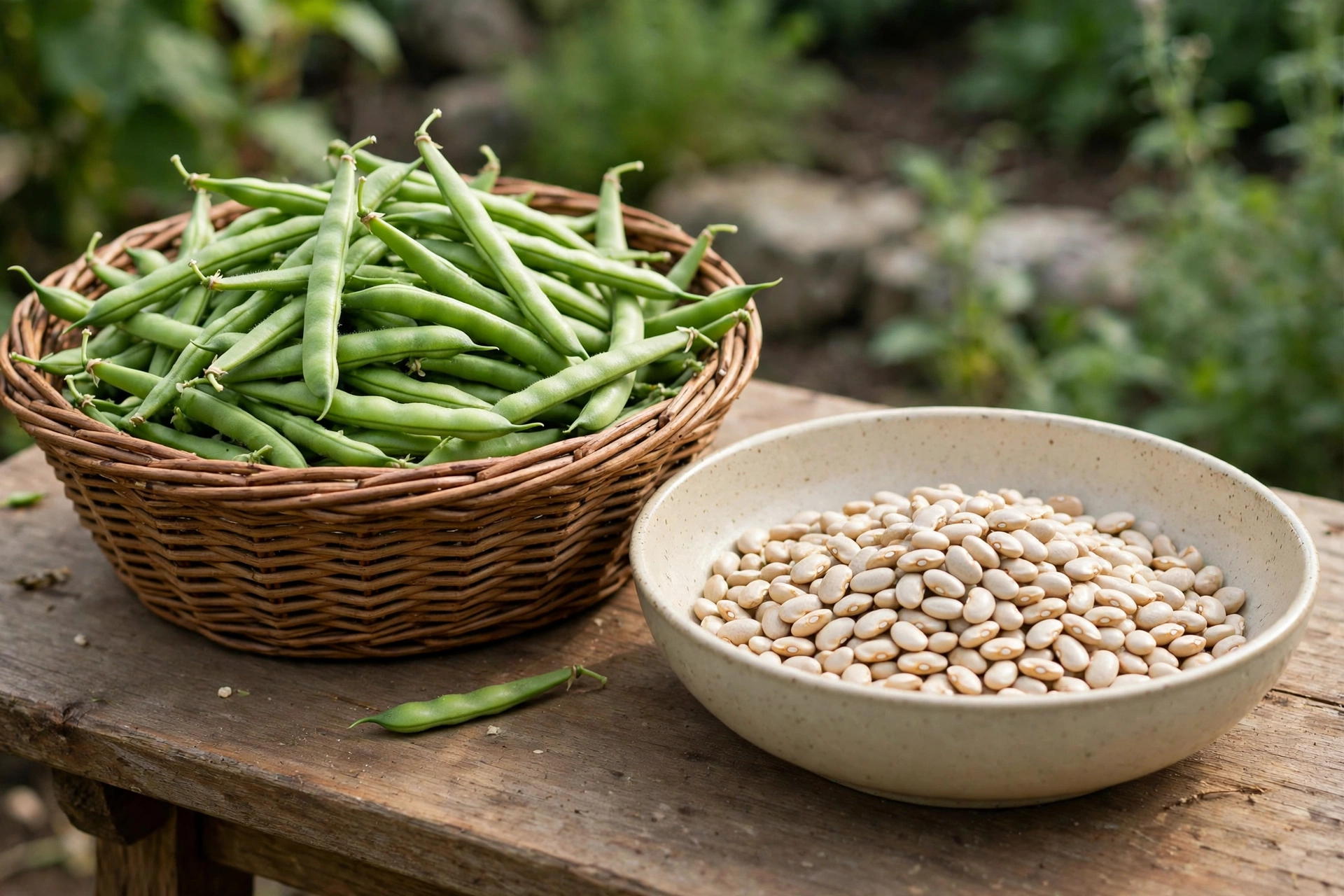
| Bush beans | Mar 15 – May 1 | Jul 5 – Aug 10 | Seed |
| Pole beans | Mar 15 – May 10 | Jul 1 – Aug 1 | Seed |
| Lima beans | Mar 15 – Jun 1 | Jul 1 – Aug 1 | Seed |
| Sweet corn | Mar 15 – Jun 1 | — | Seed |
| Cantaloupe | Mar 20 – Jun 20 | — | Seed |
| Watermelon | Mar 20 – May 1 | — | Seed |
| Tomatoes | Mar 25 – May 1 | Jun 15 – Jul 15 | Transplants |
| Cucumbers | Apr 1 – May 15 | Jul 15 – Aug 15 | Seed |
| Eggplant | Apr 1 – May 15 | Jul 10 – Jul 30 | Transplants |
| Okra | Apr 1 – Jun 1 | Jun 15 – Jul 10 | Seed |
| Bell peppers | Apr 1 – Jun 1 | Jul 25 – Aug 10 | Transplants |
| Southern peas | Apr 1 – Aug 10 | — | Seed |
| Summer squash | Apr 1 – May 15 | Aug 1 – Aug 25 | Seed |
| Winter squash | Apr 1 – Jul 1 | — | Seed |
| Sweet potatoes | Apr 15 – Jun 15 | — | Slips |
| Pumpkin | May 15 – Jul 1 | — | Seed |
Read the tomato row with the anchors in mind. March 25 is a middle Georgia transplant date; in Blairsville it lands a full month before the average last frost, and on the coast it is conservative by three weeks. The chart gives the window, and your anchor tells you where inside the window your garden sits.
What to plant, month by month
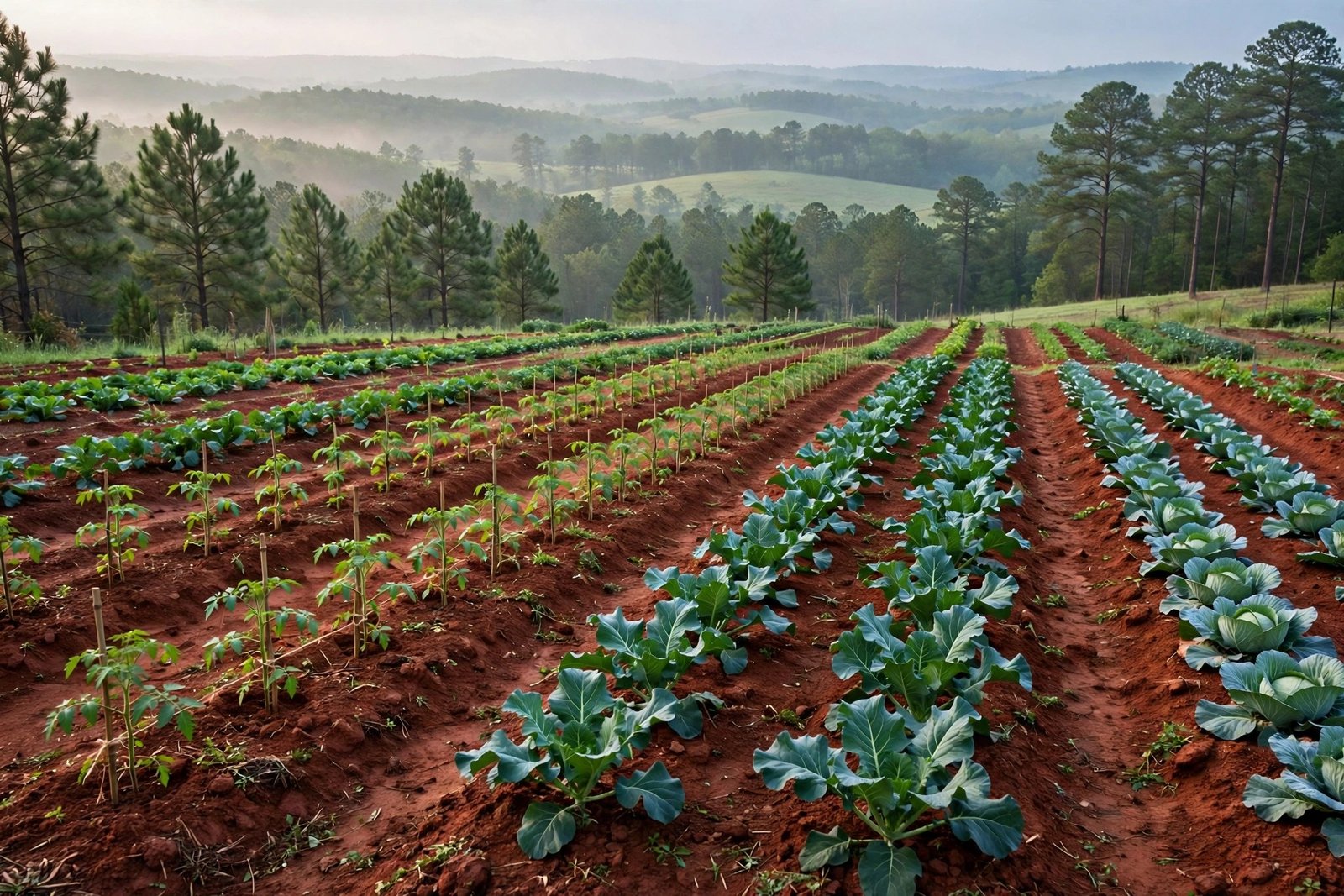
UGA’s Vegetable Garden Calendar (Circular 943) runs the year for middle Georgia, and its shape is two planting seasons — spring from March to May, fall from mid-July to September — with harvests in June and July, then again from October to December.
January and February. Planning months with real work in them: soil samples to the county Extension office, lime and fertilizer applied by the test results, and seed boxes planted in February for the transplants that go out in spring. February also takes the first outdoor sowings — carrots, collards, lettuce, mustard, English peas, Irish potatoes, radishes, spinach, and turnips on a raised ridge, where the soil drains and warms sooner.
March. Second plantings of the fast crops — turnips, mustard, radishes, spring onions — while rows are made ready for warm-season vegetables in the last week of the month. Seedlings get thinned at two to three inches tall, and transplants are hardened off outdoors in a sheltered spot before they are set out for good.
April. The main spring planting: snap, pole, and lima beans, cantaloupe, sweet corn, cucumbers, eggplant, okra, field peas, peppers, squash, tomatoes, and watermelon. Tall crops go on the north side so they do not shade the rest, corn goes in at least two rows for pollination, and a second planting of snap beans, corn, and squash follows the first by two to three weeks. Those staggered second and third plantings are the working end of succession planting — UGA builds them into the calendar rather than leaving them to chance.
May and June. Third plantings of the April list, mulch down before dry spells, and harvest kept current — beans, peas, squash, cucumbers, and okra picked regularly produce longer. June adds sweet potatoes and a second planting of Southern peas, and rows that finish bearing are cleared the same week, either for replanting or to lie ready for fall crops.
July. The fall garden starts on paper and then in the ground, under a hard deadline: tomatoes, okra, corn, pole beans, and lima beans go in no later than July 20 in middle Georgia to mature before frost, with cucumbers, squash, and snap beans alongside. Mountain gardeners move that deadline about two weeks earlier; the south gets about two weeks more.
August. Snap beans and Irish potatoes by August 15, cucumbers and squash by August 31, and seed started in a half-shaded spot for the broccoli, cabbage, cauliflower, collards, kale, and onions that set out in September. The soil for September plantings is fertilized and settled now, so seed germinates into a finished bed instead of a fresh one.
September and October. The cool-season garden, planted or transplanted in the mild weeks: beets, broccoli, cabbage, carrots, collards, lettuce, mustard, onions, radishes, spinach, and turnips, with second plantings of collards, turnips, cabbage, mustard, and kale behind them. Mature green peppers and tomatoes come in ahead of frost, whenever it decides to arrive.
November and December. Manure, rotted sawdust, and leaves spread over the garden and plowed under, and the ground rests. In south Georgia the rest is short — the chart’s January windows for peas, potatoes, and cabbage open there before the month is out.
The fall deadline is arithmetic
UGA’s calendar gives the formula outright: take the days to maturity, add 18 days for harvest, and count back from your first frost date. Snap beans at 55 days against a November 15 frost must be planted by September 3. The 18 days are the part gardeners skip, and they are the difference between a crop that yields for two weeks and a crop frost catches holding its first picking.
That arithmetic is why the fall dates in the chart end where they do — bell peppers by August 10, summer squash by August 25, lettuce not until September 1 because it wants the cooling nights. Worked backward from Blairsville’s October 19 frost, the same math closes the mountain fall garden in August. Worked from Savannah’s November 30, it runs into October, which is why the chart can print an October 1 end date for fall cabbage and lettuce and mean it — for somebody.
Soil first: a test, then lime
UGA’s recommendation is a soil pH of 6.0 to 6.5 for vegetables generally, with Irish potatoes the named exception at 5.0 to 6.0. The order matters: the sample goes to the county Extension office months before planting, and lime goes on ahead of soil preparation so it mixes in as the ground is worked. Fertilizer follows the test rather than a habit — 10-10-10 or 6-12-12 at rates set by whether the crop is a light, medium, or heavy feeder.
The rest of the site guidance is plain. Eight to ten hours of sun, soil that drains, and a mulch of straw, leaves, compost, or pine straw laid two to four inches deep after settling. Georgia clay holds water after a storm and gives it up slowly in a dry week, and that mulch layer is what evens the two out.
Sources
University of Georgia Extension, Vegetable Gardening in Georgia (Circular 963, full review March 13, 2026) and its Vegetable Planting Chart — the governing source for the planting windows, days to maturity, and the pH guidance. Fetched November 22, 2026.
University of Georgia Extension, Vegetable Garden Calendar (Circular 943, full review March 10, 2026) — the month-by-month calendar written for middle Georgia, the regional shift rules, the July 20 fall deadline, the August deadlines, and the count-back formula (days to maturity plus 18 days). Fetched November 22, 2026.
NOAA National Centers for Environmental Information, U.S. Climate Normals 1991–2020 — spring and fall freeze-date probabilities (32°F, 50%) for the Blairsville Experiment Station, Atlanta Fulton County Airport, Macon, and Savannah International Airport stations.
USDA Plant Hardiness Zone Map, 2023 — Georgia’s span of Zones 7a to 9a.