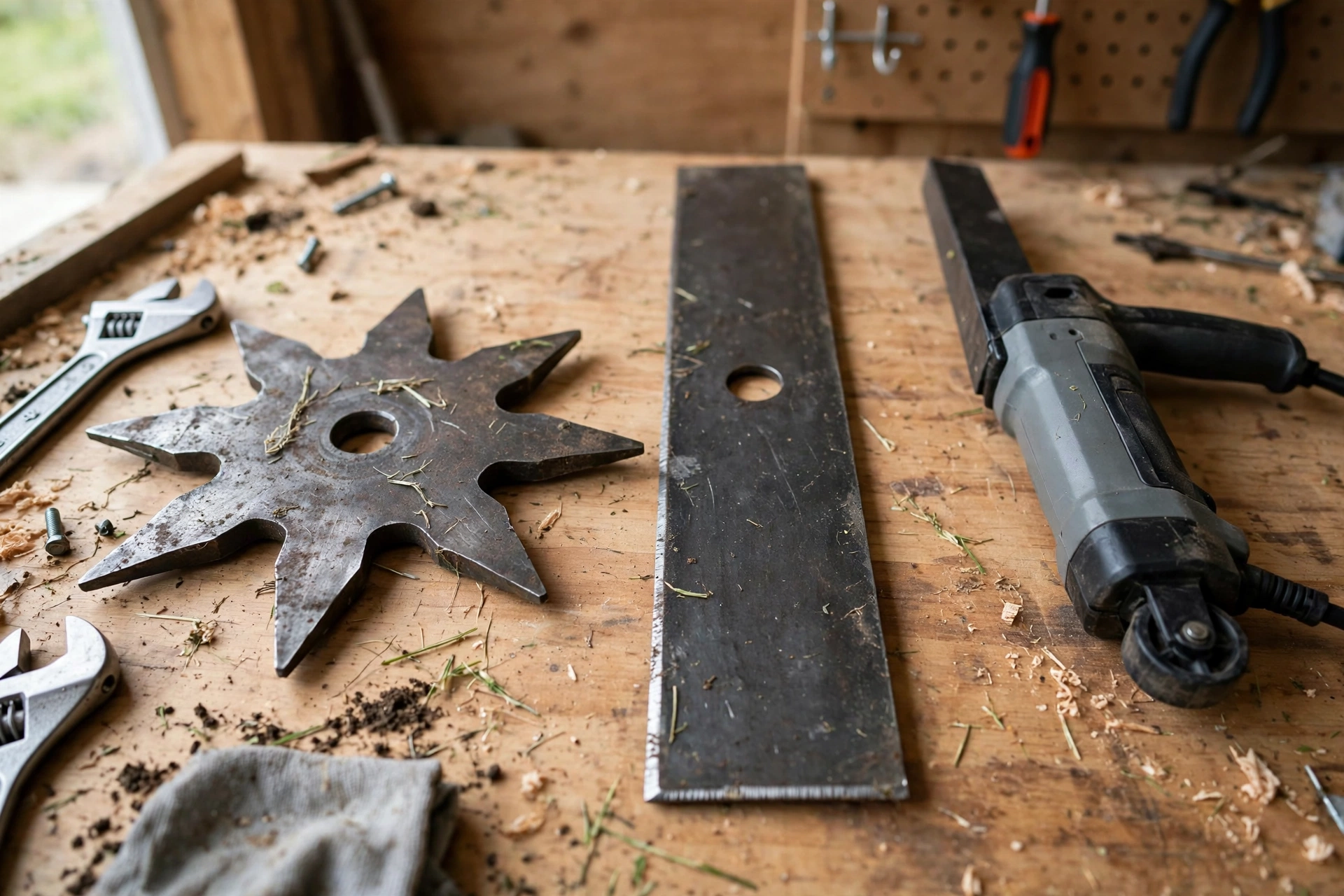
A straight blade cuts the way a knife cuts: one continuous edge, one clean slice through turf and soil. A star blade cuts the way a saw cuts: separate points striking the ground in turn, chewing through whatever the slice would have bounced off.
Neither is the upgrade of the other. They are answers to two different edges, the one you have been maintaining all season and the one that got away from you, and buying the wrong one either leaves the job half done or tears up a good edge for no reason.
The two blades at a glance
| Blade | How it cuts | Best for | Weakness |
|---|---|---|---|
| Straight blade | One flat steel edge slices a narrow, vertical-walled trench | Edges you maintain regularly along sidewalks, driveways, and curbs | Skips and deflects on thick, matted overgrowth and rooty soil |
| Star blade | Multiple points strike in turn, chopping through turf and soil | Reclaiming overgrown edges, thick warm-season runners, neglected beds | Leaves a wider, rougher trench that needs a cleanup pass to look crisp |
When the straight blade is the right cut
If your edges get cut every few weeks, the straight blade is the blade. Its single edge parts the turf cleanly and leaves a wall smooth enough to read as a line from the street, which is the whole point of edging along concrete.
Straight blades are also the gentler choice near shallow roots and on thin turf. The slice severs what crosses the line and leaves everything on the lawn side of it alone, so a maintained edge stays the same width season after season instead of creeping wider.
Most straight blades run 8 to 9 inches long and about a tenth of an inch thick, unsharpened from the factory, because the speed of the pass does the cutting. Our guide to sharpening and replacing a lawn edger blade covers when a worn edge can be dressed and when the blade is simply done.
When the star blade earns its keep
Send in the star blade when the edge has disappeared. Grass that has run six inches over the sidewalk, Bermuda or zoysia runners matted into the soil, a bed border nobody has cut since spring: a straight blade rides up over that mat and skates, while the star’s points keep biting and pull the cut through.
The trade is finish. A star blade opens a trench roughly twice the width of a straight blade’s slice, and the walls come out chewed rather than cut. On a reclamation job that costs you nothing, because the edge was rubble anyway. On a good edge it is damage, and the fix is a second pass with the straight blade once the star has done the heavy work.
There is a sound to a star blade working through matted runners, a chopping rattle under the engine note that smooths out the moment it reaches maintained turf. That change in sound is a fair signal that the reclaiming is done and the finishing blade can go on.
The fit check that decides whether either blade works
Blade shape is the second decision. The first is whether the blade fits your edger at all, and the number that matters is the center hole. Common edger arbors take a 1/2-inch, 5/8-inch, or 1-inch center hole, and a blade whose hole does not match your arbor exactly must not be shimmed, stacked with washers, or forced.
Match the diameter to the machine as well. A blade longer than the one the edger shipped with can strike the guard, and a shorter one gives up cutting depth you may need along a high curb. The blade your sidewalk edger shipped with is the size reference; stay with it unless the manufacturer lists an alternative.
Thickness matters least, but it is not free choice either. Blades around 0.09 to 0.10 inch are the standard middle: stiff enough to hold a line, thin enough not to rob a small electric edger of power. Power source plays into this too, and our gas vs cordless lawn edgers comparison covers which machines have the torque to swing an aggressive blade without bogging down.
Which one to buy first
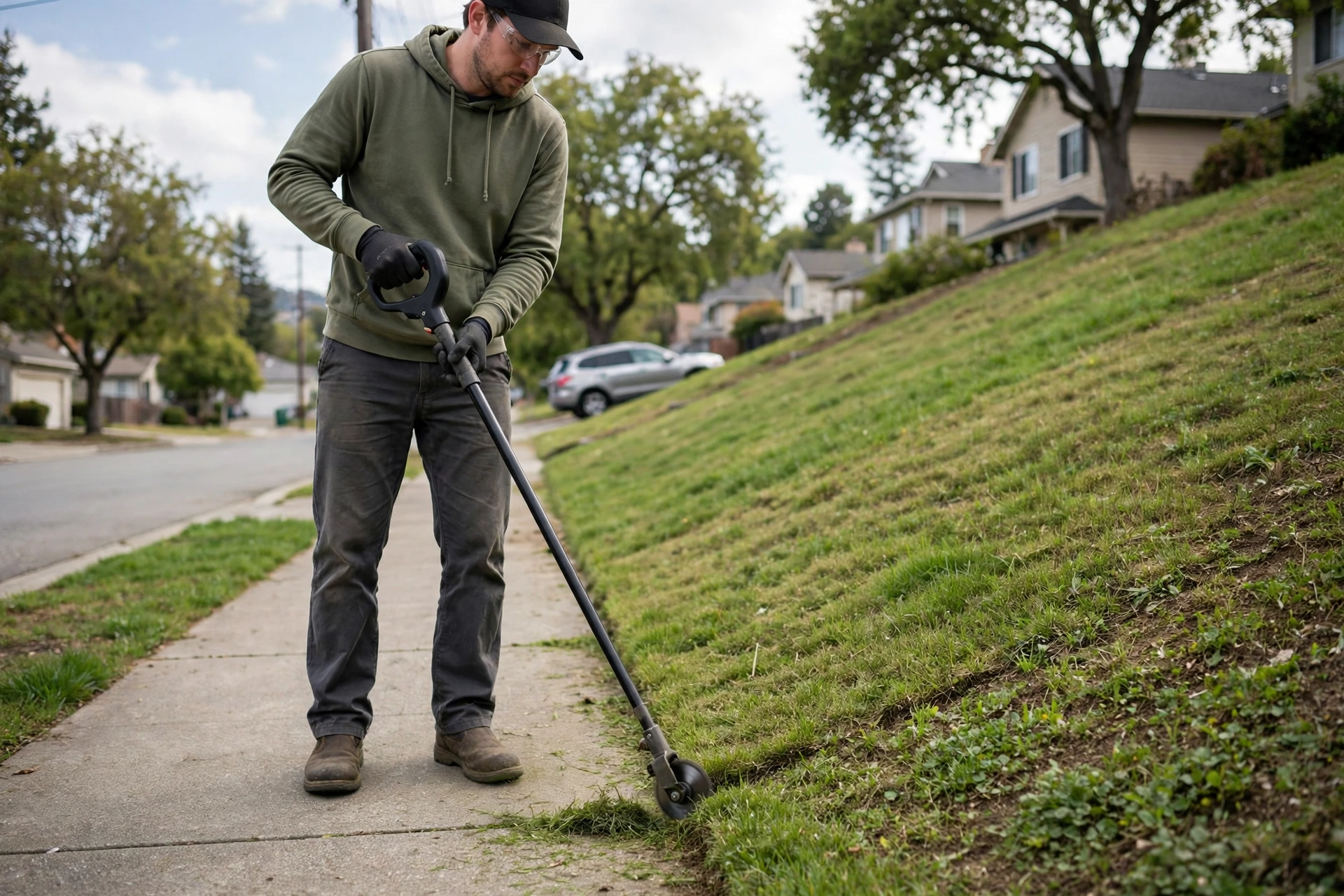
Own the straight blade first, because it does ninety percent of a maintained lawn’s edging, including the sloped work in our guide to edging a sloped lawn without scalping the high side, where a chewing blade would tear at thin turf.
Add the star blade when you have a reclamation waiting: a new house, a neglected rental, a bed line lost under a summer of runners. Buy it for that job, keep it for the next one, and let the straight blade do the weekly finish work it is shaped for.