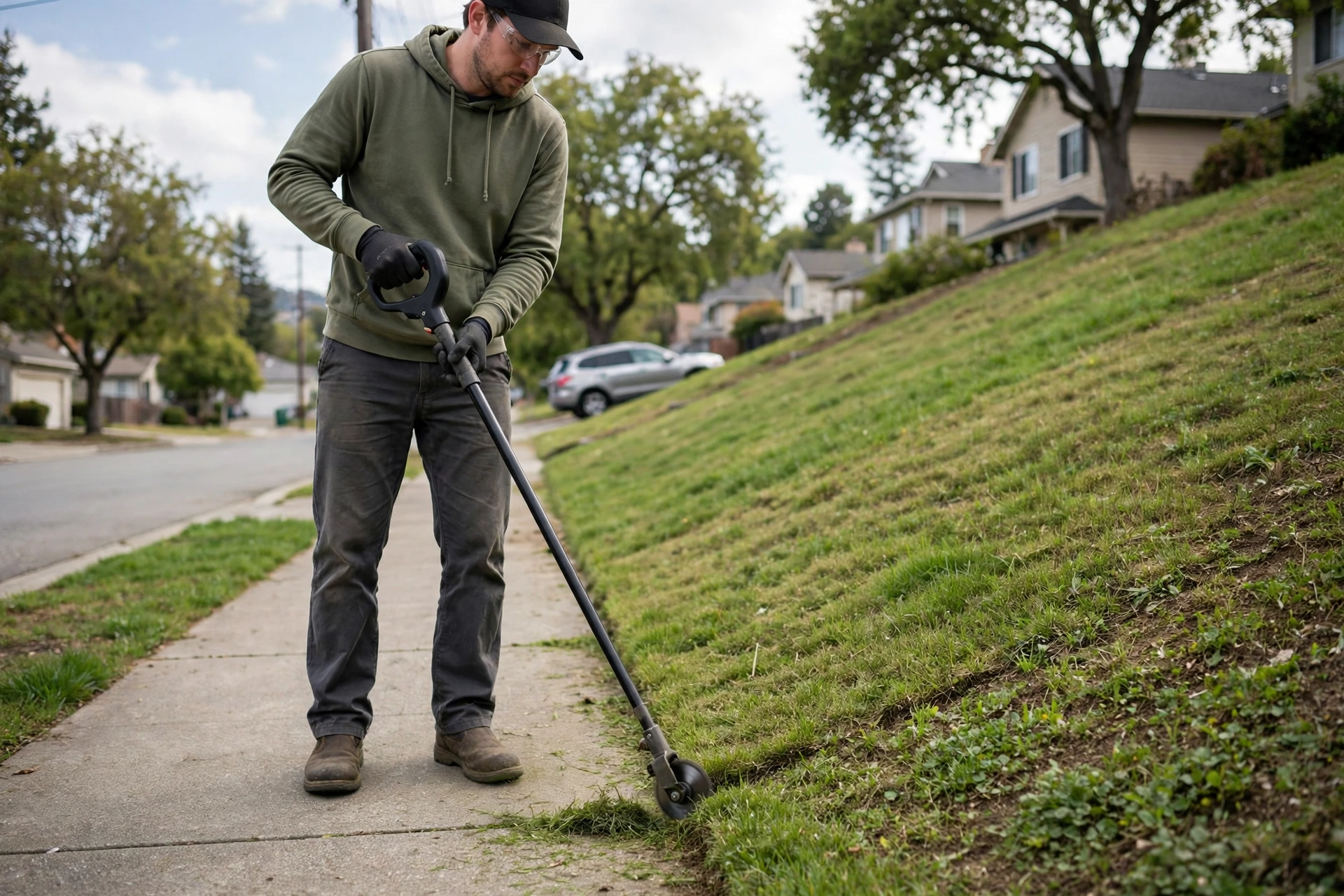
The classic slope mistake is edging straight down the hill. The blade drops into the low side, climbs out over the high side, and shaves the crown of the slope down to dirt, and that bare strip then washes a little further downhill with every hard rain.
A sloped edge fails for a simple reason: the ground under the blade keeps changing height while the edger wants to run level. Fix the geometry and the edge behaves. Work across the slope instead of down it, take the cut in shallow passes, and let the tool’s guide wheel, not your arms, decide how deep the blade runs.
Why slopes scalp in the first place
On flat ground, an edger’s depth is set once and stays honest for the whole run. On a slope, the downhill wheel rides lower than the uphill wheel, so the blade tilts with the hill and bites deepest exactly where the turf is thinnest, at the top of the bank.
The second problem is direction. Pushing an edger straight down a slope, gravity does part of the steering, the tool speeds up, and the cut wanders. Coming back up, you are muscling the machine against the hill, and the blade digs in wherever you pause to get your footing.
Across the slope, neither happens. Your pace stays yours, the guide wheel tracks the hard surface, and the blade meets the turf at the same angle from one end of the edge to the other.
Set up the cut before you start the engine
Edge when the soil is moist, not wet and not baked dry. Moist soil slices cleanly and the cut wall holds its shape. Mud smears and collapses, and drought-hard ground makes the blade skip and chatter, which is its own kind of scalping.
Set the depth shallow. A finished edge only needs to run about 2 inches deep, and on a slope that depth should be earned in two passes rather than taken in one. Our guide to how deep you should edge your lawn walks through the depth settings for flat ground; on a bank, start one notch shallower than that and deepen only if the first pass leaves the edge ragged.
Mark the line on a long slope. A string line or a garden hose laid along the edge gives your eye something true to follow. On a hill, an unmarked cut drifts downhill a little with every step, and the drift only shows once you step back.
The across-the-slope pass
Start at the bottom of the slope and work upward, one strip at a time. Each pass edges the strip directly above the last one, so the finished edge below gives you a clean reference line and your footing stays on ground you have already cut.
Keep the guide wheel on the pavement and your body on the uphill side. Standing uphill keeps your weight off the cut wall and keeps you clear of the blade’s line if the tool kicks on a root or a stone. A stick edger versus a walk-behind edger is a real choice here: the stick edger is lighter to hold at an angle on a short bank, while the walk-behind’s wheels carry the weight on a long one.
Move at half your flat-ground pace. The blade needs time to clear soil on a slope, because the spoil falls back into the cut instead of flicking clear. A slow, steady pass leaves a wall you can see; a fast one leaves a filled trench you get to dig out by hand.
Mid-slope, the cut soil has a smell to it, damp and mineral, and the exposed wall shows the turf’s whole story: a green inch on top, then roots, then the pale subsoil the blade should never reach. If you are seeing that pale layer, the blade is too deep, whatever the depth gauge claims.
Where the slope meets the flat
The transition at the top and bottom of the bank is where most scalping happens, because the edger pitches as it rolls over the break. Feather it: ease the blade up a fraction as you cross onto the flat, and let the two cuts meet instead of forcing one depth through both.
At the bottom, expect the edge to collect soil and seed heads washing down from above. A slightly deeper final pass along the bottom strip, an extra quarter inch, gives that wash somewhere to land that is not on the pavement.
Keeping the edge once it is cut
A sloped edge wants maintenance in smaller, more frequent bites than a flat one. Touch it up on the same rhythm you use for the rest of the lawn, which our guide to when to edge your lawn lays out by season, and the touch-ups stay five-minute jobs.
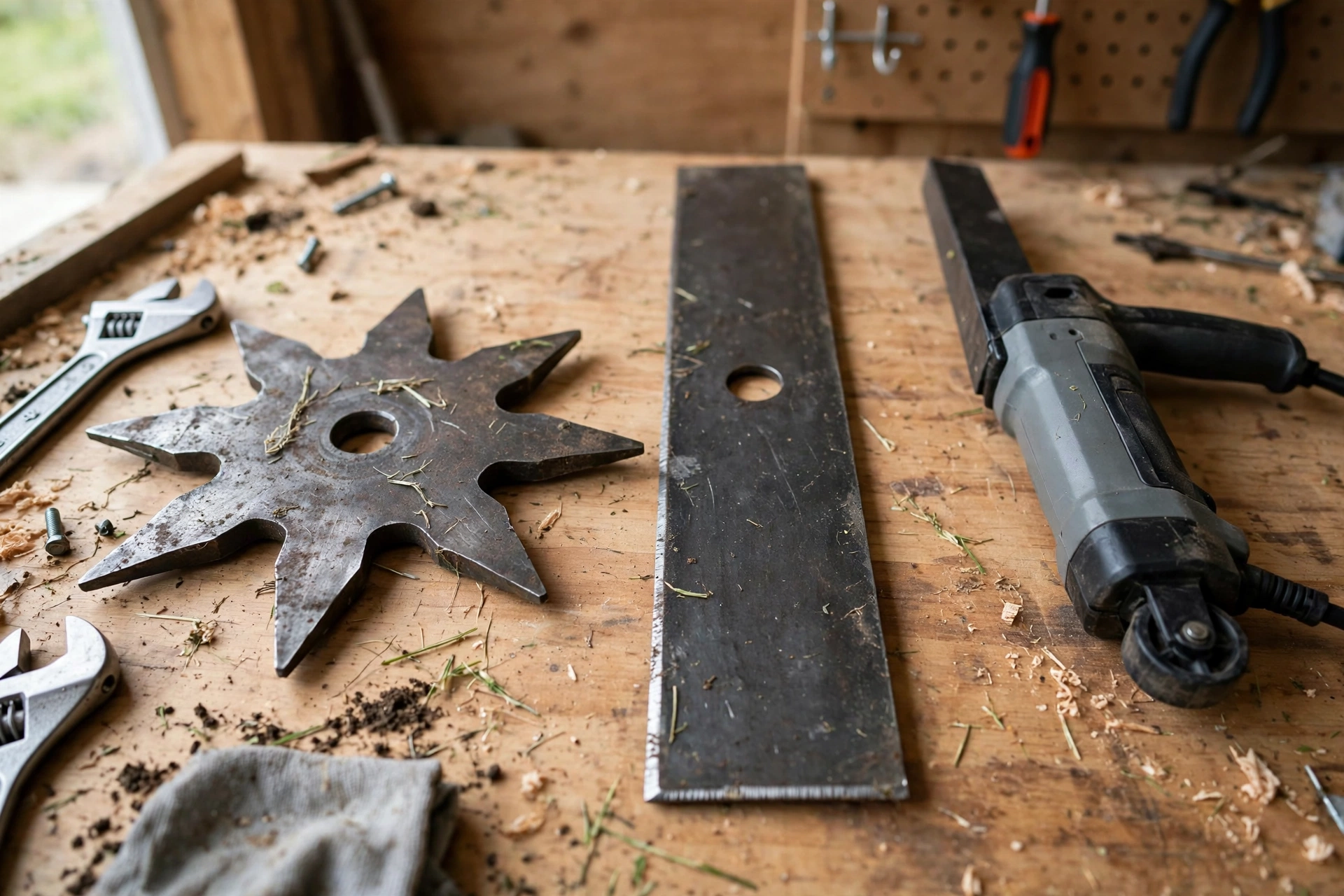
Watch the high side after heavy rain. If the cut wall is crumbling, the turf above it is too thin to hold the bank, and the honest fix is a shallower edge and a thicker stand of grass, not a deeper trench. The companion piece on star blade vs straight blade for lawn edgers covers the blade choice that matters most on ground like this, because an aggressive blade on a thin slope makes the crumbling worse.
Edge across the slope, shallow, from the bottom up. Do those three things and the high side keeps its grass.