Landscape & Leisure is reader-supported. When you buy through links on our site, including Botanical Interests seed links, we may earn a commission at no extra cost to you. Prices change, so click through to confirm current pricing.
By the time the seed catalogs are dog-eared in February, eggplant is the crop that tests your patience. Tomatoes forgive a late start, and peppers forgive a cool windowsill, but eggplant forgives neither — so the gardeners who harvest it in August are the ones who sowed it in March, under lights and on a heat mat, and then waited for genuinely warm nights before it ever saw the garden.
The whole job comes down to two numbers: ten to twelve weeks indoors before your last frost, and nights above 60 degrees before transplanting. Get those right and the rest is straightforward. Our eggplant variety roundup covers which of the three Botanical Interests varieties to start; this guide covers when and how.
Why Eggplant Needs Such a Long Head Start
Eggplant is a warm-season annual from Asia, and it grows on a slower clock than its nightshade cousins. Black Beauty and Jewel Amethyst both take 80 days from transplanting to mature fruit, and the seed needs 10 to 20 days just to germinate. Add the indoor weeks and the season runs long — in a northern garden, a plant that goes out in June without a head start simply runs out of summer before the fruit sizes up.
That is why the packet says start indoors, and why it says it so firmly. Ten to twelve weeks before your average last frost is the window, which means early March where last frost lands around mid-May. Sow later and the plant is still small when the warm nights finally arrive; sow earlier without enough light and you get a leggy seedling that spends weeks catching up. If your seedlings do stretch, our leggy seedlings guide covers the fix, but light from the start is the real answer.
The Timing, Week by Week
| Step | When | What to do |
|---|---|---|
| Sow indoors | 10–12 weeks before last frost | Sow 1/4 inch deep in cell trays; soil 70–90°F; germination in 10–20 days |
| Grow on | Under lights, 14–16 hours a day | Keep seedlings stocky with strong light; water from below; pot up once if roots fill the cell |
| Harden off | 7–10 days before transplanting | Move plants outside for lengthening stretches; bring in at night until nights stay warm |
| Transplant | 1–2 weeks after last frost | Soil at least 60°F and nights above 60°F; space 18 inches apart in rows 36 inches apart |
Heat Is the Whole Game
Eggplant seed germinates slowly in a cool room, and a tray on a cold windowsill can sit for three weeks before anything shows. The fix is bottom heat: soil at 70 to 90 degrees, which is the range Botanical Interests gives for direct sowing, and the range that gets seed up in 10 to 20 days indoors. A heat mat under the tray does this reliably, and it is the one piece of gear that changes eggplant from a gamble into a routine. Keep the mat on until the seedlings are up and growing, then move the tray to your brightest spot.
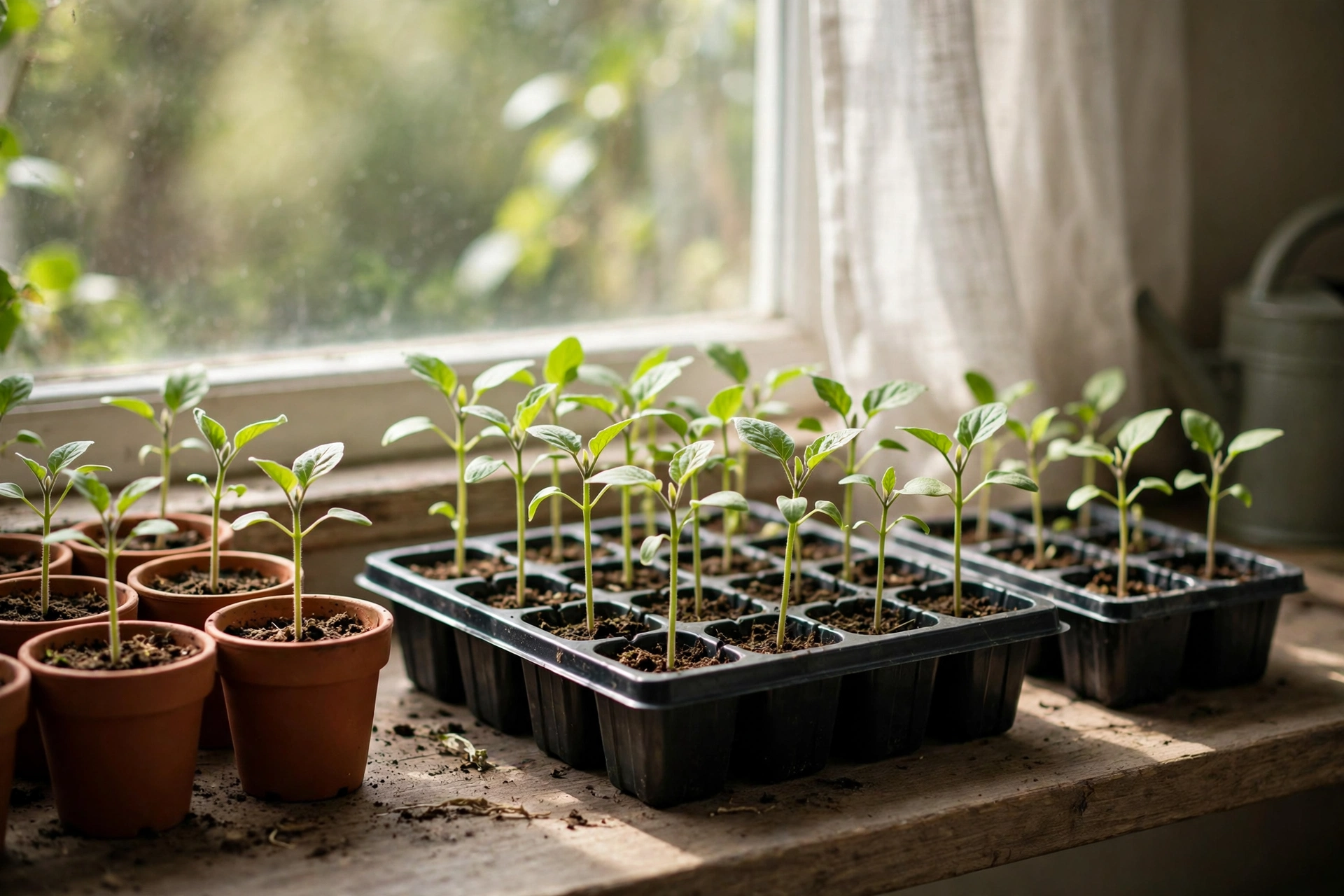
Light matters as much as heat once the seed is up. A sunny windowsill sounds like enough and usually is not — seedlings stretch toward weak winter light and go leggy in a week. Hang a grow light a few inches above the tray and run it 14 to 16 hours a day, raising it as the plants grow. Stocky seedlings with thick stems transplant well; tall, pale ones sulk for weeks after they go out.
Epic Seed Starting Heat Mat
Bottom heat at 70–90°F is what gets slow eggplant seed up in 10–20 days instead of three weeks.
Epic 6-Cell Seed Starting Trays
Deep cells that hold a long eggplant root run, with room to pot up once before transplanting.
Epic 1020 Universal Bottom Tray
Catches runoff and lets you water from below, which keeps eggplant stems dry and damping-off at bay.
Hardening Off: Don’t Skip It
Eggplant is more cold-sensitive than any other common vegetable, and a seedling that has lived under lights will sunburn and stall if it goes straight into the garden. Harden off over 7 to 10 days: a few hours outside in sheltered shade at first, then longer stretches with more sun, bringing plants in at night until the nights stay warm. Our hardening-off guide walks through the daily steps.
The transplant rule is the one to respect above all: wait until 1 to 2 weeks after your last frost, when the soil is at least 60 degrees and the night air stays above 60 degrees. A plant set out into 50-degree soil sits still for weeks and flowers late, if it flowers at all. Plant 18 inches apart in rows 36 inches apart, water deeply at the base, and mulch once the soil has warmed — mulch laid too early keeps the soil cool, which is exactly what eggplant does not want.
Can You Direct-Sow Instead?
Yes, where the season is long. Direct sow 2 to 4 weeks after your last frost, when the soil is at least 70 degrees and ideally 80 to 90, with night air above 60. In the north, that math rarely works — the seed goes in late, germination takes up to 20 days, and the 80 days from transplanting still have to fit before frost. Transplants are the honest answer for short seasons, and the same routine serves tomatoes and peppers too; our tomato starting guide and pepper starting guide run on the same calendar.
What to Watch Next
A seedling that is working looks stocky, with thick stems and leaves that open flat to the light. If the stems stretch and the leaves stay small, the light is too weak or too far away — lower the light and give it more hours. Once the plants are out, the first flowers usually appear a few weeks after transplanting, and the first fruit follows if the nights stay warm. If flowers open and drop instead, the cause is usually temperature, not the plant, and our fruit-set guide sorts out which one. Sow early, keep the soil warm, and wait for warm nights — that is the whole job, and it is enough.