Landscape & Leisure is reader-supported. When you buy through links on our site, including Botanical Interests seed links, we may earn a commission at no extra cost to you. Prices change, so click through to confirm current pricing.
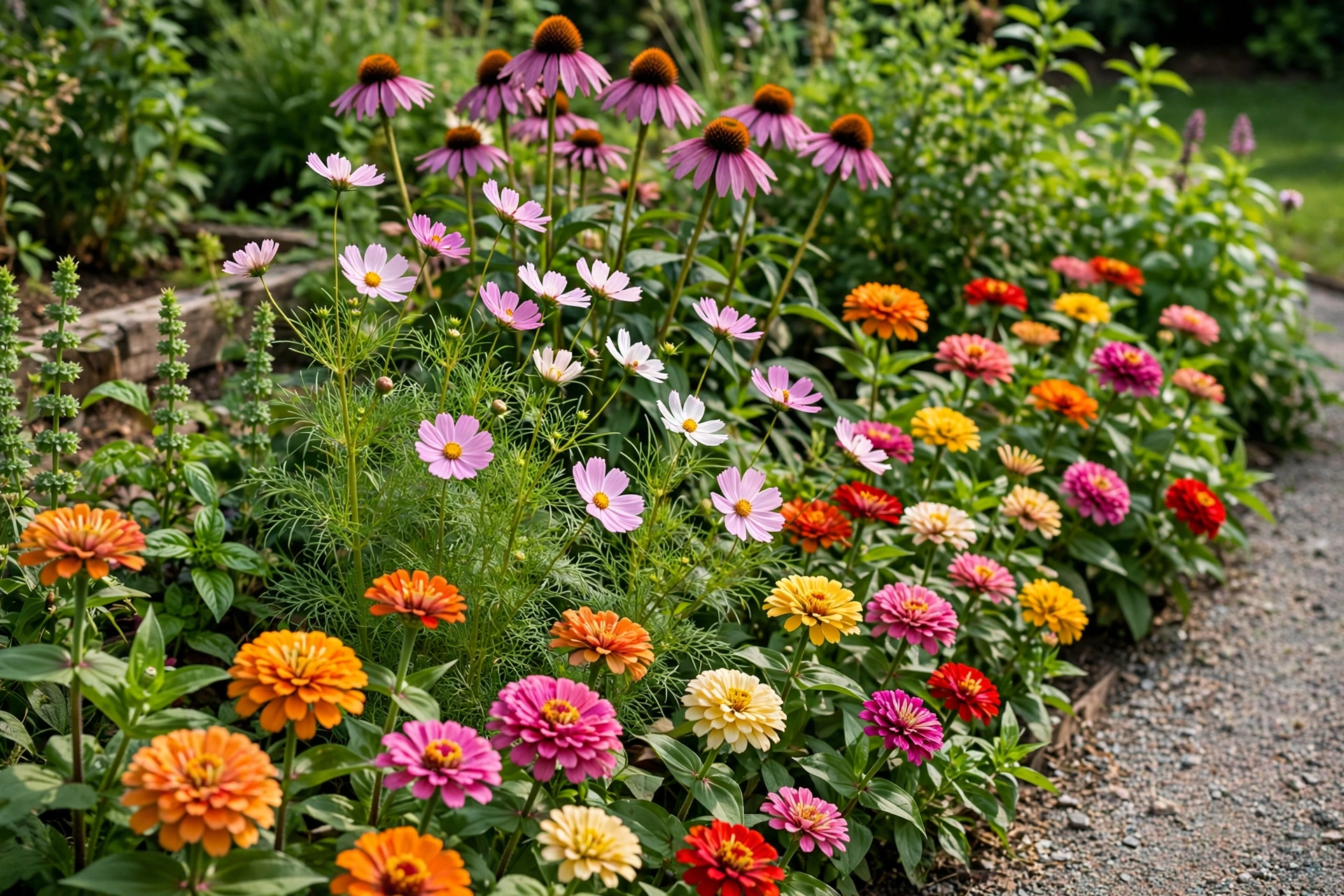
Flowers started indoors have one great advantage over flowers sown straight into the garden: they are already growing when the weather finally cooperates. That head start is the difference between zinnias in July and zinnias in August — between a summer full of bouquets and a summer spent waiting. The trick is not starting early. It is starting at the right time, in warm soil, with enough light that the seedlings grow sturdy instead of stretching toward the window like pale little question marks.
This guide covers the flowers in our roundup of the best cut flowers to grow from seed. For the general seed-starting method, see our beginner’s guide to starting seeds indoors. When your seedlings are ready for the outdoors, our guide to hardening off seedlings walks through the move.
Why Flowers Stretch: Light Before Anything Else
A seedling stretches for one reason: it is reaching for light it cannot quite find. The stem grows long and thin, the leaves stay small, and the plant that results is too weak to hold a flower upright. No amount of fertilizer fixes that. What fixes it is light — a lot of it, close to the plants, for most of the day.
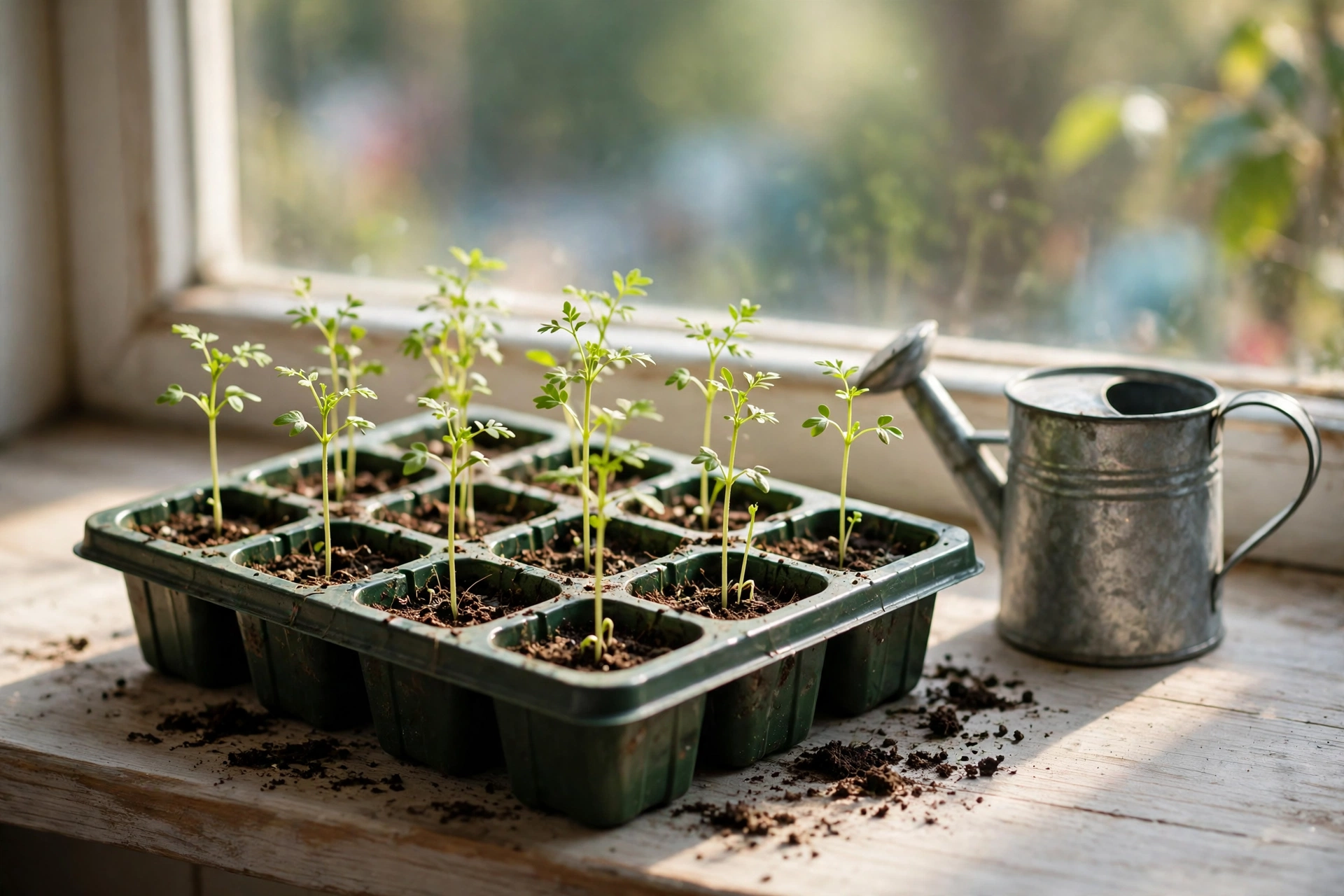
A sunny windowsill can work, but only a truly bright one, and you will need to turn the tray daily so the seedlings do not all lean one way. If your seedlings are reaching, move the light closer or add a simple grow light and keep it a few inches above the leaves, raising it as they grow. Warm soil matters just as much for heat-lovers like zinnias and marigolds: a seed tray on a cold windowsill germinates slowly, if at all, while the same seeds on a heat mat come up in days.
When to Start Each Flower
Count backward from your average last frost date. That date is the anchor for everything in this guide — not the calendar month, not the neighbor’s planting day, the frost date for your own yard. The table below uses Botanical Interests’ own planting guidance for each flower.
| Flower | Start indoors | Direct sow | Germination |
|---|---|---|---|
| Zinnia | 4 to 6 weeks before last frost | 1 to 2 weeks after last frost (recommended) | 3–10 days |
| Cosmos | 4 to 6 weeks before last frost | 1 to 2 weeks after last frost, soil at least 60°F (recommended) | 5–10 days |
| African marigold | 4 to 6 weeks before last frost (recommended) | 1 to 2 weeks after last frost, soil 70°–80°F | 5–14 days |
| Purple coneflower | 10 to 12 weeks before last frost | 2 to 4 weeks before last frost, or up to 2 months before first fall frost | 10–20 days |
Notice the pattern. Zinnias, cosmos, and marigolds all want the same window — 4 to 6 weeks indoors — and all three are happier direct-sown once the soil warms. Starting them indoors buys you earlier blooms, not better plants. Coneflower is the outlier: it needs 10 to 12 weeks indoors, and it may bloom in its first year if you give it that head start. If you are growing perennials from seed, start them first and be patient. They are playing a longer game, and they reward it.
The Setup That Actually Works
Use a cell tray, not a single flat. Individual cells let you move one seedling without disturbing its neighbors, and they keep the roots from tangling into one shared mat. Fill the cells with seed-starting mix — light, fine, and low in fertilizer — and moisten it before you sow, so the seeds sit in damp mix instead of being washed into a corner by the first watering.
Sow at the depth the packet states, and take it literally. Zinnia seed goes ¼ inch deep. Marigold seed goes ¼ inch deep. Cosmos seed is barely covered — a dusting of mix, not a burial. Seeds sown too deep run out of energy before they reach the light; seeds left on the surface dry out. The packet depth is not a suggestion.
Warmth first, light second. Until germination, seeds need warmth more than light. A heat mat under the tray holds the soil in the 70s, where zinnias and marigolds germinate fastest. The moment seedlings emerge, move them into strong light and take the dome off if you used one. Warm and dark grows a sprout; warm and bright grows a plant.
Epic 6-Cell Seed Starting Trays
Individual cells for sturdy flower seedlings — move one plant without disturbing the rest.
Seed Starting Heat Mat
Holds the soil warm so zinnias and marigolds germinate in days instead of stalling.
Thinning, Watering, and the Pinch That Pays Off
Thin early, and thin ruthlessly. Botanical Interests’ spacing is a group of 3 seeds every 12 inches for zinnias and cosmos, thinned to one plant when the seedlings are 1 to 2 inches tall. That thinning feels wasteful the first time you do it. It is not. Three seedlings sharing one spot grow into three weak plants; one seedling with room grows into a plant that can hold a bouquet.
Water from below when you can, or water gently at the soil line. Wet leaves in a warm, still room invite the damping-off that kills seedlings overnight — the stem pinches at the soil line, and the seedling falls over as if it simply gave up. Good air movement helps enormously. A small fan on low, a few feet away, does more for sturdy stems than any supplement.
Pinch zinnias when they are about 8 to 12 inches tall and have several sets of leaves: snip the growing tip just above a leaf pair. The plant branches, and instead of one flower on one stem you get a bushy plant full of cutting stems. It feels wrong, cutting the top off a plant you have been nursing for weeks. Do it anyway. The plant will thank you by doubling.
Moving Out: Harden Off, Then Plant After Frost
Flowers started indoors have never felt wind, direct sun, or a cold night. Put them straight outside and they sunburn, wilt, and stall — sometimes for weeks. Hardening off is the week-long introduction: a few hours outside in shade and shelter, a little more sun and wind each day, back inside at night, until they can spend a full day out without complaint.
Transplant only after your last frost, and for zinnias, wait for warmer weather on top of that — they do not benefit from being rushed into cold soil. Plant cosmos and zinnias 12 inches apart, marigolds 18 inches apart, and water them in well. Then step back. The flowers you started on a windowsill in March are about to do the thing they were always going to do, and all you have to do is keep the scissors handy.
California Giants Blend Zinnia Seeds
The forgiving first flower to start indoors — big blooms, fast germination, and it branches when pinched.
What to Watch Next
Sturdy seedlings are short, stocky, and deep green, with stems you can barely bend between your fingers. Leggy seedlings are tall, pale, and floppy — and the fix is more light, applied now, not more water or more fertilizer. If a seedling has already stretched badly, sow a fresh cell and learn from the first batch; flowers germinate fast enough that a second sowing still beats a direct-sown bed. And if you are deciding which flowers deserve that indoor head start at all, our annual vs. perennial comparison sorts out which ones pay you back this year and which ones are an investment in next year’s garden.